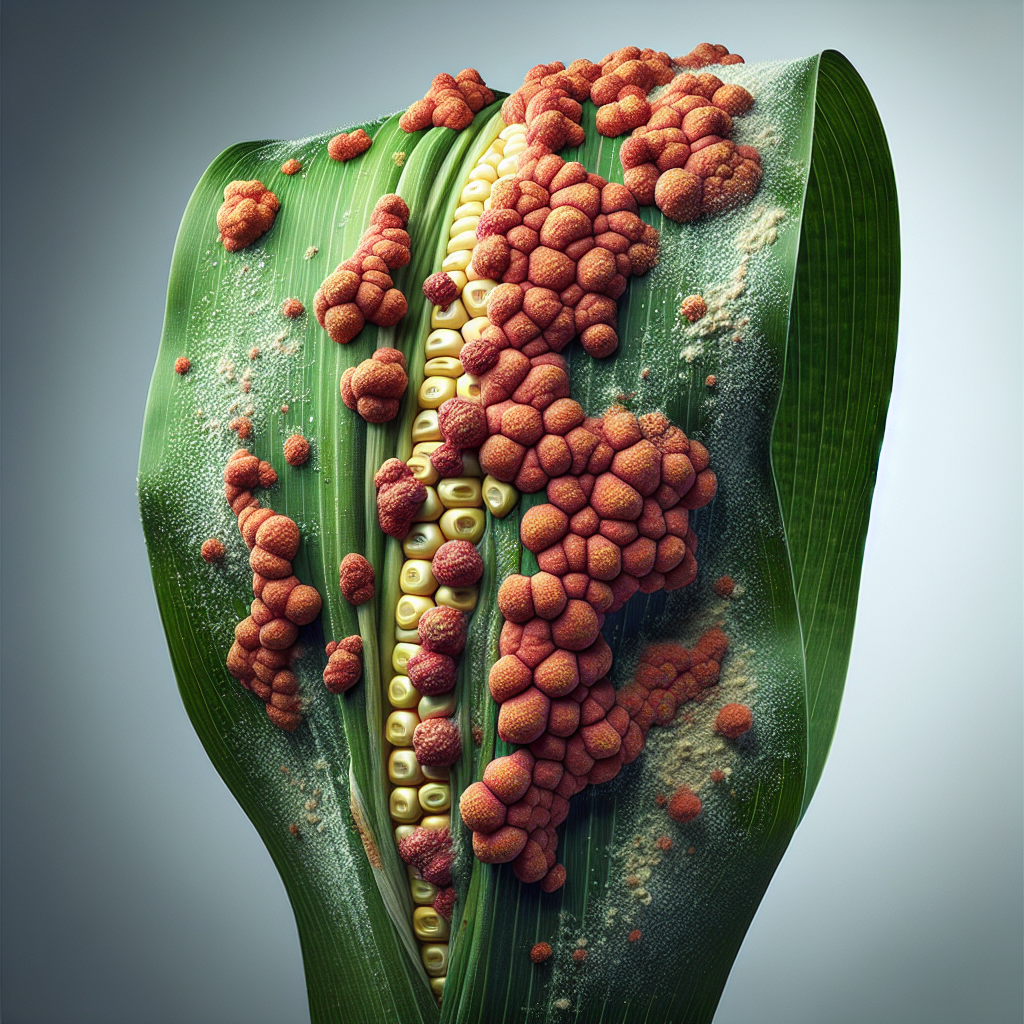
Definitive Diagnostic and Management Guide for Common Rust
Introduction to Common Rust
Common Rust, scientifically known as Puccinia sorghi, stands as one of the most prevalent and destructive foliar diseases in agricultural systems worldwide, particularly targeting cereal crops. This obligate parasitic fungus belongs to the Pucciniaceae family and is notorious for producing characteristic brick-red pustules on plant surfaces, which release infectious spores that spread rapidly under favorable conditions. First identified in the early 19th century, Common Rust has been a persistent challenge for farmers growing corn, wheat, and other Poaceae family members, causing yield reductions of up to 50% in severe epidemics.
The disease's economic impact is profound, with global losses estimated in billions annually due to diminished grain quality, reduced photosynthesis from leaf coverage, and increased susceptibility to secondary infections. In regions like the U.S. Corn Belt, Midwest Europe, and parts of Asia, outbreaks coincide with wet summers, amplifying its threat. Understanding Common Rust is crucial for sustainable farming, as it not only affects staple food security but also influences feed and biofuel production. This guide provides professional-grade diagnostics, lifecycle insights, organic management strategies, and prevention tactics tailored for small to large-scale operations. For more on related fungal threats, explore our comprehensive coverage of rusts.
Early detection remains the cornerstone of effective management. Unlike bacterial diseases that cause water-soaked lesions, Common Rust's pustules are dry and powdery, distinguishing it from look-alikes like Southern rust. Farmers leveraging integrated pest management (IPM) can mitigate outbreaks, preserving crop health and profitability. This resource draws from decades of entomological and botanical research, offering actionable advice grounded in field trials and extension services.
Identifying Symptoms & Damage
Recognizing Common Rust begins with scouting fields during vegetative stages (V6 to VT in corn). Initial symptoms appear as small, circular to oval chlorotic (yellow) flecks on upper leaf surfaces, typically 0.5-1 mm in diameter. Within 5-7 days, these evolve into raised, cinnamon-brown pustules filled with urediniospores, measuring 0.3-0.5 mm. These pustules erupt through the epidermis, releasing a rusty powder that rubs off easily on fingers, staining clothing or equipment—a hallmark diagnostic feature.
On corn leaves, pustules align parallel to veins, densely covering both leaf sides in advanced stages. Severe infections produce elongated lesions up to several centimeters, coalescing to blanket entire leaves in a reddish-brown coating. Lower leaves manifest first, progressing upward; tassels and husks may show sparse pustules. Damage manifests as premature senescence, where infected leaves senesce 2-3 weeks early, slashing photosynthetic capacity by 20-40%. Yield impacts vary: minor infections (<5% leaf area) cause <10% loss, while >20% coverage can halve grain fill, reducing kernel weight and row number.
Differentiate from Northern Corn Leaf Blight, which forms grayish, spindle-shaped lesions without pustules, or Gray leaf spot with rectangular, tan lesions. Microscopic confirmation reveals dikaryotic urediniospores (20-30 μm, echinulate walls). Economic thresholds: Scout weekly; act if >50 pustules per leaf pre-silking. In sorghum, symptoms mimic corn but favor midribs. Holistic damage assessment includes stalk weakening, lodging risk, and mycotoxin potential from stress-induced Fusarium entry.
Lifecycle and Progression of Common Rust
Puccinia sorghi exhibits a complex, macrocyclic lifecycle with five spore stages, though in temperate regions, it often functions as microcyclic, relying on urediniospores for repeated cycles. Overwintering occurs as teliospores in corn residue or alternate barberry hosts (though rare in Americas). Spring germination produces basidiospores infecting barberry, yielding pycniospores and aeciospores that infect corn.
Primary infection hits young corn (V3-V6) via wind-blown aeciospores from barberry (up to 300 miles). Uredinia form 7-10 days post-infection at 20-25°C, releasing billions of urediniospores per pustule. Optimal dispersal occurs in humid winds (60-90% RH, <12 hours leaf wetness). Each cycle (10-14 days) amplifies epidemics: one pustule yields 10,000+ spores, leading to exponential spread. Telia form late-season on senescing tissue, overwintering.
Progression accelerates post-silking under prolonged dew. Latent period: 4-5 days at 25°C. In tropics, urediniospores sustain year-round. Disease gradients follow wind patterns; polycyclic nature demands early intervention. For deeper IPM insights, check our Spring Pest Patrol blog.
Environmental Triggers & Risk Factors
Common Rust flourishes in moderate temperatures (15-25°C) with high humidity (>95% RH for 6+ hours), leaf wetness from dew, rain, or irrigation. Night temps >15°C prolong spore germination; daytime >30°C halts it. Free moisture is critical—dry leaves curb spread. Dense canopies trap humidity, exacerbating outbreaks.
Risk factors include susceptible hybrids (e.g., non-Rpp gene corn), continuous corn monoculture, residue retention (>30%), early planting into cool soils, and nearby alternate hosts like oats or barley. Nitrogen excess promotes lush foliage, ideal for infection. Irrigation overhead increases splash dispersal. Regional hotspots: U.S. Corn Belt (Iowa, Illinois), Argentina Pampas. Climate change extends seasons, boosting inoculum. Soil pH >7 reduces micronutrient uptake, stressing plants. Monitor via weather stations; thresholds: 7-day wetness >50 hours.
Organic Control & Treatment Plans
Organic management emphasizes cultural, biological, and approved biochemicals. Immediate Response: Remove volunteers and debris pre-planting. Apply potassium bicarbonate (2-5 lbs/100 gal) at first symptoms, 7-10 day intervals, covering 80% foliage. Neem oil (0.5-2%) or sulfur (OMRI-listed, 3-5 lbs/A) weekly during high risk; avoid >85°F to prevent phytotoxicity.
Biologicals: Bacillus subtilis (Serenade) or Pseudomonas fluorescens (Blossom) at 2-4 qt/A, enhancing ISR. Compost teas with Trichoderma boost antagonists. Resistant Varieties: Plant Rp1-D or Rp3 hybrids (10-50% less severe). Rotate with non-hosts like soybeans (3+ years). Foliar nutrition: Silica (potassium silicate, 1-2 qt/A) strengthens cell walls.
Integrated Plan: Scout 20 plants/10 locations weekly. Threshold: 50 pustules/leaf. Eradicate barberry within 1 mile. Mulch residues to bury telia. Post-harvest: Flail chop and till. Trials show 30-60% reduction combining these. Avoid copper in organics unless labeled.
Preventing Common Rust in the Future
Prevention hinges on IPM: Select resistant genetics (Rp genes confer hypersensitive response). Crop rotation disrupts cycles—alternate corn with peas or clover (4 years). Plant timing: Delay 1-2 weeks post-risk. Spacing: 30,000 plants/A max for airflow.
Sanitation: Destroy volunteers, plow residues <4 inches. Windbreaks reduce spore influx. Nutrition: Balanced NPK; avoid excess N. Foliar micronutrients (Mn, Zn) at V6. Monitor via apps for degree-days (base 50°F). Cover crops (rye) suppress inoculum. Seed treatments with biofungicides. Long-term: Breed stacks (Rp1+Rp3). Audits show 70% incidence drop.
Crops Most Affected by Common Rust
Primary host: Corn (Zea mays), all types including sweet corn, dent, flint. Secondary: Sorghum, oats, barley, wheat, sugarcane, quinoa. Grasses like [sudangrass] and teff susceptible. Rare on rice. Global hotspots target field corn; soybeans unaffected. Hybrids vary: Pioneer 37xx tolerant, others severe.