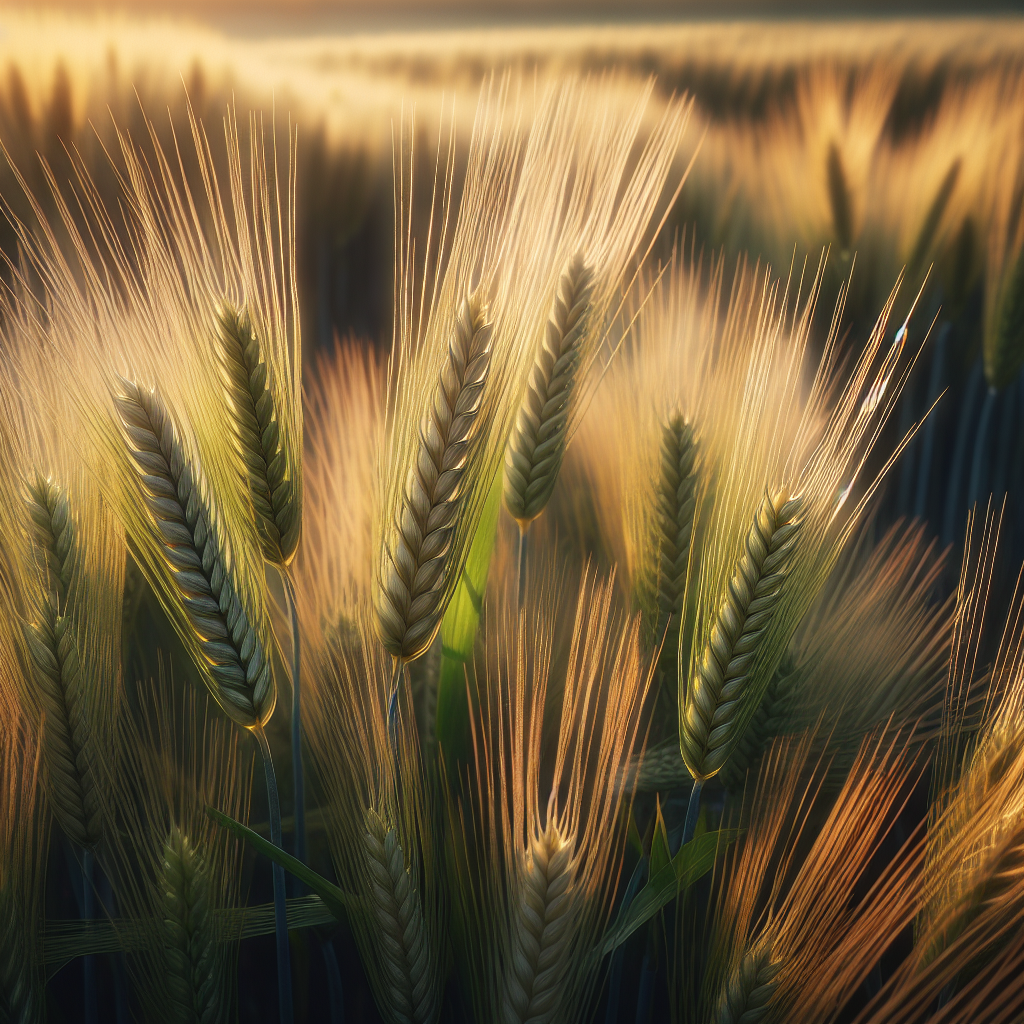
Introduction to Barley
One of the earliest cereals brought into cultivation, barley has been grown for thousands of years across the Mediterranean, Near East, Europe, North Africa, and large parts of Asia. Its enduring value comes from an unusual combination of agronomic strengths: rapid establishment, relatively short growing duration, good tolerance of cool temperatures, and versatility in end use. Barley can be grown for livestock feed, pearl barley and whole-grain food markets, straw, forage, and especially malting, where grain quality standards are stricter than for feed production.
Modern barley production generally falls into two broad botanical and market classes: two-row and six-row types. Two-row barley typically produces larger, more uniform kernels and is often preferred for malting in many regions, while six-row barley can be more productive under some conditions and may be favored for feed or certain brewing traditions. There are also hulled and hull-less forms, winter and spring growth habits, and cultivars selected for drought tolerance, lodging resistance, disease resistance, or specific malt characteristics.
For growers, barley is often considered more forgiving than some cereals, but high-quality production still depends on precision. Yield and grain quality are strongly influenced by planting date, seedbed condition, nitrogen timing, weed control, and disease pressure during stem elongation and heading. Malting barley in particular demands balance: too little fertility reduces yield, but too much nitrogen can increase protein beyond acceptable ranges and lower market value. If you already grow other cereals, compare management principles with Wheat, but note that barley is generally more sensitive to waterlogging and some foliar diseases.
Botanical Profile of Barley
Barley belongs to the grass family Poaceae and is an annual cereal species. Its scientific name, Hordeum vulgare, covers the cultivated forms grown globally. It is a tufted grass with fibrous roots, erect culms, alternate leaves, and a terminal spike inflorescence. Unlike oats, which bear loose panicles, barley produces a compact spike with spikelets attached directly to the rachis.
The crop typically reaches 0.6 to 1.2 meters in height depending on cultivar, fertility, moisture, and planting density. Leaves are narrow, flat, and smooth to slightly rough, with a prominent sheath and ligule. Auricles at the leaf collar are usually clasping and can help distinguish barley from some other cereals in the field. Tillering capacity is important in stand formation: each plant can produce several side shoots, though the final number of productive tillers depends on spacing, fertility, moisture, and temperature.
The reproductive structure is especially important for identifying barley classes. In two-row barley, only the central spikelet at each node is fertile, creating two obvious kernel rows. In six-row barley, all three spikelets are fertile, forming six rows of grain around the spike. Grain is technically a caryopsis, enclosed tightly by the hull in hulled types, while hull-less barley threshes more freely and is often preferred for food use.
Barley is usually self-pollinated, which helps maintain varietal uniformity. Its growth stages follow the typical cereal pattern: germination, seedling emergence, tillering, stem elongation, booting, heading, flowering, grain fill, and maturity. The crop’s relatively fast cycle makes it especially useful in short-season regions and in rotations where an early harvest opens a window for a cover crop or subsequent planting. For growers interested in stronger rotations and residue management, broader soil-building principles in soil health strategies can complement barley production planning.
Soil, pH, and Climate Requirements for Barley
Barley performs best in well-drained loam, silt loam, or fertile sandy loam soils with good tilth and moderate water-holding capacity. Compared with wheat, it is less tolerant of prolonged wet feet and compacted subsoils. Fields prone to standing water, saturated headlands, or surface sealing often produce thin stands, yellowed plants, shallow roots, and high disease pressure. Even short periods of waterlogging during establishment can reduce tillering and final yield.
Ideal soil pH is generally 6.0 to 7.5, with optimum performance often near 6.5 to 7.0. Barley is somewhat more tolerant of alkaline conditions and mild salinity than some cereals, but strongly acidic soils can reduce nutrient availability and root vigor. At pH below about 5.5, aluminum or manganese toxicity may become an issue in susceptible soils, while phosphorus uptake can decline. If lime is needed, apply it well before planting so pH correction occurs in the rooting zone rather than after the crop is established.
A friable seedbed is critical. Barley seed is smaller than corn or peas and should not be dropped into large clods or smeared into wet slots. Good seed-soil contact improves rapid imbibition and uniform emergence. The top 5 to 7 cm of soil should be loose enough for root penetration but firm enough to retain moisture around the seed. Excessive tillage can create crusting or moisture loss, while no-till barley can perform very well if residue is evenly distributed and seed placement is precise.
Climatically, barley is a cool-season crop. It germinates at low temperatures, with emergence possible when soils are only a few degrees above freezing, though optimum germination is much faster around 12 to 20°C. Vegetative growth is best under cool to mild conditions. High heat during heading and grain fill shortens the filling period, reduces kernel size, and can lower test weight. Daytime temperatures of roughly 15 to 24°C are favorable for much of the crop cycle, while frequent temperatures above 30°C during reproduction are stressful.
Rainfall needs vary by soil type and season length, but barley generally requires moderate moisture rather than constant wetness. Seasonal water demand often falls around 300 to 500 mm for a decent crop, with the most critical periods being establishment, tillering, stem elongation, booting, heading, and early grain fill. Soil moisture should remain consistently available in the root zone during these stages. As a practical field benchmark, the upper 15 to 20 cm should remain slightly moist and friable, not sticky or anaerobic. If a squeezed handful from the rooting zone forms a weak ball that breaks apart with light pressure, moisture is usually adequate; if it smears and remains glossy, the soil is too wet.
Winter barley requires sufficient cold tolerance and is planted in autumn to establish before winter dormancy. Spring barley is sown as soon as fields are workable in late winter or spring. In dryland systems, barley often outperforms more water-demanding cereals because of its short season and efficient use of early moisture.
Step-by-Step Planting & Propagation
Barley is propagated by seed and is almost always direct-seeded. Transplanting is not practical. Start with certified, clean seed of a cultivar matched to your target market and local disease profile. For malting, use recommended varieties approved by buyers or maltsters; for feed or forage, prioritize disease resistance, lodging resistance, and yield stability.
First, test the soil several months before planting. Base phosphorus, potassium, sulfur, and pH correction on lab results. Avoid guessing with nitrogen, especially for malting barley, where excess protein can cause rejection. Second, prepare a level, fine, firm seedbed or calibrate no-till equipment to handle residue without hair-pinning.
Third, determine planting window. Spring barley should usually be seeded as early as field conditions allow because cooler growing conditions improve tillering and grain fill. Delayed sowing often means lower yields, higher disease pressure, and more heat during reproduction. Winter barley is planted early enough to establish 3 to 5 leaves and a strong crown before hard freezes, but not so early that it becomes excessively lush and vulnerable to winter injury.
Fourth, set seeding depth carefully. In most soils, place seed 2.5 to 4 cm deep. In lighter, drier soils, depth may increase to around 5 cm to reach moisture, but deeper planting can delay emergence and weaken seedlings. Uniform depth matters more than simply planting deeper. Barley seedlings are less vigorous when forced through crusted or compacted soil.
Fifth, adjust seeding rate to target plant population. Typical rates vary with seed size, germination percentage, planting date, and expected tillering. Many grain systems aim for roughly 250 to 350 established plants per square meter for spring barley and somewhat fewer in highly tillering winter systems, though late planting may require higher seed rates. In row terms, spacing of 15 to 20 cm is common for drilled grain production. Wider rows can work, but they usually reduce early canopy closure and increase weed pressure.
Sixth, consider seed treatment where disease risk is significant. Fungicidal seed treatments can help suppress smuts, bunts, seedling blights, and early root rots. In organic systems, use disease-free seed, strong rotation, and vigorous seed lots with high germination.
Seventh, roll lightly after planting if the seedbed is cloddy and the soil is not too wet. A firm surface improves contact and emergence, though rolling should be avoided on soils prone to crusting.
Emergence usually occurs in 5 to 10 days under favorable moisture and temperature. Inspect the stand early. Uneven emergence often points to variable depth, residue interference, crusting, or early pest damage. Gaps larger than about 30 cm within rows can reduce uniform tiller contribution and increase weed infestation.
Care & Maintenance regimes for Barley
Barley management is largely about maintaining steady early growth, preventing stress during reproductive stages, and avoiding excessive vegetative lushness that invites lodging and disease. Once emerged, the crop should establish a healthy green canopy without prolonged yellowing, purple stress coloration, or patchy growth.
Water management is crucial. Barley does not need saturated soil; it needs consistent root-zone moisture with adequate aeration. During establishment, the upper seed zone should remain moist enough to support complete emergence. During tillering and stem elongation, moisture deficits can sharply reduce productive tiller number and head size. During heading and early grain fill, drought stress can cause sterile florets, shriveled grain, and poor test weight. If irrigating, aim to maintain soil moisture at roughly 60 to 80% of field capacity in the active root zone rather than cycling between drought and saturation. Signs of underwatering include bluish-green foliage, leaf rolling, reduced tillering, and prematurely advancing maturity. Signs of overwatering include pale yellow leaves, stunted roots, foul anaerobic soil odor, soft lower stems, and increased foliar disease.
Nitrogen should be managed with the end use in mind. Feed barley usually tolerates and benefits from somewhat higher nitrogen than malting barley. For malt, excessive nitrogen raises grain protein, often beyond desirable thresholds. Split applications are useful where leaching or volatile weather is likely: a base application at or before planting, then a modest topdress at early tillering if the stand is healthy and yield potential justifies it. Too much late nitrogen can prolong greenness, delay maturity, increase lodging, and reduce quality. A crop that is dark, lush, and heavily vegetative before stem elongation often signals an overly aggressive nitrogen program.
Phosphorus supports root development and early vigor, especially in cool soils. Potassium contributes to water regulation, stem strength, and stress tolerance. Sulfur deficiency is increasingly common in low-organic-matter soils and can resemble nitrogen deficiency, though sulfur symptoms often appear first on younger leaves as uniform pale coloration.
Weed control is most important early. Barley can be a competitive cereal once established, but slow emergence, low seeding rates, or thin patches allow weeds to capture light and nutrients. Start with a stale seedbed where practical, use clean seed, rotate crops, and maintain dense stands. In small-scale or organic systems, shallow blind harrowing before emergence and carefully timed post-emergence tine weeding can help, though timing must avoid uprooting seedlings.
Lodging prevention deserves special attention. Dense stands, excess nitrogen, high winds, and heavy rainfall near heading can cause stems to bend or collapse. Lodged barley is harder to harvest, more likely to sprout or mildew, and often suffers reduced grain quality. Choose straw-strong cultivars, avoid overfertilization, and maintain balanced potassium nutrition.
Scout weekly from emergence through grain fill. Look for leaf spots, rust pustules, Aphids, stem breakage, nutrient stress patterns, and uneven head emergence. Yield is often protected not by one dramatic intervention but by correcting small problems before they escalate.
Pests, Diseases & Organic Management
Barley can be affected by a broad range of pests and diseases, though severity depends heavily on weather, variety, and rotation. Integrated management starts before sowing with clean seed, resistant cultivars, field history review, and residue planning.
Common insect pests include Aphids, Armyworms, Cereal leaf beetles, Wireworms, and occasionally Grasshoppers depending on region. Aphids are important not only for sap removal but also as vectors of Barley yellow dwarf virus. Heavy infestations may cause stunting, yellow or reddish leaves, and patchy poor growth. Encourage natural enemies such as lady beetles, lacewings, and parasitoids, avoid excessive nitrogen that creates lush attractive tissue, and monitor field edges where infestations often begin. Wireworms are more likely following sod or grassy cover and can hollow seeds or prune seedlings before emergence.
Disease pressure is frequently the major limiting factor in barley. Important foliar and head diseases include Powdery mildew, Net blotch, Spot blotch, Scald, Leaf rust, Stripe rust, Fusarium head blight, and various Seed-borne smuts. Root and crown issues such as Common root rot, Take-all, and Rhizoctonia can also weaken stands.
Powdery mildew appears as white, floury patches on leaves and stems, especially in dense, humid canopies. Net blotch forms elongated brown lesions with net-like patterns, while Scald often starts as water-soaked gray-green lesions that turn tan with dark margins. Rusts produce orange to brown pustules that release spores easily when rubbed. Fusarium head blight is especially serious where wet weather coincides with heading and flowering; it can reduce yield and contaminate grain with mycotoxins.
Organic and low-input management relies on prevention. Use 2- to 4-year rotations away from barley and other cereals where possible. Avoid planting barley after barley unless disease pressure is historically low and residue is well managed. Select resistant varieties for your region, especially against Net blotch, Scald, and rusts. Improve airflow by avoiding overthick stands and excess nitrogen. Destroy volunteer cereals and grassy weeds that can host pests and pathogens between seasons.
Seed health is critical. Smuts and bunts are often introduced on or in seed. Certified seed greatly reduces risk. In organic systems, hot water or biological seed treatments may help in some cases, but varietal resistance and sanitation are the core tools.
Disease scouting should intensify from stem elongation onward. Check the lower canopy first, then move upward. If lesions begin low and weather turns wet and mild, epidemics can move rapidly. Remove and examine whole plants rather than isolated leaves so root and crown conditions are not missed. Also note whether symptoms align with nutrient deficiency, herbicide injury, or true infection.
Bird damage can occur near ripening, especially in small fields. Deer may browse young barley lightly, though severe losses are less common in large plantings than in gardens. Fencing, deterrents, and synchronized planting across wider areas can reduce pressure.
Harvesting, Curing & Optimal Storage
Harvest timing depends on the intended use: green forage, hay, silage, or grain. For grain, barley is ready when heads and straw have turned golden and kernels are hard enough that they cannot be dented easily with a fingernail. Physiological maturity occurs earlier, but combining usually waits until grain moisture drops to about 12 to 14% for safe storage, or slightly higher if grain will be dried immediately after harvest.
Do not delay too long. Overripe barley can lodge, shatter, or weather, especially after repeated rain and wind. Pre-harvest sprouting is a particular concern for malting barley because it destroys quality. The crop should be harvested when heads are dry, the peduncle is senescing, and grain moisture is monitored rather than guessed.
Combine settings must be adjusted carefully because barley awns, hull adherence, and straw moisture can affect threshing behavior. Cylinder or rotor speed should be high enough to thresh cleanly but not so aggressive that kernels crack. Fan speed and sieve settings should remove chaff while preserving plump grain. Cracked or skinned kernels reduce malting and food value.
After harvest, clean grain promptly to remove chaff, weed seeds, broken kernels, and diseased material. Aerate or dry immediately if moisture exceeds safe levels. For short-term storage, 12 to 13% moisture is generally acceptable under cool conditions. For longer storage or warm climates, closer to 11 to 12% is safer. Seed barley intended for planting should be stored cool and dry to preserve germination.
Storage bins must be sanitized before filling. Old grain residues harbor insects, mold spores, and rodents. Monitor stored grain temperature and moisture regularly. Hot spots, condensation, musty odor, caking, or insect activity indicate trouble. Grain should feel cool, free-flowing, and smell clean. If it smells sour or damp, moisture migration or fungal activity may already be underway.
Barley straw can also be valuable as bedding, mulch, or feed depending on harvest conditions. Straw intended for bedding should be dry and free of mold. If baled too wet, internal heating and spoilage can occur.
Companion Planting for Barley
In broadacre farming, companion planting with barley is better understood as intercropping, undersowing, or rotational pairing rather than classic garden-style companion planting. Barley responds well when neighboring species reduce pest pressure, improve nitrogen supply, protect soil, or occupy different canopy layers without intense competition.
Legumes are among the best partners. Peas, vetch, clovers, and lentils can be paired with barley in forage mixes or undersown systems. In grain-focused plantings, barley often serves as a nurse crop for establishing clover or alfalfa because it emerges quickly, shades the soil, and suppresses early weeds. The nurse crop must not be too competitive; use moderate seeding rates so the understory legume still receives light after barley stem elongation.
For forage or silage, barley-pea mixtures are especially valuable. Barley contributes structure, early vigor, and carbohydrate-rich biomass, while peas improve protein content and can help overall feed quality. The mixture should be balanced so barley does not completely dominate by heading time.
In rotations, barley pairs well before soybeans, pulses, or brassicas because its relatively early harvest can create an excellent window for cover crop establishment, manure incorporation, or stale seedbed preparation. It is also useful before vegetable crops when straw is managed well and volunteer barley is controlled.
Avoid companion strategies that increase shared disease pressure. Undersowing with grasses or maintaining unmanaged grassy margins nearby can support cereal Aphids and foliar pathogens. Likewise, following barley with another cereal without a sufficient break tends to compound disease and volunteer issues.
At small scale, barley can be planted as a wind buffer or nurse strip around slower-establishing crops, but it should be terminated or harvested before it competes excessively for moisture. In regenerative systems, its fast spring growth and fibrous roots make it excellent for erosion control, soil aggregation, and nutrient scavenging. The best companion approach is therefore context-specific: use legumes to add diversity and nitrogen, use barley’s fast canopy to suppress weeds and protect soil, and avoid combinations that trap humidity or prolong disease cycles.