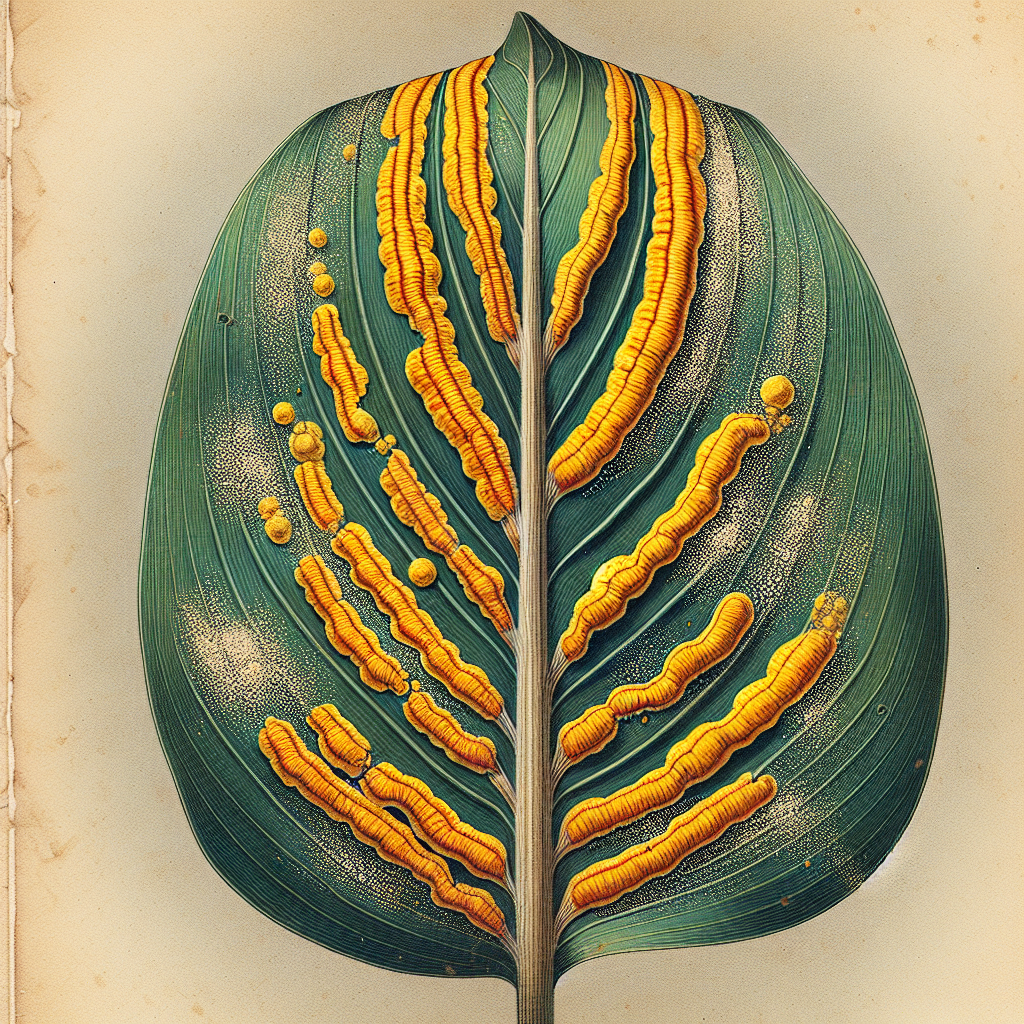
Introduction to Stripe Rust
Stripe rust, also known as yellow rust, is one of the most destructive fungal diseases impacting cereal crops globally. Caused by the obligate parasitic fungus Puccinia striiformis f. sp. tritici (Pst), it primarily targets wheat but also affects barley, triticale, and occasionally rye. First identified in the early 20th century, stripe rust has evolved rapidly, with new aggressive races emerging frequently, making it a persistent threat to food security. In major wheat-producing regions like the Pacific Northwest of the US, Europe, China, and Australia, epidemics can cause yield losses of 10-70% or more under favorable conditions.
The disease thrives in cool, moist environments, spreading via airborne urediniospores that can travel thousands of miles on wind currents. Unlike some rusts, Pst does not require an alternate host, completing its lifecycle on wheat. This guide provides professional-grade diagnostic criteria, lifecycle insights, and integrated management strategies tailored for farmers, agronomists, and crop consultants. Early detection and proactive measures are critical, as stripe rust can reduce photosynthesis, weaken stems, and shrivel grains. For small-scale and commercial operations alike, understanding stripe rust empowers sustainable production. Recent studies from the USDA and CIMMYT emphasize the role of gene deployment and forecasting models in minimizing outbreaks. Learn how to identify symptoms early and implement organic controls to protect your yields.
Identifying Symptoms & Damage
Accurate diagnosis begins with recognizing the hallmark signs of stripe rust, distinguishing it from look-alikes like leaf rust or septoria leaf spot. Initial symptoms appear 7-14 days after infection as small, yellow flecks on upper leaf surfaces, primarily on younger leaves. These develop into elongated, bright yellow-orange pustules (uredinia) arranged in linear 'stripes' parallel to the leaf veins, hence the name. Pustules are powdery when mature, rupturing to release infectious urediniospores that appear as a yellowish dust when rubbed.
As the disease progresses, stripes expand to 1-2 cm long, often surrounded by chlorotic (yellowing) halos. Severe infections cause leaf necrosis, premature drying, and flag leaf damage, critical for grain fill. On stems and glumes, pustules may appear less striate. Yield impacts are profound: 1% flag leaf infection can reduce yields by 1-2 bushels per acre; 50% infection often slashes yields by 40%. Secondary effects include increased lodging and reduced test weight.
Differential diagnosis is essential. Unlike stem rust, stripe rust pustules are smaller, yellower, and leaf-confined. Powdery mildew produces white, felt-like growth without pustules. Use a 10x hand lens to confirm uredinia morphology. Field scouting at tillering to booting stages (Feekes 3-10) is vital; sample 20-50 tillers per 10 acres in a W-pattern. For confirmation, submit samples to local extension services for PCR testing. Damage thresholds: Apply controls when 1-5% severity on flag leaves pre-heading. Proactive scouting prevents wheat crop failure.
Lifecycle and Progression of Stripe Rust
Puccinia striiformis f. sp. tritici is a macrocyclic rust with a complex lifecycle adapted for epidemic spread. It overwinters as dormant mycelium or urediniospores on volunteer wheat, winter cereals, or alternate grass hosts like wild barley. In spring, under cool (45-65°F) moist conditions (>8 hours leaf wetness), urediniospores germinate, penetrate stomata, and produce pustules within 10-14 days. Each pustule releases 10,000-100,000 spores daily for 3-4 weeks, enabling polycyclic epidemics.
The asexual uredinial stage drives outbreaks, with 10-20 infection cycles per season. Teliospores (two-celled, thick-walled) form late-season on senescing tissues, germinating to produce basidiospores for primary inoculum on barberry (alternate host, rare in many regions). Aecia on barberry release aeciospores infecting grasses. However, in modern agriculture, urediniospores from distant regions initiate epidemics, as seen in the 2011 US outbreak from Central Asia.
Progression follows a logistic curve: slow build-up, rapid exponential spread during flowering, then decline. Latency period shortens from 14 days at 50°F to 7 days at 60°F. Optimal temperature: 55-65°F; >75°F inhibits. High humidity (>90% RH) and dew favor infection. Understanding this informs prevention strategies. For detailed insights, check this comprehensive guide on wheat disease management.
Environmental Triggers & Risk Factors
Stripe rust epidemics require the classic disease triangle: susceptible host, virulent pathogen, and conducive environment. Key triggers include cool, wet springs (50-65°F, >10 hours leaf wetness nightly), common in maritime climates. Wind-blown spores from overwintering 'green bridges' (volunteers, early-planted wheat) amplify risk. High nitrogen fertilization promotes lush foliage ideal for spore germination, increasing susceptibility.
Risk factors: Susceptible cultivars like older wheat varieties (e.g., soft white classes); dense canopies from narrow rows or high seeding rates trap moisture; continuous cereal rotations without breaks. Global warming shifts overwintering northward, extending the 'Rust Belt'. Regional forecasts from USDA's WheatSC and EuroWheat integrate weather, race surveys, and remote sensing for 75% accuracy. Volunteer barley or rye heightens local inoculum. Monitor via apps; risk >50% warrants fungicide readiness. Avoid over-irrigation in pivot systems.
Organic Control & Treatment Plans
Organic management integrates cultural, biological, and approved fungicides. Start with resistant varieties (Yr genes like Yr27, Yr36); rotate with non-hosts like corn or soybeans. Eliminate green bridges by tillage or herbicides pre-planting. Enhance airflow via wider rows (7.5-10 inches), lower seeding rates (1-1.5M seeds/acre), and pruning lower leaves.
Biologicals: Apply compost teas or Trichoderma spp. at tillering to antagonize mycelium. OMRI-listed copper (e.g., Cueva) or sulfur at 5-7 gal/acre pre-boot provides 70% control; rotate to prevent resistance. Bacillus subtilis (Serenade) suppresses via induced resistance. Timing: Flag leaf emergence (Feekes 8-9). Scout weekly; treat at 1% severity. Silicate fertilizers (potassium silicate) bolster cell walls. For outbreaks, stripe-rust-specific biopesticides like Regalia (extract of Reynoutria sachalinensis) offer systemic acquired resistance. Integrate with rusts management; yields recover 20-30% with timely action.
Preventing Stripe Rust in the Future
Long-term prevention hinges on IPM: Deploy stacked Yr-gene varieties (e.g., UI Magic, Otto), monitored via regional bulletins. Diversify rotations: 50% non-cereals every 3 years cuts inoculum 80%. Clean equipment/seed (hot water treatment at 122°F for 25 min). Eradicate volunteers post-harvest. Foliar nutrition (Mn, Zn) at tillering reduces susceptibility 25%. Use predictive models for fungicide timing, saving 30% inputs. Regional efforts like Washington's Wheat Commission fund race surveys. Future breeding focuses on durable Yr15/Yr46. For small farms, soil health strategies build resilience against diseases like stripe rust.
Crops Most Affected by Stripe Rust
Wheat dominates losses, with wheat varieties like hard red winter (hard red winter wheat), durum (durum wheat), and soft white highly vulnerable. Barley (two-row/six-row) suffers 10-50% losses, especially in cool highlands. Triticale and rye face similar threats. Minor hosts: Wild grasses, quinoa, oats (rare). Global impact: 5-10M tons annual wheat loss. Susceptibility varies; Aegilops cylindrica acts as bridge host.