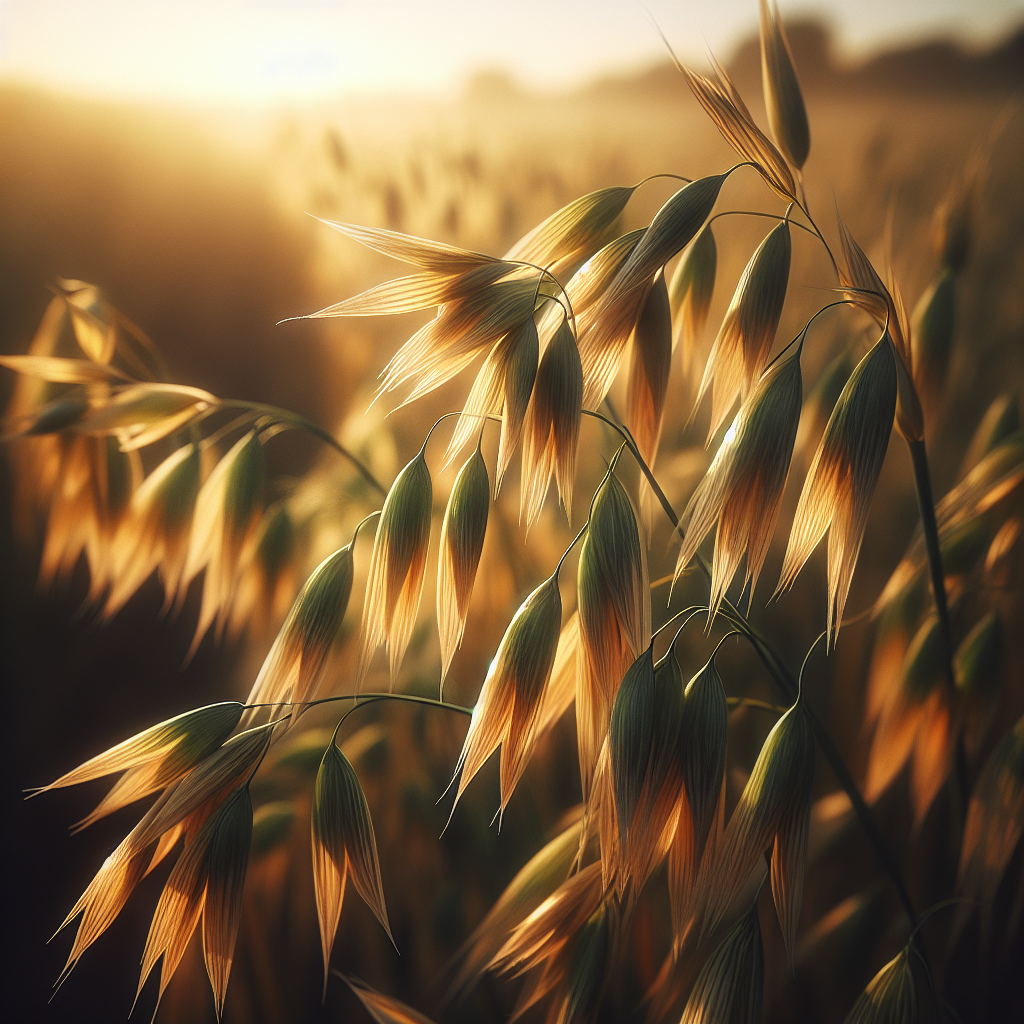
Introduction to Oats
A cornerstone cereal of temperate agriculture, oats have been cultivated for centuries for human food, livestock feed, hay, silage, green manure, and straw. Compared with some other small grains, oats are often considered more forgiving in cool, moist conditions and can succeed where summers are mild and soils are reasonably fertile. Their grains are widely used for rolled oats, oat flour, porridge, breakfast cereals, and specialty products, while the crop itself is valued by farmers for rapid early growth, strong ground cover, and the ability to fit well into diverse crop rotations.
Historically, oats likely rose to prominence later than wheat and barley, initially behaving as a volunteer or secondary cereal in older grain systems before becoming an important crop in their own right. They became especially significant in northern Europe and other cool regions where their tolerance of lower temperatures and moist weather gave them an advantage. Modern oats remain agronomically relevant not only as a food crop but also as a soil-improving species, often used to reduce erosion, scavenge residual nutrients, and add organic matter. For growers comparing cereals, see Wheat.
Commercially, oats are grown either as spring oats or winter oats, depending on climate. Spring oats are the more common type in colder regions with severe winters, while winter oats are grown where winters are mild enough for survival. The crop matures relatively quickly, making it useful as a short-season grain or a catch crop. Oats are also notable for their nutritional profile: the grain contains soluble fiber, especially beta-glucans, and relatively high oil content compared with many cereals. From the field perspective, however, the keys to success are timely planting, moderate nitrogen management, careful lodging prevention, and harvesting at the correct grain moisture.
Botanical Profile of Oats
Oats belong to the grass family, Poaceae, and are most commonly cultivated as Avena sativa. The plant is an annual cereal grass with a fibrous root system, hollow culms, narrow leaves, and a distinctive loose panicle rather than a dense spike. This open, branched seed head is one of the easiest visual features distinguishing oats from wheat, rye, or barley. Spikelets typically contain two or more florets, and mature grains remain enclosed in hulls in many common oat types, although hull-less cultivars also exist.
Morphologically, oat seedlings emerge with a single shoot and then begin tillering, producing additional stems from the plant base. Productive tiller formation is strongly influenced by early planting, moisture, nitrogen availability, and stand density. Plants generally range from about 60 to 150 cm tall depending on cultivar, fertility, planting date, and whether they are being grown for grain, forage, or dual-purpose use. Leaves are usually bluish green to medium green, with rough margins and a membranous ligule typical of grasses.
The growth stages of oats follow the standard cereal progression: germination, emergence, tillering, stem elongation, booting, panicle emergence, flowering, grain fill, and ripening. Oats are largely self-pollinating, though some cross-pollination can occur at low levels. Flowering usually proceeds from the top of the panicle downward and from outer branches inward. This staggered flowering pattern partly explains why panicles may not mature perfectly uniformly.
Botanically and agronomically, cultivar selection matters. Grain oat varieties are bred for kernel quality, test weight, lodging resistance, disease resistance, and maturity timing. Forage oat cultivars may prioritize biomass, leafiness, and rapid regrowth or seasonal growth. Hull-less oats can offer processing advantages but may be more delicate in handling or lower yielding in some systems. White oats, yellow oats, and black oats may differ in adaptation and end use; black oats are often used more heavily as forage or cover crop in some regions. Awns, straw strength, and Crown Rust resistance are also significant varietal traits. In professional production, matching the cultivar to local disease pressure, day length, seasonal heat, and intended market is often more important than simply choosing the highest-yielding variety from another region.
Soil, pH, and Climate Requirements for Oats
Oats perform best in cool, temperate conditions and generally prefer more moisture than many other cereals, though they do not tolerate waterlogging well. Ideal growing temperatures are usually in the range of 15-25°C during vegetative growth. Germination can begin at low soil temperatures, often around 4-5°C, but emergence is quicker and more uniform when soils are closer to 10-20°C. High temperatures during flowering and grain fill can sharply reduce yield and grain quality, particularly if combined with drought. Once daytime temperatures repeatedly exceed about 30°C during reproductive stages, stress effects become more likely: shortened grain fill, lighter kernels, lower test weight, and accelerated maturity.
The crop is best suited to regions with cool springs, moderate summer conditions, or mild winters in winter-oat zones. Spring oats are especially effective in areas where planting can occur early and the crop can complete grain fill before intense summer heat. Winter oats require enough cold tolerance for local winter lows but are generally less hardy than winter rye and often less hardy than winter wheat.
Soil texture preferences lean toward fertile loams, silt loams, and clay loams with good water-holding capacity and sound drainage. Oats can perform better than some cereals on slightly acidic soils, making them a useful option where pH is not ideal for other grains. A practical pH range is about 5.5-7.5, with 6.0-7.0 often optimal for nutrient availability and root activity. They can tolerate acidity somewhat better than barley, but strongly acidic soils below about pH 5.2 may limit root growth, phosphorus availability, and overall vigor. In alkaline soils above about pH 7.8, micronutrient imbalances may appear and structure-related drainage issues can become more significant depending on the soil type.
Good drainage is critical. Oats like consistent moisture, but saturated soils reduce root oxygen, increase seedling disease risk, and encourage shallow rooting. The best seedbeds are firm, level, and free from deep clods. The top 5-8 cm should be fine enough for good seed-soil contact, while the profile below should remain structured and porous. Compaction in the upper rooting zone can stunt tillering and reduce resilience in dry spells.
Water demand varies by environment and season, but oats commonly need approximately 350-500 mm of available water over the crop cycle for dependable grain production. Moisture is most important from early tillering through grain fill. During establishment, the seed zone should be evenly moist but not sticky or airless. A useful field rule is that soil in the top few centimeters should hold together when squeezed but crumble easily rather than smear. Overwatered stands often show pale lower leaves, sluggish growth, increased root disease, or patchy yellowing in low spots. Underwatered stands may exhibit reduced tillering, bluish-gray foliage, midday leaf rolling, shortened plants, and rapid senescence after heading.
Where rotation planning matters, oats fit well after legumes or manured crops because they respond to residual fertility while benefiting from lower disease carryover than continuous cereals. Their role in soil improvement is discussed broadly in soil health strategies.
Step-by-Step Planting & Propagation
Oats are propagated by seed and are almost always direct-sown. Transplanting is not practical for field production and is rarely justified even in small-scale systems. Seed quality has an outsized effect on stand establishment, so use clean, high-germination seed with known varietal identity and, where appropriate, seed treatment compliant with your production philosophy.
Select the right planting window. For spring oats, sow as early as the soil can be worked without compaction. Early planting usually improves tillering, extends grain-fill duration, and helps the crop avoid hot weather during reproduction. In many temperate regions, this means late winter to early spring. For winter oats, sow in autumn early enough to establish several leaves and a modest root system before hard freezing, but not so early that excessive lush growth increases disease or winter injury.
Prepare a firm seedbed. Oat seed is medium-sized and benefits from shallow, uniform placement. Whether using conventional tillage or reduced tillage, the objective is the same: good seed-soil contact, minimal air pockets, and an even surface for consistent depth. In no-till systems, residue should be distributed evenly to avoid hair-pinning and erratic emergence.
Test soil and correct major deficiencies. Base nutrient applications on a soil test. Oats often respond well to nitrogen, but overapplication increases lodging risk and can reduce grain quality. Phosphorus is particularly important in cool soils for early root growth. Potassium supports stalk strength and stress tolerance.
Calibrate seeding rate. Typical grain production seeding rates range from about 65-120 kg/ha depending on seed size, germination percentage, planting date, and moisture conditions. A target of 250-350 established plants per square meter is common for grain systems, with higher populations often used for late sowing or weed suppression. For forage or cover cropping, rates may be increased for denser canopy development.
Seed at the proper depth. Ideal seeding depth is usually 2-4 cm. In heavier or cooler soils, lean toward the shallower end if moisture is present. In lighter soils or where the surface is drying, seed slightly deeper, but avoid burying seed so deeply that emergence is delayed and weakened. Uneven depth is a major cause of staggered stands.
Use proper row spacing. Standard drill spacing of 15-20 cm is common for grain oats. Narrow rows generally improve canopy closure and weed suppression. Wider rows may be used in specialized systems but often sacrifice some competitiveness.
Roll if needed. In stony soils or rough seedbeds, rolling after sowing can improve seed-soil contact and make later harvest easier. Do not roll wet clay soils into a crust-prone condition.
Monitor emergence. Under favorable moisture and temperature, seedlings often emerge within 5-10 days. Poor emergence usually points to crusting, planting too deep, seed rot, cold saturated soil, or pest damage.
For mixed farming systems, oats may also be sown with peas, vetch, or other annual legumes for forage or green manure. In such cases, seeding rates are adjusted downward to avoid excessive competition and lodging.
Care & Maintenance regimes for Oats
Once established, oats benefit most from disciplined management rather than constant intervention. The crop’s strongest performance comes from balancing fertility, moisture, stand density, and canopy health.
Nitrogen management should be precise. Total nitrogen needs vary widely with expected yield, previous crop, soil organic matter, and rainfall pattern, but grain oats commonly receive around 40-90 kg N/ha in moderate-input systems. After legumes or heavily manured fields, lower rates are usually sufficient. Excess nitrogen can produce lush, dark-green growth that looks impressive early but raises the likelihood of lodging, delays maturity, and can worsen some foliar diseases. A sound professional strategy is to place a moderate amount at planting, especially in low-residual-N soils, and top-dress only if the stand is promising and moisture outlook supports yield potential.
Phosphorus and potassium should be supplied according to soil test. Deficient phosphorus often shows up in slow early growth and weak rooting, especially in cold soils. Potassium deficiency may contribute to reduced stalk strength and poorer drought tolerance. Sulfur may be limiting in low-organic-matter or sandy soils and can improve protein synthesis and vigor where deficient.
Water management depends on whether the crop is rainfed or irrigated. In dryland systems, conserve soil moisture through early planting, residue retention, and weed control. In irrigated systems, the most critical periods are establishment, tillering, stem elongation, heading, and grain fill. Avoid frequent shallow irrigation that keeps roots near the surface. Instead, aim for deeper wetting cycles that recharge the active rooting zone while allowing the surface to aerate between events. A practical target is to maintain moderate moisture in the top 30-60 cm of soil through stem elongation and grain fill. If the upper profile remains constantly saturated, expect greater disease pressure and weaker roots. If the profile dries severely at booting or heading, panicle size and kernel number may be reduced.
Weed management is especially important during establishment and early tillering. Oats are competitive once they canopy well, but a slow or thin stand can lose significant yield to early weed pressure. Clean seed, rotation, stale seedbed techniques, and competitive seeding rates are the main cultural tools. Mechanical control is more feasible in wider-row or organic systems before the crop becomes too large. After canopy closure, the crop often suppresses later germinating weeds effectively.
Lodging prevention deserves attention in fertile soils or high-rainfall areas. Lodging occurs when stems bend or collapse before harvest, complicating combining and reducing grain quality. It is favored by excessive nitrogen, dense lush canopies, storms, and weak straw varieties. Prevent it by selecting shorter, stronger-strawed cultivars, avoiding heavy late nitrogen, maintaining balanced potassium, and not over-irrigating during stem elongation.
Growth monitoring should include weekly checks of stand uniformity, tiller counts, canopy color, lower stem strength, disease lesions, and soil moisture. Pale green crops may indicate nitrogen shortage, root restriction, or waterlogging. Purpling or poor early vigor suggests phosphorus stress. Patchy height differences may trace back to seed depth, compaction, or uneven fertility. Professional growers intervene based on the cause, not just the symptom.
Pests, Diseases & Organic Management
Oats are comparatively resilient, but they are not pest- or disease-free. The most important problems vary by region, cultivar, planting date, and weather.
Among diseases, Crown Rust is one of the most economically significant in many oat-growing areas. It appears as orange to yellow-orange pustules, mainly on leaves, and can spread rapidly under warm, humid conditions. Severe infection reduces photosynthetic area, shrinks kernels, and lowers test weight. Stem Rust can also occur, causing elongated reddish-brown pustules on stems and leaf sheaths. Leaf blotches, including Septoria and Helminthosporium-type diseases, may produce elongated necrotic lesions and premature leaf death. Powdery Mildew can develop in cool, humid, dense canopies, especially where airflow is poor. Loose Smut and Covered Smut, both seed-borne fungal diseases, can deform or replace grain structures and are best prevented through clean seed and seed treatment. Root and Crown Rots are more likely in poorly drained soils or tight cereal rotations.
Organic and low-input disease management starts with resistant cultivars. This is the single most effective nonchemical tool against rusts and many foliar pathogens. Next, rotate away from oats and other cereals for at least one season, and preferably longer where disease pressure is chronic. Avoid excessive nitrogen that creates lush, susceptible tissue. Promote airflow with appropriate seeding rates rather than over-thick stands in humid climates. Destroy volunteer cereals and grassy hosts that can bridge disease cycles.
Insect pests may include Aphids, Armyworms, Cutworms, Wireworms, and occasionally Cereal Leaf Beetle depending on region. Aphids damage plants directly by sap feeding and indirectly by vectoring viral diseases such as Barley Yellow Dwarf Virus. Early symptoms of virus infection include yellowing or reddening, stunting, and patchy growth. Armyworms and Cutworms can defoliate stands or clip seedlings, particularly in fields following grassy cover or sod. Wireworms attack germinating seeds and roots, causing gaps in emergence.
Organic pest management relies on prevention and field scouting. Use crop rotation, avoid planting oats immediately after grassy sod where Wireworms and Cutworms are favored, and encourage beneficial insects through field margins and biodiversity. Monitor from emergence onward, especially at edges and in lush areas. Light infestations of Aphids may be tolerated if natural predators such as lady beetles, lacewings, hoverflies, and parasitic wasps are active. Severe infestations are less common in balanced agroecosystems but should still be tracked closely.
Bird feeding on maturing grain can be localized but serious, especially in small plots. Deer may browse lush autumn or spring oat stands, particularly where oats are used as forage or wildlife plantings. In such systems, physical exclusion or strategic field placement may be required.
The general organic rule for oat health is to treat the crop as part of a rotation ecology rather than as an isolated plant. Good drainage, resistant seed, clean establishment, moderate fertility, and diverse rotations solve more problems than rescue treatments.
Harvesting, Curing & Optimal Storage
Harvest timing depends on intended use. For forage, oats may be cut from the boot stage through the milk or soft dough stage, depending on the desired balance between feed quality and tonnage. For grain, harvest generally begins when kernels are fully formed, panicles have turned golden or straw-colored, and grain moisture has dropped to around 18-20% for combining, followed by drying, or closer to 13-14% for safer direct storage depending on local conditions and aeration capacity.
A key sign of maturity is that the kernels in most spikelets are firm and no longer exude a milky fluid when pressed. Straw begins losing green color, and the pedicels and panicle branches dry down. Because oat panicles can mature somewhat unevenly, growers often balance the risk of harvesting too early against the risk of shattering, lodging, or weather damage if they wait too long.
In mechanized systems, combining should be done carefully to minimize dehulling and kernel damage. Cylinder or rotor settings that are too aggressive can crack grain or strip hulls, reducing quality. Concave clearance and fan speed should be adjusted to local conditions, cultivar, and moisture. Lodged oats require slower ground speed and careful header setup. In small-scale systems, hand harvest is possible by cutting panicles or whole plants and bundling them to dry before threshing.
If grain is harvested above safe storage moisture, prompt drying is essential. Drying temperatures must be managed carefully to preserve milling quality and seed viability if the grain is intended for planting. For storage, 12-13% moisture is a widely accepted target for medium-term grain storage, while even lower moisture may be preferred in warm climates or long storage periods. Grain stored too wet is vulnerable to mold, heating, caking, insect activity, and quality loss.
Store oats in clean, dry bins or sealed containers protected from rodents, birds, and moisture ingress. Aeration is valuable in larger storage systems to equalize temperature and prevent condensation. Grain should smell fresh and slightly sweet; musty or sour odors suggest spoilage. Monitor stored grain regularly for hot spots, insect presence, and moisture migration. Oats are bulkier and often lower in test weight than some cereals, so storage planning should account for volume as well as weight.
Straw is also a useful byproduct. Oat straw is generally softer and more palatable than some other cereal straws, making it useful as bedding and sometimes feed roughage when harvested appropriately. Straw intended for bedding should be dry, bright, and free from heavy mold contamination.
Companion Planting for Oats
In broadacre agriculture, companion planting with oats is usually better understood as intercropping, nurse-cropping, or rotational association rather than classic garden-style companion planting. Oats are especially valuable as a nurse crop because they establish quickly, shade soil, reduce erosion, and suppress many annual weeds. They are commonly paired with legumes such as peas, vetch, berseem clover, crimson clover, or alfalfa in forage, green manure, or underseeding systems.
When used with legumes, oats provide upright structure and early biomass while the legume contributes nitrogen fixation and protein-rich forage. The balance matters: too much oat seed can suppress the companion legume through shading and root competition. For underseeded forage or green manure, reduce the oat seeding rate compared with a pure stand so the companion has enough light after early establishment. Timing is also important; in cool climates, simultaneous sowing works well, while in some systems the legume is broadcast later into a lightly established oat stand.
Oats also function well before or after row crops because they interrupt pest cycles, mop up residual nitrogen, and leave a friable residue that is relatively easy to manage. They are an excellent rotational partner ahead of potatoes, soybeans, and many vegetable crops where soil structure and weed suppression are priorities. As a fall cover crop, oats are often used alone or with radish and peas. In colder climates, they winter-kill, leaving a mulch that is easier to plant into than residues of overwintering cereals.
In market gardens, oats can be used as a living mulch or fast cover between vegetable successions, though they must be managed before they set mature seed if volunteer plants are undesirable. They pair particularly well with field peas in spring forage mixes and with clovers in soil-building systems. Avoid combining oats too densely with other grasses where competition becomes excessive and disease humidity increases.
The most effective companionship principle for oats is functional compatibility: pair them with crops that benefit from rapid early cover, nitrogen capture, structural support, or rotation-based disease breaks. Used this way, oats are not just a cereal grain but a versatile management tool in resilient farming systems.