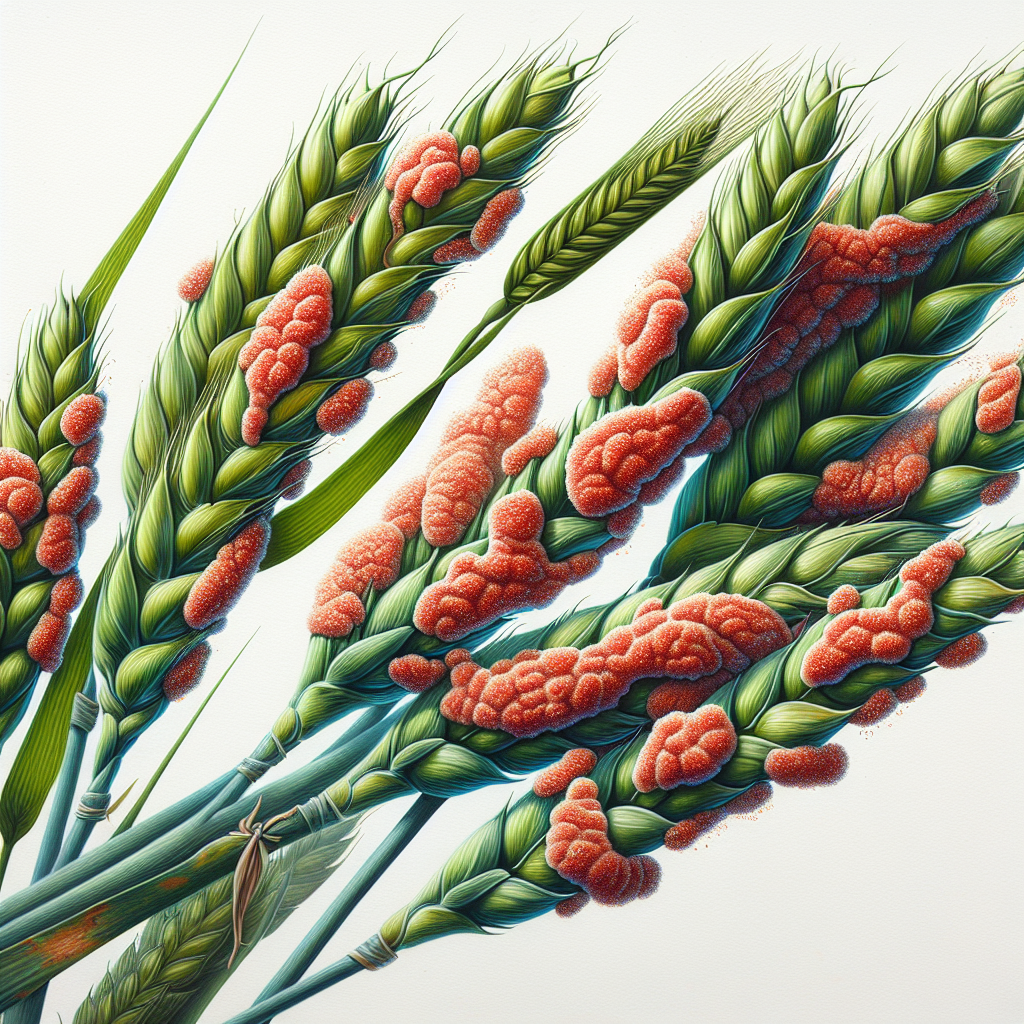
Introduction to Stem Rust
Stem rust, scientifically known as Puccinia graminis, stands as one of the most notorious fungal diseases in global agriculture, capable of decimating cereal crops and threatening food security. This obligate parasite thrives on grasses, particularly wheat, barley, and oats, producing distinctive brick-red pustules that erupt from plant tissues. Historically, stem rust epidemics, such as the 1916 outbreak in the US that destroyed 300 million bushels of wheat or the Ug99 race emergence in 1999, underscore its destructive potential, causing billions in economic losses worldwide.
The pathogen's polycyclic lifecycle enables multiple infection cycles per season, amplifying damage rapidly under favorable conditions. Farmers must prioritize early detection and integrated management to mitigate its impact. This guide provides comprehensive diagnostic tools, lifecycle insights, organic control strategies, and prevention tactics tailored for small-scale and commercial growers. Understanding stem rust empowers proactive defense, safeguarding yields and sustainability. For deeper insights into related cereal pathogens, explore Stripe Rust, a cooler-weather rust variant often co-occurring with stem rust.
Identifying Symptoms & Damage
Accurate identification is crucial for timely intervention. Stem rust begins with small, yellow flecks on upper leaf surfaces, evolving into raised, brick-red pustules filled with urediniospores—the pathogen's primary dispersal units. These pustules appear linearly on stems, leaf sheaths, and glumes, often rupturing to release powdery spores that stain fingers and clothing reddish-brown.
Key Diagnostic Features:
- Uredinia Stage: Oval to elongated, 1-3 mm long pustules predominantly on stems (hence the name), but also on leaves and heads. Unlike leaf rust, stem rust favors stems.
- Aecia Stage: On alternate hosts like barberry, small, cup-shaped structures with orange aeciospores.
- Telial Stage: Dark brown, elongated telia forming later in the season.
Damage escalates as pustules coalesce, weakening stems and causing lodging—plants toppling under wind or their own weight. Photosynthesis is impaired by leaf coverage, reducing grain fill by 10-100% depending on infection timing. Early infections (before flag leaf) yield the worst losses; late-season attacks shrivel heads and lighten kernels. Differentiate from common rust on corn, which produces larger, circular pustules on both leaf sides. Severity ratings use the Modified Cobb Scale: 0% (none) to 100% (all surfaces covered).
Microscopic confirmation reveals dikaryotic urediniospores (20-30 µm, echinulate walls). Yield impacts: 1% severity at heading equals 1.3 quintals/ha loss in wheat. Scouting tip: Check lower stems first, as symptoms migrate upward.
Lifecycle and Progression of Stem Rust
Puccinia graminis exhibits a complex, heteroecious lifecycle requiring two hosts: cereals (telial host) and barberry (Berberis vulgaris) or mahonia (aecial host). Five spore stages drive its epidemiology:
- Teliospores (Overwintering): Black, two-celled spores on infected stubble germinate in spring, producing basidiospores (4 per teliospore).
- Basidiospores: Infect barberry leaves, forming pycnia (flask-like spermogonia) and receptive hyphae for sexual recombination.
- Aeciospores: Orange, chain-like spores erupt from barberry aecia, wind-dispersed up to 50 km to cereal seedlings.
- Urediniospores (Summer Cycle): Primary epidemic drivers; produced in profusion (up to 100,000/lesion), airborne up to 100 km, repeating every 7-14 days at 15-30°C.
- Teliospores: Form late-season, overwintering to complete the cycle.
Without barberry, urediniospores overwinter on volunteer wheat or ryegrass. Progression: Incubation 4-6 days; latent period 5-8 days. A single aeciospore can spawn millions via clonal uredinial cycles. Races like Ug99 (TTKSK) overcame Sr31 resistance, highlighting virulence evolution. Lifecycle disruption targets barberry eradication and spore-trapping.
Environmental Triggers & Risk Factors
Optimal conditions accelerate epidemics: 15-35°C daytime, 10-20°C nights, leaf wetness >8 hours, high humidity (>90% RH). Free moisture from dew or rain is essential for urediniospore germination (90% at 20°C). Wind disperses spores regionally; thunderstorms loft them stratosphere-high for continent-scale travel.
Risk Factors:
- Susceptible Varieties: Lacking Sr genes (e.g., Sr5, Sr24).
- Dense Plantings: High humidity, rapid canopy closure.
- Volunteer Hosts: Self-sown wheat, barley, or rye.
- Alternate Hosts: Barberry within 5 km.
- Nitrogen Excess: Lush growth favors infection.
- Irrigation/Mulch: Prolonged leaf wetness.
Thresholds: 1% severity at tillering warrants action. Climate change expands ranges, with models predicting Ug99 spread to Australia by 2025. Monitor via Rusts networks.
Organic Control & Treatment Plans
Organic management integrates cultural, biological, and approved inputs. No cure exists; focus on suppression. For more on organic strategies, check this Fall Companion Planting Guide.
Immediate Response: Remove/destroy infected plants; rogue volunteers.
Cultural Controls:
- Rotate 2-3 years away from cereals.
- Eradicate barberry (legal in many regions).
- Space rows 30 cm for airflow.
- Irrigate early morning; avoid overhead.
Biologicals:
- Trichoderma spp. or Pseudomonas fluorescens as seed treatments (reduce uredinial germination 40-60%).
- Compost teas with Bacillus subtilis for induced resistance.
Organic Fungicides:
- Potassium bicarbonate (2-5 kg/ha, 7-day intervals): disrupts spore walls.
- Sulfur (3-5 kg/ha): multi-site protectant.
- Copper octanoate (OMRI-approved, 1-2 L/ha): early-season.
- Plant extracts: Neem oil or garlic-chili sprays deter sporulation.
Timing: Scout weekly from jointing; apply at 1% severity. Rotate modes-of-action. Efficacy: 50-70% under low pressure. Integrate with resistant varieties like those carrying SrTmp.
Preventing Stem Rust in the Future
Long-term prevention hinges on resistance breeding and IPM.
Resistant Varieties: Deploy gene stacks (Sr9, Sr17, Sr27); pyramid with adult-plant resistance (APR). Newer cultivars like 'Kranz' resist Ug99.
Crop Management:
- Clean seed (hot water treat 52°C/10 min).
- Destroy residue; till deeply.
- Stubble mulch sparingly.
- Foliar nitrogen split-applied.
Monitoring: Use sentinel plots, weather-based models (e.g., Smith-Dunn thresholds). Apps forecast risk via temperature-humidity indices.
Regional Strategies: Quarantine new races; collaborate via GRDC or CIMMYT. Future: Gene editing for broad-spectrum R-genes. Aim for <5% incidence via vigilance.
Crops Most Affected by Stem Rust
Primarily cool-season grasses:
- Wheat (Triticum aestivum): Worst hit; 50+ races.
- Barley (Hordeum vulgare): Variable resistance.
- Oats (Avena sativa): Crown rust more common, but stem rust severe.
- Rye (Secale cereale), triticale.
- Wild Grasses: Quackgrass, brome as reservoirs.
Minor: Sorghum, timothy. Barberry essential for sexual cycle. Global hotspots: East Africa (Ug99), US Great Plains, India-Pakistan. Diversify with quinoa or sorghum in rotations.