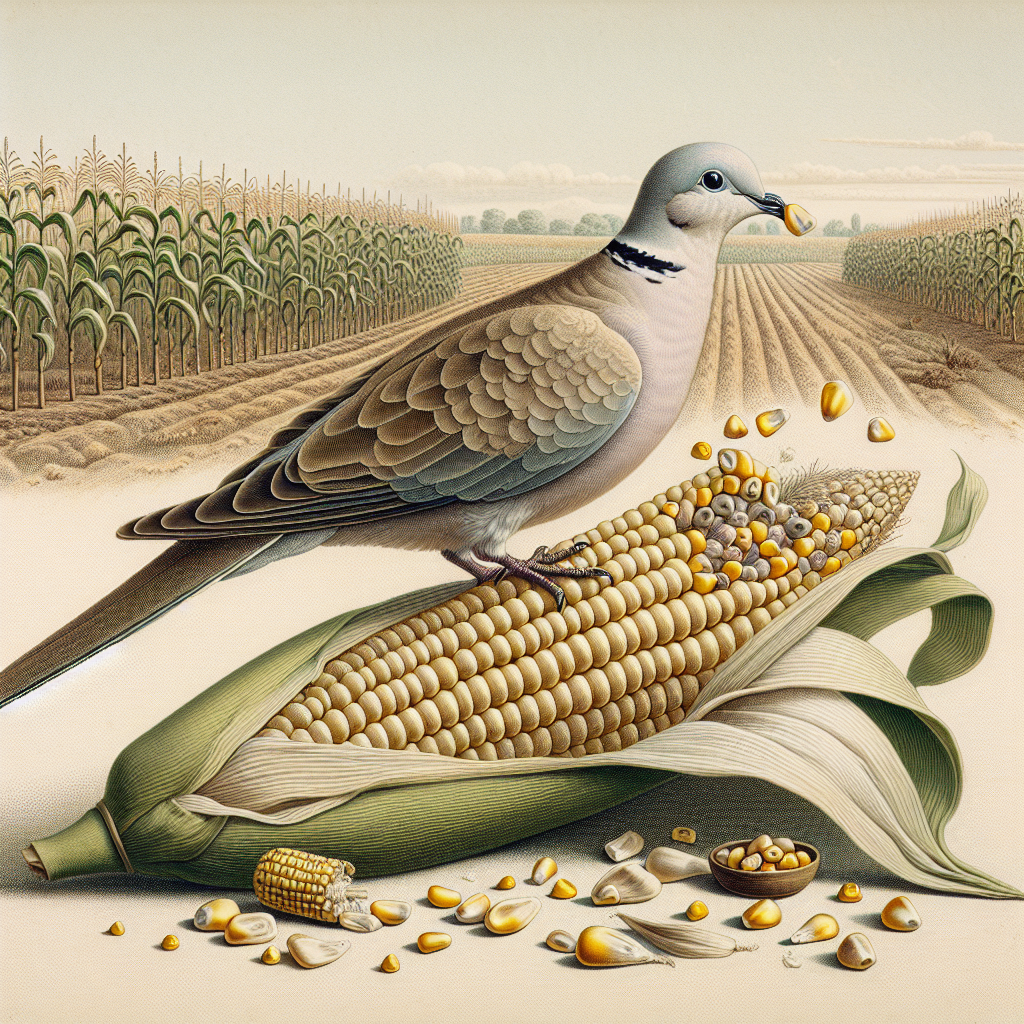
Introduction to Doves
Doves represent a major challenge for farmers worldwide, particularly in grain-producing regions. Species such as the Eurasian Collared Dove and mourning dove (Zenaida macroura) have adapted remarkably to human-altered landscapes, thriving in agricultural settings. These birds are prolific feeders, targeting seeds, cereal grains, and maturing fruits with relentless efficiency. A single flock can strip a field bare in days, leading to yield losses of 20-50% in untreated areas. Their rapid reproduction—up to 6 clutches per year with 2 eggs each—exacerbates infestations, making early intervention critical. This guide provides professional-grade diagnostics, lifecycle insights, and proven management strategies tailored for small to medium-scale operations. Understanding dove behavior is key: they prefer open fields for foraging but nest in sheltered trees or structures nearby. For comprehensive bird pest strategies, see our Spring Pest Patrol: Organic AI Strategies to Shield Your Crops from Common Invaders. Economic impacts are stark; in the U.S. alone, dove-related losses exceed $50 million annually in corn, wheat, and rice crops. Proactive management not only protects yields but also complies with wildlife regulations, balancing agricultural needs with ecological considerations.
Identifying Symptoms & Damage
Dove damage manifests distinctly across crop stages. Early signs include scattered seed loss in freshly planted fields, visible as bare patches amid germinating rows. Seedlings appear nibbled, with cotyledons cleanly clipped. In grain crops like sorghum or millet, expect stripped panicles—husks remain, but grains are gone, leaving dusty residues from feeding. Fruits suffer pecking wounds: small, precise holes in berries or drupes, leading to rot entry points often compounded by fruit rots. Fecal droppings, white and abundant, signal roosting sites nearby, potentially spreading pathogens like salmonella to produce. Listen for cooing calls at dawn/dusk, and scout for feathers or footprints (three forward toes, one back). Differentiate from other birds like sparrows or finches: doves leave larger, cleaner pecks without webbing damage. Severity peaks post-planting (seeds) and pre-harvest (grains/fruits). Use scouting grids: count droppings per square meter (>10 indicates infestation). Pair with drone imagery for flock mapping. Damage thresholds: 5% seed loss warrants action; 15% demands immediate intervention. Document with photos for IPM records.
Lifecycle and Progression of Doves
Doves exhibit rapid, opportunistic lifecycles synchronized with crop cycles. Adults (20-30 cm, 100-200g) are year-round residents in mild climates, migrating short distances in colder zones. Breeding begins spring (Feb-Apr), peaking summer-fall to exploit harvests. Females lay 2 white eggs in flimsy twig nests (trees, ledges, silos) every 4-6 weeks; incubation 14 days by both parents. Chicks (squabs) fledge in 15 days, reaching maturity in 3-4 months—capable of breeding same season. Peak populations align with food abundance: post-rain seed flushes or ripening grains. Daily routine: forage dawn/midday, roost dusk. Flocks swell to 100+ birds, following scout individuals. Winter slowdown but no diapause; seeds sustain them. Generations overlap: 4-6 per year in tropics. Monitor via banding or eBird data for local patterns. Progression: eggs → nestlings (vulnerable to predators) → fledglings (join flocks) → breeders. Disrupt at nesting to curb numbers. Lifespan 1-5 years wild, longer in suburbs with feeders.
Environmental Triggers & Risk Factors
Doves thrive where food and shelter converge. Key triggers: open fields post-tillage expose seeds; irrigation creates soft soil for probing. Mild winters (>5°C avg) boost survival; drought concentrates flocks on irrigated crops. Proximity to urban edges provides roosts/nesting—within 5km spikes risk. Monocultures like vast wheat or corn fields invite invasions; edges lack barriers. Overripe or spilled grains post-harvest lure hordes. Companion pests like grasshoppers or army worms signal disturbed fields attracting doves. Climate shifts: warmer springs advance breeding 2-3 weeks. Poor sanitation (unharvested heads) sustains populations. Risk map: high in flatlands <500m elevation, low humidity. Assess via farm audit: % bare soil, roost trees, water sources. Mitigation starts pre-plant: till timing, residue management.
Organic Control & Treatment Plans
Organic dove control emphasizes exclusion, deterrence, and population pressure without harm (check local regs). Physical Barriers: Overhead netting (mesh 1-2cm) over fields—effective 95% on small plots (<5ha); bird-repellent tape (iridescent, noisy) flutters between rows. **Visual/Audio Deterrents:** Reflective balloons, pie tins, propane cannons (every 100m, random timing) disrupt feeding 70-80%. Falcons/hawks (live or kites) induce fear; rotate sites. **Habitat Modification:** Trim roost trees, plant dense hedges (e.g., clover borders) to block lines-of-sight. Mulch seeds deeply; use baffles on poles. **Repellents:** Capsaicin sprays on fruits (non-toxic, rainfast); methyl anthranilate (grape-like odor) on grains—apply pre-feeding. **Traps:** Live traps baited with millet, relocate >10km (permit req'd). Biological: Encourage predators—owls (nest boxes), kestrels (perches). Integrate with IPM: scout weekly, threshold 5 birds/ha. Treatment timeline: install barriers week 1 post-plant; rotate deterrents biweekly. Cost: $200-500/ha initial, ROI via 30% yield save. Avoid poisons—illegal/harmful to non-targets. Monitor efficacy: pre/post flock counts.
Preventing Doves in the Future
Long-term prevention builds resilient systems. Cultural Practices: Stagger planting; harvest promptly, incorporate residues. Sow under cover (plastic tunnels) first 2 weeks. Diversify: interplant grains with tall corn or sunflower barriers. Landscape Design: Wide buffer strips (10m+) of thorny shrubs (e.g., thyme, yarrow) deter landing. Eliminate off-farm attractants: secure silos, no ground feeders. Tech Integration: Motion-activated lasers/sprinklers; ultrasonic devices (mixed efficacy). Early warning: apps track migrations. Community Efforts: Coordinated scaring across farms amplifies effect. Annual audits: nest removal pre-spring. Seed coatings (bitter aviary gels) reduce appeal. Rotate crops away from high-risk grains yearly. Success metric: <2% loss sustained. Pair with broader pest plans targeting rodents or raccoons.
Crops Most Affected by Doves
Doves devastate seed/grain crops primarily. Top targets: rice (broadcast seedlings 50% loss), wheat (milk stage heads), corn (ear tips). Sorghum/millet panicles vanish overnight. Fruits: cherry, grapes, strawberry—pecked ripe berries rot fast. Legumes like peas, chickpeas seeds pulled. Vegetables: sunflower heads, lettuce seedlings. Orchards (apple, mango) suffer fruit damage. Quantify: rice 30-40% global losses in Asia; U.S. corn $20M/yr. Varieties matter: small-seed quinoa > large-kernel soybeans. Prioritize protection on these.