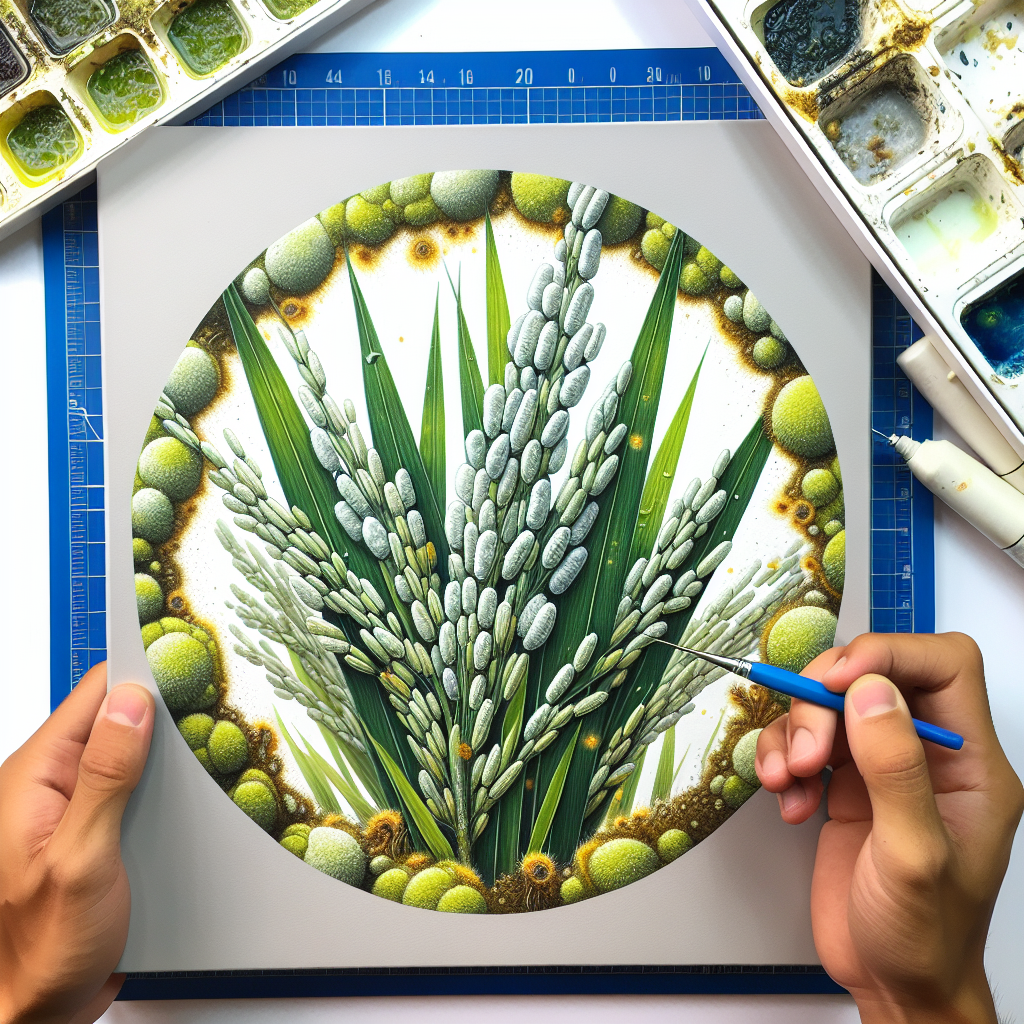
Introduction to bacterial blight
Bacterial blight represents one of the most destructive bacterial diseases affecting agricultural crops worldwide, particularly in warm, humid environments. Primarily caused by species of the Xanthomonas genus, such as Xanthomonas oryzae pv. oryzae (Xoo) in rice and Xanthomonas campestris pv. campestris (Xcc) in crucifers, this disease infiltrates plant tissues through natural openings or wounds, multiplying rapidly and blocking vascular systems. Farmers face yield reductions of up to 50% in severe outbreaks, making timely diagnosis and management essential for protecting harvests.
The pathogen thrives in tropical and subtropical regions, spreading via rain splash, irrigation water, wind-driven rain, and contaminated tools or seeds. Understanding bacterial blight's dynamics is critical for small-scale and commercial growers alike, as it targets high-value crops and can persist in crop residues. This comprehensive guide equips you with professional-grade diagnostic tools, organic treatments, and prevention strategies to minimize losses and sustain productivity. For more on rice cultivation challenges, explore our detailed wiki.
Identifying Symptoms & Damage
Accurate identification of bacterial blight is the cornerstone of effective management. Initial symptoms appear as small, water-soaked spots on leaves, typically 1-3 mm in diameter, often starting at leaf tips or margins. These lesions are angular, delimited by veins, and turn grayish-white with yellow halos as they expand, sometimes reaching several centimeters.
In rice, the hallmark is the 'Kresek' phase during tillering, where entire leaves wilt and turn grayish-white, resembling frost damage. Advanced stages show yellowish ooze from lesions during humid mornings, drying to form creamy beads. On crucifers like cabbage, V-shaped lesions form at leaf margins, progressing inward with black veins and rot. Stems may develop cankers with cracks and gum-like exudate, while fruits or grains show sunken, discolored spots.
Damage extends beyond aesthetics: vascular blockage causes wilting, stunted growth, and premature leaf drop. In rice, panicles become sterile or produce shriveled grains; in beans, pods develop dark lesions. Differentiate from fungal blights like early blight by the lack of concentric rings and presence of bacterial ooze—test by cutting lesions; bacterial ones smell foul and ooze when squeezed. Yield losses average 20-30% but can exceed 70% in epidemics. Early scouting during wet seasons prevents escalation.
Lifecycle and Progression of bacterial blight
The lifecycle of bacterial blight bacteria is tightly linked to environmental moisture and host availability. Xanthomonas survives as epiphytes on weed hosts, in soil, seeds, and plant debris for up to 6 months. Primary infection occurs via seed transmission (up to 70% in contaminated lots) or splashing rain carrying bacteria from residues into stomata or hydathodes.
Once inside, bacteria multiply in intercellular spaces, producing enzymes that dissolve cell walls, forming water-soaked lesions within 4-7 days at 25-30°C. Systemic spread through xylem vessels leads to wilting. Under high humidity (>90%), lesions expand rapidly; bacteria exude from lesions, forming bacterial masses that dry into crusts, serving as secondary inoculum.
The disease progresses in cycles: incubation (3-5 days), lesion expansion (1-2 weeks), and dispersal during rain events. Multiple cycles per season amplify damage. In rice, infection peaks at booting stage, causing panicle blight. Overwintering in residues restarts the cycle. Understanding this progression allows targeted interventions, like residue management post-harvest. Check our blog on Why Timing Kills Small Farm Profits - And How AI Task Scheduling Saves Your Harvests for timing optimization.
Environmental Triggers & Risk Factors
Bacterial blight epidemics are triggered by specific environmental conditions favoring bacterial multiplication and dispersal. Optimal temperatures of 25-30°C combined with relative humidity above 85% for 6+ hours daily create ideal infection windows. Frequent rain or overhead irrigation splashes bacteria onto foliage, while wind accelerates spread over fields.
Risk factors include susceptible varieties, dense planting (reducing airflow), excessive nitrogen fertilization (lush growth), and poor sanitation (contaminated tools, floodwater). Acidic soils (pH <6) and water stress predispose plants. In rice paddies, continuous flooding heightens risk via systemic movement. Crop rotation gaps with non-hosts like corn mitigate buildup.
Climate change intensifies outbreaks through erratic monsoons. Scout during prolonged wet spells; avoid wounding plants during cultural operations. Integrated monitoring of weather and field conditions is key to preempting outbreaks.
Organic Control & Treatment Plans
Organic management of bacterial blight emphasizes cultural, biological, and physical strategies, avoiding synthetic bactericides. Start with certified disease-free seeds, treated by hot water (52°C for 10 min) or solarization. Apply biocontrol agents like Pseudomonas fluorescens or Bacillus subtilis as seed/soil drenches (10^9 CFU/ml, 5-10 kg/ha) at planting and 20-30 days later—these outcompete Xanthomonas.
Copper-based organics (e.g., Bordeaux mixture, 1% copper oxychloride) provide protective barriers; apply preventively every 7-10 days during high-risk periods, not exceeding 4 sprays/season. Plant extracts like neem oil (5 ml/l) or garlic-chilli sprays inhibit bacterial growth. Remove and destroy infected plants promptly to curb spread.
Enhance plant immunity with silicon fertilizers (sodium silicate, 2-4 kg/ha foliar) and micronutrients (manganese, zinc). Biologicals like Streptomyces griseoviridis suppress via antibiosis. In rice, drain fields intermittently to aerate and reduce bacterial populations. For beans, interplant with antagonistic marigold. Monitor efficacy; combine with resistant varieties like IR24 rice or Conqueror cabbage. Always rotate with non-hosts like onion.
Preventing bacterial blight in the Future
Prevention is the most cost-effective strategy against bacterial blight recurrence. Select resistant/tolerant varieties: rice hybrids like Improved Samba Mahsuri or crucifer hybrids with Xcc resistance. Implement 2-3 year crop rotations excluding solanaceous or brassica crops, incorporating suppressives like mustard green manures.
Optimize spacing (25x25 cm for cabbage, 20x15 cm for rice) for airflow; avoid overhead irrigation, opting for drip systems. Sanitize tools with 10% bleach between uses. Deep plow residues post-harvest to bury inoculum. Apply balanced nutrition, limiting nitrogen to prevent succulent growth. Weed management eliminates alternate hosts.
Field sanitation includes rogueing 1-2% infected plants weekly. Use windbreaks to reduce rain splash. Soil solarization (6 weeks summer) kills soilborne bacteria. Long-term, breed locally adapted resistants and scout via apps. These IPM practices can reduce incidence by 80%.
Crops Most Affected by bacterial blight
Bacterial blight impacts a wide array of crops, with rice suffering the most severe global losses (30 million tons annually). Key affected include rice, where Xoo causes leaf, sheath, and panicle blight; crucifers like cabbage, cauliflower, and broccoli via Xcc, leading to black rot; beans and soybeans with angular leaf spot (Xanthomonas axonopodis pv. phaseoli); and cotton with boll rot.
Tomato and potato face bacterial spot (Xanthomonas perforans/eugenefeldii), while wheat experiences minor leaf streaks. Tropicals like mango (mango) and citrus show twig blights. In Asia, rice dominates losses; in Africa, cassava and legumes. Focus prevention on these high-risk crops for farm-wide protection. (Word count: 1452)