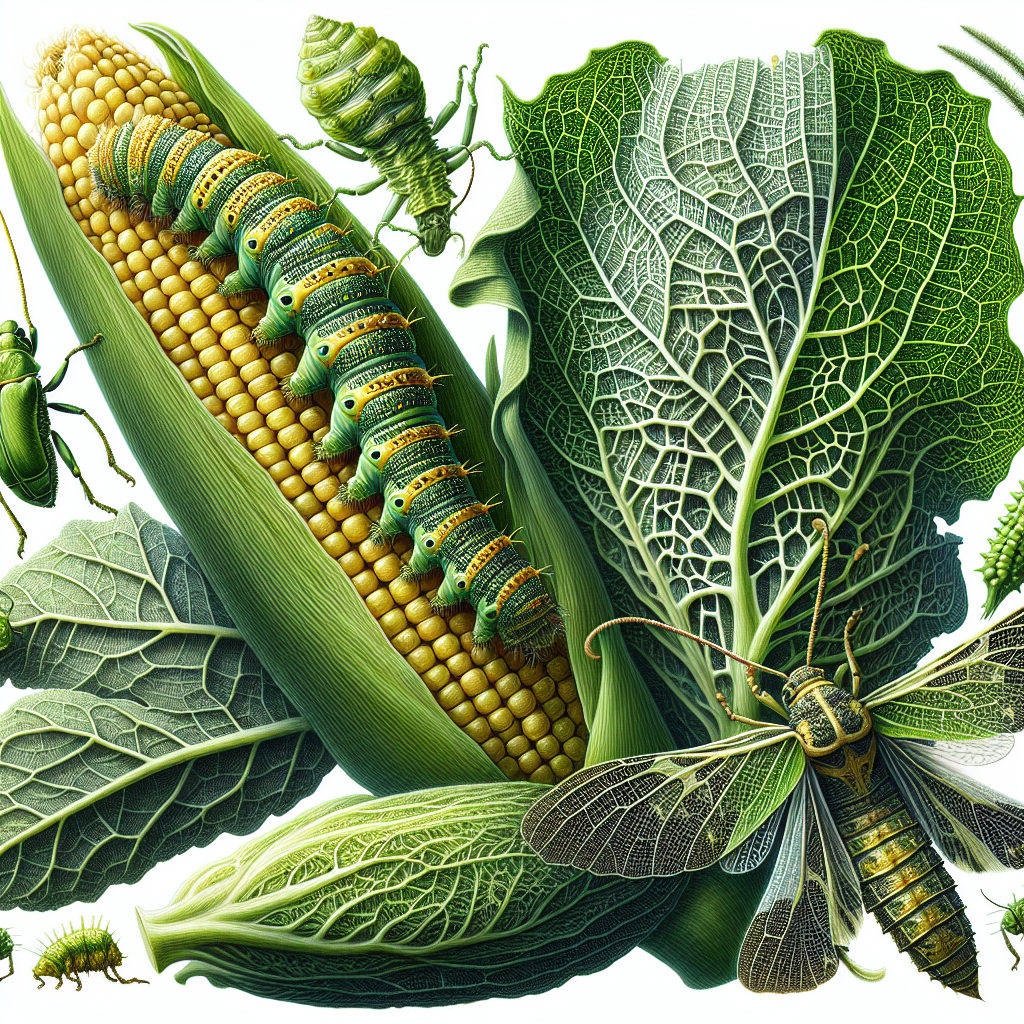
Introduction to Defoliators
Defoliators represent one of the most pervasive threats to agricultural productivity worldwide, encompassing a diverse array of insect species that voraciously consume plant leaves. These pests, primarily from orders Lepidoptera (caterpillars), Coleoptera (beetles and their larvae), and Orthoptera (grasshoppers and locusts), can strip crops bare in a matter of days, reducing photosynthetic capacity and compromising fruit, seed, and tuber development. In commercial farming, defoliation can lead to 20-100% yield losses depending on the crop stage and infestation severity, making timely identification and management critical.
Unlike root or vascular pests, defoliators cause visible, immediate damage, often appearing as skeletonized leaves or complete defoliation. Common culprits include armyworms, caterpillars, Japanese beetles, and grasshoppers. This guide equips farmers with professional-grade diagnostics, organic treatments, and prevention strategies. For small farms battling these invaders, check out this Spring Pest Patrol: Organic AI Strategies to Shield Your Crops from Common Invaders for cutting-edge tips.
Understanding defoliators requires recognizing their diversity: larval stages are often the most destructive, while adults may contribute to secondary damage or egg-laying. Economic thresholds vary by crop—e.g., 20-30% defoliation in vegetative stages for corn versus 10-15% during pod fill for soybeans. Proactive scouting and integrated pest management (IPM) form the backbone of control, minimizing reliance on synthetic inputs while preserving beneficial insects.
Identifying Symptoms & Damage
Diagnosing defoliator activity starts with visual inspection. Primary symptoms include large, irregular holes in leaves, often with jagged edges from chewing mouthparts—distinguishing them from the serpentine mines of leafminers or stippling of mites. Skeletonization occurs when only veins remain after epidermal layers are consumed, common with beetle larvae or late-instar caterpillars.
Examine undersides of leaves for eggs (clustered or solitary), frass (droppings resembling black pellets or sawdust), and the pests themselves. Larvae may be green, brown, or striped with distinct markings—e.g., armyworm frass forms loose piles, while webworms produce silken mats. Severe infestations lead to defoliated branches, stunted growth, and secondary issues like sooty mold from honeydew or vulnerability to powdery mildew.
Damage progression: Early feeding targets tender new growth, progressing to mature leaves. In fruit crops like apple or mango, defoliation weakens trees, reducing next-season yields. Use a 10x hand lens to confirm presence; shake branches over white paper to dislodge larvae. Differentiate from diseases like Alternaria leaf spot by chewing edges versus necrotic spots. Thresholds: Scout weekly, treating when 15-25% foliage is affected in row crops.
Lifecycle and Progression of Defoliators
Defoliators exhibit complete metamorphosis (egg-larva-pupa-adult) for Lepidoptera and Coleoptera, or incomplete (egg-nymph-adult) for Orthoptera. Eggs hatch in 3-10 days under warm conditions (>20°C/68°F), with larval feeding peaks lasting 2-4 weeks. Pupation occurs in soil or leaf litter, emerging as winged adults for dispersal and reproduction.
Generations per year vary: 2-4 in temperate zones for caterpillars, up to 6-8 in tropics for tropical armyworms. Grasshoppers overwinter as eggs, nymphs feeding aggressively in spring. Progression: Eggs → voracious larvae (80% damage) → non-feeding pupae → adults (egg-laying). Monitor degree-days (e.g., 300-500 DD base 10°C for many species) for timing sprays. Lifecycle disruption via Bt targeting larvae is key in organic systems.
Environmental Triggers & Risk Factors
Warm, dry conditions (25-35°C, low humidity) accelerate egg hatch and larval development, with outbreaks following mild winters reducing natural mortality. Monocultures of susceptible crops like cabbage, potato, or tomato amplify risks, as do nearby weed hosts harboring pests. Nitrogen-rich fertilizers promote lush foliage, attracting defoliators; over-irrigation creates humid microclimates favoring fungal associates.
Migratory species like armyworms exploit wind currents; scout after storms. Poor biodiversity—lacking predators like birds or parasitic wasps—increases vulnerability. Climate change extends active seasons, with models predicting 10-20% more generations by 2050. Risk assessment: High in reduced-tillage fields retaining pupae; mitigate with cover crops like clover.
Organic Control & Treatment Plans
Organic management emphasizes IPM: cultural, biological, and mechanical controls before botanicals. Cultural: Hand-pick larvae daily; destroy pupae by tilling. Plant trap crops (e.g., nasturtiums) or repellents like thyme. Biological: Apply Bacillus thuringiensis (Bt) kurstaki at 1-2g/L water during early larval stages—highly selective for caterpillars, safe for bees. Release Trichogramma wasps for egg parasitism (10,000/acre weekly).
Mechanical: Pheromone traps for adults; row covers exclude pests. Botanicals: Neem oil (azadirachtin 0.03%) disrupts molting—apply evenings at 7-14 day intervals. Spinosad (organic-approved) at 0.5ml/L targets larvae via ingestion. For grasshoppers, Nosema locustae bran baits. Treatment plan: Scout → Threshold breach → Bt/neem evening spray → Re-scout 3-5 days. Rotate modes to prevent resistance; integrate with marigold borders attracting beneficials. Yields recover 70-90% with timely action.
Preventing Defoliators in the Future
Prevention builds resilient systems. Diversify crops spatially/temporally—interplant with repellents like garlic or onion. Encourage predators: birds, lacewings via flowering hedges (yarrow, nasturtium). Use reflective mulches early season; destroy crop residues post-harvest to break pupal cycles.
Soil health via compost reduces lush growth; monitor with sticky traps. Early planting evades peak larval periods. Resistant varieties: Bt-corn hybrids for corn, hairy-leaf soy for soybeans. Annual rotation with non-hosts like grains. Long-term: Farm-wide biodiversity—hedgerows cut outbreaks 40%. Track via apps for predictive alerts.
Crops Most Affected by Defoliators
Leafy vegetables and field crops suffer most. Crucifers (cabbage, kale, broccoli) face cabbage loopers/diamondbacks. Solanaceae (tomato, potato, eggplant) hit by hornworms, Colorado potato beetle. Grains (corn, wheat, rice) plagued by armyworms, European corn borer. Legumes (soybeans, peas) by velvetbean caterpillars. Fruits (apple, grapes) by leafrollers, codling moth. Tropicals (mango, banana) by tip borers. Economic impact: $4B+ US losses annually. Tailor IPM per crop.