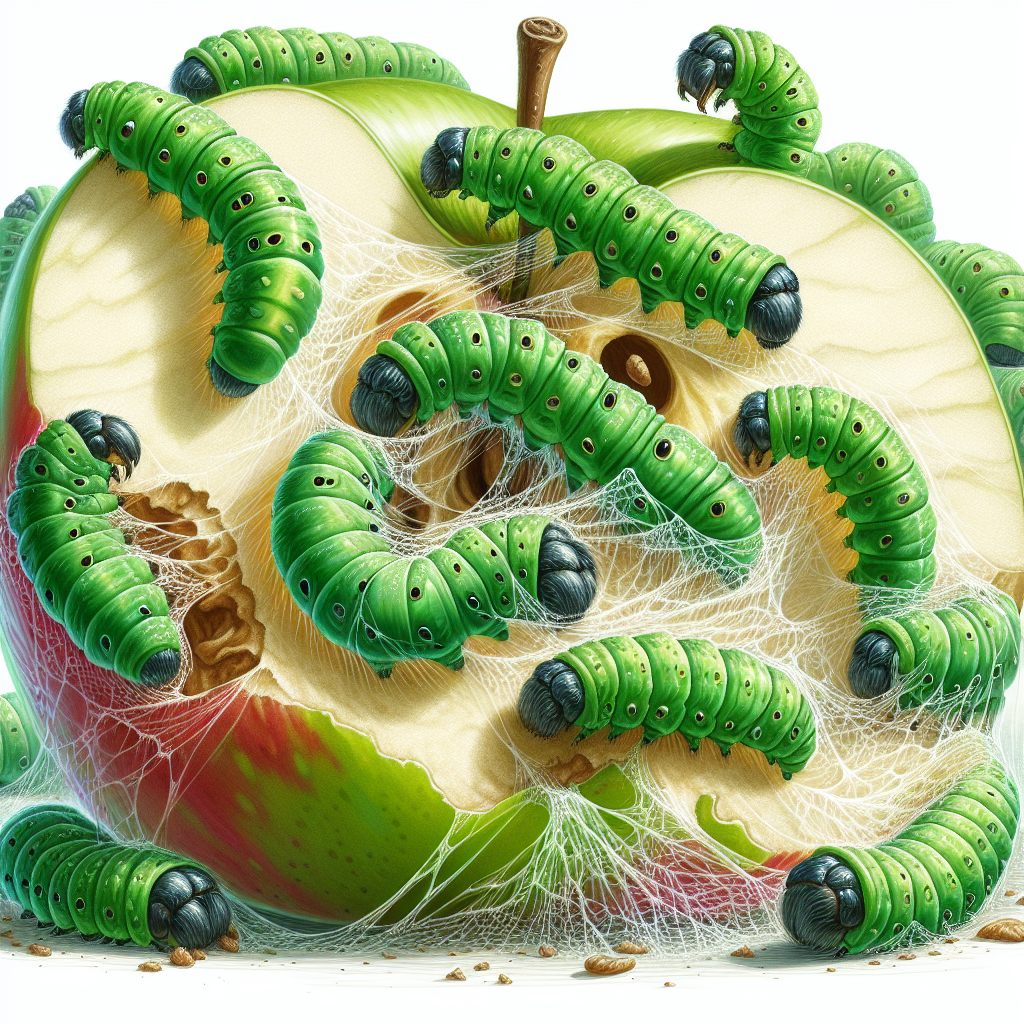
Introduction to Tortricid moth larvae
Tortricid moth larvae represent one of the most pervasive pest challenges in modern agriculture, infamous for their ability to inflict widespread damage across orchards, vineyards, and vegetable fields. Belonging to the family Tortricidae, these larvae—often called leafrollers, codling moth larvae, oriental fruit moth larvae, or budworms—are small, cylindrical caterpillars typically measuring 10-20 mm in length. Their color varies from pale green to brown or pink, often featuring dark head capsules and a distinctive body covered in short spines or hairs. Adult moths are small (wingspan 15-25 mm), with forewings displaying intricate mottled patterns in shades of gray, brown, or bronze.
These pests thrive in temperate and subtropical climates, completing multiple generations per year—up to 4-6 in warmer regions. Over 1,000 species exist worldwide, but key agricultural threats include the codling moth (Cydia pomonella), oriental fruit moth (Grapholita molesta), and obliquebanded leafroller (Choristoneura rosaceana). Farmers face yield reductions of 20-50% in untreated crops, with larvae boring into fruits like apple, peach, and grape, rendering produce unmarketable. Early detection and integrated pest management (IPM) are crucial, as these larvae develop resistance to some chemical controls. This guide provides professional-grade diagnostics, lifecycle insights, and organic strategies to safeguard your harvest. For more on companion planting to deter pests, check this Fall Companion Planting Guide.
Identifying Symptoms & Damage
Spotting tortricid moth larvae damage requires vigilance, as early infestations mimic other issues like caterpillars or leafrollers. Primary symptoms include webbed clusters of leaves, frass (insect droppings resembling sawdust or granules), and entry holes in fruits or buds. Larvae spin silken shelters, rolling or folding leaves together, where they feed on mesophyll tissue, causing skeletonization or browning.
On pome fruits like apple and pear, expect brown tunnels packed with frass in the fruit core, often with a 'sawdust' extrusion at the entry point. Stone fruits such as peach and cherry show gummosis (sap leakage) around larval galleries. In grapes, larvae web clusters, feeding on berries and leading to rot. Vegetable crops like tomato exhibit shoot tip webbing and defoliation.
Diagnostic tips: Shake infested branches over white paper to dislodge larvae; look for tiny black fecal pellets. Differentiate from cutworms by their leaf-rolling habit versus soil-dwelling. Severe infestations cause premature leaf drop, stunted growth, and up to 30% fruit drop. Scout weekly during bloom and fruit set, using pheromone traps for adults. Damage thresholds vary: 1-2% infested fruitlets in apples warrants action.
Lifecycle and Progression of Tortricid moth larvae
Understanding the tortricid lifecycle is key to timed interventions. Eggs (0.5-1 mm, flattened, ribbed) are laid singly or in clusters on leaves, fruits, or bark, hatching in 5-10 days at 20-25°C. Larvae (1st-5th instar) emerge, spin silk, and bore into plant tissue, molting 4-5 times over 2-6 weeks. Full-grown larvae (15-20 mm) pupate in cocoons within webbing, debris, or bark crevices, lasting 7-14 days.
Adults emerge, mate, and lay eggs within 1-3 days; females produce 50-150 eggs. Generations overlap: overwintering as diapause larvae in diapause (codling moth) or pupae. In temperate zones, 2-3 generations/year; tropics see continuous cycles. Degree-day models predict phenology—e.g., codling moth biofix at first sustained moth catch, with 250 DD for egg hatch.
Progression: Eggs (spring), young larvae (bloom), mature larvae (fruit enlargement), pupae (summer), adults (dusk fliers). Monitor with traps: delta traps baited with sex pheromones capture males for timing sprays.
Environmental Triggers & Risk Factors
Tortricid moths exploit specific conditions. Warm temperatures (15-30°C optima) accelerate development; mild winters reduce overwintering mortality. High humidity favors egg hatch and larval survival. Risk spikes in neglected orchards with abundant hosts like wild apple or plum trees.
Poor sanitation—leaving infested fruit or prunings—harbors pupae. Excessive nitrogen promotes tender flush, ideal for egg-laying. Drought-stressed plants suffer more larval penetration. Proximity to unmanaged areas increases immigration. Climate change extends seasons, boosting generations. Secondary factors: ant-tending of honeydew, aiding sooty mold; concurrent aphids weaken plants.
Organic Control & Treatment Plans
Organic IPM emphasizes prevention over cures. Monitoring: Deploy 1-2 pheromone traps/ha; treat at 5-10 moths/trap/week. Cultural: Thin fruit clusters to reduce hiding spots; prune for airflow; destroy drops weekly (e.g., via chickens). Biological: Release Trichogramma wasps (egg parasitoids, 100,000/ha); encourage predators like lacewings, birds.
Biopesticides: Bacillus thuringiensis (Bt) kurstaki (apply evenings, 1-2 g/L, 7-10 day intervals to young larvae); spinosad (0.2-0.4 ml/L, 5-7 days); granulosis virus (e.g., Cyd-X for codling moth, 10^9 OB/ha). Mating disruption: Pheromone dispensers (e.g., Isomate-C) confuse males, reducing egg-laying by 80-95%. Trap crops: Plant perimeter nasturtium to lure moths.
Treatment plan: Scout → Trap threshold → Bt first strike → Virus/spinosad if needed → Assess. Rotate modes to prevent resistance. For leafrollers, kaolin clay (Surround) barriers work well.
Preventing Tortricid moth larvae in the Future
Long-term prevention builds resilient systems. Select resistant varieties (e.g., codling moth-tolerant apples). Plant diverse hedgerows with yarrow, thyme to attract beneficials. Maintain ground covers to suppress weeds, pupation sites. Calendar sprays unnecessary with IPM.
Sanitation: Flail mow residues post-harvest; heat-treat prunings. Reflective mulches deter adults. Push-pull: Trap crops + repellents. Monitor overwintering with trunk bands (corrugated cardboard, remove/destroy January). Annual trap counts guide spring prep. Integrate with codling moth strategies for synergy.
Crops Most Affected by Tortricid moth larvae
Tortricids plague pome/stone fruits: apple, pear, peach, plum, cherry, apricot. Viticulture hits hard on grapes (grape berry moth). Tree nuts: almond, walnut, pecan. Vegetables: tomato, pepper, eggplant. Berries: strawberry, blueberry. Others: citrus, mango, avocado. Losses exceed $1B annually globally.