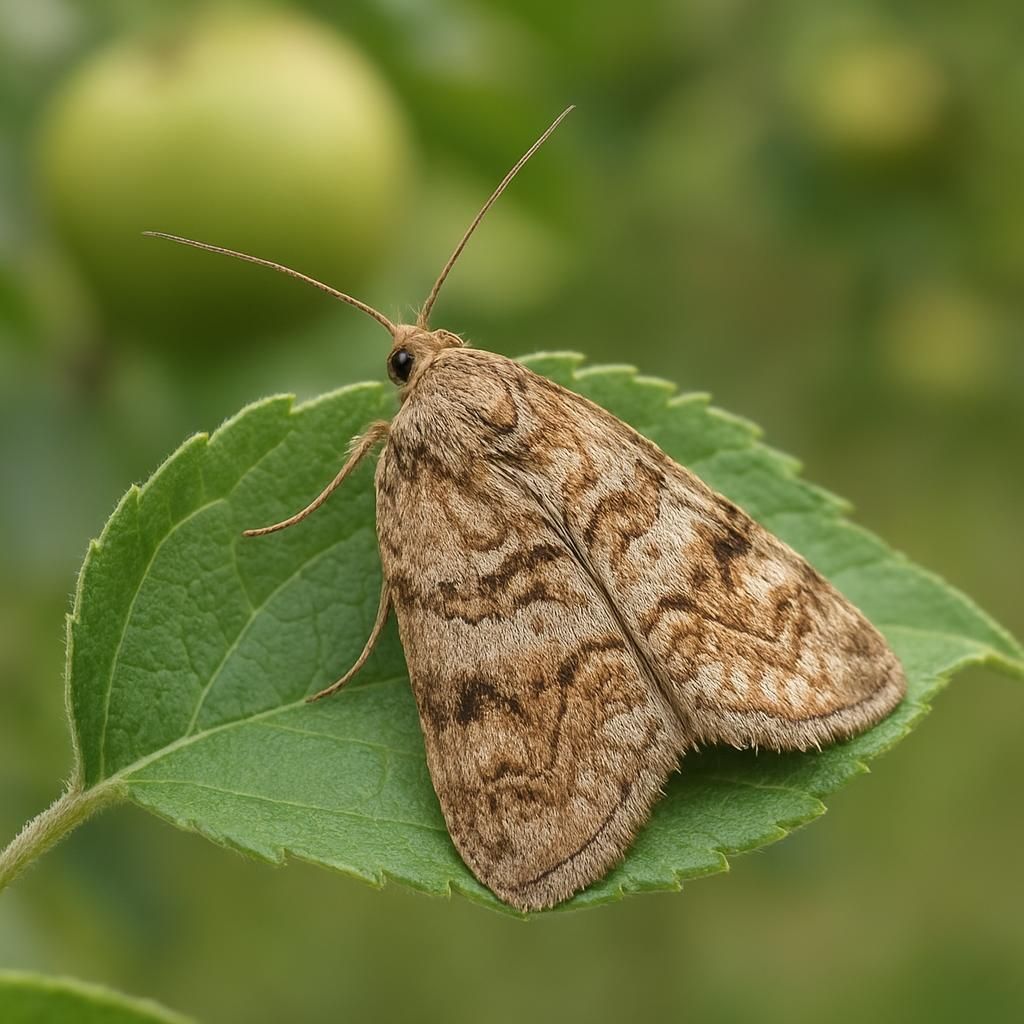
Introduction to Codling moth
The codling moth, scientifically known as Cydia pomonella, stands as one of the most destructive pests in commercial and backyard orchards worldwide. This small, grayish-brown moth targets developing fruits of apple, pear, and related stone fruits like peach and plum, where its creamy-white larvae tunnel deep into the core, leaving behind silken webbing and frass (insect excrement). First identified in Europe centuries ago, it has spread to every major apple-producing region, costing growers billions annually in lost yield and control measures.
Adult codling moths measure about 1/2 inch (12-20 mm) with a distinctive coppery patch on their wings and alternating light and dark bands. Females lay up to 200 eggs on leaves or fruit, hatching into larvae that penetrate fruit skin within days. Without intervention, a single infestation can ruin 80-100% of a crop, making early detection and proactive management critical for sustainable fruit production. This guide provides professional-grade diagnostics, lifecycle insights, and organic strategies to combat codling moth effectively. For advanced monitoring tips, check this Spring Pest Patrol blog post.
Understanding codling moth biology empowers growers to disrupt its cycle at vulnerable stages. In temperate climates, multiple generations per season amplify damage, while overwintering larvae in cocoons ensure yearly recurrence. Integrated approaches emphasizing biological controls, cultural practices, and targeted treatments yield the best long-term results, reducing reliance on synthetic chemicals.
Identifying Symptoms & Damage
Codling moth damage is unmistakable once larvae enter fruits, but early signs allow timely intervention. Scout orchards weekly from petal fall through harvest, focusing on fruit clusters near the tree canopy's interior where moths prefer to oviposit.
Primary Symptoms:
- Entry Holes: Small (1-2 mm), round holes on fruit skin, often near the calyx end, surrounded by reddish-brown frass resembling sawdust or "rat dirt."
- Internal Tunneling: Larvae bore straight to the seed core, creating brown, sawdust-packed tunnels. Advanced damage causes fruit rot, premature drop, and maggot-like larvae visible if cut open.
- Exit Holes: Larger (3-5 mm) holes with silken webbing as mature larvae exit to pupate.
- Frass Trails: Sawdust-like pellets accumulate under trees or on leaves.
Damage Progression: Early instars cause superficial 'stings' (tiny brown spots). By third instar, larvae reach the core, rendering fruit unmarketable. In severe cases, entire bins are rejected at packing houses. Differentiate from apple maggot (irregular tunnels) or corn earworm (surface feeding). Use a knife to slice fruits; codling moth tunnels are straight and frass-filled, unlike curvilinear maggot damage.
Diagnostic Tools:
- Pheromone traps: Capture male moths to predict egg-laying.
- Fruit dissection: Sample 100 fruits per 10 trees; >1% infested signals action.
- Sticky cards: Monitor adult flight.
Yield losses average 20-50% untreated, but vigilant scouting limits this to <5%. Photograph suspicious fruits for records and consult extension services for confirmation.
Lifecycle and Progression of Codling moth
Codling moth completes 1-3 generations annually, depending on degree-days (base 10°C/50°F). Total cycle: 50-70 days.
Egg Stage (4-20 days): Tiny (1 mm), flat, white-to-brownish eggs laid singly on leaves, spurs, or fruit. Hatching peaks 200-250 degree-days post-bloom.
Larval Stage (20-30 days, 5 instars): Creamy-white caterpillars with brown heads grow to 20 mm. All instars feed inside fruit; first three are most vulnerable to controls.
Pupation (14-21 days): Larvae exit fruit, spin brown cocoons under bark, in debris, or calyces. Overwintering occurs as diapausing larvae.
Adult Stage (5-20 days): Moths emerge at dusk, mate, and females oviposit within 24-48 hours. First flight: late spring; second/third: midsummer.
Overwintering: 90% of larvae pupate in soil/groundcover; disrupt via tillage or flooding. Track with pheromone traps: biofix (first sustained moth catch) starts degree-day models for timing sprays.
Use tools like apple IPM apps for precise predictions. Lifecycle knowledge enables targeting neonate larvae before fruit penetration.
Environmental Triggers & Risk Factors
Codling moth thrives in warm, humid conditions accelerating generations. Key triggers:
- Temperature: Optimal 21-27°C (70-80°F); >30°C halts development. Accumulate 240-280 DD for egg hatch.
- Humidity: >60% RH favors egg survival; dry conditions reduce viability.
- Proximity to Hosts: Infested wild crabapples or neglected orchards seed invasions.
- Orchard Factors: Dense canopies, poor pruning, excessive nitrogen promote moist microclimates.
- Climate Change: Warmer springs advance first flight by 1-2 weeks.
High-Risk Scenarios:
- Late-maturing varieties like Fuji apple.
- Organic blocks without mating disruption.
- Adjacent backyard trees.
Mitigate by planting resistant varieties, enhancing airflow, and monitoring weather data. Powdery mildew outbreaks compound issues via weakened trees.
Organic Control & Treatment Plans
Organic management integrates multiple tactics for >95% control without synthetics. Follow this phased IPM plan:
1. Monitoring (Essential): Deploy 2-4 delta traps/ha with codlemone lures from pink bud stage. Action threshold: 0.2-1 moth/trap/day.
2. Cultural Controls:
- Sanitation: Remove infested 'mummy' fruits post-harvest; destroy via shredding/composting at 60°C.
- Trunk wraps/bands: Collect overwintering larvae.
- Kaolin clay (Surround): Deters oviposition; apply at petal fall.
3. Biological Controls:
- Predators: Trichogramma wasps parasitize eggs (release 50,000/ha weekly).
- Bacillus thuringiensis (Bt) kurstaki: Targets larvae; apply evenings within 72 hours of egg hatch.
- Granulovirus (CpGV): Highly specific; 3-5 applications/season.
4. Mating Disruption: Pheromone dispensers (e.g., Isomate) confuse males; 400/ha for small orchards.
5. Organic Sprays:
- Neem oil/azadirachtin: Repels/ disrupts hormones.
- Spinosad: Effective on young larvae.
- Timing: Use DD models; cover sprays every 10-14 days during flights.
Integrated Plan: Traps → sanitation → disruption/Bt → spot treatments. Rotate modes to prevent resistance. Expect 80-90% control first year, improving annually. For more, see apple scab management synergies.
Preventing Codling moth in the Future
Long-term prevention builds resilient orchards:
- Resistant Varieties: Plant Honeycrisp apple or Geneva rootstocks with tolerance.
- Orchard Design: Wide spacing (4-6m), reflective mulches, reflective paint on trunks.
- Sanitation Protocols: Triple-pass mowing, chip dropped prunings.
- Biodiversity: Interplant yarrow or marigold to attract predators.
- Quarantine: Inspect nursery stock; avoid infested areas.
- Annual Monitoring: Trap networks + fruit sampling.
Zero-tolerance via these yields pest-free crops. Track progress with yield maps.
Crops Most Affected by Codling moth
Codling moth primarily attacks Rosaceae pome and stone fruits:
- Primary Hosts: Apple (all varieties), pear (esp. Bartlett), quince.
- Secondary: Peach, plum, cherry, apricot, walnut, fig.
Global impact: 70% of apple acreage infested. Late varieties suffer most from overlapping generations. Protect Gala apple blocks vigilantly.