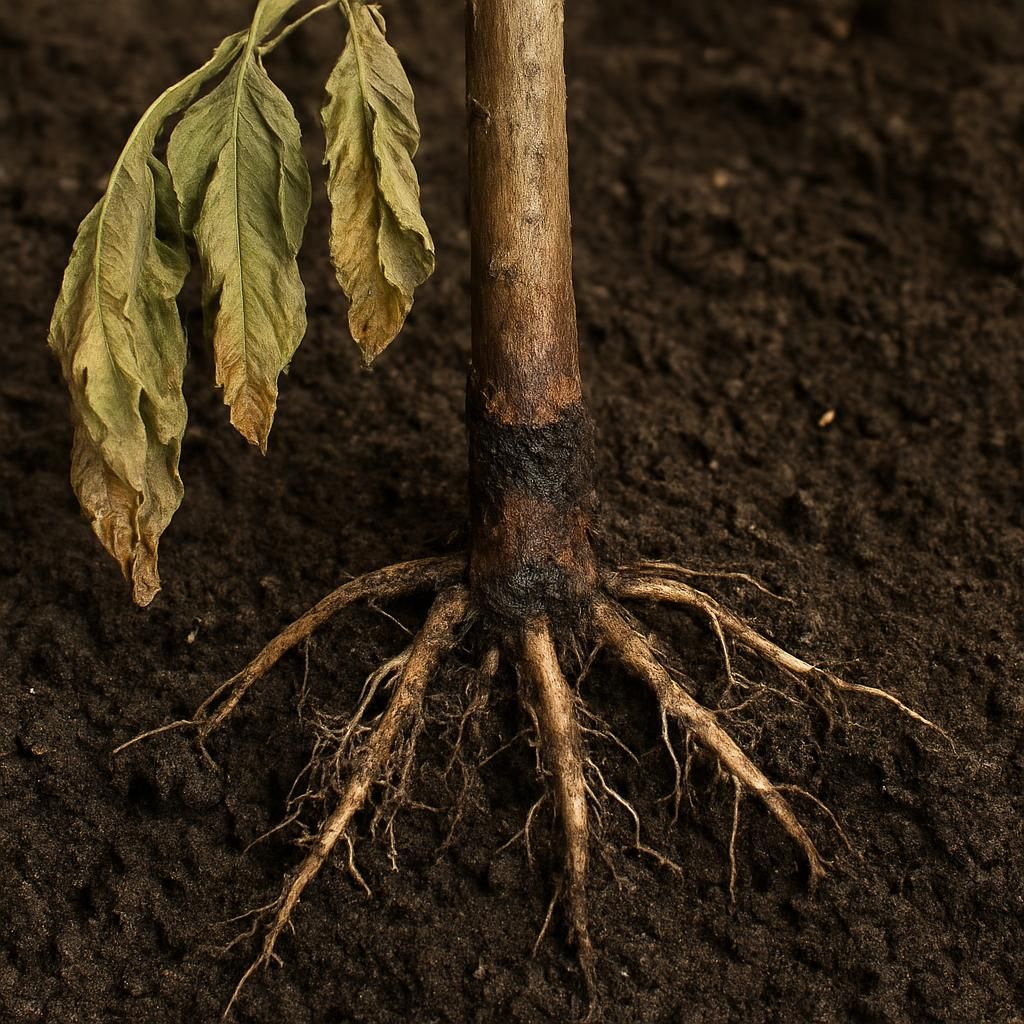
Introduction to Phytophthora root and collar rot
Phytophthora root and collar rot represents one of the most destructive soilborne diseases in agriculture, caused by various species of the oomycete genus Phytophthora. These pathogens, often mistaken for fungi but more closely related to algae, produce waterborne spores that infect roots and the collar (lower stem) of plants, leading to rapid decline and death. First identified in the early 20th century, this disease has become a global threat due to its ability to persist in soil for years via thick-walled oospores and chlamydospores.
The economic impact is staggering, with losses exceeding billions annually in crops like avocado, citrus, and ornamentals. In avocado groves, for instance, Hass Avocado trees can succumb within 3-5 years if unmanaged. Symptoms mimic drought stress, often leading to misdiagnosis. This guide provides professional-grade diagnostic criteria, lifecycle insights, and organic management plans tailored for small farms and commercial operations. Understanding environmental triggers is key to prevention, as Phytophthora thrives in saturated soils with temperatures between 15-30°C (59-86°F).
Early intervention through soil solarization and biofumigation can reduce inoculum by 70-90%. For Fuerte Avocado growers, integrating cover crops like mustard enhances suppression. This comprehensive resource empowers growers to protect yields effectively. (Read more on Soil Health Mastery: 5 Proven Strategies for Small Farms to Build Fertile Ground Without Breaking the Bank for foundational prevention.)
Identifying Symptoms & Damage
Accurate diagnosis begins with recognizing distinctive symptoms of Phytophthora root and collar rot. Above-ground signs include stunting, yellowing of lower leaves (chlorosis), and wilting that persists even after watering—often called 'summer decline' in perennials. Foliage may drop prematurely, with branches dying back from the tips. In severe cases, entire plants collapse suddenly, resembling root rot or collar rot.
Examine the root zone: roots appear dark brown to black, water-soaked, and rotten, with few fine feeder roots remaining. The cortex sloughs off easily, revealing discolored vascular tissue. Collar rot manifests as sunken, necrotic lesions at the soil line, often with reddish-brown discoloration extending 10-30 cm up the stem. Gum or sap may ooze from lesions in woody plants like mango.
Cut stems longitudinally to reveal brown streaking in the wood. In tomato and potato, underground stems show girdling cankers. Differentiate from Fusarium or Pythium by the absence of white mycelium and presence of lemon-shaped sporangia under microscopy. Damage escalates in wet seasons, reducing yields by 50-100%. Soil moisture above 60% volumetric water content accelerates spread. Conduct a shovel test: dig around suspect plants to assess root decay extent.
Lifecycle and Progression of Phytophthora root and collar rot
Phytophthora's lifecycle is aquatic-adapted, with zoospores as primary infectors. Resting spores (oospores/chlamydospores) survive in soil for 5+ years. Under wet conditions (saturation >48 hours), they germinate, producing sporangia that release biflagellate zoospores. These motile spores swim to roots, encyst, and penetrate via appressoria.
Infection progresses rapidly: initial root tip colonization leads to cortical rot within days. Hyphae spread systemically, blocking xylem and causing wilting. In collars, lesions expand girdling the stem, interrupting phloem flow. Secondary cycles occur via splashing rain or irrigation, with sporangia airborne short distances. Optimal temperature for P. cinnamomi is 25-28°C, peaking sporulation.
Progression phases: 1) Latent (2-4 weeks, minimal symptoms); 2) Acute (wilting, root loss); 3) Chronic decline (stunted regrowth); 4) Death. In perennials like citrus, trees decline over seasons. Annuals like peppers die quickly. Soil inoculum builds with repeated susceptible plantings, necessitating rotation.
Environmental Triggers & Risk Factors
Phytophthora flourishes in poorly drained, compacted soils with high clay content. Key triggers include prolonged soil saturation from over-irrigation, heavy rains, or flooding—pathogen requires free water for zoospore motility. Warm soil temperatures (20-30°C) combined with moisture create ideal infection windows.
Risk factors: planting in low-lying areas, using unsterilized nursery stock, and excessive nitrogen promoting succulent roots. pH extremes (below 5.5 or above 7.5) exacerbate issues. Compaction from machinery reduces aeration, favoring anaerobes. In avocado, rootstocks like Duke 7 are susceptible. Overwatering drip systems without tensionometers spikes risk. Mulching with non-composted organics harbors spores. Climate change intensifies outbreaks via erratic rains. Monitor with soil probes for >20% volumetric water.
Organic Control & Treatment Plans
Organic management emphasizes cultural, biological, and physical tactics—no curative fungicides approved for organics. Step 1: Diagnosis—confirm via lab assay (baiting or PCR). Step 2: Remove infected plants entirely, including root balls, and destroy (do not compost).
Soil Treatment: Solarize fields in summer (clear plastic, 4-6 weeks) kills 80-95% propagules. Biofumigate with mustard or broccoli cover crops—chop and till in at flowering for glucosinolate release. Amend with compost (high-carbon) to boost antagonists like Trichoderma.
Biologicals: Apply Trichoderma harzianum or Bacillus subtilis drenches (2-4 L/ha monthly). Mycorrhizal inoculants enhance root resilience. Cultural: Improve drainage with berms/raised beds. Drip irrigate shallowly, maintaining soil moisture at 10-20 kPa tension. Use phosphite (mono-potassium phosphite) as booster—0.5-1% foliar/soil drench boosts defenses.
Resistant Varieties: Select tolerant rootstocks (e.g., Dusa for avocado, Nemaguard for stone fruits). Treatment Timeline: Week 1: Excavate/ remove; Week 2-4: Solarize/amend; Ongoing: Monitor/biweekly biofungicides. Integrate with root-knot nematodes management, as co-infections worsen damage. Expect 60-80% recovery in early cases.
Preventing Phytophthora root and collar rot in the Future
Prevention hinges on exclusion and site preparation. Quarantine nursery stock—inspect roots pre-planting. Use certified, disease-free transplants. Rotate with non-hosts like grasses or onion for 3-5 years. Site selection: avoid heavy soils; test drainage (dig 1m hole, fill with water—should drain in 2 hours).
Enhance soil biology: incorporate compost teas with Lactobacillus and Actinomycetes. Mulch with coarse, aerated materials. Avoid wounding trunks during cultivation. Annual phosphite applications preventively. Monitor with sentinel plants or soil sampling. For high-risk avocado, interplant with suppressive species like Brassicas. Long-term: gypsum amendments in sodic soils improve structure. Track via soil health audits. Sustainable practices reduce inoculum to undetectable levels over 2-3 years.
Crops Most Affected by Phytophthora root and collar rot
This disease plagues diverse crops, especially perennials and those in wet tropics/subtropics. Top victims: Avocado (P. cinnamomi devastates Hass Avocado, Fuerte Avocado); Citrus (orange, lemon, lime); Mango, Banana, Pineapple. Vegetables: Tomato, Pepper, Eggplant, Potato, Sweet Potato. Others: Strawberry, Raspberry, stone fruits (peach, plum), ornamentals, and forestry (e.g., oaks).
Susceptibility varies: annuals die fast; trees decline chronically. In potato, it causes blackleg-like symptoms. Global hotspots: California avocado groves, Australian macadamia, Peruvian asparagus. Over 200 hosts reported, but woody perennials suffer most economically. Select resistant cultivars where available.