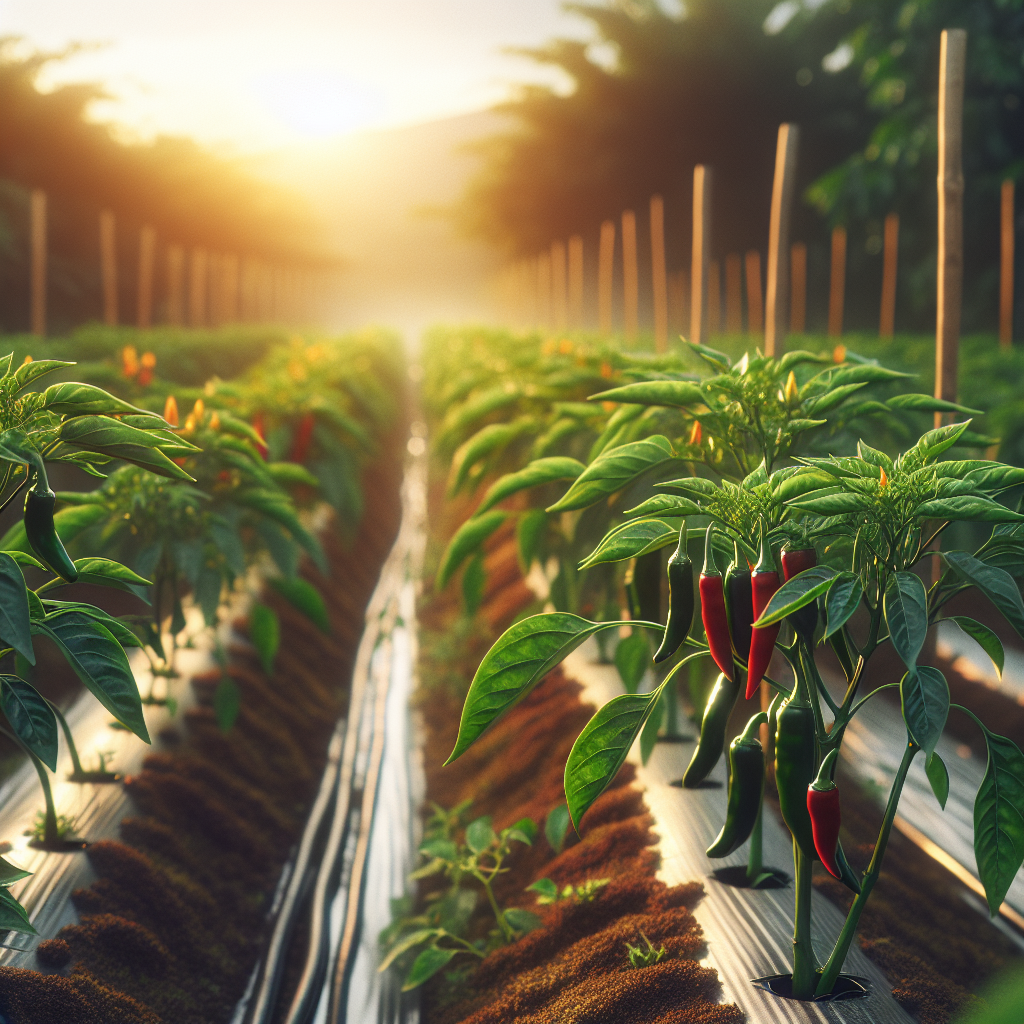
Introduction to Chili Pepper
Native to the Americas and domesticated thousands of years ago, chili pepper spread globally after the Columbian Exchange and became foundational to cuisines from India and Thailand to Mexico, Korea, North Africa, and the Mediterranean. Its importance lies not only in pungency from capsaicinoids, but also in fruit diversity: pods may be long, conical, lantern-shaped, round, wrinkled, or thin-skinned for drying. Colors range from green and cream to yellow, orange, red, purple, and chocolate brown at maturity.
For growers, chili pepper is both rewarding and exacting. High yields and premium fruit quality are achieved when the crop experiences uninterrupted warmth, high light, moderate but consistent soil moisture, and a root zone that is oxygen-rich rather than wet. Even short periods of cold stress, waterlogging, or nutrient imbalance can reduce flower retention, fruit set, pungency, and marketable yield. Chili pepper is closely related to sweet pepper and other solanaceous crops; if you also grow tomatoes, compare rotation and disease pressure with this Tomato guide.
Production systems vary widely. Small gardeners may grow a few ornamental-hot varieties in containers, while commercial producers often use raised beds, drip irrigation, plastic mulch, trellising, and staggered harvests. Some cultivars are bred for fresh green harvest, others for ripe red drying, sauce processing, pickling, powder production, or specialty markets based on Scoville heat units, aroma, and skin thickness. Understanding the intended end use is essential before sowing seed because spacing, fertility, harvest timing, and postharvest handling all differ by fruit type.
Botanical Profile of Chili Pepper
Chili peppers belong to the genus Capsicum in the Solanaceae family, which also includes tomato, eggplant, and potato. While many cultivated chilies are grouped under Capsicum annuum, the term “chili pepper” in agriculture often includes hot forms of C. frutescens, C. chinense, and C. baccatum. This matters because species differ in branching habit, internode length, flower position, fruit orientation, maturity period, aroma profile, and tolerance to heat or humidity.
The plant is technically a tender perennial in frost-free climates but is usually managed as an annual crop. It develops a fibrous root system with a moderate taproot tendency when direct-seeded, though most commercial plantings use transplants. Stems are initially herbaceous and become semi-woody with age. Leaves are simple, smooth-edged, and vary from narrow lanceolate to broad ovate depending on cultivar. Flowers are generally white, off-white, or greenish-white, usually solitary or in small clusters at nodes. Pollination is mostly self-fertile, but insect activity and airflow can improve fruit set.
The fruit is botanically a berry. Pungency is concentrated primarily in the placental tissue and internal membranes where capsaicinoids are synthesized, not in the seeds themselves, though seeds may carry heat from contact. Heat level is influenced by genetics first, then modified by environment, maturity, and crop stress. Mild moisture stress late in fruit maturation can concentrate solids and sometimes intensify pungency, but severe drought reduces fruit size and total yield.
Growth habit is typically compact to moderately bushy, ranging from 30 cm to over 100 cm tall. Early cultivars may flower 60 to 80 days after transplanting, while longer-season or ultra-hot types can require 90 to 140 days to reach full ripe harvest. Fruit walls may be thin and fast-drying or thick and fleshy for fresh markets. This difference strongly affects disease risk after rain or overhead irrigation, as thick-walled fruits hold moisture longer and are more prone to soft rots if air circulation is poor.
Soil, pH, and Climate Requirements for Chili Pepper
Chili pepper performs best in fertile, well-drained loam or sandy loam with high biological activity and stable structure. The ideal soil pH is generally 6.0 to 6.8, though the crop can tolerate about 5.8 to 7.0 if nutrient availability is carefully managed. At pH below 5.5, calcium, magnesium, and phosphorus availability becomes less reliable while manganese or aluminum toxicity may increase. At pH above 7.2, iron, manganese, boron, and zinc deficiencies become more common, often showing as interveinal chlorosis on new leaves.
Drainage is non-negotiable. Chili roots need moisture, but they are highly sensitive to oxygen deprivation. In practical terms, the ideal soil should hold enough water to remain uniformly moist 10 to 20 cm deep while still draining after heavy irrigation or rain within a day. If you squeeze moist soil in your hand and it forms a weak ball that crumbles when tapped, that is usually suitable. If it forms a sticky ribbon or remains glossy and compacted, the site may be too heavy unless amended and raised.
A target soil organic matter of roughly 3% to 5% is excellent for field production. Organic matter buffers moisture, moderates temperature, and improves cation exchange capacity, but excessive fresh manure can drive overly lush vegetative growth and increase disease. Fully matured compost incorporated before planting is safer than raw manure, especially where bacterial contamination or ammonium injury is a concern. For broader bed-building principles, see soil health tips.
Temperature is the major climate driver. Optimal vegetative growth usually occurs around 21 to 30°C, with root activity strongest in warm but not overheated soils. Seed germination is fastest at 27 to 32°C. Below about 15°C, growth slows sharply; below 10°C, plants become stressed and may show purpling, stalled growth, or blossom drop. Extremely hot conditions above 35°C, especially with hot nights above 24 to 26°C, can reduce pollen viability and fruit set.
Chili pepper prefers full sun, ideally 8 or more hours of direct light. In humid tropical zones, however, a slight reduction of late-afternoon heat load can reduce sunscald and flower abortion. Relative humidity around 50% to 70% is often favorable. Excessive humidity combined with dense foliage increases foliar disease pressure, while very dry hot winds can cause flower desiccation and poor fruit set.
Step-by-Step Planting & Propagation
Most growers start chili pepper from seed in trays, plugs, or nursery beds because transplanting gives a more uniform stand and shortens field occupancy. Use fresh, high-quality seed with strong germination percentages. Seed priming in clean water for 6 to 12 hours can improve uniformity in some lots, but do not soak so long that oxygen starvation damages embryos.
Fill seed trays with a sterile, fine-textured propagation mix that drains well while retaining even moisture. Sow seeds 0.5 to 1 cm deep. Maintain media temperature between 26 and 30°C if possible; under these conditions germination often occurs in 7 to 14 days, though some hotter or thicker-seeded types take longer. Keep the medium moist but never saturated. The correct moisture level is comparable to a wrung-out sponge: evenly damp, with no standing water in cells and no gray, slimy surface.
Seedlings need bright light immediately after emergence to prevent stretching. If started indoors, provide strong overhead light for 14 to 16 hours daily. A healthy transplant at fielding time is short, stocky, dark green, and has 5 to 8 true leaves with a stem thick enough to resist bending. Overgrown, root-bound seedlings often suffer transplant shock and delayed early yield.
Harden seedlings 7 to 10 days before transplanting by gradually exposing them to outdoor conditions, slightly reducing water, and avoiding excessive nitrogen. Do not harden by chilling them; peppers resent cold. Transplant only after frost danger has fully passed and night temperatures are reliably above 13°C, preferably above 15°C.
Prepare beds thoroughly. Raised beds 15 to 25 cm high are especially beneficial in heavy soils or wet regions. Mix in compost and any pre-plant mineral amendments based on soil testing. Common spacing for compact hot pepper cultivars is 30 to 45 cm between plants and 60 to 90 cm between rows. Larger branching types may need 45 to 60 cm within row. Dense spacing increases early yield per area but can reduce airflow and increase disease later.
Water transplants immediately after setting. Plant at the same depth they were growing in trays; unlike tomato, chili pepper is not typically buried deeply to encourage extra stem rooting. Apply mulch soon after the soil has warmed. Black plastic mulch improves earliness in temperate regions, while organic mulch can help moderate heat and reduce evaporation once warm weather is established.
Direct seeding is possible in hot climates with long seasons and reliable moisture, but germination can be uneven in crusting soils. Where direct-seeded, sow into finely prepared beds, irrigate lightly and frequently until emergence, then thin to final spacing.
Care & Maintenance regimes for Chili Pepper
Irrigation should be steady, not erratic. Chili pepper performs best when the root zone stays consistently moist but aerated, especially from flowering through fruit fill. As a practical benchmark in field soils, the top 3 to 5 cm may dry slightly between irrigations, but the 10 to 15 cm layer should remain lightly moist, never dust-dry and never swampy. Drip irrigation is ideal because it keeps foliage dry and delivers precise moisture.
Signs of underwatering include midday wilting that persists into evening, dull gray-green foliage, leaf curl, flower drop, small fruits, thin fruit walls, and increased blossom-end rot from impaired calcium transport. Signs of overwatering include persistent wilting despite wet soil, yellowing lower leaves, edema-like blistering, weak root growth, sour-smelling soil, algae on the surface, and increased root disease. In coarse sandy soils, frequent short irrigations may be needed; in loams, deeper less frequent irrigation is better.
Nutrition should be based on soil and tissue testing whenever possible. Chili pepper needs balanced fertility, with moderate nitrogen, adequate phosphorus early for rooting, and strong potassium support for fruit quality, color, and stress tolerance. Excess nitrogen is a common mistake: it produces lush, soft growth, delays flowering, increases aphid attraction, and can dilute pungency and dry matter. Split nitrogen applications are safer than a large pre-plant dose.
A professional feeding strategy often includes a modest basal application of compost or balanced fertilizer before planting, followed by side-dressing or fertigation once plants establish and again at early flowering and fruit set. Calcium and magnesium must be sufficient, especially in acidic or sandy soils. Blossom-end rot in chili pepper is usually not caused by lack of total calcium in soil alone, but by inconsistent moisture, root damage, salinity, or excessive ammonium/potassium competition that limits calcium movement to fruit.
Mulching reduces weed pressure and stabilizes moisture. Keep mulch a few centimeters away from the main stem to avoid collar rot. Weed control is most critical in the first 6 to 8 weeks after transplanting, when peppers compete poorly. Shallow cultivation is safer than deep hoeing because feeder roots are close to the soil surface.
Staking or trellising becomes valuable for heavy-fruiting cultivars or windy sites. A simple stake per plant, or a Florida weave adapted for peppers, helps prevent lodging and fruit contact with soil. Pruning is minimal in most field systems, but removing the first crown flower on young transplants can encourage stronger branching in some cultivars intended for longer harvest windows.
In protected cultivation, ventilation is essential. High humidity reduces pollen viability and encourages fungal disease. Gentle shaking of plants or insect pollinators can improve fruit set in still-air structures.
Pests, Diseases & Organic Management
Chili pepper is vulnerable to a broad pest complex, particularly under warm conditions. Aphids colonize tender shoots and transmit viruses. Thrips scar leaves and flowers and can vector tospoviruses. Whiteflies weaken plants and spread viral diseases. Spider mites thrive in hot, dry weather, causing stippling and bronzing. Cutworms may sever young transplants at the soil line, and Fruit borers or Caterpillars can tunnel into pods.
Organic management starts with prevention. Use insect-proof nursery production, reflective mulches where practical, crop rotation, weed control around field edges, and prompt removal of virus-suspect plants. Avoid planting near older solanaceous crops that harbor vectors. Encourage beneficial insects by maintaining flowering refuges nearby, but not so close that airflow is blocked.
For direct pest suppression, insecticidal soap can reduce Aphids and Whiteflies if coverage is thorough, especially on leaf undersides. Neem-based products can help suppress soft-bodied pests and some early-stage chewing insects, though timing matters and applications during intense sun or high heat may risk phytotoxicity. For Caterpillars, Bacillus thuringiensis works best on small larvae before they enter fruit. Spider mites often flare where broad-spectrum insecticides have reduced predators, so conserving natural enemies is a major advantage in organic systems.
Diseases are often more limiting than insects. Damping-off can kill seedlings in wet, poorly aerated media. Phytophthora capsici is one of the most destructive problems in peppers, causing root rot, crown rot, foliar blight, and fruit rot, especially in poorly drained soils after warm rains. Bacterial leaf spot causes lesions on leaves and fruit, thriving in splashing water and dense canopies. Anthracnose creates sunken fruit lesions, often appearing near ripening. Powdery mildew may occur in dry climates with humid canopies, while Cercospora and other leaf spots can weaken foliage.
Viral diseases such as Cucumber mosaic virus, Tobacco mosaic virus, Pepper mottle virus, and Tomato spotted wilt virus can cause mottling, distortion, ring spots, stunting, and drastic yield loss. Since viruses cannot be cured, rogue infected plants early and control vectors aggressively. Sanitize hands and tools if handling tobacco products, as some viruses can spread mechanically.
Key organic disease defenses include wide rotation of at least 3 years away from peppers, tomatoes, eggplant, and potatoes; raised beds; drip irrigation; mulching to prevent soil splash; resistant or tolerant cultivars where available; and avoiding field work when foliage is wet. Copper-based products can suppress bacterial and some fungal issues, but they work preventively rather than curatively and should be used carefully to avoid overaccumulation in soil.
Harvesting, Curing & Optimal Storage
Harvest stage depends on market goal. Green harvest is common for fresh use when fruits have reached full size but are still immature in color. Red or fully colored harvest is preferred for drying, powder production, sauce processing, seed saving, and maximum sweetness or aroma in many cultivars. Capsaicin content often peaks near full maturity, though cultivar and conditions matter.
Use clean shears or snap fruits carefully with a short stem attached if the market prefers it. Repeated pulling can break brittle branches, especially late in the season when plants are heavily loaded. Harvest regularly, every 3 to 7 days in peak production, to stimulate continued flowering and prevent overripe fruit from weakening plants.
For fresh-market peppers, sort immediately. Remove damaged, sunscalded, diseased, or insect-punctured pods. Keep harvested fruit shaded in the field; direct sun can rapidly raise fruit temperature and shorten shelf life. Fresh chili peppers store best at cool but not chilling temperatures, generally around 7 to 10°C with relative humidity near 90% to 95%. Temperatures much below this can cause chilling injury, visible as pitting, softening, dull color, and poor flavor. At proper conditions, many chilies keep 2 to 3 weeks, though thin-walled hot varieties may dehydrate faster.
For drying, harvest fully ripe fruits with strong color development. Clean and sort before curing. Small thin-walled chilies can be sun-dried in hot, arid weather if protected from dew, dust, and pests, but screened solar dryers or forced-air dehydrators produce safer, more uniform results. Aim to reduce moisture content sufficiently that fruits become leathery to brittle depending on end use, with no internal softness that could support mold. Final dried product should be cooled before packing to avoid condensation.
Store dried chilies in airtight containers in a cool, dark, dry place. Light, oxygen, and heat degrade color and volatile aroma compounds over time. Whole dried pods retain quality longer than ground powder, which oxidizes more quickly. For premium paprika-type or specialty hot powders, low-oxygen packaging and moisture control are especially important.
Companion Planting for Chili Pepper
Companion planting in chili pepper should be approached as a pest-management and space-efficiency tool, not as a substitute for soil fertility or irrigation discipline. The best companions are those that either repel or distract pests, attract beneficial insects, improve microclimate without excessive shading, or occupy different rooting zones.
Good companions include basil, onions, garlic, marigolds, lettuce, and low-growing herbs. Aromatic alliums may help confuse some pests while using relatively little canopy space. Basil can fit well in diversified garden systems, and culinary growers often pair peppers with herbs for harvest efficiency; see Thai basil for a compatible warm-season herb. Lettuce can act as a short-term intercrop early in the season before pepper canopies close, especially in mild climates.
Legumes such as bush beans can contribute biodiversity, but they should not crowd pepper roots or reduce airflow. Flowers such as alyssum, dill, and coriander are excellent near, though not necessarily within, pepper rows because they attract hoverflies, parasitic wasps, and predatory insects. In hot regions, a carefully managed living border can also reduce wind stress, but tall companions must be positioned to avoid afternoon shading unless heat stress is extreme.
Avoid close association with plants that create heavy shade, sprawl aggressively, or compete strongly for the same root zone and nutrients. Fennel is a poor companion in many vegetable systems due to allelopathic effects. Large brassicas or unmanaged cucurbits can limit airflow and create humid pockets favorable to disease. Companion planting is most effective when combined with sanitation, rotation, mulching, and irrigation management rather than used as a stand-alone strategy.