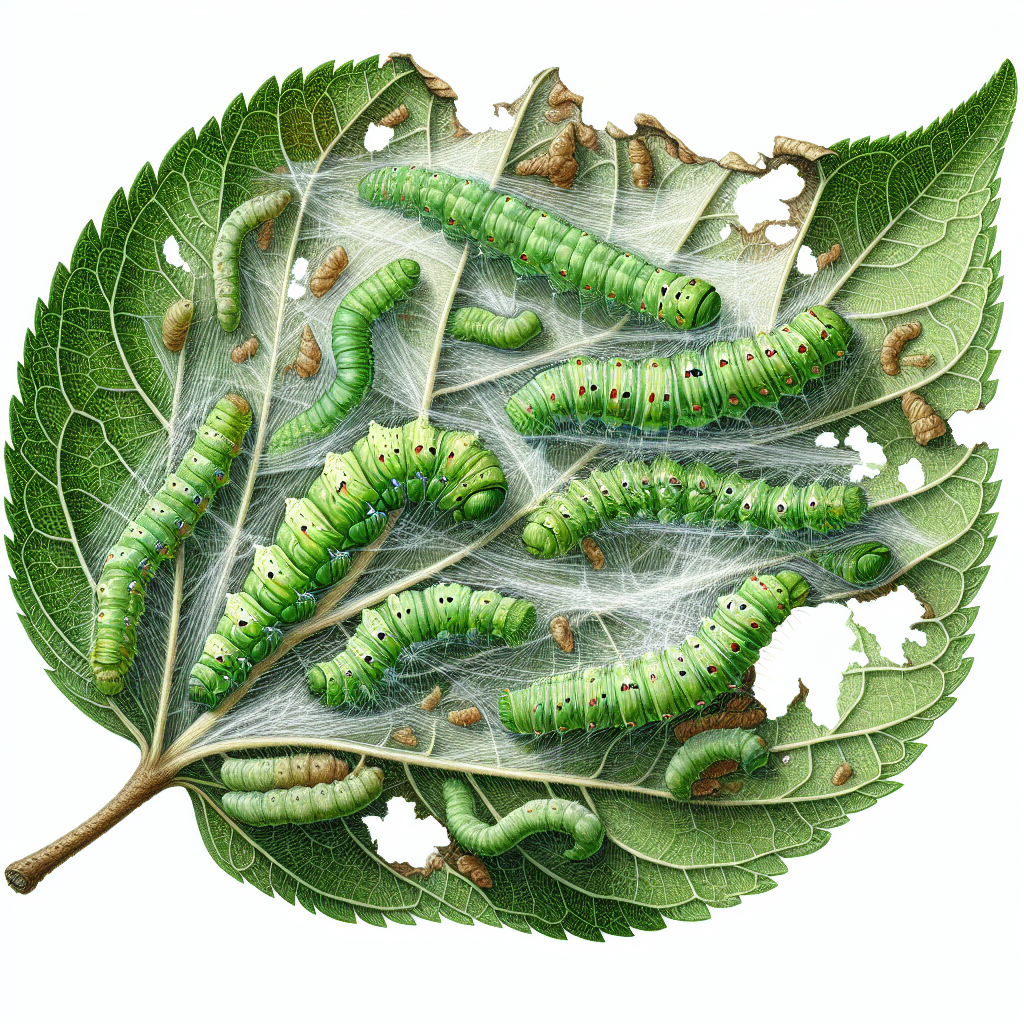
Introduction to leaf rollers
Leaf rollers represent a diverse group of pests primarily from the Tortricidae family, notorious for their silk-binding habits that protect larvae while they devour tender plant tissues. These small green or brown caterpillars target a wide array of crops, rolling or webbing leaves into protective shelters where they feed voraciously, leading to defoliation, fruit scarring, and reduced photosynthesis. Common species include the leafrollers like the obliquebanded leafroller (Choristoneura rosaceana) and fruittree leafroller (Archips argyrospilus), thriving in temperate and subtropical regions worldwide.
Farmers often first notice leaf rollers during spring flushes when larvae are most active, causing up to 50% yield losses in unmanaged orchards. Understanding their behavior is crucial for timely intervention. This definitive guide equips agricultural professionals with diagnostic tools, lifecycle knowledge, and proven organic strategies to mitigate infestations effectively. By integrating monitoring and prevention, growers can safeguard crops like apple, grapes, and strawberry from these pervasive threats. For small farms battling multiple invaders, check out Spring Pest Patrol: Organic AI Strategies to Shield Your Crops from Common Invaders.
Identifying Symptoms & Damage
Diagnosing leaf roller damage starts with recognizing the hallmark signs: leaves folded, crinkled, or webbed together with silky threads, often appearing as tight rolls or tents. Inside these shelters, small larvae (1/4 to 1 inch long) feed on mesophyll, leaving skeletonized patches or shot-hole patterns. Early symptoms include translucent windows on leaves where upper epidermis is scraped, progressing to browning, necrosis, and premature leaf drop.
On fruits like cherry or peach, damage manifests as shallow scars, russeting, or corky lesions from larval frass and feeding. Severe infestations cause stunted growth, deformed terminals, and contaminated produce with silk and excrement, rendering it unmarketable. Differentiate from similar pests like caterpillars or leafminers by the presence of silk ties and external webbing—leafminers tunnel internally without silk.
Inspect undersides of young leaves and terminals during dawn or dusk when larvae are active. Use a hand lens to spot tiny black fecal pellets (frass) on leaves or ground beneath. Thresholds vary: in orchards, 5-10% infested shoots signal action; in vegetables, any visible rolling warrants response. Regular scouting with sticky traps captures adult moths, aiding identification of species-specific damage patterns.
Lifecycle and Progression of leaf rollers
Leaf rollers undergo complete metamorphosis: egg, larva, pupa, adult. Females lay 50-200 flat, overlapping eggs on leaves in clusters, hatching in 7-14 days into tiny larvae that immediately spin silk to roll foliage. Larval stage (5-7 instars) lasts 3-6 weeks, depending on temperature, with peak feeding in cool springs (50-70°F). Mature larvae pupate within rolls, emerging as small moths (1/2 inch wingspan, mottled brown/gray) after 10-14 days.
Multiple generations occur annually—2-4 in temperate zones, up to 6 in warmer climates. Overwinter as partially grown larvae in protected rolls or debris. Spring warm-up (above 50°F) triggers resumed feeding. Monitor degree-day models: first flight at 100-200 DD (base 50°F), egg hatch at 250 DD. This progression informs precise timing for interventions, disrupting vulnerable larval stages.
Environmental Triggers & Risk Factors
Leaf rollers flourish in mild, humid conditions with temperatures 55-75°F and high relative humidity (>70%), favoring dense canopies that shield larvae from predators and sprays. Over-fertilization with nitrogen promotes succulent growth, highly attractive to egg-laying moths. Poor pruning leads to shaded, humid microclimates ideal for silk-bound refuges.
Weedy field margins harbor alternate hosts, while nearby unmanaged orchards amplify migrations. Drought stress weakens plants, increasing susceptibility. Risk spikes post-bloom when new flush emerges. Companion pests like aphids or mites exacerbate damage by honeydew-favoring sooty mold, compounding stress. Climate shifts extend generations, heightening pressure in transitional zones.
Organic Control & Treatment Plans
Organic management emphasizes integrated pest management (IPM): monitor with pheromone traps (1-2 per acre), targeting 5-10 moths/trap/week for action. Hand-remove and destroy early rolls, especially on small plantings. Introduce biologicals like Bacillus thuringiensis (Bt) kurstaki at first instar (apply evenings, 1-2 gal/100 gal water), effective up to 80% with 3 applications 7-10 days apart.
Trichogramma wasps parasitize eggs—release 50,000-100,000/acre weekly during flights. Neem oil or spinosad disrupts feeding/larvae (OMRI-listed, rotate to prevent resistance). Encourage predators: lacewings, birds, spiders via hedgerows. For outbreaks, lightweight row covers exclude adults. Avoid broad-spectrum disruptors; focus on larval stage when 90% vulnerable.
Treatment timeline: Scout weekly; Bt at egg hatch; predators ongoing. Efficacy: 70-95% in orchards with IPM. Always test sprays on small areas.
Preventing leaf rollers in the Future
Prevention hinges on cultural practices: prune for open canopies, improving air flow and spray penetration—remove 20-30% winter debris. Plant resistant varieties like disease-tolerant Honeycrisp apple. Time planting to miss peak flights; use reflective mulches to deter moths.
Sanitation: destroy rolls, till soil to expose pupae. Border sprays with kaolin clay deter egg-laying. Pheromone mating disruption (hand-applied ties, 100/acre) confuses males, reducing larvae 70-90%. Cover crops like clover boost beneficials. Monitor weather for triggers; destroy volunteers harboring pests. Long-term: diversify rotations, avoiding monocultures.
Crops Most Affected by leaf rollers
Leaf rollers plague pome and stone fruits foremost: apple, pear, cherry, peach, plum, with losses up to 30% in unsprayed blocks. Berries suffer heavily—strawberry, raspberry, blueberry, blackberry, where webbed calyces scar fruit. Vines like grapes see cluster damage; citrus (orange, lemon) face shoot blight.
Vegetables: cabbage, lettuce, tomato; ornamentals and nuts (almond, walnut). Tropicals like mango, avocado (Hass avocado) host species too. Global impact: billions in losses yearly, underscoring vigilant management.