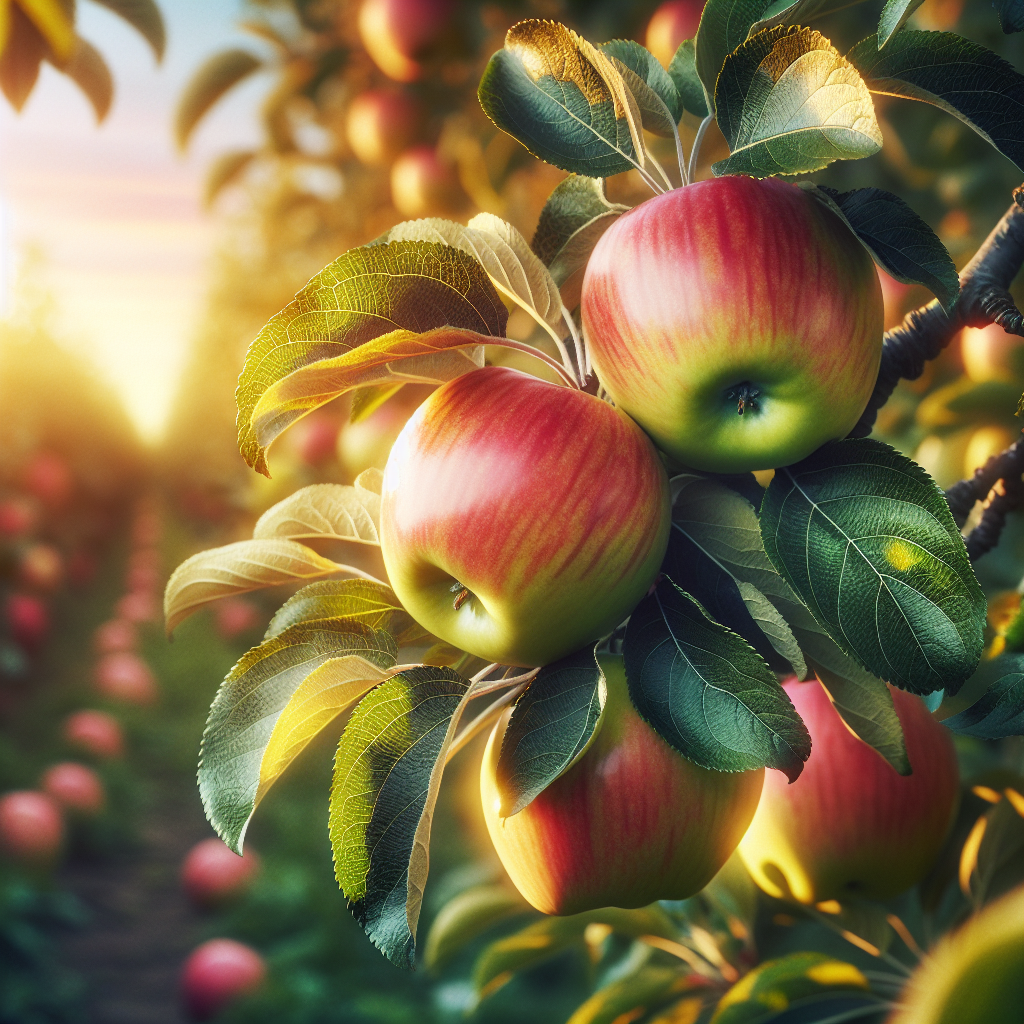
Introduction to Honeycrisp Apple
Developed at the University of Minnesota and released in 1991, this cultivar became one of the most commercially influential apples in North America because it combined exceptional texture with broad consumer appeal. Its hallmark is a large-celled flesh structure that fractures cleanly when bitten, producing the distinctive “crisp” sensation that made it famous. That same cellular structure, however, also helps explain why it can be physiologically finicky in the orchard and after harvest.
Compared with many standard dessert apples, trees are moderately vigorous when young, can be somewhat shy or biennial if unmanaged, and are notably susceptible to several storage and physiological disorders including bitter pit, soft scald, and soggy breakdown. Fruit color typically develops as a mottled to striped red over a yellow-green background, and flavor improves dramatically when the crop is harvested at the right maturity rather than simply left until overripe. For growers, the variety is best approached as a high-value but management-intensive apple that rewards precision.
For general species-level background on apple growth habits, pollination biology, and orchard systems, see our Apple guide. Honeycrisp is especially well suited to cool temperate regions with adequate winter chill, moderate summer heat, and low risk of prolonged humid disease pressure during ripening.
Botanical Profile of Honeycrisp Apple
This cultivar belongs to the rose family, Rosaceae, and the domesticated apple species Malus domestica. Like most apples, it is a deciduous pome fruit tree with mixed fruiting habit, producing on spurs and terminal buds depending on training system and vigor. Blossoms are borne in spring on short shoots, typically in clusters, and require cross-pollination from another compatible apple cultivar flowering at a similar time.
Honeycrisp flowers are generally mid-season in bloom timing, though local climate and rootstock affect the exact window. It is not reliably self-fertile, so a pollinizer within bee flight range is essential. Crabapples or compatible mid-bloom apples are commonly used. Pollination failure leads to misshapen fruit, low set, and poor return on inputs.
Tree size depends primarily on rootstock. On dwarfing stocks such as M.9 or B.9, mature height may remain around 8-12 feet with trellis support; on semi-dwarf stocks such as G.30 or M.26, size often reaches 12-18 feet; on more vigorous roots it may exceed 20 feet. Rootstock choice also influences precocity, Fire blight tolerance, anchorage, drought response, and susceptibility to replant disease.
Fruit are usually medium to large, round-conic, with thin but resilient skin and pale cream flesh. Soluble solids commonly run in the low to mid teens under good ripening conditions, while acidity remains high enough to keep flavor lively. One distinctive trait is that fruit size can become excessive if crop load is too low, increasing bitter pit risk and reducing storage consistency. Professional growers often aim for moderate fruit size rather than maximum size.
Cold hardiness is a major asset of this cultivar, reflecting its northern breeding heritage. Trees tolerate severe winters better than many mainstream dessert apples, but flower buds can still be damaged by late spring freezes. The cultivar needs winter chill, generally in the range of roughly 800-1000 chilling hours or more, to break dormancy uniformly and flower properly.
Soil, pH, and Climate Requirements for Honeycrisp Apple
The ideal orchard soil is a deep, well-drained loam or sandy loam with good internal drainage, moderate organic matter, and enough water-holding capacity to buffer summer dry spells without becoming waterlogged. Honeycrisp performs poorly in compacted clay basins, shallow hardpan sites, or any location where water stands within the root zone after rain. If you dig a test hole 18-24 inches deep and it still contains water 24 hours after a heavy soak, drainage is inadequate for long-term tree health unless mounded rows, tile drainage, or raised berms are installed.
Preferred soil pH is generally 6.2-6.8. Trees can survive a bit outside that range, but nutrient availability becomes less predictable. At pH below about 5.8, calcium and magnesium availability often drop while aluminum toxicity risk rises; at pH above 7.2, iron, manganese, boron, and zinc deficiencies become more likely. Because Honeycrisp is especially sensitive to calcium-related fruit disorders, keeping pH in the optimal range matters more than it does for some tougher cultivars.
Before planting, conduct a full soil analysis at least several months in advance. Target organic matter near 3-5% where possible. Incorporate well-finished compost modestly if organic matter is low, but do not over-amend the planting hole itself with rich material that encourages circling roots or creates a water-holding pocket. Correct phosphorus and potassium according to test results across the whole row or block, not just at each hole.
Climatically, this is a cool-temperate apple. It excels in USDA zones roughly 3-7, with the best fruit quality often produced where nights cool during the ripening period. Excessively hot climates can reduce color development, soften texture, and exacerbate sunburn. Regions with prolonged summer humidity increase pressure from Apple scab, Flyspeck, Sooty blotch, and Bitter rot.
Full sun is mandatory for premium fruit. Trees need at least 8 hours of direct sunlight daily, and commercial-quality orchards benefit from unobstructed morning sun that dries foliage quickly after dew. Wind protection is useful, but dense shelterbelts that trap humidity can increase disease pressure. Good air drainage on a gentle slope reduces frost risk and helps leaves dry faster.
Water needs are moderate but consistent. During active growth, the root zone should remain evenly moist to a depth of roughly 12-18 inches, especially during establishment and from petal fall through fruit enlargement. As a practical field standard, aim to provide about 1-1.5 inches of water weekly from rain plus irrigation, adjusting upward in hot, sandy sites and downward in cool, heavy soils. Chronic saturation causes yellowing leaves, poor shoot maturation, root stress, and increased susceptibility to Phytophthora crown rot. Drought stress shows up as reduced shoot extension, small fruit, premature fruit drop, and weak return bloom.
If you want to strengthen long-term orchard fertility before planting, practices like cover cropping and compost addition are valuable; see soil health strategies.
Step-by-Step Planting & Propagation
Propagation by seed is unsuitable if you want true Honeycrisp fruit. Apples are heterozygous, so seedling offspring will not match the parent cultivar. Reliable propagation is done by grafting dormant scionwood onto a selected rootstock. For growers without grafting experience, buying certified disease-free nursery trees is strongly recommended.
Choose rootstock based on your system. Dwarf trees suit high-density plantings and easier picking but require support. Semi-dwarf trees are more forgiving and often better for home orchards. In Fire blight-prone regions, choose rootstocks with known resistance and avoid those with weak disease performance.
Select a site with full sun, air drainage, and no recent history of apple replant disease if possible. Avoid planting immediately after removing an old orchard unless you fumigate, rotate, or move rows away from previous tree lines.
Test soil and correct pH before planting. Lime acidic soil well in advance. Apply phosphorus and potassium according to test results, but avoid high nitrogen at planting.
Plant in early spring in cold climates as soon as soil is workable, or in late fall to winter in milder climates where the ground does not freeze deeply. Bare-root stock should be planted while dormant.
Dig a hole wide enough to spread roots naturally, usually 2-3 times the root spread, but no deeper than the root system. The graft union should remain 2-4 inches above the final soil line on dwarfing rootstocks to prevent scion rooting, which would negate size control.
Backfill with native soil, firm gently, and water thoroughly to settle air pockets. Do not pack excessively.
Install stakes or trellis at planting for dwarf trees. A permanent support system is not optional for many high-density rootstocks.
Mulch with wood chips or shredded bark 2-4 inches deep in a broad ring, but keep mulch 4-6 inches away from the trunk to prevent rodent damage and crown rot. Maintain a weed-free strip at least 3 feet wide around young trees.
Space appropriately. Dwarf trees in slender spindle systems may be set 3-5 feet apart in rows 10-12 feet apart. Semi-dwarf trees commonly need 12-18 feet in-row and 16-20 feet between rows, depending on vigor.
Plan pollination from the start. Place compatible pollinizers within 50-100 feet, and maintain strong bee activity during bloom.
Bench grafting is possible in late winter using whip-and-tongue or cleft techniques with dormant scions. Store scionwood refrigerated and slightly moist until use. After grafting, heal unions under cool, humid conditions before field planting or potting.
Care & Maintenance regimes for Honeycrisp Apple
Pruning and training are central to success. Honeycrisp tends to benefit from systems that promote light distribution, moderate vigor, and annual cropping. Central leader or tall spindle forms are common. In the first 3 years, prioritize scaffold placement, branch angles of roughly 60-70 degrees, and balanced structure rather than heavy cropping. Wide crotch angles reduce breakage and improve fruiting wood development.
Dormant pruning should remove dead, diseased, crossing, and overly upright wood. Avoid excessive winter heading cuts that stimulate vigorous vegetative regrowth at the expense of fruiting. Summer pruning may be used lightly to improve light penetration and color, but severe summer cuts can reduce tree reserves.
Crop load management is especially important. This cultivar is prone to biennial bearing if overcropped one year. Thin aggressively. A practical target is often one fruit per cluster, spaced about 6-8 inches apart along branches, adjusted for tree vigor and age. Thin within 30 days after bloom when possible. If too many fruit remain, the tree produces smaller, lower-color apples one season and sparse bloom the next.
Nutrition should be guided by annual leaf analysis and periodic soil testing. Nitrogen is needed, but excess nitrogen can increase vegetative growth, reduce red color, delay hardening before winter, and worsen some disorders. Young nonbearing trees may need modest split applications in spring; bearing trees often require lower rates than growers expect. Calcium deserves special attention. Low calcium in fruit is strongly associated with bitter pit, a common and frustrating Honeycrisp disorder. Foliar calcium sprays during fruit development are standard in many orchards, often beginning shortly after petal fall and repeated through the season according to local recommendations.
Boron, zinc, magnesium, and potassium should be maintained in balance, not applied blindly. Excess potassium can interfere with calcium uptake. Overly vigorous trees with large fruit often have more bitter pit because calcium becomes diluted in the expanding tissue.
Irrigation should be managed by soil type and phenological stage. Newly planted trees need frequent but not shallow watering, typically enough to moisten the root zone without creating chronic saturation. On sandy soils, this may mean 2-3 lighter irrigations per week in hot weather; on loams, one deep irrigation may suffice. Drip irrigation is ideal because it keeps foliage dry and allows precise scheduling. Use tensiometers or moisture probes where possible; as a rule of thumb, maintain soil in the moist but aerated range, avoiding both dust-dry surface profiles and soggy root zones.
Signs of overwatering include persistently limp leaves despite wet soil, chlorosis, weak shoot growth, sour-smelling soil, algae on the surface, and dark, compromised feeder roots. Signs of underwatering include midday leaf curl, reduced terminal extension, hard dry soil below mulch, undersized fruit, and increased fruit drop during hot spells.
Weed control is essential because grass competition can dramatically suppress young tree growth. Maintain a vegetation-free strip under the canopy. Avoid trunk injury from string trimmers and mowers; use guards if needed.
Fruit quality management also includes sunburn prevention in hot areas, reflective mulch or pruning for color, and balanced canopy density. Netting may be needed in bird-prone sites. In wildlife-heavy regions, fencing against deer and guards against voles or rabbits are often necessary.
Pests, Diseases & Organic Management
Honeycrisp is not the easiest cultivar from a plant-health standpoint. In humid climates, fungal disease management is often the difference between premium fruit and severe crop loss.
Apple scab is among the most important diseases, causing olive-black lesions on leaves and fruit. Sanitation helps: shred or compost leaves thoroughly, improve airflow, and avoid overhead irrigation. Organic growers commonly rely on sulfur or lime sulfur programs timed to infection periods, though repeated use requires caution to avoid phytotoxicity and soil acidification.
Fire blight, caused by Erwinia amylovora, can kill shoots, spurs, and even young trees. Risks are highest during warm, wet bloom periods and on highly vigorous growth. Prune out strikes 8-12 inches below visible symptoms during dry weather, disinfecting tools between cuts if pressure is severe. Avoid excessive nitrogen and overly vigorous rootstocks in hot blight regions.
Cedar apple rust, Powdery mildew, Sooty blotch, Flyspeck, and Bitter rot may also be significant depending on region. Good pruning, sanitation, orchard floor management, and timely protectant sprays are the backbone of prevention.
Codling moth is a primary insect pest, tunneling into fruit and rendering it unmarketable. Monitor with pheromone traps and use degree-day timing for interventions. Organic options include mating disruption, granulosis virus products, and spinosad where permitted. Apple maggot, Plum curculio, Aphids, Leafrollers, Mites, and Scale can also be important.
For Aphids, encourage beneficial insects with flowering understory species placed outside the immediate trunk zone. Horticultural oils applied during dormant or delayed dormant periods can suppress overwintering eggs and Scale. Kaolin clay can deter some insect pests and reduce sunburn, though it leaves a visible residue until washed off.
Bitter pit is not a pathogen but a physiological calcium disorder that appears as small, dark, sunken spots, usually near the calyx end, with corky brown flesh beneath. It is strongly associated with low fruit calcium, large fruit size, light crop loads, excessive vigor, erratic irrigation, and imbalanced nutrition. Prevention includes moderate nitrogen, regular moisture, calcium sprays, avoiding oversize fruit, and storing fruit under proper conditions.
Organic management works best as an integrated system rather than a single product approach: resistant rootstocks where relevant, strict sanitation, balanced fertility, accurate pruning, monitoring traps, predictive disease timing, and fast removal of infected material.
Harvesting, Curing & Optimal Storage
Picking at proper maturity is critical because Honeycrisp can lose quality if harvested too early, but it is also vulnerable to internal disorders if handled or cooled improperly. Harvest timing should be based on background color change, starch conversion, seed color, ease of separation, and local maturity indices rather than full external redness alone.
In many regions, fruit are harvested in multiple picks over 1-3 weeks because ripening is uneven within the canopy and across the tree. Selective picking improves color and storage performance. Fruit should detach with an upward roll rather than a hard pull that tears spurs.
Handle gently. The flesh bruises more easily than its crisp texture suggests. Use padded picking bags and avoid dropping fruit into bins. Harvest when fruit are dry to reduce postharvest disease spread.
Unlike onions or some storage crops, apples are not “cured” in the classic dry-down sense, but they do benefit from careful postharvest conditioning. Rapid cooling is important, yet Honeycrisp is unusual because immediate very cold storage can trigger soft scald and soggy breakdown in some lots. Commercial protocols often use a short conditioning period around 50°F (10°C) for several days before moving fruit into colder storage, though exact recommendations vary by region, orchard history, and expected storage duration.
For short-term home storage, keep fruit at about 36-40°F (2-4°C) with high relative humidity, ideally 90-95%. For longer commercial storage, controlled atmosphere conditions with low oxygen and elevated carbon dioxide may be used, but gas levels must be managed carefully because this cultivar can be sensitive. Never store damaged, overmature, or bitter-pit-affected fruit with clean lots.
Inspect stored fruit every 1-2 weeks. Remove any fruit showing soft scald, skin depressions, internal browning, or decay. Properly grown and handled Honeycrisp can store for months, but exceptional storage results depend on calcium status, crop load, maturity, and cooling protocol more than on cold temperature alone.
Companion Planting for Honeycrisp Apple
The best companion planting around orchard trees serves three functions: pollinator support, pest suppression, and soil stewardship without excessive competition. Companion species should be placed in guild-style rings or alley strips, not packed directly against the trunk where they compete for water and invite rodent issues.
Garlic is one of the most practical companions because its scent may help confuse some pests, and it occupies little vertical space. Plant it outside the immediate root flare, typically 18-30 inches from young trunks, and avoid dense plantings that make trunk inspection difficult.
Onion offers similar benefits and can be used in alternating bands with garlic in small orchards. Keep fertility moderate so these alliums do not stimulate lush weed growth under the trees.
Clover is valuable as a living mulch in row middles or outer dripline zones. It supports beneficial insects, suppresses some weeds, reduces erosion, and can contribute biologically fixed nitrogen if managed correctly. Do not let it grow rank directly against trunks, and mow before it competes strongly for moisture during drought.
Thai Basil can be useful in diversified homestead orchards as a pollinator-attracting aromatic herb, especially near tree rows or orchard borders. It is less of a staple orchard companion than clover or alliums, but it helps increase floral diversity and beneficial insect visitation.
Avoid highly competitive grasses close to young trees, and avoid companion species that create dense humid mats against bark. In commercial systems, the most successful “companion planting” is often a carefully managed understory rather than a mixed bed directly beneath every tree.