Introduction to leaf curl
Leaf curl represents one of the most recognizable and destructive diseases in agriculture, characterized by the upward or downward curling, puckering, and distortion of leaves on affected plants. Unlike simple wilting, leaf curl involves abnormal leaf development that severely impairs the plant's ability to photosynthesize, leading to reduced vigor, smaller fruits, and significant yield losses. This condition isn't limited to a single pathogen or crop; it encompasses fungal infections like Taphrina deformans in peach trees, viral begomoviruses in tomato and chili pepper, and physiological responses to environmental stress in many others.
Farmers worldwide encounter leaf curl, with economic impacts running into billions annually due to defoliation and fruit deformation. In stone fruits such as cherry and plum, fungal leaf curl emerges in cool, wet springs, while in solanaceous crops like eggplant and bell pepper, it's often vectored by whiteflies carrying viruses. Understanding leaf curl is crucial for sustainable farming, as early intervention can prevent outbreaks. This definitive guide draws on botanical, entomological, and agronomic expertise to equip you with diagnostic tools, lifecycle insights, organic treatments, and prevention tactics. For small farms struggling with misidentification, check out Why Misidentifying Plants Costs Small Farms Thousands - And How AI Camera Diagnosis Fixes It Fast to streamline your scouting.
The disease's prevalence spikes in humid, temperate regions but adapts to tropical climates via viral strains. Symptoms mimic nutrient deficiencies or aphids infestations, underscoring the need for precise diagnosis. Yield reductions can hit 50-100% in severe cases, making leaf curl a top priority for crop protection programs.
Identifying Symptoms & Damage
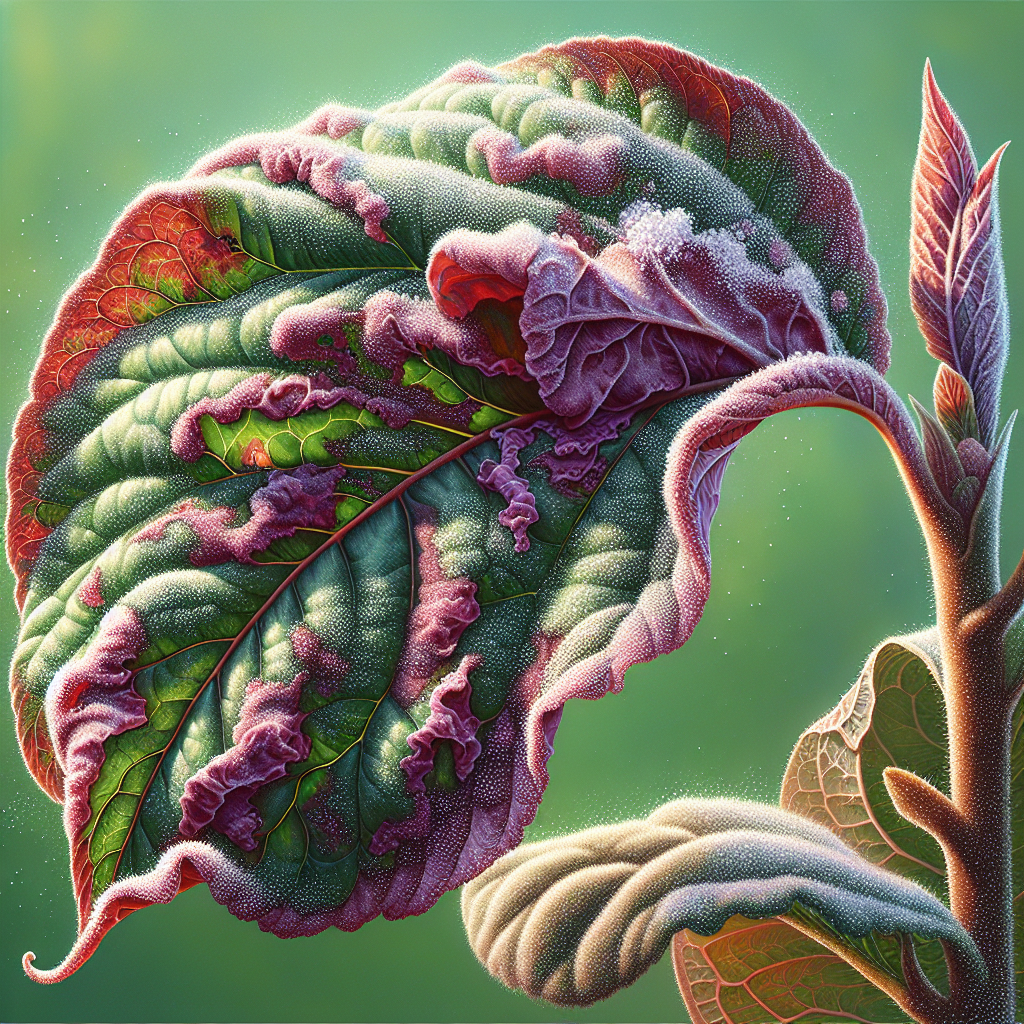
Accurate identification hinges on observing a suite of symptoms beyond mere curling. Early signs include thickened, brittle leaves with a leathery texture, often displaying reddish, purplish, or chlorotic (yellowing) discoloration. In fungal peach leaf curl, leaves emerge distorted with powdery white spores on the upper surface during wet weather, progressing to necrosis where tissues die and drop, leaving "shot-hole" patterns.
Viral leaf curl, prevalent in tomato, shows stunted internodes, brittle leaves rolling upward, and accompanying mosaic viruses with mottled patterns. Check undersides for whiteflies, key vectors. Damage extends to fruits: deformed, necrotic spots or reduced size, as seen in chili leaf curl where plants become bushy with fewer flowers.
Physiological leaf curl from drought or herbicide drift lacks pathogen signs but features uniform curling across the plant. Differentiate via microscopy for fungal hyphae or PCR tests for viruses. Yield impacts are profound—peach trees lose 70% leaves, halting fruit swell; tomatoes drop 80% marketable yield. Scout weekly during spring flush, using a 10x hand lens for spores or insects. Secondary signs include sooty mold from honeydew-excreting pests like mealybugs on curled leaves.
In advanced stages, entire shoots die back, mimicking Verticillium wilt. Document with photos for trends; consult extension services for confirmation. Economic thresholds: treat if >10% foliage affected.
Lifecycle and Progression of leaf curl
Leaf curl lifecycles vary by cause, demanding tailored monitoring. Fungal types like peach leaf curl (Taphrina deformans) overwinter as ascospores in bark crevices or fallen leaves. Cool (50-70°F), moist springs trigger spore germination, infecting expanding buds. Symptoms appear 2-3 weeks later as leaves deform; spores release in summer rain, splashing to new sites. One cycle per season, but survivors persist years without treatment.
Viral leaf curl, such as chili leaf curl disease, involves begomoviruses transmitted by whiteflies in a persistent manner. Virions circulate in vectors for life, spreading via flights or plant-to-plant contact. Infected plants remain sources indefinitely; progression: mild curling to severe stunting within 4-6 weeks post-infection. No cure—focus on vectors.
Environmental leaf curl progresses rapidly: drought causes permanent distortion in days; recovery possible with irrigation. Progression stages: 1) Initial puckering (days 1-7); 2) Coloration change (week 2); 3) Necrosis/drop (week 3+); 4) Defoliation/shoot dieback (month 1). Monitor with disease calendars tied to weather. In perennials like avocado, repeated cycles weaken trees over seasons.
Environmental Triggers & Risk Factors
Leaf curl thrives under specific conditions amplifying pathogen pressure. Fungal strains demand prolonged leaf wetness (>8 hours at 55-75°F), common in foggy valleys or irrigated orchards. High nitrogen fertilizers promote succulent growth, ideal for infection. Poor air circulation in dense canopies traps humidity.
Viral transmission surges with whitefly populations, favored by warm (75-95°F), dry weather and weeds as reservoirs. Overlapping crops or nearby cotton fields heighten vector migration. Soil pH extremes (too alkaline/acidic) stress plants, mimicking symptoms.
Risk factors: susceptible varieties (e.g., older peach cultivars), overhead irrigation, compacted soils limiting roots, and climate shifts like erratic rains. New plantations near infected fields risk 90% incidence. Assess via risk indices: high if >60% humidity + vector presence.
Organic Control & Treatment Plans
Organic management integrates cultural, biological, and approved sprays. For fungal leaf curl, apply copper-based fungicides (e.g., Bordeaux mix) at bud swell (delayed dormant stage)—full coverage essential, repeat post-rain. Sulfur sprays during green tip stage work in organics. Rake/prune infected shoots, destroy debris.
Target vectors: release predatory insects like lacewings against whiteflies; neem oil or insecticidal soaps smother nymphs (apply evenings, 3x/week). Reflective mulches deter alates. For viruses, rogue infected plants immediately—cut and burn.
Biologicals: Bacillus subtilis for fungal suppression; mycorrhizal inoculants bolster resistance. Nutritional sprays (calcium, silicon) toughen cell walls. Treatment timeline: Scout weekly; intervene at 5% incidence. In tomato, interplant with marigold for nematode/vector repulsion. Rotate crops 3-4 years; solarize soil pre-planting. Success rates: 80-95% with timely action.
Integrated plan: 1) Sanitize; 2) Vector control; 3) Fungicide if needed; 4) Monitor. Avoid resistance via rotation.
Preventing leaf curl in the Future
Prevention outperforms cure through resilient systems. Select resistant varieties: 'Crimsoncurl-free' peaches, virus-tolerant tomatoes like 'Swaroop'. Site selection: well-drained, sunny spots with airflow; avoid low-lying fog pockets.
Cultural practices: Drip irrigation minimizes wetness; prune for open canopies (20-30% light penetration). Mulch suppresses splash; cover crops enhance soil health. Monitor with traps for whiteflies; threshold: 1/trap/day.
Quarantine new plants; certify virus-free stock. Seasonal timing: plant post-vector peaks. Boost immunity via balanced fertility (avoid excess N); foliar kelp extracts. Long-term: biodiversity with trap crops, beneficial habitats. Annual audits reduce incidence 70%.
Crops Most Affected by leaf curl
Leaf curl plagues diverse crops, hitting solanaceae hardest. Tomatoes (Beefsteak Tomato, Roma Tomato) suffer viral strains, losing 50-90% yield. Chili Pepper and bell pepper face chili leaf curl disease, stunting plants. Stone fruits like peach, cherry, plum, and almond battle Taphrina fungi.
Potato, eggplant, and papaya show symptoms; cotton (Upland Cotton) viral curl devastates fibers. Mango, banana, and citrus experience physiological/environmental forms. Lesser hits: squash, cucumber. Global hotspots: India (chili/tomato), USA (peach), Australia (stone fruits). Prioritize scouting in these.