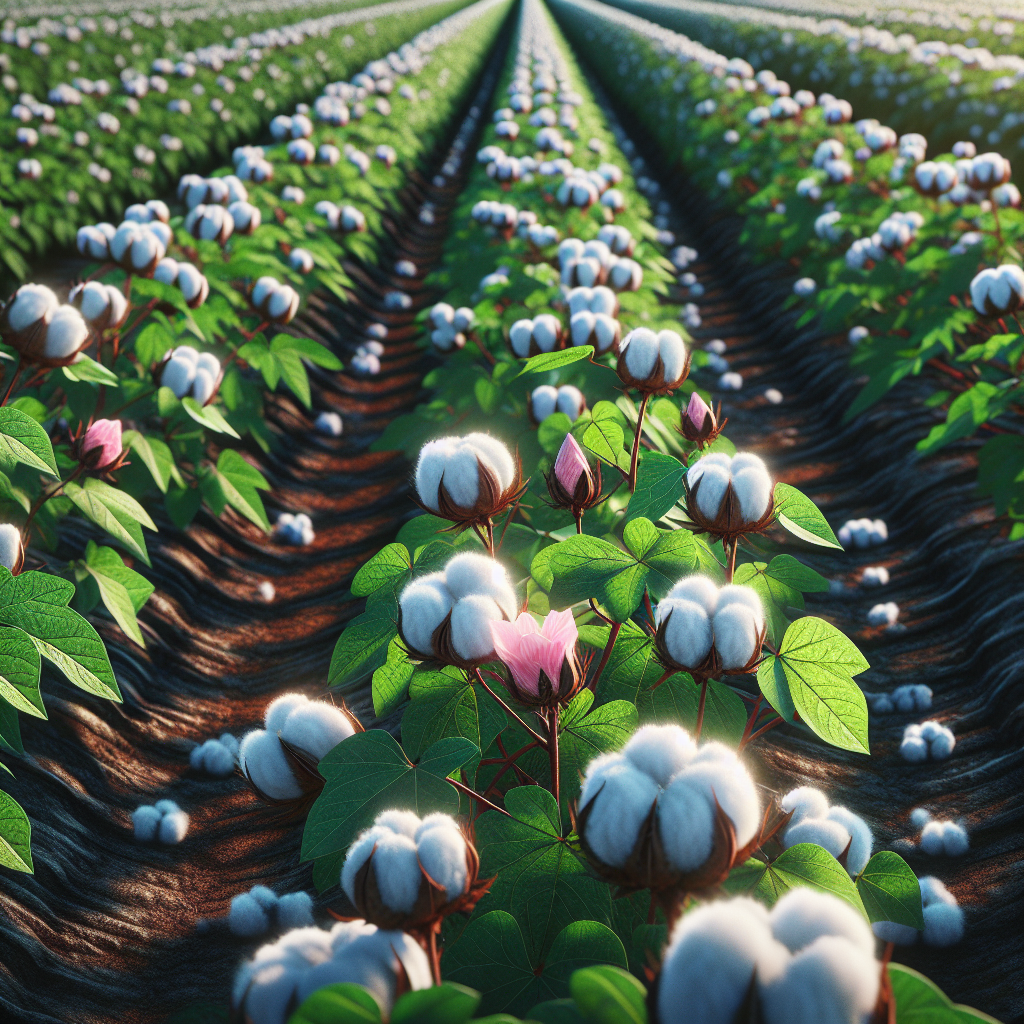
Introduction to Upland Cotton
The most widely cultivated cotton species in the world, this crop accounts for the great majority of global lint production and is the standard cotton of many farming regions in the Americas, Africa, and Asia. It is often called American upland cotton because of its historical domestication and selection in Mesoamerica and later large-scale development in the United States, where breeding programs focused on earliness, storm resistance, machine harvest suitability, and improved lint quality.
Unlike extra-long-staple types such as Pima Cotton, this species generally produces medium-staple fiber with strong agronomic flexibility. That flexibility is the main reason growers choose it: it tolerates a wider range of soils and production systems, responds well to irrigation or rainfall-based farming, and has an enormous number of regionally adapted cultivars.
Upland cotton is both a fiber crop and an oilseed crop. The lint is the spinnable fiber surrounding the seed, while the seed itself can be processed for oil, meal, or planting stock. Successful production depends on managing the crop as a sequence of developmental stages: emergence, seedling establishment, square initiation, flowering, boll set, boll fill, boll opening, and defoliation or dry-down. Yield is determined not just by plant population, but by fruit retention, boll load, and the plant's ability to balance vegetative and reproductive growth under heat, water, and pest pressure.
For broader rotational context with other field crops, see our Cotton guide. Good field planning and soil stewardship matter enormously; practical principles overlap with those discussed in soil health strategies.
Botanical Profile of Upland Cotton
This species belongs to the family Malvaceae, the same family as okra and hibiscus. It is a warm-season perennial by nature, but it is almost always grown as an annual crop in commercial systems. The plant has an indeterminate growth habit, meaning it can continue producing vegetative and reproductive structures at the same time when conditions remain favorable.
Growth begins with a strong taproot that may penetrate well over 1 meter in friable soils, with a dense network of lateral roots concentrated in the upper soil profile. This root architecture explains two important management facts: the crop is moderately drought tolerant once established, but it is still highly sensitive to early root restriction, compaction, and prolonged waterlogging in the top 15 to 30 cm of soil.
Seedlings first produce cotyledons, then true leaves that are typically broad and palmately lobed. As plants mature, they develop a central stem, vegetative branches, and fruiting branches called sympodia. Squares are the flower buds. Flowers are often creamy white to yellow when they open, then may turn pinkish or reddish after pollination. The fruit is a capsule called a boll, containing seeds covered in lint and shorter fibers called fuzz.
Botanically, the crop is self-pollinating to a large degree, though insect activity can increase cross-pollination. Fiber quality traits include staple length, strength, uniformity, micronaire, and color grade. Many upland cultivars are bred for machine harvest efficiency, compact plant architecture, stormproof bolls, and transgenic or conventional resistance packages. Mature plant height typically ranges from 75 to 150 cm depending on variety, fertility, water supply, and plant density.
The developmental timeline is temperature dependent. Emergence may occur in 5 to 10 days in warm soil, first squares often appear around 35 to 45 days after planting, first bloom around 55 to 75 days, and first open boll commonly 110 to 150 days after planting depending on variety and environment. Heat unit accumulation is a better predictor than calendar days in professional production.
Soil, pH, and Climate Requirements for Upland Cotton
Best performance comes from deep, well-drained loam, sandy loam, or silt loam soils with good internal drainage and a stable crumb structure. The crop can be grown on heavier clays, but only where drainage is reliable and the soil does not remain saturated after rain or irrigation. Standing water for even 24 to 48 hours during seedling establishment can sharply reduce stands and predispose roots to disease.
Ideal soil pH is generally 5.8 to 7.2, with the sweet spot often around 6.0 to 6.8. Below pH 5.5, aluminum and manganese toxicity risk increases and availability of calcium, magnesium, and molybdenum can decline. Above pH 7.5, deficiencies of zinc, iron, or manganese become more common, especially in calcareous soils. Before planting, a professional soil test should include pH, buffer pH, organic matter, cation exchange capacity, and available phosphorus and potassium.
The crop needs warmth more than almost any other common broadacre row crop. Germination is best when soil temperature at planting depth is consistently at or above 18 to 20°C, though some growers plant at 16°C with high-quality seed and excellent forecasts. Air temperatures of 25 to 35°C favor active growth. Prolonged exposure below 15°C slows root activity and fruiting, while repeated temperatures above 38 to 40°C during flowering can reduce pollen viability and increase square or young boll shed.
Frost is highly damaging. The crop requires a long frost-free period, usually 160 to 200 days depending on cultivar and harvest method. Relative humidity and rainfall patterns also matter. Excess rainfall and high humidity late in the season increase Boll rot, hard lock, delayed opening, and staining. Very dry climates reduce foliar disease pressure and often improve harvest quality, provided irrigation is sufficient.
Seasonal water demand commonly ranges from 500 to 900 mm, depending on soil type, evaporative demand, and season length. The critical periods are square formation through boll fill. Soil moisture should be maintained in the active root zone without prolonged saturation. As a practical target, many growers aim to avoid depletion beyond roughly 40 to 50% of available water in the top 60 to 90 cm during peak fruiting. Overwatering often shows up as rank vegetative growth, darker overly lush leaves, delayed fruiting, increased square shed, shallow rooting, and more disease pressure. Underwatering leads to midday wilting, reduced internode growth, shed squares, smaller bolls, and premature cutout.
Step-by-Step Planting & Propagation
Propagation is almost always by seed. Use certified, high-vigor seed with a known germination percentage and, where relevant, appropriate seed treatments for damping-off fungi, seedling blights, or early Thrips pressure. Fuzzy seed may be acid-delinted commercially for more uniform planting.
- Choose a field with low residual herbicide risk, minimal compaction, and no recent history of severe nematodes or seedling disease.
- Prepare a fine, firm seedbed if conventional tillage is used, or ensure residue is evenly distributed in reduced-till systems. Good seed-to-soil contact is essential.
- Plant only when the 5-day forecast supports rapid emergence. Cold shock after planting causes erratic stands and weaker seedlings.
- Sow seed 2 to 4 cm deep in most soils. In cool or heavy soils, stay shallower; in warm sandy soils with drying surfaces, slightly deeper placement may be appropriate.
- Target final populations according to row spacing, irrigation, and cultivar architecture. Many systems aim for roughly 8 to 15 plants per meter of row, though local recommendations vary widely.
- Maintain uniform spacing because gaps reduce fruiting efficiency and uneven emergence complicates pest control and defoliation timing.
Row spacing can range from ultra-narrow to conventional wide rows, but 75 to 100 cm spacing remains common in many mechanized systems. Narrow rows may suppress weeds earlier and favor earlier canopy closure, but they can also increase humidity and reduce spray penetration if foliage becomes dense.
Seedlings should emerge into moist, not saturated soil. If a crust forms after rain on fine-textured soils, weak emergence and stand loss can occur. Rotary hoeing or other light mechanical intervention may be justified where appropriate. Replant decisions should be based on surviving plant population, uniformity, and calendar date rather than panic over imperfect emergence; cotton can compensate surprisingly well when stands remain reasonably uniform.
Transplanting is rare commercially and usually not economical, though it is possible in research or specialty plots. Direct seeding is the standard and preferred method.
Care & Maintenance regimes for Upland Cotton
Early growth management sets the ceiling for yield. During the first 3 to 5 weeks, protect seedlings from weed competition, crusting, and early sap-feeding insects. Cotton grows relatively slowly at first, so even modest weed pressure can rob moisture, nutrients, and light. Keep the field clean until canopy development improves competitiveness.
Nitrogen management should be balanced, not excessive. Typical needs often fall in the range of 50 to 150 kg N/ha depending on yield goal, residual soil nitrate, organic matter mineralization, irrigation, and previous crop. Too little nitrogen leads to pale foliage, reduced boll set, small plants, and early cutout. Too much causes rank growth, delayed maturity, Boll rot risk, difficult defoliation, and more attraction to certain insects. Split applications are often safer than a heavy single dose, especially on sandy or irrigated ground.
Phosphorus supports early rooting and vigor; potassium is crucial for boll filling, water regulation, and fiber quality. Potassium deficiency in cotton often appears first as marginal chlorosis and scorching on older leaves, especially under heavy boll load. In high-yield systems, hidden potassium hunger can occur even when soil tests seem moderate. Sulfur, boron, and zinc may also be needed in deficient fields.
Irrigation should follow crop stage and soil water monitoring rather than calendar habit. From emergence to first square, keep the upper root zone evenly moist but not waterlogged. During squaring and flowering, prevent severe swings between dry and wet conditions, because that promotes fruit shed. During boll fill, maintain enough moisture to support lint development, but begin reducing irrigation as the crop approaches cutout and boll opening. Late unnecessary irrigation often delays maturity and degrades fiber quality.
Useful practical signs of correct moisture include leaves that remain turgid through midday except under extreme heat, steady node production, and good square retention. Signs of excess water include yellowing from oxygen-starved roots, lower leaf drop without drought, algae or persistent surface wetness, and foul-smelling anaerobic soil in severe cases. Signs of deficit include persistent leaf cupping, shortened upper internodes, aborted squares, and bolls that remain small or shed.
Growth regulator use, especially mepiquat chloride in conventional commercial systems, may be warranted where vigor is excessive. The goal is not to stunt the crop, but to improve fruiting balance, shorten internodes, open the canopy, and promote earlier maturity. Use only according to local recommendations, variety response, and measured growth patterns.
Weed control typically combines stale seedbed tactics, cultivation, mulches in small-scale plantings, cover-crop residue, and selective herbicides where permitted. The most critical weed-free period is generally early, before the crop shades row middles.
Pests, Diseases & Organic Management
This crop hosts a wide pest complex, and successful management relies on scouting rather than routine spraying. The most damaging insects vary by region, but key threats often include Thrips, Aphids, Whiteflies, Bollworms or Budworms, Armyworms, Stink bugs, Plant bugs, Spider mites, and Boll weevils where present.
Thrips damage young leaves and terminals, causing crinkling, silvery scarring, and delayed seedling growth. Healthy, fast-emerging plants often outgrow moderate injury. Aphids and Whiteflies remove sap and excrete honeydew, which can foul lint and encourage sooty mold. Stink bugs and Plant bugs are especially damaging during squaring and boll development because they puncture fruiting structures, causing shed, warted bolls, stained lint, or hard lock.
Organic management begins with sanitation, rotation, balanced fertility, and habitat for beneficial insects. Avoid excess nitrogen, which creates lush tissue attractive to sap feeders. Destroy volunteer cotton and crop residues that bridge pest populations between seasons. Border plantings of beneficial-attracting species such as Clover, Sunflower, and Yarrow can support parasitoids and predators, though they must be managed so they do not become alternate pest reservoirs.
Biological allies include lacewings, lady beetles, minute pirate bugs, big-eyed bugs, parasitic wasps, and predatory mites. Bt-based products can be effective on small caterpillars if applied early and with good coverage. Neem formulations may help suppress some sucking insects, but repeated use should be strategic to avoid harming non-targets. Insecticidal soaps can assist against Aphids or Whiteflies in small plantings, though coverage on dense canopies is difficult.
Major diseases include seedling blights caused by Pythium, Rhizoctonia, and Fusarium; Fusarium wilt; Verticillium wilt; Bacterial blight; Boll rot complexes; and Root-knot nematodes. Seedling disease is most severe in cool, wet soils. Wilts are favored by infested soils and stress. Bacterial blight tends to increase with splashing rain, susceptible cultivars, and residue carryover.
Organic disease prevention centers on warm planting conditions, long rotations, resistant cultivars where available, clean seed, excellent drainage, and avoidance of overhead irrigation late in the day. Rotating with non-hosts such as Wheat can help reduce some disease and nematode pressures, although rotation alone may not eliminate persistent problems. Remove or deeply incorporate heavily infected residue where appropriate and legal, and keep field traffic off wet soils to avoid compaction that weakens root systems.
Harvesting, Curing & Optimal Storage
Harvest begins when most harvestable bolls are fully open and the crop has reached physiological maturity. In machine-picked systems, growers often wait until about 60 to 70% or more of bolls are open, with immature top bolls evaluated against weather risk and fiber quality goals. Defoliation is commonly used to remove leaves, improve picker efficiency, reduce trash content, and expose bolls for cleaner harvest.
A mature boll is dry, well-opened, and shows fluffy lint that expands outward cleanly. Immature bolls are tighter, greener, and produce poorer fiber and sticky processing problems if harvested too early. Rain after boll opening can reduce color grade, increase leaf trash, and promote string-out or field weathering, so harvest timing is critical.
For hand harvest in small plots, pick only dry cotton after dew has lifted. Wet lint stains easily and is prone to microbial problems in storage. Use clean breathable sacks, and keep picked cotton off the ground. For spindle picker harvest, field preparation should minimize green regrowth, weeds, and lodged plants.
Curing in the traditional sense is less relevant than thorough drying and clean handling. Seed cotton should be kept dry enough to avoid heating in storage. If moisture is too high, microbial respiration can generate heat, cause discoloration, create musty odor, and reduce gin turnout quality. As a rule, cotton destined for storage should feel crisp and dry, not cool-damp or compressed. Commercial storage targets depend on form and facility, but avoiding elevated moisture is essential.
Store seed cotton in a clean, covered, well-ventilated area protected from rain, rodents, birds, and oil or chemical contamination. Never store near fuels, pesticides, or strong odors. Lint is highly adsorptive and contamination can cause severe market discounts. Baled cotton requires correct moisture and density management to prevent spoilage or fire risk. Seed reserved for planting should be kept cool, dry, and protected from insects, with stable low humidity to preserve viability.
Companion Planting for Upland Cotton
In smaller farms and diversified systems, carefully chosen companions can support biological control, improve pollinator activity around field edges, and protect soil between wider rows or around plot margins. The best companions are usually not mixed densely within the cotton stand, but placed in borders, alleys, or rotational strips so they assist ecology without competing heavily for light and moisture.
Clover is one of the most useful support plants because it functions as a living mulch or off-season cover, helps protect soil structure, and contributes biologically fixed nitrogen when used in rotation rather than as an aggressive in-row competitor. Yarrow attracts predatory and parasitic insects with its flat umbels and extended bloom period, making it valuable on margins near cotton blocks.
Sunflower can serve as an insectary and trap-edge plant, drawing pollinators and beneficial insects while also offering structural diversity in field borders. Thai Basil is useful in small-scale or garden-adjacent cotton plantings where aromatic flowering herbs are used to diversify beneficial insect habitat. In all cases, keep a buffer so companions do not shade young cotton or complicate cultivation and harvest.
Avoid pairing the crop closely with companions that host overlapping key pests, create excessive humidity in the canopy, or demand frequent irrigation late in the season. The guiding principle is support without competition: companions belong around the cotton production system more often than directly inside the row.