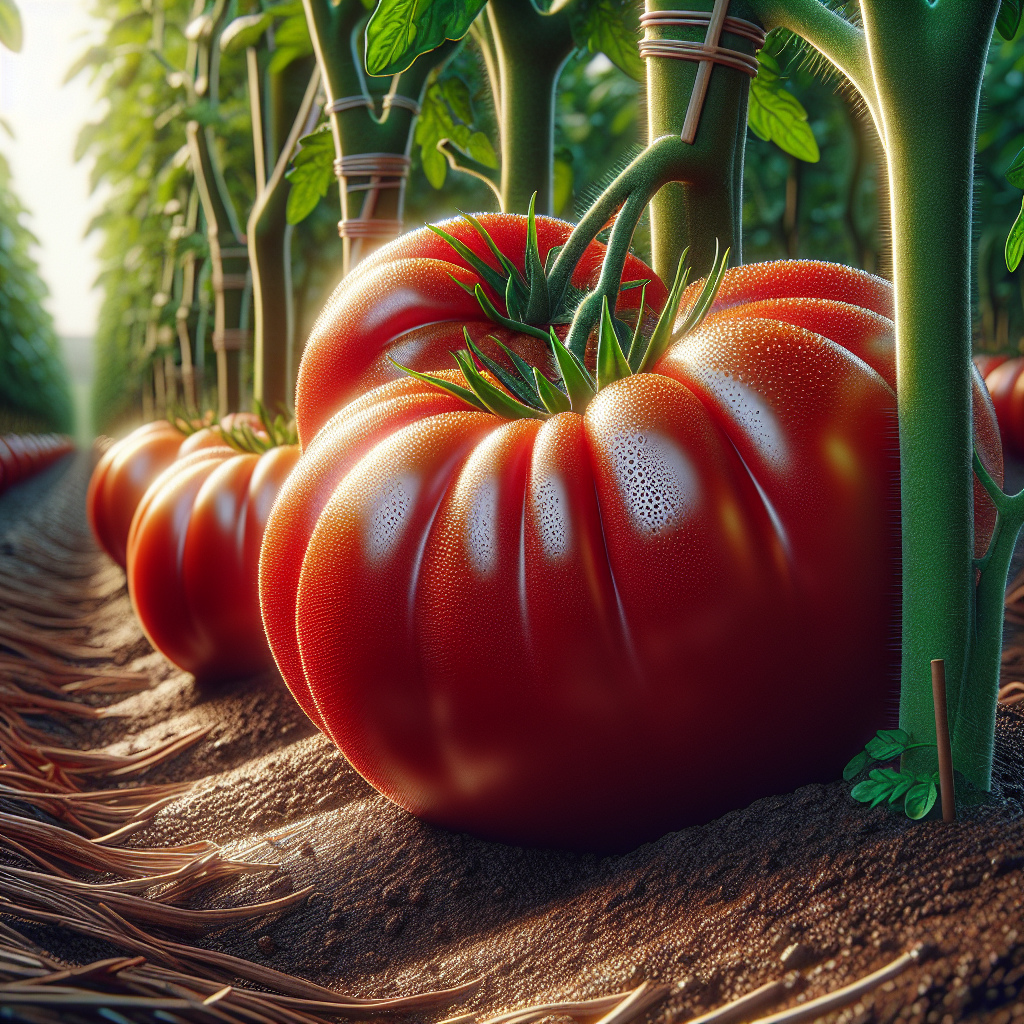
Introduction to Beefsteak Tomato
Among all tomato classes, this is the archetype of the sandwich tomato: large, flattened or globe-shaped fruits with dense flesh, broad seed cavities, and enough size that a single slice can cover a piece of bread. The term “beefsteak” refers more to a fruit type than to one single cultivar, and it includes many heirloom and hybrid selections ranging from pink and red to striped and even dark-fruited forms. What unites them is fruit mass, often 250-450 g per tomato, with many cultivars regularly exceeding 680 g under excellent management.
This fruit type traces its popularity to North American and European kitchen gardens where size, slicer quality, and fresh flavor were valued over shipping durability. Many heirloom beefsteaks are indeterminate, late to mature, and exceptional in flavor but less uniform than commercial hybrids. Modern hybrid beefsteaks often improve crack resistance, disease tolerance, and yield, but they still retain the central production challenge of the type: very large fruits place enormous demand on roots, foliage, calcium transport, and structural support.
Growers choosing this type should think of it as a high-input tomato. It is not necessarily difficult, but it is unforgiving of irregular watering, weak trellising, poor airflow, or shallow fertility. If you already grow standard slicers, compare cultural notes with a general Tomato guide, but expect beefsteaks to require more disciplined pruning and support. For growers refining bed fertility and organic structure before planting, broad principles in soil health strategies are especially relevant because this crop performs best in biologically active, moisture-balanced soil.
Botanical Profile of Beefsteak Tomato
This crop belongs to the Solanaceae, or nightshade family, alongside peppers, potatoes, and eggplants. It is botanically a warm-season perennial grown as an annual in most climates. Plants can be determinate or indeterminate, though most classic beefsteak cultivars are indeterminate and continue producing flowers and fruit until cold weather, disease, or drought stress stops them.
Morphologically, beefsteak plants often show robust vegetative vigor with thick stems, coarse leaves, and long internodes if fertility is excessive or light is inadequate. Flowers are yellow, self-fertile, and primarily self-pollinated by vibration, though wind and insect movement improve pollen release. Fruit development is strongly influenced by temperature: daytime highs around 24-29°C and nighttime temperatures of 16-21°C support best fruit set. Above about 32-35°C, pollen viability falls, blossoms may abort, and misshapen fruit becomes more common.
Large-fruited cultivars frequently produce ribbing, catfacing, uneven shoulders, and zipper scars, especially when early blossoms experience cool nights, temperature swings, or physical flower damage. These defects are often more cosmetic than pathological. Because the fruits are multilocular and large, they are more prone to cracking than smaller-fruited tomatoes when water uptake surges after a dry spell.
Rooting is deeper than many gardeners realize. In loose soil, the crop benefits from a rooting depth of 45-60 cm or more, with most active feeder roots concentrated in the upper 20-30 cm. Adventitious roots form readily along buried stem tissue, which is why deep transplanting is highly effective. Foliage and fruit contain the alkaloid tomatine in varying amounts, particularly in green tissues, so only ripe fruits are considered edible.
Soil, pH, and Climate Requirements for Beefsteak Tomato
This crop performs best in deep, friable, well-drained loam or sandy loam rich in organic matter, with good aggregation and consistent moisture-holding capacity. A target soil organic matter range of roughly 3-6% is excellent for field or garden production. Heavy clay can work if raised beds, compost incorporation, and drainage correction are used, but persistently saturated conditions sharply increase root stress, edema, nutrient imbalance, and disease pressure.
Ideal pH is 6.2-6.8. Growth remains acceptable from about 6.0-7.0, but nutrient availability becomes less balanced outside that range. At pH below 5.8, calcium, magnesium, and phosphorus issues become more likely, and manganese or aluminum toxicity can suppress root growth. At pH above 7.2, iron and manganese may become less available, often showing up as chlorosis on younger leaves. If liming is needed, apply agricultural lime well before planting so pH can stabilize. If pH is high, avoid overapplying wood ash or alkaline composts.
Nutritionally, beefsteaks need strong but not excessive nitrogen. Too much early nitrogen creates lush vines with delayed flowering and softer tissues more susceptible to pests and disease. A balanced preplant fertility program often includes mature compost and a base fertilizer emphasizing phosphorus and potassium alongside moderate nitrogen. Calcium is especially important because large fruits are vulnerable to blossom end rot when calcium transport is disrupted by inconsistent soil moisture, high salinity, root damage, or excessive ammonium and potassium competition.
Climate should be warm, sunny, and frost-free. Provide at least 8 hours of direct sun daily; 10 or more is ideal for dense canopies and full flavor. This type is best suited to temperate, Mediterranean, subtropical highland, or warm summer continental conditions where nights are not excessively cold and humidity is manageable. In hot, humid regions, disease pressure from foliar pathogens may be the limiting factor rather than fertility. In arid climates, sunscald can become a major issue if pruning is too aggressive.
Soil moisture should remain consistently even, not cycling between powder-dry and saturated. A practical target is moist soil at root depth that holds together when squeezed but does not drip water. Tensiometer-based irrigation in field settings often aims roughly around 10-25 centibars in loam during active fruiting, with irrigation triggered before plants reach significant stress. In containers, allow only the top 2-3 cm to dry slightly before watering again; deeper drying commonly causes fruit cracking and blossom end rot.
Step-by-Step Planting & Propagation
Start seed indoors 6-8 weeks before the last expected frost, or buy stocky, disease-free transplants. Sow seed 0.5-1 cm deep in a sterile, fine-textured seed-starting mix at 24-28°C. Germination commonly occurs in 5-10 days. Immediately after emergence, provide strong light for 14-16 hours daily if under artificial lighting, keeping lights close enough to prevent stretching. Seedlings grown too warm and too dim become weak and spindly, which reduces later performance.
Once the first true leaves appear, pot seedlings into larger cells or 7.5-10 cm pots, burying stems slightly deeper to encourage additional root formation. Maintain moderate fertility; seedlings should be green and compact, not dark, lush, and floppy. Before planting out, harden off over 7-10 days by gradually increasing sun exposure and reducing but not withholding water.
Transplant only after all frost danger has passed and soil temperatures are consistently above 16°C, preferably nearer 18-21°C for rapid establishment. Cold soil slows root function and can stunt growth for weeks. Prepare planting holes deeply, incorporating compost only if the surrounding bed is also improved; concentrated “pockets” of rich amendment can discourage roots from expanding outward.
Bury transplants deeply, leaving only the top cluster of leaves above the soil, or plant horizontally in a trench if stems are tall. Remove lower leaves that would be buried. This technique significantly increases root mass and anchorage, which is especially valuable for large-fruited indeterminate types.
Spacing depends on training method:
- Staked and pruned indeterminate plants: 45-60 cm apart in-row, 90-120 cm between rows.
- Caged plants: 60-75 cm apart.
- Wider spacing may be needed in humid climates to improve airflow and reduce foliar disease.
Install supports at planting time, not later, to avoid root damage. Heavy-duty stakes at least 2.1-2.4 m long, robust cages, Florida weave systems, or overhead trellises all work. Lightweight cages are usually inadequate for this crop because fruits and foliage can exceed their load-bearing capacity quickly.
Mulch after the soil has warmed. Straw, shredded leaves, or clean grass clippings help reduce evaporation, buffer temperature swings, and limit soil splash that spreads pathogens. Keep mulch a few centimeters away from the stem base to reduce collar rot risk.
Propagation from saved seed is possible for open-pollinated heirloom beefsteaks, but not reliable for hybrids if true-to-type offspring are desired. Seed saving should come from fully ripe, healthy fruits on vigorous plants. Ferment seeds briefly to remove the gel sac, rinse, and dry thoroughly before storage.
Care & Maintenance regimes for Beefsteak Tomato
Success hinges on regularity. Large-fruited tomatoes respond poorly to sudden changes in water, fertility, or canopy management.
Water deeply and consistently. In field or raised-bed culture, plants typically need about 2.5-4 cm of water per week, but actual demand rises sharply in hot, windy weather and during heavy fruit load. Mature plants in midsummer may need irrigation every 2-3 days in sandy soils, while loam may support longer intervals. The goal is to wet the root zone to at least 15-20 cm depth per irrigation event rather than applying frequent shallow sprinkles.
Signs of underwatering include midday wilt that persists into evening, dull or blue-green foliage, flower drop, and fruits that become prone to cracking after the next irrigation. Signs of overwatering include persistently drooping leaves despite wet soil, yellowing lower foliage, algae or fungus gnat presence in containers, sour-smelling soil, and reduced root vigor. Chronically waterlogged plants often show nutrient deficiency symptoms because roots cannot respire effectively.
Fertilize in phases. Before planting, use a balanced organic or conventional base feed with moderate nitrogen. Once plants establish and first fruit clusters are forming, side-dress with additional nutrients emphasizing potassium and calcium support. Avoid pushing strong nitrogen after flowering begins, or the plant may prioritize vine growth over fruit quality. In intensive systems, split applications every 2-3 weeks are often safer than one heavy feeding. Leaf tissue testing is ideal in professional settings; in gardens, use foliage color and growth rate as indicators. Pale green new growth may indicate nitrogen deficiency, while dark, lush growth with poor set suggests overfeeding.
Prune according to your support method and climate. For indeterminate beefsteaks on stakes or strings, many growers remove suckers below the first flower cluster and then maintain one or two main stems. This improves airflow, fruit size, and spray penetration. However, excessive pruning in hot climates exposes fruit to sunscald, seen as pale, blistered patches on the sun-facing shoulder. Leave enough leaf cover to shade fruit during extreme heat.
As plants grow, tie stems loosely with soft ties at 20-30 cm intervals. Support fruit trusses if they become exceptionally heavy. Remove yellowing or diseased lower leaves promptly, especially those touching the soil. Sanitize pruners between plants if disease is suspected.
Pollination is usually self-sufficient outdoors, but fruit set may decline in still, humid weather or high heat. Lightly shaking support wires or stakes during flowering can improve pollen release in protected culture. Avoid broad-spectrum insecticides during bloom if pollinators are active nearby, even though tomatoes are primarily self-pollinating.
Temperature management matters. Blossom drop commonly occurs when night temperatures stay above 24°C or below about 13°C. In cool early seasons, black plastic mulch or low tunnels can accelerate growth. In intense summer heat, afternoon shade cloth around 20-30% can reduce stress without sacrificing too much light.
Pests, Diseases & Organic Management
This crop is vulnerable to numerous pests and pathogens, so prevention is more effective than rescue treatments.
Common insect pests include Aphids, Whiteflies, Thrips, Flea Beetles, Hornworms, Stink Bugs, and Spider Mites. Aphids and Whiteflies weaken plants and can spread viruses. Thrips can damage flowers and also vector disease. Hornworms defoliate rapidly and are easiest controlled by hand removal or encouraging parasitic wasps. Spider Mites proliferate in hot, dry conditions, causing stippling and bronzing on leaves.
Organic management begins with habitat and hygiene. Use crop rotation of at least 3 years away from other solanaceous crops where disease pressure is significant. Avoid planting near Potato if Late Blight is a regional concern, as both crops can share key diseases. Maintain weed control because many weeds host insect vectors and viruses. Reflective mulch can suppress aphid and whitefly landing in some systems. Insecticidal soap and neem-based products can help with soft-bodied pests if coverage is thorough and applications are made during cooler parts of the day to avoid phytotoxicity.
Major diseases include Early Blight, Septoria Leaf Spot, Late Blight, Bacterial Speck, Bacterial Spot, Fusarium Wilt, Verticillium Wilt, and various viruses such as Tomato Mosaic Virus and Tomato Spotted Wilt Virus. Foliar diseases usually begin on lower leaves where humidity persists longest. Septoria often appears as many small dark spots with tan centers; Early Blight forms larger lesions with target-like rings. Late Blight is more aggressive, with water-soaked lesions and rapid collapse in cool, wet weather.
Organic disease prevention focuses on five principles:
- Start with resistant or tolerant cultivars when available.
- Keep foliage dry by watering at the base rather than overhead.
- Improve airflow through spacing, pruning, and staking.
- Mulch to reduce soil splash.
- Remove infected foliage early and destroy crop debris after the season.
Copper-based fungicides and biologicals containing Bacillus species can be useful preventively, but they work best before disease is severe. Once systemic wilts or viral diseases are established, rogueing affected plants is often the best course. Do not compost severely diseased material unless your compost system reliably reaches pathogen-killing temperatures.
Blossom end rot is not a pathogen but a physiological disorder common in beefsteaks. It appears as a dark, leathery patch on the blossom end of fruit. The underlying issue is disrupted calcium delivery, usually caused by erratic moisture, root damage, excessive salts, or imbalanced fertilization rather than simple lack of calcium in the soil. Correct watering consistency first.
Fruit cracking and catfacing are also frequent. Radial cracks around the stem usually follow rapid water uptake after dryness. Concentric cracking may be partly varietal. Catfacing is associated with cool weather during flower development and is more common in large heirloom beefsteaks.
Harvesting, Curing & Optimal Storage
Harvest stage depends on intended use and distance to market. For the best flavor, allow fruits to ripen on the vine until full cultivar color develops and the fruit gives slightly under gentle pressure. For local market handling, harvest at breaker stage when the first visible color change appears, especially if cracking, birds, or weather threaten. Beefsteaks harvested too green often fail to develop full sugars and aroma.
Use pruners or twist fruit gently without tearing the truss. Handle carefully; large fruits bruise more easily than smaller firm-fruited types. Remove damaged, cracked, or diseased fruits immediately so they do not attract pests or spread rot.
Unlike onions or winter squash, this crop is not “cured” in the classic dry-down sense. However, harvested fruits do benefit from a short stabilization period in shade with good airflow. Hold them in a single layer at about 18-21°C to finish ripening evenly. Avoid stacking deep layers because pressure bruising degrades quality quickly.
Never refrigerate unripe fruits. Chilling below about 10-13°C can impair flavor development, cause mealy texture, and reduce aroma. Fully ripe fruits can be held briefly at slightly cooler temperatures if necessary, but room-temperature storage is best for eating quality. Ideal short-term storage is around 12-18°C with moderate humidity and good ventilation. Under these conditions, breaker-stage fruits may ripen over several days, while fully ripe fruits should be consumed within 2-5 days for peak quality.
For seed saving, select the healthiest true-to-type fruits from productive plants, ideally from early to midseason harvests rather than stressed late fruit. Fully ripe fruits give the most viable seed.
Companion Planting for Beefsteak Tomato
Companion planting is most useful when approached as microclimate and pest-management design rather than folklore. The best companions either repel or confuse pests, attract beneficial insects, or occupy different root and canopy niches without competing too aggressively.
Thai Basil is valuable near tomato rows because its aromatic foliage may help confuse some insect pests, and its flowers attract pollinators and beneficial insects when allowed to bloom. It also thrives under similar warm-season conditions and does not create dense shade.
Garlic and Onion are classic intercrops around tomato beds because their strong scent can disrupt pest host-finding behavior, and their upright growth habit uses space efficiently at bed edges. They also mature on a different timeline, reducing direct canopy competition.
Avoid close association with crops that share major disease risks or impose strong nutrient competition in the same space. Other solanaceous crops are best separated in rotation blocks. Tall, dense companions that block airflow can increase humidity around foliage and worsen foliar disease. Companion species should support, not crowd, a plant that already develops a large, heavy canopy.
A practical layout is tomatoes on strong supports in the main row, basil planted 25-30 cm from the stem line, and alliums on outer edges where they receive light but do not interfere with pruning, tying, or harvest access.