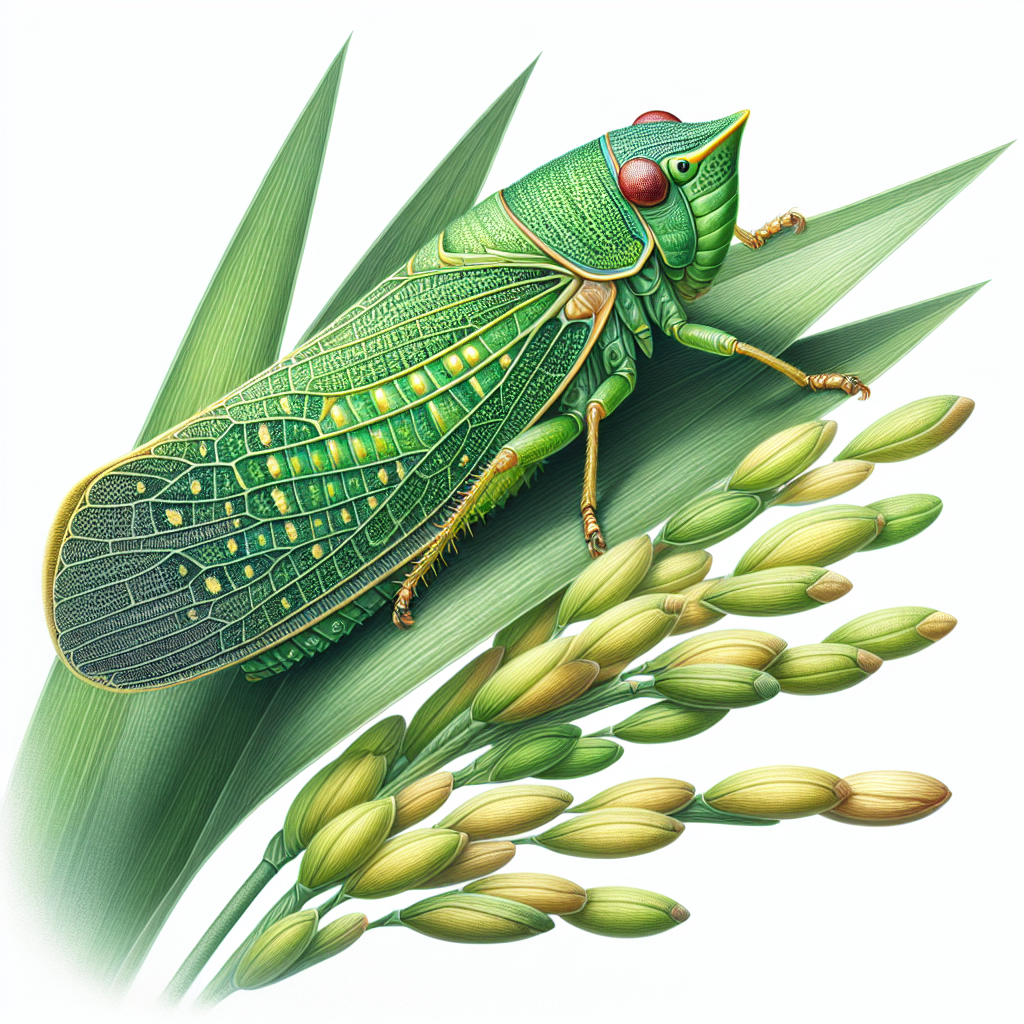
Introduction to Hoppers
Hoppers, more precisely known as leafhoppers (family Cicadellidae), represent one of the most pervasive pests in global agriculture. These tiny insects, typically measuring 3-15 mm in length, are characterized by their wedge-shaped bodies, broad heads, and remarkable jumping ability—hence the colloquial name "hoppers." Found worldwide, they infest a broad spectrum of crops, from staple grains like rice and wheat to fruits such as mango and vegetables including tomato. Leafhoppers feed by piercing plant tissues and extracting sap, which weakens plants and often leads to secondary issues like sooty mold or viral diseases.
Their economic impact is staggering: in rice-growing regions of Asia, hopper outbreaks can destroy up to 60% of yields annually, costing billions in losses. In tropical orchards, species like mango hoppers damage panicles, reducing fruit set by 50-80%. Unlike larger pests such as grasshoppers, hoppers evade detection due to their size and mobility, often going unnoticed until symptoms appear. This guide provides farmers with diagnostic tools, lifecycle insights, and proven organic management strategies to combat hoppers effectively. Early intervention is key, as populations explode in favorable conditions. For small farms, integrating these practices with tools like those in Spring Pest Patrol: Organic AI Strategies to Shield Your Crops from Common Invaders can optimize control efforts.
Hoppers thrive in diverse climates but prefer warm temperatures (25-35°C) and high humidity. Over 3,000 species exist, but key agricultural pests include the green leafhopper (Nephotettix virescens) on rice, potato leafhopper (Empoasca fabae) on legumes, and mango hopper (Idioscopus spp.) on fruits. They not only direct-feed but also vector pathogens like tungro virus in rice or grapevine yellows. Understanding their behavior—diurnal feeding, rapid reproduction, and host migration—is crucial for timely management.
Identifying Symptoms & Damage
Detecting hoppers early prevents devastating losses. Primary symptoms include stippling: tiny white or yellow dots on leaves from sap extraction, progressing to complete chlorosis (yellowing). Affected leaves curl upward, become brittle, and drop prematurely. In severe cases, hopper burn—complete scorching of leaf tips—occurs due to toxin injection during feeding.
Inspect undersides of leaves at dawn or dusk when hoppers are less active. Adults are wedge-shaped, often green or brown for camouflage, with prominent eyes and bristle-like antennae. Nymphs lack wings, appear crab-like, and excrete honeydew, fostering sooty mold—a black fungal growth. Unlike aphids, hoppers hop vigorously when disturbed.
Damage varies by crop: on sugarcane, internodes shorten, reducing sucrose content by 20-30%; on cotton, leafhopper infestations stunt growth and shed squares, cutting lint yield. Transmission of diseases like rice grassy stunt virus amplifies harm—yellow mosaic patterns or stunted tillers signal vectored pathogens. Use a hand lens (10x) for confirmation; shake plants over white paper to spot dislodged hoppers. Thresholds: 5-10 hoppers per leaf warrant action. Differentiate from thrips (silvering without honeydew) or mites (dusty webs). Scouting weekly from seedling stage is essential.
Lifecycle and Progression of Hoppers
Hoppers undergo incomplete metamorphosis: egg, nymph (5 instars), adult. Females lay 1-3 eggs daily in leaf veins or stems using needle-like ovipositors, totaling 100-200 eggs per female. Eggs hatch in 4-10 days at 30°C. Nymphs, wingless and mobile, feed gregariously, molting every 3-7 days; full development takes 15-30 days depending on temperature.
Adults live 30-60 days, with 10-20 generations yearly in tropics. Winged forms (macropterous) migrate; brachypterous stay local. Peak populations align with crop vegetative stages. Overwinter as eggs or adults in temperate zones. Monitor with sticky traps (yellow for adults) or sweep nets. Lifecycle acceleration in heat explains monsoon outbreaks. For detailed pest ID, see leafhoppers.
Environmental Triggers & Risk Factors
Hoppers explode in warm (25-35°C), humid (>70% RH) conditions with low rainfall variability. Monsoon onset triggers migration from grasses to crops. Dense planting, excess nitrogen (lush growth), and weeds like Echinochloa spp. serve as reservoirs. Poor drainage fosters nymph survival; drought-stressed plants attract adults.
Risk factors: monocropping corn, late planting overlapping hopper peaks, and nearby infested fields. Climate change extends seasons, boosting generations. Companion crops like marigold reduce incidence by repelling hoppers. Avoid over-fertilization; balanced NPK minimizes susceptibility. For weather insights, hyper-local forecasts help predict outbreaks.
Organic Control & Treatment Plans
Organic management emphasizes IPM: prevention, monitoring, biologicals, then targeted organics.
Cultural Controls: Destroy volunteers and grasses. Plant resistant varieties (e.g., rice TN1). Time sowing to evade peaks. Intercrop with thai-basil or nasturtium—natural repellents.
Physical Barriers: Floating row covers; blue sticky traps (1/10m²). Reflective mulches deter landing.
Biological Controls: Encourage predators like spiders, lacewings, ladybugs. Release Chrysoperla carnea (green lacewings) at 10,000/ha. Parasitic wasps (Gonatocerus spp.) target eggs.
Organic Sprays: Neem oil (0.5%) disrupts feeding/hormones—apply evenings, 3x/week. Insecticidal soaps smother nymphs. Garlic-chili extracts: 50g garlic + 50g chili in 1L water, strain, add soap. Rotate to prevent resistance. For soybeans, pyrethrum works well.
Treatment Plan: Scout weekly. At 5 hoppers/leaf, apply neem + release predators. Reapply post-rain. Combine with yarrow tea for systemic repellence. Efficacy: 70-90% reduction. Avoid broad-spectrum; preserve whiteflies predators.
Preventing Hoppers in the Future
Long-term prevention builds resilient systems. Rotate crops (grains-legumes-vegetables) to disrupt cycles. Use hopper-resistant cultivars: rice ASD16, mango Alphonso hybrids. Maintain field sanitation—burn residues, deep plow to expose eggs.
Enhance biodiversity: border hedges of clover, thyme. Mulch with straw to suppress weeds. Balanced nutrition: avoid N excess; add silica for tougher leaves. Trap crops like sorghum draw hoppers away. Monitor with apps for thresholds. Clean tools/equipment to prevent spread. In greenhouses, introduce Encarsia wasps.
Annual planning: pre-season trap counts guide prophylaxis. For small farms, AI scheduling optimizes timings. Consistent practices yield 80% fewer outbreaks.
Crops Most Affected by Hoppers
Hoppers plague diverse crops, prioritizing sap-rich hosts.
- Grains: Rice (brown planthopper synergy), wheat, corn, sorghum—yield losses 20-100%.
- Legumes: Soybeans, chickpeas, peanuts—defoliation, virus spread.
- Fruits: Mango (panicle damage), grapes, citrus—fruit drop.
- Vegetables: Tomato, potato, eggplant, cucumber—stunting, curling.
- Others: Cotton, sugarcane, tea.
Global hotspots: Asia (rice), Americas (potato leafhopper), Africa (cassava). Tailor strategies per crop.