Introduction to apple maggot
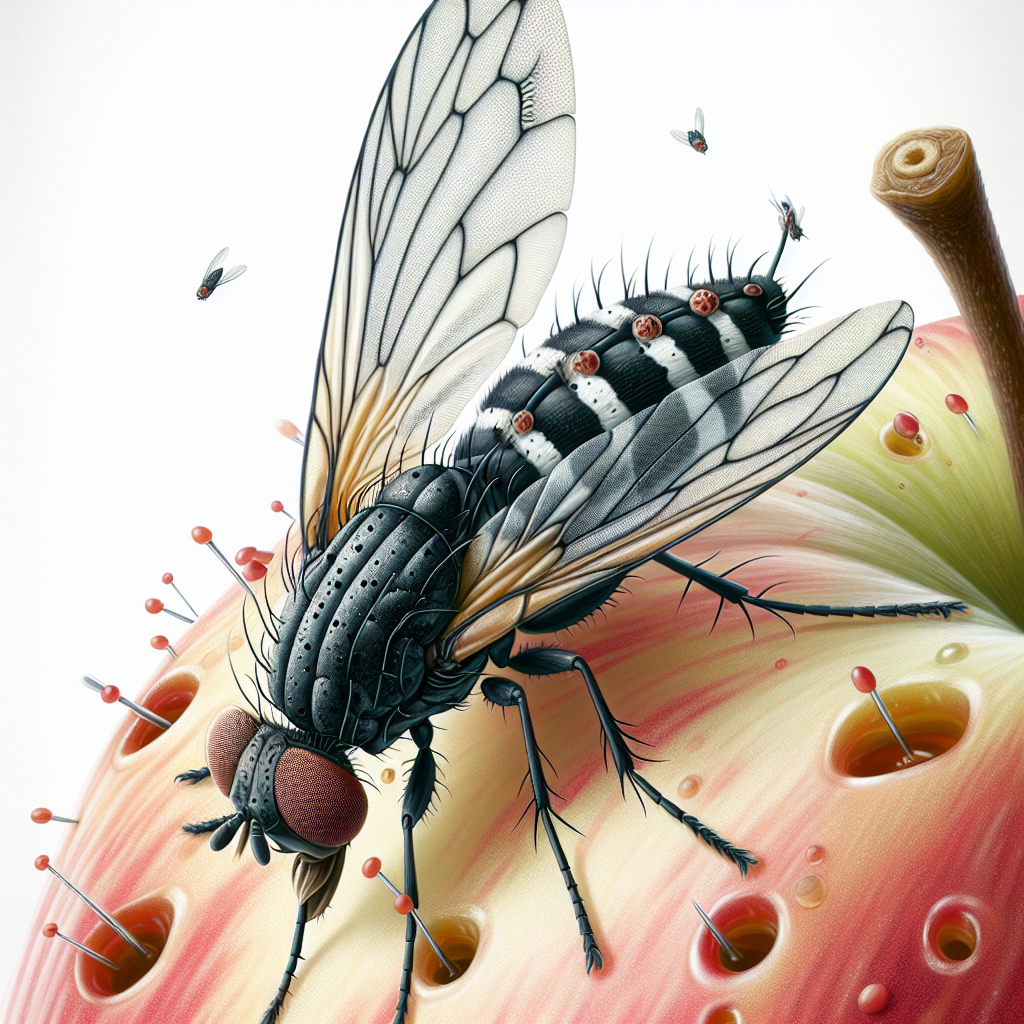
Apple maggot (Rhagoletis pomonella), also known as railroad worm or apple fruit fly, is one of the most notorious pests affecting apple orchards across North America. First identified in the northeastern United States in the mid-19th century, this fly has rapidly expanded its range due to its adaptability and human-mediated dispersal via infested fruit transport. Adults are small, about 1/4 inch long, with distinctive white bands on black wings resembling railroad tracks—hence the nickname. Females lay eggs under the skin of developing fruit, and the hatching larvae tunnel through the flesh, leaving brown, winding trails that make apples unsuitable for fresh market or processing.
The economic impact is staggering: in unmanaged orchards, infestation rates can exceed 50%, leading to total crop loss. In commercial settings, it reduces fruit quality, increases sorting costs, and necessitates strict quarantine measures in affected regions like the Pacific Northwest and eastern Canada. Home gardeners face similar challenges, with even low infestations spoiling harvests. Early detection and integrated pest management (IPM) are crucial, as chemical controls are often ineffective post-infestation. This guide equips growers with diagnostic tools, lifecycle knowledge, and organic strategies to protect yields effectively. For broader orchard health, monitoring alongside issues like apple scab or codling moth is recommended.
Identifying Symptoms & Damage
Diagnosing apple maggot infestation requires keen observation during fruit development stages. The most telltale sign is the presence of small, puncture wounds on the fruit skin where females oviposit using their serrated ovipositor. These 'stings' appear as dimples or slightly raised spots, often 1-2 mm in diameter, surrounded by a reddish-brown halo. Unlike plum curculio damage, which features crescent-shaped cuts, apple maggot stings are pinpoint and numerous.
Internally, larvae create meandering, brown tunnels filled with frass (insect waste), causing fruit to rot prematurely. Affected apples develop a spongy texture, bitter flavor, and may drop early. Advanced damage leads to secondary infections from fungi or bacteria entering through larval tunnels, resulting in soft rots or sooty molds. In cross-sections, larvae—white, legless, tapered maggots up to 8 mm long—are visible, often near the core.
External indicators include pupae in soil under infested trees (brown, capsule-shaped) and adult flies on sticky traps. Damage is most evident on varieties like Gala Apple or Honeycrisp Apple, which have thinner skins. Differentiate from corn earworm or other borers by the fruit-specific tunneling pattern. Scout weekly from fruit set, examining 100 fruits per tree for stings; thresholds for action are 1-5% infested fruit. For visual aids, check resources like Spring Pest Patrol: Organic AI Strategies to Shield Your Crops from Common Invaders.
Lifecycle and Progression of apple maggot
Understanding the apple maggot lifecycle is key to timing interventions. This univoltine (one generation per year) pest overwinters as pupae 2-6 inches deep in orchard soil. Adults emerge in late June to August, coinciding with fruit coloring, triggered by degree-day accumulation (base 50°F, around 1200-1500 DD). Emergence peaks when apples reach marble size.
Freshly emerged adults are non-reproductive for 7-10 days, feeding on honeydew, bird droppings, or aphid excretions from pests like woolly apple aphid. Females then oviposit 1-2 eggs per site, up to 20 eggs per fly, preferring sunny, exposed fruit sides. Eggs hatch in 3-6 days into tiny maggots that burrow inward, feeding for 3-4 weeks. Mature larvae exit via 'tail-end' holes, drop to soil, and pupate within hours.
Lifecycle duration varies by climate: 40-50 days in warmer regions, longer in cooler ones. Multiple strains exist, adapted to host phenology—hawthorn-race flies emerge earlier than apple-race. Monitor with yellow sticky traps baited with ammonium acetate; capture 5+ flies/week signals high risk. Soil temperatures above 70°F hasten pupation, while cold winters (>90 days below 32°F) reduce survival. Disrupting this cycle through sanitation breaks the loop.
Environmental Triggers & Risk Factors
Apple maggot thrives in temperate climates with mild winters and warm summers, USDA zones 4-8. Proximity to wild hawthorn, crabapple, or alternate hosts like cherry or pear heightens infestation risk, as flies disperse up to 1/2 mile. Abandoned orchards serve as reservoirs, with adults flying into managed sites.
High humidity and rainfall during oviposition favor egg survival, while drought stresses trees, making fruit more susceptible. Overripe or cull fruit piles amplify populations. Poor orchard hygiene, such as unburied drops, increases pupal survival by 30-50%. Climate change extends emergence windows, overlapping with late-maturing varieties like Fuji Apple.
Risk is elevated in organic or low-spray orchards lacking resistant cultivars. Soil type matters—sandy loams retain fewer pupae than heavy clays. Windbreaks limit fly movement, but dense canopies trap humidity, aiding larval development. Assess farm risk via trap counts and host proximity; high-risk sites (>10 wild trees within 1/4 mile) demand aggressive monitoring.
Organic Control & Treatment Plans
Organic management emphasizes cultural, biological, and minimal physical controls. Start with sanitation: collect and destroy all drops weekly, hot-composting at 140°F or burying 2 feet deep to kill 95% of pupae. Solarize soil under trees with clear plastic (4-6 weeks, summer) to desiccate pupae.
Deploy Pherocon AM traps (yellow rectangles with lures) at 1-2 per tree; remove when 5 flies/trap/week. Kaolin clay (Surround WP) coats fruit, deterring oviposition by 70-90%; apply at petal fall, reapply after rain. Neem oil or spinosad targets adults and young larvae, with 3-5 applications timed to biofix (first trap catch +14 days). Release biological agents like Odorglyphus longicaudus parasitic wasps, which parasitize 20-50% of pupae.
GF-120 NF bait spray (protein hydrolysate + spinosad) lures and kills adults; apply to borders every 7-10 days. Trunk wraps or sticky bands intercept dropping larvae. Integrate with marigold borders to repel flies. Treatment plan: Week 1 (emergence) traps + clay; Weeks 2-6 baits + sanitation; post-harvest soil tillage. Efficacy: 80-95% reduction in low-pressure orchards. Rotate tactics to prevent resistance.
Preventing apple maggot in the Future
Long-term prevention builds resilient systems. Plant resistant varieties like Liberty or Enterprise apples, which exhibit antibiosis (larval mortality) and antixenosis (reduced oviposition). Maintain 500-foot buffers from wild hosts, eradicating hawthorns. Use reflective mulches early season to disorient adults.
Annual pre-season soil drenching with beneficial nematodes (Heterorhabditis bacteriophora) targets pupae. Encourage predators: birds (bluebirds eat adults), ground beetles devour pupae. Cover trees with fine mesh (1/8-inch) at fruit set for high-value blocks, though labor-intensive. Timing is critical—base sprays on degree-days via local weather stations.
Rotate cultivars and interplant with repellents like garlic or thyme. Post-harvest, disk soil to expose pupae to predators/weather. Monitor via apps for hyper-local forecasts. Quarantine infested fruit; inspect transport. Sustainable prevention yields 90% clean fruit over 3-5 years, reducing costs by 40%. Combine with IPM for fire blight resistance.
Crops Most Affected by apple maggot
Primarily targeting apple, apple maggot infests over 20 Rosaceae species. Commercial apples suffer most, especially thin-skinned varieties like Golden Delicious Apple and Granny Smith Apple. Crabapples and hawthorn are primary wild hosts, sustaining populations.
Secondary hosts include pear (Bartlett, Bosc), cherry (sweet and sour), plum, peach, apricot, and quince. In backyards, it attacks strawberry, blackberry, raspberry, and blueberry, though less severely. Rarely, serviceberry, honeysuckle fruits. Economic losses peak in mixed orchards; isolated monocultures fare better. Varietal susceptibility: early-maturing like McIntosh Apple hit first, late like Rome Beauty Apple last.