Definitive Diagnostic and Management Guide for Quince Pest
Introduction to quince
Quince (Cydonia oblonga), often celebrated for its fragrant golden fruits used in jams and jellies, poses a significant challenge as an invasive pest in many regions. While cultivated for centuries in orchards for its ornamental value and edible produce, feral quince trees escape cultivation and proliferate uncontrollably, forming impenetrable thickets that smother native plants and hinder farm operations. This woody invader spreads rapidly through root suckering, self-seeding, and animal-dispersed fruits, making it a persistent threat to biodiversity and crop productivity.
In agricultural contexts, quince competes aggressively for water, nutrients, and sunlight, particularly in disturbed soils along fence lines, roadsides, and field edges. Its hard, thorny branches create barriers for machinery and livestock, while fallen fruits attract rodents and fermenting debris fosters fungal pathogens like sooty mold. Home gardeners and small farms often overlook early infestations, allowing quince to establish deep root systems that resist removal. For more on hyper-local pest forecasting to catch invaders early, check this blog post.
Understanding quince as a pest requires recognizing its dual nature: a valuable crop when managed, but a relentless colonizer when neglected. Originating from regions like Iran and Turkey, it has naturalized across North America, Europe, and Australia, where it hybridizes with related species like apple and pear trees, amplifying its invasiveness. Early intervention is key, as mature trees produce thousands of seeds annually, perpetuating infestations for decades. This guide equips farmers with professional-grade tools to diagnose, manage, and eradicate quince effectively.
Identifying Symptoms & Damage
Quince infestations manifest through distinct visual and structural symptoms on affected landscapes. Look for dense clusters of multi-stemmed shrubs or small trees, typically 10-20 feet tall, with smooth gray bark that develops flaky patches on older specimens. Leaves are broad, fuzzy, and alternate, turning vibrant yellow-orange in fall, often persisting as a giveaway in winter thickets.
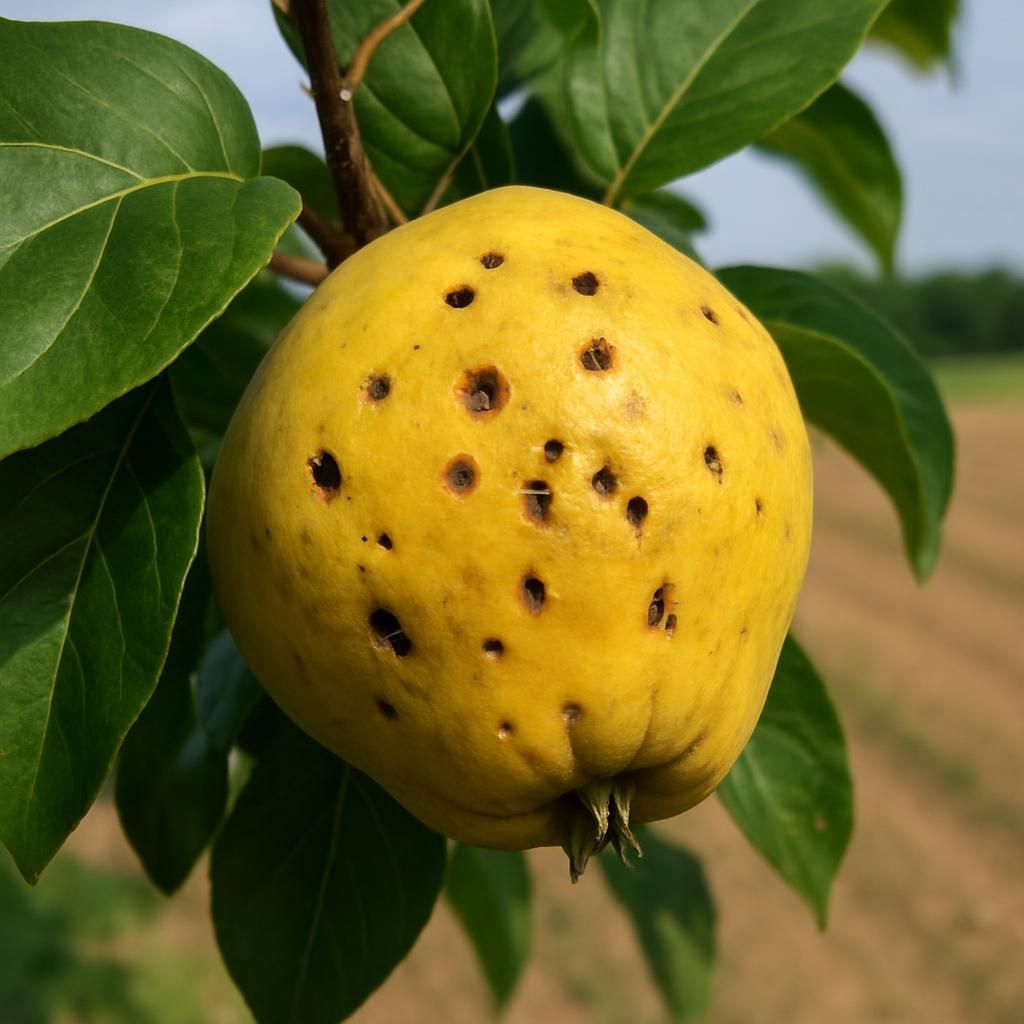
Characteristic damage includes rampant suckering: vigorous vertical shoots emerging 10-50 feet from parent plants via shallow, extensive roots. These suckers bear sharp thorns up to 2 inches long, creating hazardous barriers that tear equipment and injure workers. Fruits appear in late summer to fall—large, fuzzy, yellow-green orbs (2-4 inches diameter) with a strong, pineapple-like aroma when ripe—littering the ground and attracting wildlife.
Landscape impacts are profound: quince outcompetes grasses and forbs, leading to bare soil erosion, reduced forage for livestock, and habitat loss for pollinators. In orchards, it harbors pests like aphids and codling moth, serving as an alternate host that reinfests nearby peach or plum trees. Inspect for girdling roots that strangle young trees and competition stunting in crops like strawberry beds or blueberry patches.
Diagnostic tips: Cut suckers to reveal moist, white pith—hallmark of quince. Fruits persist on trees into winter, unlike native species. Use a soil probe to map root extent; infestations often span 100+ feet radially. Differentiate from similar invaders like multiflora rose by quince's solitary white flowers (1 inch, early spring) and lack of compound leaves. For precise identification, compare leaf undersides' dense woolly hairs against pear (glossy) or apple (sparse). Early detection via regular perimeter scouting prevents establishment.
Lifecycle and Progression of quince
Quince exhibits a perennial lifecycle adapted for persistence and spread, spanning decades per individual. Plants are long-lived woody perennials, with lifespans exceeding 50 years. Growth begins in spring with bud break around March-April (temperate zones), producing 5-petaled white flowers that self-pollinate efficiently, yielding 20-100 fruits per mature tree.
Vegetative propagation dominates: roots produce suckers year-round, peaking post-disturbance. Seeds within fruits germinate readily after cold stratification (90-120 days at 35-40°F), sprouting in spring. Seedlings establish quickly in full sun to partial shade, reaching 3-6 feet in year one. Progression: Year 1-3 juvenile suckers/shrubs; 4-10 years maturity with fruiting; 10+ years canopy dominance and thicket formation.
Adult trees flower annually, fruits ripening September-November. Seeds (5-8 per fruit) disperse via gravity, birds, mammals, and floods. Dormancy occurs in winter, with roots storing carbohydrates for explosive spring growth. Infestation progression: Isolated pioneers → Patchy stands (2-5 years) → Monotypic thickets (10+ years), reducing biodiversity by 70-90%.
Seasonal management windows: Pre-budbreak herbicide application; summer cut-stump treatment; fall fruit removal to curb seedbank. Monitor progression via annual mapping; small patches (<1 acre) are manageable organically, while mature infestations demand integrated plans. Lifecycle resilience stems from resprouting post-fire/flood, necessitating repeated controls over 3-5 years.
Environmental Triggers & Risk Factors
Quince thrives in disturbed, temperate environments, with optimal conditions accelerating invasions. Prefers well-drained loamy soils (pH 6.0-7.5), tolerating clay or sand, but falters in waterlogged sites. Full sun (6+ hours) drives vigor; partial shade slows but doesn't halt spread. Hardy to USDA zones 5-9, enduring -15°F winters and 100°F summers.
Key triggers: Soil disturbance from tillage, construction, or overgrazing exposes roots, spurring suckers. Floodplain deposition carries seeds/fragments miles downstream. Climate shifts—warmer springs advance flowering, prolonging seed production. Nutrient-rich sites (high N/P from fertilizers) boost growth rates 2-3x.
Risk factors include proximity to ornamental plantings; one escaped tree seeds 10-20 satellites yearly. Poor pasture management favors quince over grasses. Companion pests like Japanese beetles weaken competitors, aiding establishment. High-risk areas: Fence rows, old homesteads, riparian zones. For AI-driven risk assessment on your farm, explore Spring Pest Patrol.
Organic Control & Treatment Plans
Organic management emphasizes mechanical, cultural, and biological tactics, avoiding synthetics for sustainable results. Step 1: Survey and Prioritize – Map infestations by size/density; target small patches first.
Mechanical Control: Mow/cut suckers repeatedly (every 4-6 weeks, May-Oct) to exhaust roots; mulch stumps with cardboard+woodchips (6-12 inches deep) to block regrowth. For trees, girdle trunks (remove 2-inch bark ring) or basal bark cut low, timing post-leafout. Excavate small stands with root rakes, ensuring 100% removal—compost offsite to prevent resprouting.
Cultural Practices: Dense grazing with goats/sheep (3-5 animals/acre, rotational) strips foliage, weakening plants over 2-3 seasons. Solarization (clear plastic over moist soil, 6-8 weeks summer) kills roots shallowly. Flame weeding singes suckers pre-budbreak.
Biological Aids: Introduce competing natives like clover or yarrow post-clearance. Encourage predators via hedgerows. Vinegar (20% acetic acid) sprays desiccate foliage (3-5x/year).
Integrated Plan: Year 1 heavy cutting+mowing; Year 2 excavation/mulch; Year 3 monitoring/resprouts. Success rates: 80-95% with persistence. Avoid tilling, which spreads fragments.
Preventing quince in the Future
Prevention hinges on vigilance and barriers. Scout perimeters weekly spring-fall; remove pioneers immediately. Install root barriers (HDPE plastic, 24-36 inches deep) along high-risk edges. Promote dense cover crops (Thai basil or marigold) to shade out seedlings.
Sanitize equipment to prevent fragment transport. Quarantine fruits—compost hot (160°F) or incinerate. Choose non-suckering cultivars for intentional planting. Landscape certification programs aid community-wide prevention. Long-term: Restore with natives, monitoring 5 years post-control.
Crops Most Affected by quince
Quince invades orchards and pastures primarily, choking apple, pear, peach, and cherry trees via root competition and pest reservoirs. Berry crops like strawberry, raspberry, and blackberry suffer yield drops near thickets. Pastures lose grazing value; hayfields require extra mowing. Vineyard edges (grapes) face shading; vegetable plots (tomato, cucumber) get overrun. Small fruits and ornamentals bear the brunt.