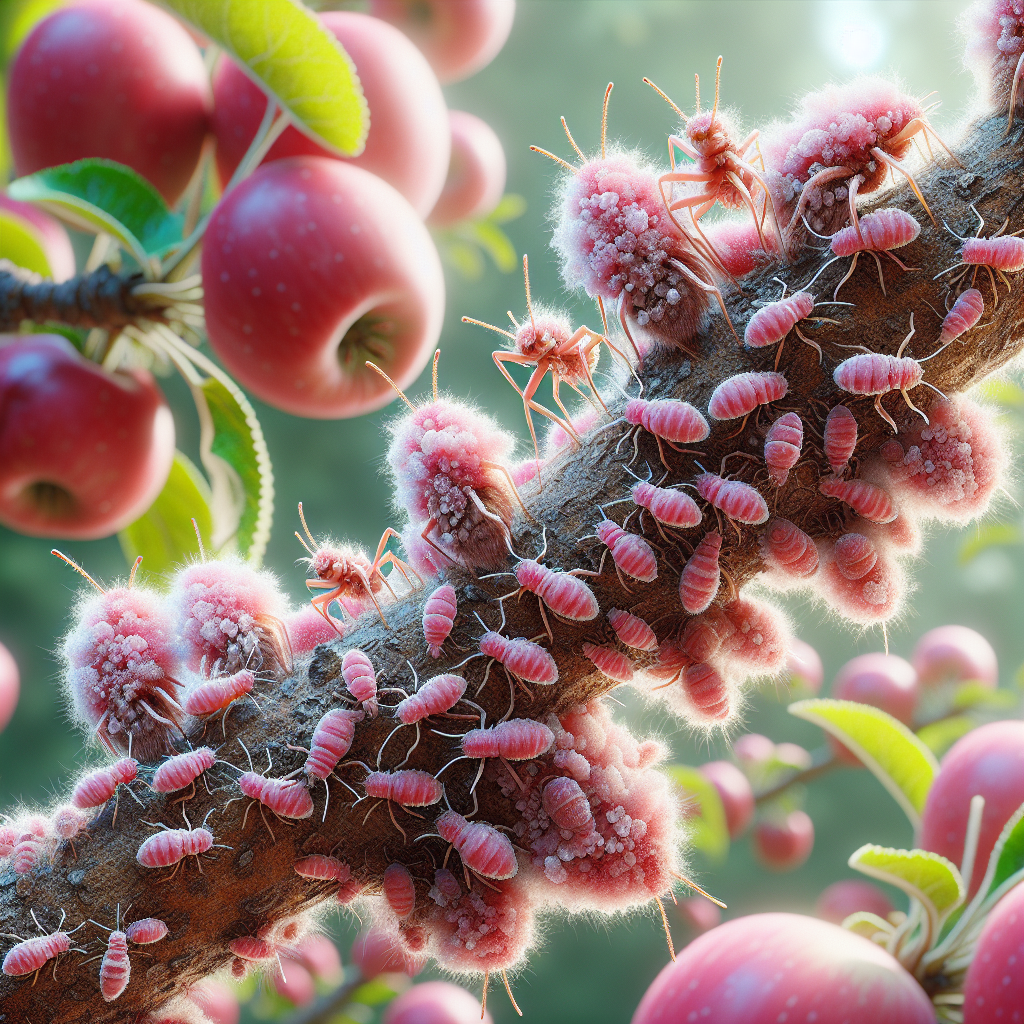
Introduction to Woolly apple aphid
The woolly apple aphid, scientifically known as Eriosoma lanigerum, is one of the most challenging pests in apple orchards worldwide. Native to North America, this aphid species has spread to Europe, Asia, and other apple-growing regions, posing a persistent threat to commercial and backyard apple trees. Unlike typical aphids, woolly apple aphids are distinguished by their white, cottony wax secretions that provide camouflage and protection, earning them their descriptive name.
These aphids primarily target Rosaceae family plants, with apples being the preferred host. They feed by piercing plant tissues and extracting sap, weakening trees and creating entry points for diseases like fire blight or Phytophthora root rot. Infestations often go unnoticed until masses of woolly clusters appear on trunks, branches, limbs, and roots. In severe cases, they can girdle roots and branches, leading to tree decline or death. Economic losses from woolly apple aphids include reduced fruit quality, yield drops of up to 50% in unmanaged orchards, and increased management costs.
Understanding this pest's biology is crucial for effective integrated pest management (IPM). For small farms and home gardeners, early detection and organic strategies are key, as chemical controls can disrupt beneficial insects. Learn more about Aphids (pest) for broader context on related species. This guide provides diagnostic tools, lifecycle insights, and proven organic treatments to protect your apple harvest. Check out this Spring Pest Patrol: Organic AI Strategies to Shield Your Crops from Common Invaders for timely prevention tips.
Identifying Symptoms & Damage
Spotting woolly apple aphids early prevents widespread damage. Look for clusters of white, fluffy, cotton-like wax on twigs, branches, trunks, and roots. These 'wool' masses, 1/4 to 1/2 inch long, house pinkish-purple aphids inside. On bark, infestations create shiny, reddish-brown galls as the tree responds to feeding.
Symptoms include:
- Galls and Swellings: Irregular, tumor-like growths on branches and roots, filled with aphids.
- Honeydew and Sooty Mold: Sticky excretions attract ants and lead to black sooty mold on leaves and fruit.
- Yellowing Leaves and Stunted Growth: Sap depletion causes chlorosis, wilting, and dwarfed shoots.
- Branch Dieback: Girdling by root or trunk colonies kills sections above.
- Root Damage: Underground infestations weaken anchorage, increasing windthrow risk.
Damage peaks in late summer on roots, explaining tree vigor loss without visible topside signs. Differentiate from scale insects or mealybugs, which lack woolly wax. Use a knife to scrape bark; live colonies ooze honeydew. Severe root feeding transmits viruses and invites root rot. Monitor pear trees too, as alternate hosts.
Lifecycle and Progression of Woolly apple aphid
Woolly apple aphids have a complex lifecycle with host alternation. In temperate climates, it starts with fundatrices (stem mothers) overwintering as nymphs in bark cracks. Spring sees asexual reproduction: wingless females produce live nymphs parthenogenetically, forming colonies under wax.
By mid-summer, crowded colonies produce winged males and oviparous females that migrate to alternate hosts like elm or hawthorn. Sexual reproduction occurs there, with eggs overwintering. In mild climates without alternates, populations remain all-female and asexual year-round, exploding via 10-12 generations annually.
Nymphs mature in 40-50 days at 70°F, with peak activity July-September. Root colonies persist year-round, protected from predators. Cold hardiness allows survival below 0°F. Lifecycle progression:
- Overwintering: Nymphs in bark/root crevices.
- Spring Crawlers: Foundresses produce nymphs on new growth.
- Summer Colonies: Rapid buildup on roots/branches.
- Fall Migration: Winged forms to secondaries.
Understanding timing aids targeted controls. For detailed aphid dynamics, see Aphids (pest).
Environmental Triggers & Risk Factors
Woolly apple aphids thrive in cool, humid conditions (50-70°F), slowing in heat above 85°F. High nitrogen soils promote tender growth, ideal for feeding. Poor vigor from drought, over-cropping, or root damage heightens susceptibility.
Risk factors:
- Climate: Temperate orchards with mild winters favor persistence.
- Tree Stress: Pruning wounds, mechanical injury, or fire blight scars serve as entry points.
- Ants: Protect aphids from predators, farming honeydew.
- Cultivar Susceptibility: Gala Apple and Fuji Apple more vulnerable than resistant rootstocks like Bud 9.
- Orchard Practices: Dense planting, poor sanitation increase spread.
Alternate hosts like [Hawthorn (not listed, but contextual)] nearby boost populations. Monitor irrigation to avoid water stress, mimicking root-feeding conditions.
Organic Control & Treatment Plans
Organic management emphasizes biological, cultural, and mechanical methods. Avoid broad-spectrum sprays to preserve predators.
Biological Controls:
- Natural Enemies: Lady beetles, lacewings, syrphid flies, and parasitic wasps (Aphelinus mali) devour 90% of aphids. Release Aphelinus at 1,000-2,000/acre.
- Entomopathogens: Beauveria bassiana or neem oil infects aphids.
Cultural Practices:
- Prune infested wood in winter, destroy galls.
- Use reflective mulches or dormant oil sprays (2-3% rate) to smother overwinterers.
- Encourage biodiversity with flowering borders.
Organic Treatments:
| Treatment | Timing | Application | Notes |
|---|---|---|---|
| Insecticidal Soap | Crawler stage (spring/fall) | 2% solution, 7-day intervals | Contact kill, safe for bees. |
| Neem Oil | Early colonies | 0.5-1% emulsifiable, evenings | Disrupts molting, antifeedant. |
| Horticultural Oil | Dormant buds | 2-3% concentrate | Smothers eggs/nymphs. |
| Beneficial Insect Release | Summer | Weekly until control | Monitor establishment. |
Treatment Plan:
- Scout weekly; threshold: 1 colony/10 branches.
- Apply oils at green tip.
- Release predators mid-season.
- Band trunks with Tanglefoot to block crawlers.
Integrated with IPM, organics suppress 80-95%. Avoid soaps on hot days to prevent phytotoxicity.
Preventing Woolly apple aphid in the Future
Prevention starts with resistant varieties like Geneva series rootstocks. Plant certified stock free of aphids. Maintain orchard sanitation: remove volunteers, alternate hosts.
- Monitoring: Use sticky traps, beat sheets for crawlers.
- Cultural: Balance fertility; avoid excess N. Irrigate deeply but infrequently.
- Barriers: Wrap trunks with burlap or foil in fall.
- Rotation/Biodiversity: Interplant with thyme or yarrow to attract predators.
- Timing: Dormant pruning exposes hidden colonies.
Annual IPM audits reduce incidence by 70%. For small farms, consistent scouting prevents outbreaks. Learn AI-enhanced monitoring in Why Misidentifying Plants Costs Small Farms Thousands - And How AI Camera Diagnosis Fixes It Fast.
Crops Most Affected by Woolly apple aphid
Primarily apple trees, including cultivars like Honeycrisp Apple, Granny Smith Apple. Secondary hosts: pear (Bartlett Pear), quince, hawthorn, cotoneaster, elm. Rare on peach or cherry. Focus protection on pome fruits.