Introduction to Rome Beauty Apple
Originating in Ohio in the early 19th century, this cultivar became one of the foundational American market apples because it combined handsome appearance, dependable yields, and strong keeping quality. It is especially famous as a baking apple: the flesh tends to hold its shape better than many softer cultivars, making it a long-standing favorite for pies, baked apples, and processed products.
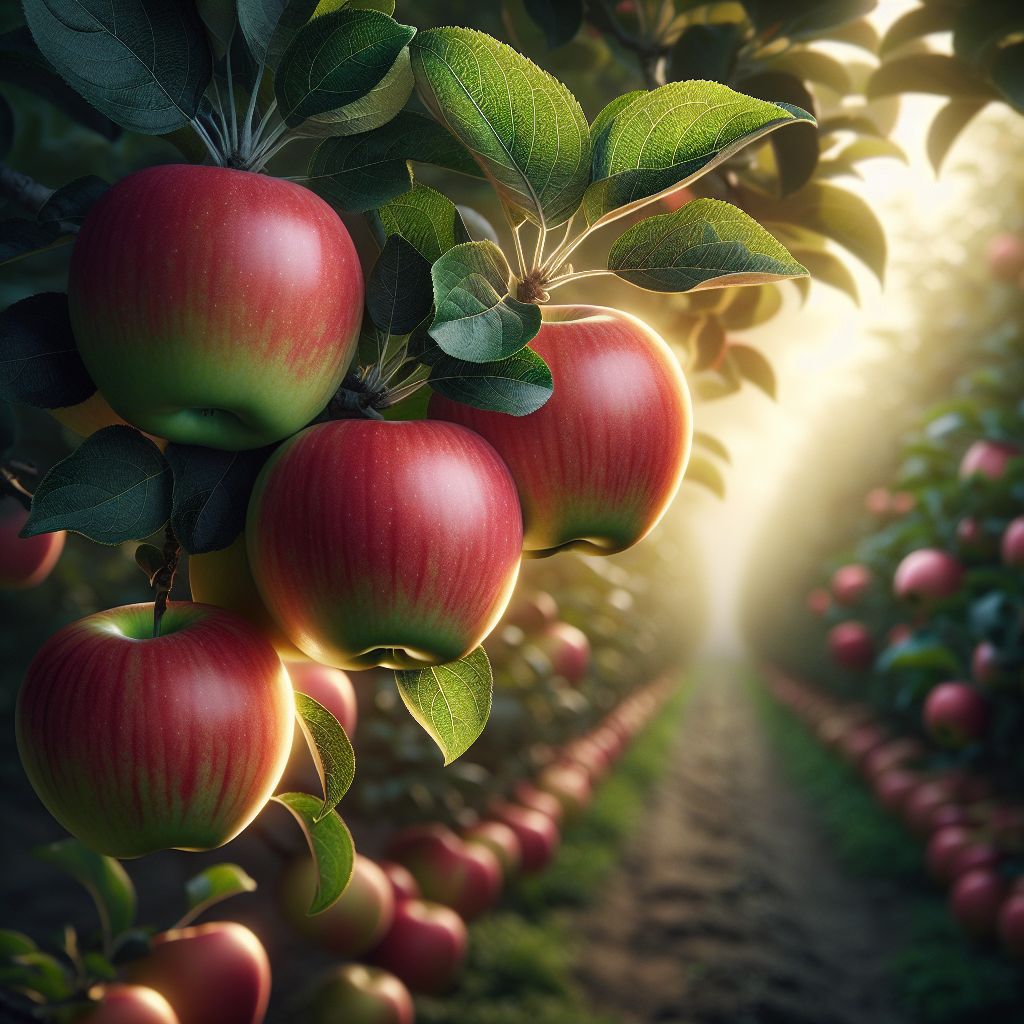
The tree is typically vigorous and spreading, with a tendency to form a broad canopy if left unpruned. Fruit is usually medium to large, round to slightly conic, with smooth, glossy skin that develops a rich red blush over a yellow-green background when mature. Flavor is usually mild, slightly sweet, and less complex than premium fresh-eating apples, but texture and structure make it commercially and culinarily important.
For general pomological background, see our Apple guide. In orchard systems, this variety is often chosen not because it is the sweetest apple off the tree, but because it stores well, ships relatively well, and develops improved quality after a period in storage. That post-harvest character is a defining trait and should influence how growers plan harvest timing and marketing.
Botanical Profile of Rome Beauty Apple
This is a named cultivar of Malus domestica, the domesticated apple, within the family Rosaceae. Like other apples, it is a deciduous pome fruit tree that flowers on spurs and short shoots, with productivity closely linked to spur management, light penetration, and annual pruning discipline.
Typical tree characteristics include moderate to strong vigor, especially when grafted onto semi-dwarf or seedling rootstocks. Trees can become quite large on standard rootstocks, often exceeding 20 feet in height and spread, while dwarfing stocks can hold them in the 8 to 12 foot range for backyard culture. Habit is generally upright when young, broadening with age into a rounded canopy. Branch angles matter with this variety because narrow crotches can lead to limb breakage under heavy crop load, especially once mature trees begin carrying large fruit sets.
Leaves are simple, alternate, ovate, and serrated, medium green above and paler beneath. Spring flowers emerge in clusters, opening from pink buds into white blossoms with five petals. Bloom time is generally midseason, which helps it fit well into mixed orchards, but it still requires a compatible pollinizer because it is not reliably self-fruitful. Suitable pollinizing partners are other mid-blooming apples that flower at the same time.
Fruit is borne primarily on two-year-old wood and older spurs. One management implication is that severe pruning that removes too much fruiting wood can delay cropping or shift the tree back into excessive vegetative growth. The flesh is creamy white to pale yellow, moderately coarse, and often firmer after storage than at initial harvest. Skin color improves significantly with sun exposure, so canopy thinning and orchard row orientation strongly affect market appearance.
Rome Beauty is considered a late-ripening cultivar. In many temperate regions, harvest falls from late September through October, depending on elevation, rootstock, climate, and seasonal heat accumulation. It generally needs a meaningful winter chill period for proper dormancy release and productive flowering, making it poorly suited to low-chill subtropical areas.
Soil, pH, and Climate Requirements for Rome Beauty Apple
This cultivar performs best in deep, fertile, well-drained loam with good moisture-holding capacity but no prolonged saturation. Ideal soil depth is at least 3 to 4 feet so roots can establish broadly and deeply. Although apple trees can survive in a range of soils, Rome Beauty is far more dependable when planted in structured loam or sandy loam enriched with stable organic matter.
The target pH range is 6.0 to 6.8, with 6.2 to 6.5 being especially favorable for nutrient availability. If soil pH drops below about 5.8, calcium, magnesium, and phosphorus uptake may become less efficient, while manganese and aluminum can become overly available in acidic soils. If pH rises above 7.2, iron, zinc, and manganese deficiencies become more likely, especially in calcareous soils. Conduct a full soil test before planting and adjust at least several months ahead of installation. Agricultural lime is the standard amendment for acidic soils; elemental sulfur can gradually lower pH in alkaline sites.
Drainage is critical. Apples do not tolerate “wet feet,” and Rome Beauty planted in poorly drained clay is far more likely to suffer reduced vigor, root decline, collar rot, and winter injury. A simple field test is to dig a hole 18 to 24 inches deep, fill it with water, and observe infiltration. If water remains after 24 hours, the site is marginal to unsuitable unless corrected with drainage, berm planting, or a different location.
Climate preference is temperate, with cold winters sufficient to satisfy chilling requirements and warm but not excessively hot summers. A practical target is roughly 800 to 1,200 chill hours, though exact needs vary by region and rootstock interaction. The tree benefits from full sun, meaning at least 8 hours of direct light daily, to maximize flower bud formation, fruit color development, and disease reduction through faster drying of foliage.
Late spring frost is a major limitation. Flower buds at pink and bloom stages can be injured by temperatures below freezing, with severe loss possible around 28°F (-2°C) or lower during open bloom. Avoid frost pockets, low-lying basins, and enclosed valleys where cold air settles. Gentle slopes with air drainage are superior orchard sites.
Wind exposure should be moderate rather than extreme. Good airflow reduces fungal disease pressure, but constant strong wind can interfere with pollination, break brittle fruiting wood, and increase water stress. In hot inland climates, fruit may experience sunburn on exposed western faces if the canopy is opened too aggressively.
For broader soil management principles applicable to orchard establishment, see soil health tips.
Step-by-Step Planting & Propagation
Commercial and serious home growers should plant grafted nursery stock, not seedlings. Seed-grown apples do not come true to type, and a seed from this cultivar can produce a completely different tree with unpredictable fruit quality. Purchase a certified disease-free, one-year whip or feathered tree grafted onto a rootstock matched to your production system.
Choose rootstock carefully. Dwarf stocks are easier to prune, spray, thin, and harvest, but they usually require permanent staking and more precise irrigation. Semi-dwarf stocks balance manageability with stronger anchorage and somewhat greater stress tolerance. Standard rootstocks produce very large trees appropriate mainly for traditional orchards with wide spacing.
Plant during dormancy, usually late winter to early spring in cold climates, or in late fall where winters are mild and soils remain workable. Bare-root trees should be planted before budbreak. Keep roots moist before planting; never allow them to dry in sun or wind.
Site preparation begins the prior season if possible. Remove perennial weeds in a circle at least 3 to 4 feet wide. Do not simply dig a small hole in turf and plant into competition. Grass roots aggressively steal moisture and nitrogen from young apple trees and can reduce early establishment dramatically.
Steps for planting:
- Dig a hole two to three times the width of the root system, but only as deep as the roots themselves. Wide is better than deep.
- Identify the graft union and keep it 2 to 4 inches above the final soil line, especially on dwarfing rootstocks, to prevent the scion from rooting and negating size control.
- Prune broken or dead roots cleanly.
- Spread roots naturally over a small cone of soil in the hole.
- Backfill with native soil unless a soil test indicates a major structural deficiency. Avoid creating a “pot” of highly amended soil that discourages outward root exploration.
- Water thoroughly to settle soil and eliminate air pockets.
- Apply 2 to 4 inches of organic mulch, keeping it 3 to 6 inches away from the trunk to prevent rodent damage and rot.
- Stake dwarf trees immediately and install tree guards where rabbits, Voles, or sunscald are concerns.
Spacing depends on rootstock and training system. Typical home orchard spacing is about 8 to 10 feet for dwarf trees, 12 to 16 feet for semi-dwarf, and 20 feet or more for standard trees. Between-row spacing must also accommodate mowing, spraying, pruning access, and sunlight penetration.
Propagation beyond nursery grafting is usually done by whip-and-tongue grafting, cleft grafting, or budding onto compatible rootstocks. Scionwood should be collected during winter dormancy from healthy one-year shoots. While topworking is possible, maintaining tree architecture and disease hygiene is essential.
Because pollination is required, plant at least one compatible cultivar nearby unless neighboring apple or crabapple trees bloom at the same time. Bee activity is critical; poor spring pollinator weather can reduce fruit set even when compatible pollen is present.
Care & Maintenance regimes for Rome Beauty Apple
Young trees need disciplined training from the first year. Central leader systems are usually the best choice because they create a strong framework, distribute crop load, and improve light exposure. During the first 3 to 5 years, focus on scaffold placement, crotch angle correction, and moderate vigor control rather than heavy cropping.
Water management should be precise. Newly planted trees generally need the equivalent of 5 to 10 gallons of water once or twice weekly during the first growing season, depending on temperature, wind, and soil type. The objective is to moisten the root zone 8 to 12 inches deep, then allow the top inch or two of soil to dry slightly before the next irrigation. Mature trees often need about 1 to 1.5 inches of water per week from rainfall plus irrigation during active growth, with higher demand during fruit sizing.
Signs of proper moisture include steady shoot extension, leaves that remain turgid through afternoon heat, and even fruit enlargement. Underwatering causes dull, slightly cupped leaves, premature fruit drop, reduced shoot growth, and smaller apples. Overwatering causes yellowing leaves, poor vigor despite wet soil, root-zone sourness, and in severe cases leaf drop or collar disease. Soil should be moist but never swampy; if a squeezed handful from 6 inches deep releases free water, it is too wet for routine conditions.
Fertilization should be based on soil and leaf analysis, not guesswork. Young nonbearing trees often need modest nitrogen to build framework, but too much creates rank, disease-prone growth and delays fruiting. A common target is modest spring nitrogen application, adjusted to annual shoot growth. Nonbearing trees often do well with 18 to 24 inches of terminal growth per year, while bearing trees may be better around 8 to 12 inches, depending on age and vigor. Excessively long shoots suggest overfertilization or overpruning.
Apples also respond strongly to potassium, calcium, boron, and magnesium balance. Low calcium is especially important because it affects fruit quality and storage disorders. Foliar calcium sprays are often used in commercial systems during fruit development, particularly on larger-fruited cultivars intended for storage.
Pruning should be done in late winter while trees are dormant, with summer pruning used sparingly to reduce vigor and improve light penetration. Remove dead, diseased, crossing, and inward-growing branches first. Then maintain the central leader, renew fruiting wood, and thin crowded spurs where necessary. Good light penetration is essential; ideally, dappled light should reach much of the canopy interior.
Fruit thinning is crucial. Rome Beauty can set heavily, and overloaded trees produce smaller fruit, poor color, biennial bearing tendencies, and broken limbs. Thin fruit when they reach roughly marble size, usually leaving one fruit per cluster and spacing apples 6 to 8 inches apart along branches. This improves size, return bloom, and limb safety.
Weed management should maintain a vegetation-free strip beneath the canopy, especially in the first 5 years. Mulch, shallow cultivation, organic herbicide approaches, or orchard-safe weed barriers can be used, but avoid damaging shallow feeder roots.
Pests, Diseases & Organic Management
This cultivar is not considered highly disease-resistant, so preventive management is more effective than reactive treatment. Orchard sanitation, airflow, pruning, and careful monitoring are essential.
Apple scab is one of the most important fungal diseases. It causes olive-dark lesions on leaves and fruit, leading to cracking, defoliation, and downgraded crops. Scab pressure rises in cool, wet springs. Organic management includes removal or rapid decomposition of fallen leaves, pruning for airflow, and protective sprays such as sulfur or approved copper materials timed to infection periods.
Cedar-apple rust may appear where junipers are nearby. Orange leaf spots and fruit lesions reduce vigor and marketability. Reducing nearby alternate hosts helps, though this is not always practical.
Fire blight is a bacterial disease that can blacken blossoms, shoots, and branches as if scorched by flame. It spreads rapidly during warm, wet bloom periods. Avoid excessive nitrogen, prune out strikes at least 8 to 12 inches below visible infection during dry weather, and disinfect tools between cuts when disease pressure is high.
Powdery mildew affects young shoots and foliage, especially in dense canopies with poor air circulation. White-gray fungal growth, distorted shoots, and weakened flower buds are common symptoms. Prune infected shoots and maintain balanced vigor.
Key insect pests include Codling moth, Apple maggot, Aphids, Scale insects, Plum curculio, Mites, and Leafrollers. Codling moth larvae tunnel directly into fruit, leaving frass at entry holes. Apple maggot causes internal browning and winding trails. Plum curculio scars young fruit with crescent-shaped oviposition marks and can trigger fruit drop.
Organic management should be integrated rather than relying on a single spray. Use pheromone traps for Codling moth monitoring, sticky traps for Apple maggot, dormant oil for scale and mite suppression, kaolin clay for Plum curculio and some summer pests, and beneficial insect habitat around but not directly competing under the tree. Bagging individual fruit can be highly effective in small plantings.
Maintain orchard floor hygiene by removing dropped fruit weekly during pest season. Fallen fruit acts as a breeding reservoir for insects and disease. Thin dense fruit clusters to reduce pest shelter and improve spray coverage. Encourage beneficial insects with plantings of Yarrow, Thyme, and Clover in nearby strips, while keeping immediate trunk zones competition-free.
Rodents and Deer are also serious orchard pests. Voles girdle trunks beneath mulch in winter, and Deer browse shoots and rub antlers on young trees. Use trunk guards, maintain mulch spacing, mow surrounding vegetation, and install fencing where necessary.
Harvesting, Curing & Optimal Storage
This is a late-season apple and should be harvested at physiological maturity rather than simply when red color appears. External color alone is not a reliable indicator because Rome Beauty can color before internal maturity is ideal. Better indicators include seed darkening, ease of separation when the fruit is lifted and twisted upward, reduction of starch in the flesh, and background color shifting from deep green toward lighter green or yellow-green.
Harvest carefully by hand. Grasp the apple, lift, and roll it gently so the stem remains attached. Pulling straight outward can tear spurs and damage next year’s fruiting wood. Avoid bruising because even firm apples lose storage potential quickly after impact.
Unlike some dessert apples that are best immediately after harvest, this cultivar often improves after a period of storage. Fresh-picked fruit may seem mild or somewhat starchy; after several weeks in proper storage, texture and flavor usually become more balanced.
There is no true curing process as used for onions or sweet potatoes, but field heat should be removed promptly. Move harvested fruit into shade immediately and cool them as soon as possible. Ideal storage conditions are 30 to 32°F (-1 to 0°C) with 90 to 95% relative humidity. At these conditions, fruit can keep for several months, often into winter, with much better quality than if left at room temperature.
Lower humidity causes shriveling and weight loss; excessively wet storage with condensation encourages rot. Maintain air circulation but avoid direct airflow that dehydrates fruit. Store only sound, unbruised apples. Separate damaged fruit for prompt use in sauce, baking, or cider.
Inspect stored fruit every 1 to 2 weeks and remove any apples showing soft spots, mold, bitter rot, or breakdown. One decaying fruit can accelerate losses in a storage bin. If storing in a household refrigerator, perforated plastic bags help preserve humidity without sealing in excess moisture.
Companion Planting for Rome Beauty Apple
Companion planting around apple trees works best when it supports pollination, beneficial insect habitat, soil protection, and weed suppression without creating heavy competition at the trunk. The most useful companions are low-growing, shallow-rooted, or strategically placed flowering species that attract parasitoid wasps, hoverflies, lacewings, and native bees.
Clover is one of the best functional companions in alleyways or outer dripline zones because it helps cover soil, reduces erosion, attracts pollinators, and can contribute biologically fixed nitrogen over time. Keep it mowed and prevent dense growth right against the trunk, where rodent habitat and root competition become problems.
Thyme works well in drier orchard edges and sunny borders. Its flowers attract beneficial insects, and its low habit means it rarely shades the soil excessively or interferes with airflow.
Yarrow is particularly useful for drawing in predatory and parasitic insects. It can be placed in insectary strips adjacent to the orchard or at row ends. Because it can spread, manage it intentionally rather than letting it crowd tree bases.
Nasturtium can act as a sacrificial and pollinator-friendly companion in mixed garden orchards, drawing Aphids away from more valuable growth and adding floral diversity. In humid climates, however, monitor density so foliage does not create excess moisture retention near the lower canopy.
Avoid heavy-feeding companions directly under the dripline, especially dense grasses, large brassicas, or sprawling annual vegetables that require frequent irrigation. A good system is a mulch ring around the trunk, a lightly competitive herbaceous zone farther out, and pollinator or cover-crop strips between rows.
When planned well, companion planting improves biodiversity and pest balance while preserving fruit quality and tree vigor. The best results come from designing layers of function rather than crowding many species close to the trunk.