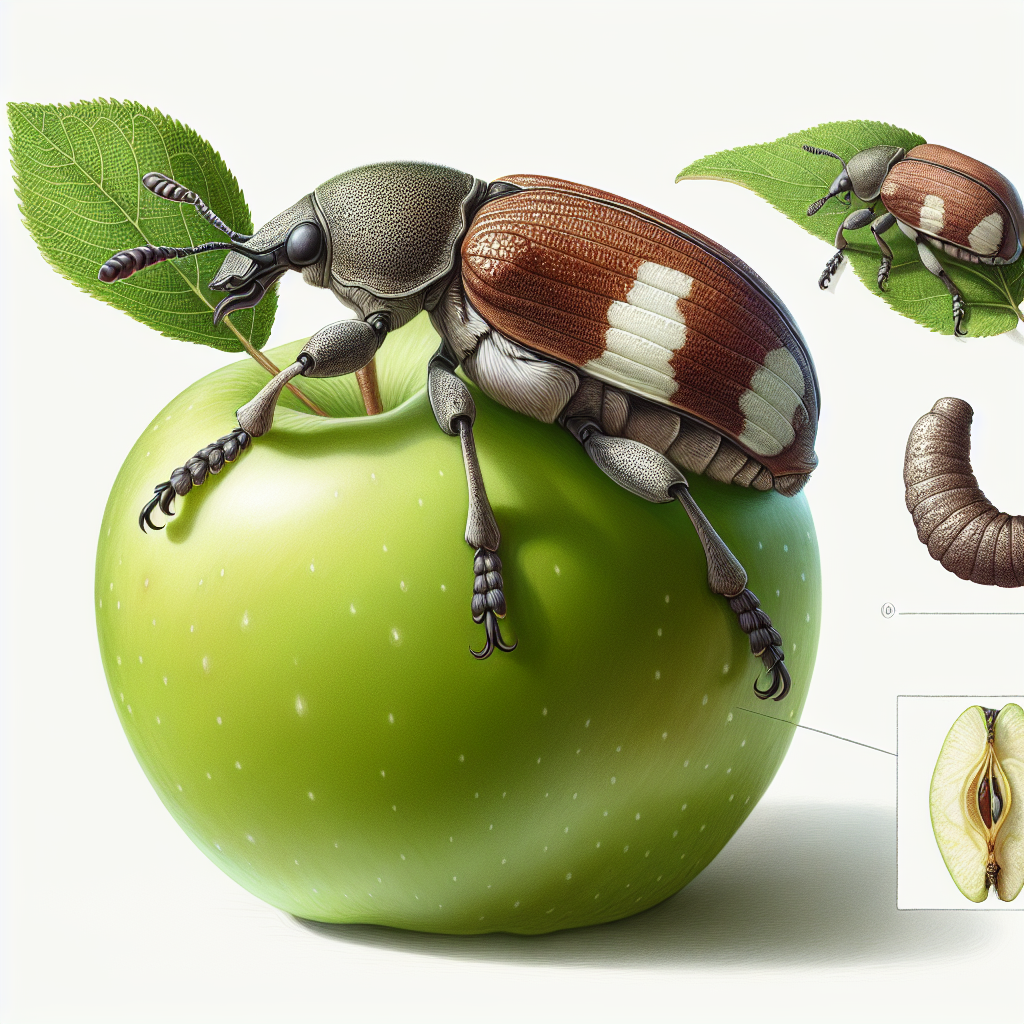
Introduction to plum curculio
The plum curculio (Conotrachelus nenuphar) is one of the most destructive pests in North American orchards, particularly targeting apple, peach, plum, cherry, and pear trees. This small, brown snout beetle, measuring about 4-6 mm long, features a distinctive curved snout and white wing patches that flash when it flies. Native to eastern North America, it has spread widely, causing millions in annual losses through direct fruit damage and secondary infections from fruit rots.
Adult curculios overwinter in protected sites like leaf litter or woodlots and migrate to orchards in early spring, coinciding with bloom. Females lay eggs in developing fruit, and larvae tunnel inside, rendering fruits unmarketable. For small farms and home orchards, early scouting and organic interventions are crucial to prevent infestations. This definitive guide covers identification, lifecycle, triggers, organic controls, prevention, and affected crops, empowering growers with professional-grade strategies. Learn more about Spring Pest Patrol: Organic AI Strategies to Shield Your Crops from Common Invaders for timely defense tips.
Identifying Symptoms & Damage
Plum curculio damage is unmistakable once you know what to look for. The hallmark sign is the feeding punctures on young leaves, shoots, and blossoms: small, round holes often with jagged edges from the beetle's chewing. But the most diagnostic feature is the egg-laying punctures on developing fruit—crescent-shaped or 'horseshoe' scars with a central puncture where the female inserts her egg using her snout. These appear 7-10 days after petal fall, typically 3-5 mm in size.
Inside the fruit, larval tunnels create brown, winding galleries filled with frass (insect waste), leading to fruit drop or deformed, 'cat-faced' apples and stone fruits. Premature fruit drop is common, with 'stings' concentrated near the calyx end. Secondary damage includes entry points for pathogens like brown rot blossom blight or bacterial infections, causing rot. Severely infested fruit may ooze gum or show sunken lesions.
Scouting tips: Shake branches over a white sheet early morning (adults are sluggish below 18°C/65°F). Look for adults with their snout down and legs splayed. Use a 10x hand lens to confirm crescent scars on fruits smaller than a pea. Damage thresholds: 2-5 stings per 100 fruits signals action. Differentiate from codling moth (clean entry holes) or apple maggot (brown trails). In peach orchards, check clusters for multiple stings.
Lifecycle and Progression of plum curculio
Understanding the plum curculio lifecycle is key to timing interventions. Adults emerge from overwintering sites in spring (April-May in the Northeast, earlier in the South), drawn to blooming trees by pheromones and plant volatiles. Peak flight occurs at petal fall to 10-14 days after, when females feed and oviposit.
Egg stage (5-11 days): Tiny white eggs laid singly under the skin via crescent punctures. Larvae (2-3 weeks): Legless, white grubs with brown heads tunnel fruit interiors, exiting to pupate. Pupae (2 weeks): In soil or litter. Adults (summer generation): Emerge in 4-6 weeks, producing 1-3 generations per year depending on latitude (one in North, two in Mid-Atlantic, three in South).
Overwintering adults (September-October) seek harborage in woods or high weeds. Full cycle: 6-10 weeks. Monitor with pyramid traps baited with grandisoic acid pheromone. Degree-day models (base 50°F/10°C) predict first catch at 125 DD, peak oviposition at 350 DD. In cherry and plum, synchronize sprays with bloom to flight.
Environmental Triggers & Risk Factors
Plum curculio thrives in humid, temperate climates (USDA zones 4-8), with populations exploding under specific conditions. Key triggers: Mild winters (> -10°C) allow high adult survival; wet springs promote larval survival in dropped fruit. Risk factors: Proximity to wild hosts like hawthorn or abandoned orchards (adults migrate 100m+). Perimeter trees in south/west orchard borders suffer 80% of damage due to wind-driven invasion.
Susceptible varieties include early-maturing apple like Gala or McIntosh, and thin-skinned stone fruits like peach. Poor sanitation (unremoved drops) boosts soil pupae survival. Drought stress weakens trees, increasing attractiveness. High weed borders or nearby Japanese beetles indicate weedy refugia. Monitor weather: rainfall >1 inch/week post-petal fall heightens egg hatch. Climate change extends generations southward.
Organic Control & Treatment Plans
Organic management emphasizes IPM: monitoring, cultural, biological, and targeted sprays. Cultural: Destroy drops weekly (flail mowing crushes larvae); use chippers for prunings. Border sprays (first row only) reduce 70-90% migration.
Biological: Encourage birds (birds) and ground beetles. Kaolin clay (Surround WP, 25-50 lb/A) creates a particle film barrier, repelling 80% adults—apply at petal fall, reapply after rain. Neem oil or spinosad targets larvae in drops.
Treatment plans:
- Petal fall spray: Kaolin + BT (Bacillus thuringiensis) for neonates.
- 1st cover (7-10 days post-petal): Entrust SC (spinosad) if >2 stings/100 fruits.
- 2nd cover (14 days): Repeat if needed.
- Border row: GF-120 bait (spinosad) on perimeter trees.
Trap crops: Early plum varieties. Success: 90% control in trials. Avoid broad-spectrum; preserve predators like wasps. For codling moth co-infestations, rotate modes. Check labels for organic certification.
Preventing plum curculio in the Future
Long-term prevention builds resilient orchards. Site selection: Avoid woodlot edges; plant >200m from wild hosts. Variety choice: Late-maturing, thick-skinned cultivars like Enterprise apple or Elberta peach. Sanitation: Rake/mow litter; burn or solarize drops.
Monitoring tech: Pheromone traps (4-6/ha); apps for DD tracking. Habitat: Interplant with marigold or thyme repellents; mulch to disrupt soil pupae. Timing: Pre-bloom perimeters with kaolin. Resistant rootstocks: Geneva series for apple. Annual audits: <1% damage goal. Integrate with Soil Health Mastery: 5 Proven Strategies for Small Farms to Build Fertile Ground Without Breaking the Bank for vigorous trees.
Crops Most Affected by plum curculio
Primarily pome and stone fruits: apple (80% economic loss), peach, plum, cherry, pear, apricot, nectarine. Secondary: hawthorn, serviceberry, quince. Rare on blueberry or grape. Early-season thin-skinned fruits hit hardest; commercial thresholds lowest for fresh market apple.