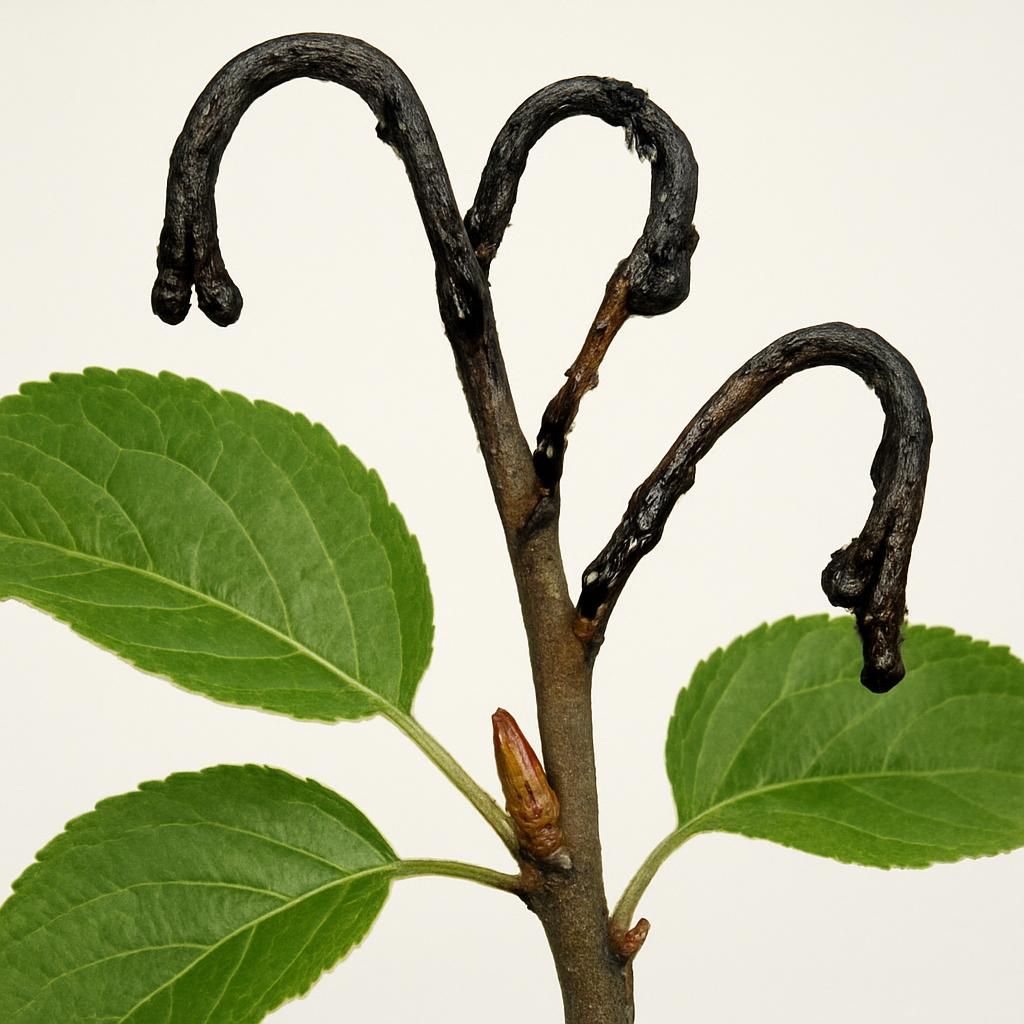
Introduction to fire blight
Fire blight, caused by the bacterium Erwinia amylovora, stands as one of the most dreaded diseases in fruit orchards worldwide. First identified in the United States in the late 18th century, it has since spread to Europe, Asia, and beyond, devastating commercial and backyard apple and pear production. This guide provides professional-grade diagnostic criteria, lifecycle insights, organic management strategies, and prevention tactics tailored for small farms and orchards. Understanding fire blight is crucial for growers, as a single outbreak can wipe out 50-100% of blossoms, shoots, and even entire trees in susceptible varieties. Symptoms mimic fire scorch, hence the name, with rapid progression during bloom and shoot growth phases. Early intervention is key to limiting spread, especially in humid climates where the pathogen thrives via rain, wind, and insects.
Identifying Symptoms & Damage
Accurate diagnosis begins with recognizing fire blight's distinctive signs. Initial infections often appear during bloom as wilting, blackened flower clusters that turn brown to black, remaining attached to spurs like a shepherd's crook. Shoots exhibit the classic 'C- or J-shaped' curvature at tips, with leaves turning black while staying firmly attached—no leaf drop like in fungal blights. Bark on infected branches darkens to reddish-brown, progressing to black cankers with a slightly sunken, amber ooze during wet weather, especially noticeable on young trees.
Advanced damage includes girdling cankers on trunks and limbs, leading to tree decline or death. Fruitlets shrivel and blacken, rarely developing fully. Differentiate from fungal diseases like apple scab (olive-green lesions) or cedar-apple rust (orange galls); fire blight lacks fruiting bodies and spreads systemically. Use a knife to cut cankers—healthy tissue is white/green; infected shows brown vascular streaking. Lab confirmation via ELISA or PCR is ideal for borderline cases. Damage severity peaks in young orchards, with losses up to 80% in untreated Honeycrisp apple blocks. Monitor during spring for earliest detection.
Lifecycle and Progression of fire blight
Erwinia amylovora overwinters in cankers on branches, trunks, and rootstocks, resuming activity at bud break when temperatures exceed 18°C (65°F). Oozing bacteria are disseminated by insects like bees, splashing rain, wind, hail, or pruning tools during bloom. Primary infections hit flowers, entering via natural openings (nectaries, stigmas); bacteria multiply rapidly in warm (25-29°C/77-84°F), wet conditions (>90% humidity), killing tissue within days.
Secondary spread occurs via 'trauma'—hail wounds or insect feeding on shoots—leading to rapid 'strike' blights up to 1m/day. Bacteria move systemically through vascular tissue, forming new cankers by summer. In fall, margins harden, providing overwintering sites. Progression varies: epidemic years follow mild winters and wet springs. Lifecycle completes in 1-2 weeks under ideal conditions, with millions of cells per gram of ooze. Streptomycin-resistant strains complicate control in repeat outbreaks.
Environmental Triggers & Risk Factors
Fire blight thrives in temperate regions with cool winters and warm, humid springs. Optimal infection occurs at 24-29°C with free moisture on flowers for 4+ hours (rain, dew, fog). High nitrogen fertilization promotes succulent shoots, highly susceptible. Crowded canopies trap humidity, exacerbating spread; poor air circulation in valleys or near water bodies increases risk.
Susceptible varieties like Bartlett pear, Gala apple, and quince are most vulnerable; resistant ones like Enterprise apple fare better. Hail, heavy pruning, or frost cracks create entry wounds. Overwintering cankers from prior years serve as primary inoculum sources. Climate change extends bloom periods, heightening epidemic potential. Risk models like Maryblyt or CougarBlight predict outbreaks using temperature, moisture, and phenology data—for more on forecasting tools, check this blog post on hyper-local AI weather predictions.
Organic Control & Treatment Plans
Organic management emphasizes sanitation, biologicals, and resistant varieties—no systemic antibiotics allowed. Prune infected shoots 20-30cm below visible symptoms during dry weather (10-14 days post-infection), sterilizing tools with 10% bleach or 70% alcohol between cuts. Dispose of debris by burning or deep burial; avoid composting. Apply copper-based bactericides (e.g., Bordeaux mixture) at green tip and pre-bloom, rotating with Serenade (Bacillus subtilis) or Actigard (acibenzolar-S-methyl) for SAR induction.
Biological controls include Bloomtime (Pantoea agglomerans) sprayed during bloom to outcompete E. amylovora. Streptomycin is permitted organically in some regions under limited use. For active infections, streak antibiotics into cankers. Support microbiome with compost teas enhancing biocontrol. Integrate aphids management, as they vector bacteria. Monitor weekly during high-risk periods; remove 'rat-tail' blooms promptly. In severe cases, rogue entire trees. Success rates: 70-90% with vigilant IPM.
Preventing fire blight in the Future
Prevention starts with resistant cultivars: choose Liberty, Freedom apples or Harrow Sweet pears. Site selection avoids low-lying frost pockets; ensure 20% open canopy for airflow. Fertilize moderately to avoid excessive vigor. Eradicate wild hawthorn or serviceberry nearby, alternate hosts. Plant certified disease-free stock. Annual spring pruning removes cankers before bud break.
Apply preventative coppers at silver tip, pink bud, and petal fall. Use disease forecasting apps for spray timing. Promote biodiversity with cover crops improving soil health—see Soil Health Mastery blog for strategies. Quarantine new plantings. Long-term, scout for overwintering cankers in winter. Integrated programs reduce incidence by 95% in managed orchards.
Crops Most Affected by fire blight
Fire blight targets Rosaceae family, with pome fruits hardest hit. Apples (Malus spp.) suffer most commercially: susceptible varieties like Idared, Jonathan lose entire crops; semi-resistant like Empire, M26 rootstocks vary. Pears (Pyrus spp.) are highly vulnerable—Bartlett, d'Anjou blighted easily; Asian pears (P. serotina) more tolerant. Quince (Cydonia oblonga) serves as symptomless carrier, spreading to grafts.
Ornamentals include cotoneaster, firethorn (Pyracantha), hawthorn (Crataegus), and spirea, acting as reservoirs. Stone fruits like cherry and plum rarely affected but monitor. Crabapples (Malus spp.) bridge wild/domestic cycles. Global impact: billions in losses yearly, especially in Pacific Northwest, New York apple belts. Diversify with non-hosts like peach or blueberry in mixed orchards.