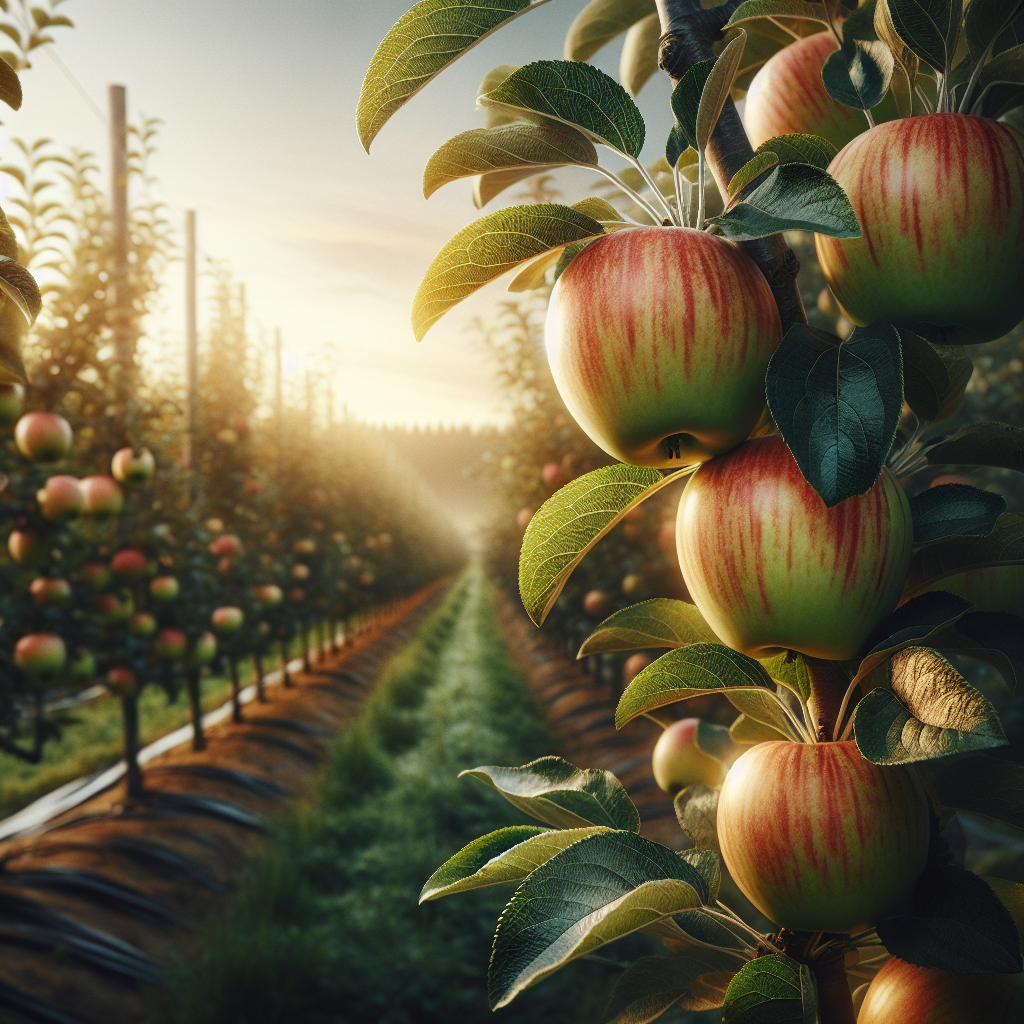
Introduction to Gala Apple
Developed in New Zealand in the 1930s from a cross between Kidd’s Orange Red and Golden Delicious, this cultivar rose to global prominence because it combines attractive red-orange striping, dependable production, and a sweet, mild flavor that appeals to a broad market. It is now a standard commercial orchard apple and an excellent home-orchard choice where climate and pollination requirements are met.
Fruit quality is strongly tied to orchard management. Good light exposure, balanced crop load, disciplined pruning, and proper nutrient management all influence skin color, soluble solids, firmness, and storage life. Compared with some modern ultra-crisp cultivars, it is somewhat more forgiving in eating quality at harvest, but premium Gala still requires precise timing.
For broader species-level context, see Apple. Gala is generally considered an early- to mid-season apple depending on region, often harvested before many late dessert cultivars. Its sweet flavor profile, thinner skin, and aromatic flesh make it especially suitable for fresh eating, lunchbox markets, and farm-stand sales.
Botanical Profile of Gala Apple
This cultivar belongs to the Rosaceae family, the same family as pear, quince, peach, and many cane fruits. Like most cultivated apples, it is a deciduous pome fruit tree. Trees are typically moderate in vigor, but final size depends heavily on rootstock choice rather than the scion alone.
Leaves are oval to elliptic with serrated margins, medium green, and borne alternately. Spring bloom usually occurs in mid-season relative to other apples, with clusters of white to pink-tinged blossoms. Flowers are insect-pollinated and generally self-incompatible, so a compatible pollinizer is necessary for reliable cropping.
Fruit are round-conic to round, medium sized, with a yellow background overlaid by orange-red to red striping. In warm climates or on shaded wood, color can be weaker. Flesh is cream to pale yellow, fine-textured, crisp when properly harvested, and notably sweet with low to moderate acidity. Typical soluble solids at good harvest maturity often range around 12-14% Brix, though excellent sites and balanced crop loads can push higher.
Gala is precocious on dwarfing rootstocks, often fruiting in the second or third leaf. This is commercially advantageous, but it also means young trees can overcrop early if not managed carefully. Overcropping in juvenile years reduces vegetative framework development, leads to biennial tendencies, and produces undersized fruit.
Common rootstocks include M.9 for high-density orchards, M.26 for somewhat greater vigor, MM.106 for semi-dwarf systems, and seedling or vigorous stocks for traditional low-density plantings. In professional systems, M.9 and related dwarfing stocks dominate because they support early bearing, easier picking, more efficient pruning, and better light interception, though they require staking or trellising and reliable irrigation.
Soil, pH, and Climate Requirements for Gala Apple
Deep, well-drained loam or sandy loam is ideal. Apples tolerate a range of textures, but Gala performs poorly in compacted, waterlogged, or highly calcareous soils where nutrient uptake becomes erratic. Effective rooting depth should ideally be at least 80-100 cm. Hardpans, perched water tables, or persistent saturation increase the risk of Phytophthora crown and root rot.
Target soil pH is typically 6.0-6.8, with acceptable performance from about 5.8-7.2 if fertility is well managed. Below pH 5.5, calcium, magnesium, and phosphorus availability may become limiting, while manganese or aluminum toxicity can increase in some soils. Above pH 7.2, iron, zinc, and manganese deficiencies are more likely, especially on calcareous sites. A pre-plant soil test is essential because orchards are long-term investments, and correcting pH after planting is much slower and less efficient.
Organic matter should ideally be in the 3-5% range or higher in mineral soils to improve structure, cation exchange, moisture buffering, and microbial activity. However, excessively rich soils or heavy manure applications can drive too much vegetative growth at the expense of fruit color and spur formation.
Water management is critical. During active growth and fruit sizing, the root zone should remain consistently moist but never saturated. As a practical guide, soil in the main rooting zone should feel cool and slightly damp when squeezed, forming a weak ball that crumbles easily rather than a sticky mass. On coarse soils, irrigation may be needed 2-4 times weekly in hot weather; on heavier loams, once every 5-8 days may suffice depending on evapotranspiration. Mature orchard water demand commonly falls around 25-40 liters per tree per irrigation event in drip systems, but exact needs vary by canopy size, rootstock, weather, and soil texture.
Signs of underwatering include dull, slightly folded leaves during mid-morning, reduced shoot extension, small fruit, increased June drop, and poor return bloom if stress is severe. Signs of overwatering include chlorotic leaves, weak roots, poor shoot maturation, lenticel breakdown on fruit in some situations, and a sour, anaerobic smell in saturated soil. Persistent wet feet are more damaging than brief dryness.
Climatically, Gala is best suited to temperate regions with adequate winter chill. A chilling range of roughly 600-800 hours below 7°C is often sufficient for good dormancy release, though performance depends on local conditions and strain. Too little chill can lead to uneven bud break, poor flowering, and reduced fruit set. Excessively warm nights before harvest can also diminish color development.
The cultivar prefers warm days and cool nights during fruit ripening. Optimal color and sugar accumulation usually occur where late summer days are bright and nights are moderately cool. It is generally adapted to USDA zones about 5-8, though local rootstock, training system, and site conditions influence real-world suitability. Spring frost remains a major hazard because blossoms and small fruitlets are vulnerable; a slight dip below freezing at bloom can significantly reduce crop.
Wind exposure should be managed. Moderate air movement reduces disease pressure, but strong winds can scar fruit, break young shoots, and reduce bee activity during bloom. Sheltered but well-ventilated sites are ideal.
For orchard floor and long-term soil-building concepts, the principles in soil health strategies are especially relevant to perennial fruit systems.
Step-by-Step Planting & Propagation
Commercially and in most home settings, Gala is propagated by grafting rather than seed. Seed propagation does not come true to type and produces genetically variable offspring with unpredictable fruit quality. Purchase certified disease-free nursery trees, preferably feathered one-year whips or well-formed two-year trees on a rootstock suited to your planting density and soil conditions.
Select the site carefully. Choose full sun with at least 8 hours of direct light daily. Avoid frost pockets, poorly drained bottoms, and sites with a history of replant disease unless soil remediation is planned.
Test soil before planting. Assess pH, phosphorus, potassium, calcium, magnesium, organic matter, and salinity. Correct major deficiencies before planting because incorporation is far easier before trees are in the ground.
Prepare the planting strip. Eliminate perennial weeds at least one season in advance if possible. A weed-free strip 1-1.5 meters wide along the tree row reduces competition for water and nutrients during establishment.
Plan spacing based on rootstock. High-density M.9 systems may use about 0.9-1.5 meters between trees and 3-4 meters between rows. Semi-dwarf systems may need 3.5-5 meters between trees. Traditional plantings may require much more. Do not overcrowd; poor light penetration reduces color, spur renewal, and disease control.
Include pollinizers. Gala is not reliably self-fertile. Plant compatible apple cultivars nearby with overlapping bloom. Crabapples are also common pollinizers in commercial systems. Ensure strong bee activity during bloom.
Plant while dormant. In cold-winter climates, early spring planting is safest. In milder areas, late autumn through winter planting can work if soil is workable and not waterlogged.
Dig a broad planting hole rather than an excessively deep one. The hole should accommodate roots without bending them. Set the tree so the graft union remains 10-15 cm above final soil line, especially on dwarf rootstocks, to prevent scion rooting and loss of size control.
Backfill with native soil. Avoid heavily amending only the hole, which can create a bathtub effect in some soils. Firm gently to remove large air pockets, then irrigate deeply to settle soil around roots.
Stake immediately if on dwarf rootstock. Permanent support is usually required with M.9-class stocks. Secure the tree without girdling the trunk.
Head and train appropriately. Whips are often headed at planting to encourage scaffold formation, though feathered trees may be managed differently depending on the training system. Central leader systems are standard for Gala because they support good light distribution and manageable cropping wood.
Propagation by bench grafting or budding is possible for advanced growers. Whip-and-tongue grafting in late winter or T-budding in summer onto compatible rootstocks are standard methods, but sanitation, virus-free material, and correct rootstock selection are essential.
Care & Maintenance regimes for Gala Apple
Training and pruning determine long-term productivity more than almost any other intervention. Gala naturally tends to set heavily, so the goal is to maintain a calm, fruitful tree with good light throughout the canopy. A slender spindle or tall spindle system works well in high-density orchards. Maintain a dominant central leader, remove overly vigorous upright shoots, and renew aging fruiting wood regularly.
Winter pruning should focus on structure, light penetration, and removal of diseased, broken, shaded, or crossing branches. Avoid excessively severe dormant pruning on vigorous young trees, as that stimulates unwanted vegetative regrowth. Summer pruning can help improve light exposure and color, especially by removing water sprouts or shading shoots in the upper canopy.
Thinning is essential. Gala often sets more fruit than the tree can size properly. If left unthinned, fruit become small, color is poorer, branches may break, and return bloom declines. Hand thinning should begin after natural June drop, aiming for one fruit per cluster and roughly 15-20 cm between fruit along a branch, adjusted by tree vigor and target fruit size. In commercial systems, chemical thinning is often used earlier, but hand follow-up remains important.
Nutrition should be guided by annual leaf analysis and periodic soil tests. Nitrogen is the nutrient most often overapplied in apples. Excess nitrogen causes vigorous shoot growth, softer fruit, greener skin, delayed maturity, and greater susceptibility to some storage disorders and Fire Blight. Young nonbearing trees may need modest nitrogen to establish canopy, but bearing trees should receive only enough to support spur leaves, shoot balance, and crop development. Split applications in spring are often more efficient than large single doses.
Calcium deserves special emphasis because it influences fruit firmness and storage quality. Low calcium in fruit increases risk of bitter pit and internal breakdown, especially when trees are vigorous, overcropped, irregularly irrigated, or heavily fertilized with nitrogen or potassium. Foliar calcium sprays during fruit development are common in quality-focused orchards.
Micronutrients such as boron and zinc can be important in apples. Boron supports flowering and fruit set but has a narrow margin between deficiency and toxicity, so apply only according to test results.
Mulching helps conserve moisture and moderate temperature, but keep mulch 10-15 cm away from the trunk to reduce crown rot and rodent damage. Wood chips, shredded bark, or composted materials are useful. In mature commercial orchards, managed alleyways and herbicide-free or reduced-herbicide strips may be integrated with mow-and-blow systems or organic mulches.
Irrigation is best delivered via drip or microsprinkler. Young trees need frequent, moderate irrigation because their root systems are limited. During the first year, do not let the upper 20-30 cm of soil dry completely. Mature trees are somewhat more resilient, but moisture stress during bloom, fruit set, and the 4-8 weeks before harvest can reduce fruit size and next year’s flower initiation. Reduce extreme fluctuations; cycles of drought followed by heavy irrigation increase fruit cracking risk in some environments and contribute to erratic calcium movement.
Protect trunks from sunscald, herbicide injury, and rodent chewing, especially in young orchards. White tree guards or diluted interior white latex paint on trunks can reduce southwest injury in cold regions.
Pests, Diseases & Organic Management
Gala is susceptible to many standard apple pests and diseases, so integrated management is mandatory. In humid climates, Apple Scab, Powdery Mildew, Fire Blight, Cedar-Apple Rust, Codling Moth, Aphids, Mites, and Leafrollers are among the most important recurring problems.
Apple Scab, caused by Venturia inaequalis, produces olive-brown lesions on leaves and fruit. Severe infections reduce tree vigor and fruit marketability. Sanitation helps: shred or mow fallen leaves to accelerate decomposition, and maintain open canopies for airflow. Organic programs often rely on sulfur or lime sulfur during critical infection periods, though timing must be precise.
Powdery Mildew appears as white-gray fungal growth on shoots, blossoms, and leaves. It thrives in dense canopies with poor airflow. Prune out infected terminals during dormancy and reduce lush nitrogen-driven growth.
Fire Blight, caused by Erwinia amylovora, is especially dangerous in warm, wet bloom periods. Infected blossoms and shoots blacken and take on a scorched appearance. Prune out strikes well below visible symptoms, disinfecting tools between cuts when pressure is high. Avoid pushing excessive spring nitrogen, and do not overprune into vigorous regrowth if Fire Blight is endemic.
Codling Moth is the classic worm-in-the-apple pest. Larvae tunnel into fruit, making it unmarketable. Organic management includes pheromone trapping for monitoring, mating disruption ties in larger plantings, sanitation of dropped fruit, and well-timed applications of granulosis virus or spinosad where permitted.
Aphids, including Rosy Apple Aphid and Woolly Apple Aphid, distort shoots and can reduce tree vigor. Encourage beneficial insects with diverse flowering borders while avoiding bloom-time sprays harmful to pollinators. Dormant oils help suppress overwintering stages of some pests.
Mites proliferate in hot, dusty conditions and can bronze leaves, reducing photosynthesis. Predatory Mites are important allies; broad-spectrum insecticides often worsen outbreaks by killing natural enemies.
Borers, deer, rabbits, and voles can be serious non-insect threats. Keep guards around trunks, maintain vegetation management around the base, and inspect regularly in winter.
Organic management works best as a system rather than as isolated sprays: resistant rootstocks where possible, open pruning, orchard sanitation, pest monitoring, pollinator protection, balanced nutrition, and timely interventions. Never spray insecticides during active bloom when bees are foraging.
Harvesting, Curing & Optimal Storage
Harvest timing has an outsized effect on Gala quality. Fruit picked too early may be starchy, less aromatic, and poorly colored; fruit picked too late become softer, greasier, and shorter-lived in storage. Maturity indicators include background color shift from green toward yellow, improved red striping, seed browning, ease of separation from the spur with an upward twist, starch conversion tests, and rising soluble solids.
Gala is often harvested in multiple picks because exposed fruit color earlier than shaded fruit. This selective picking improves packout and eating quality. Handle fruit gently, as bruising shortens storage life and invites decay.
Unlike true curing crops such as onions or winter squash, apples are not cured in a warm, drying sense. Instead, they benefit from prompt pre-cooling after harvest. Remove field heat as quickly as possible, ideally within hours, by placing fruit in cold storage at about 0-1°C with high relative humidity around 90-95%. Lower humidity causes shriveling; free moisture on fruit surfaces encourages rot.
Under ordinary cold storage, Gala may keep for 2-4 months depending on harvest maturity and condition. In controlled-atmosphere storage with reduced oxygen and elevated carbon dioxide, storage life extends further, but atmosphere must be carefully managed to prevent off-flavors or internal disorders. Fruit intended for long storage should be harvested at proper firmness and calcium status, not from overripe or overstressed trees.
Sort out damaged, insect-stung, cracked, or diseased fruit before storage. Even a few compromised apples can increase ethylene exposure and decay spread in small batches. For home growers, perforated plastic bags or humidified crisper storage can help maintain firmness.
Companion Planting for Gala Apple
Useful orchard companions should support pollinators, beneficial insects, soil biology, or shallow groundcover management without strongly competing with the tree. The best companions are usually low-growing, manageable species placed outside the immediate trunk zone.
Chives and Garlic are commonly planted near apple trees because their scent may help confuse some pests and because they fit well in small orchard guilds. They should not be packed tightly against the trunk, but they can be useful on the outer edge of the weed-free ring.
Clover is one of the most practical orchard-floor companions. It suppresses weeds, supports pollinators when managed correctly, helps reduce erosion, and contributes nitrogen biologically. Keep it mowed or managed so it does not compete excessively with young trees or create vole habitat right at the trunk.
Comfrey is often used functionally in permaculture-style systems as a chop-and-drop mulch plant, though it should be placed where its vigorous roots will not interfere with cultivation. Its biomass can recycle nutrients and shade soil.
Avoid aggressive grasses directly under young trees, as sod competition can dramatically reduce establishment, trunk growth, and early yield. Also avoid companion species that demand heavy irrigation or fertilization at the base of the tree, since this can destabilize root-zone moisture and nutrition.
The most successful companion planting around apples is layered and restrained: a clean mulch ring around the trunk, modest insectary or allium plantings beyond that, and a managed living alleyway between rows.