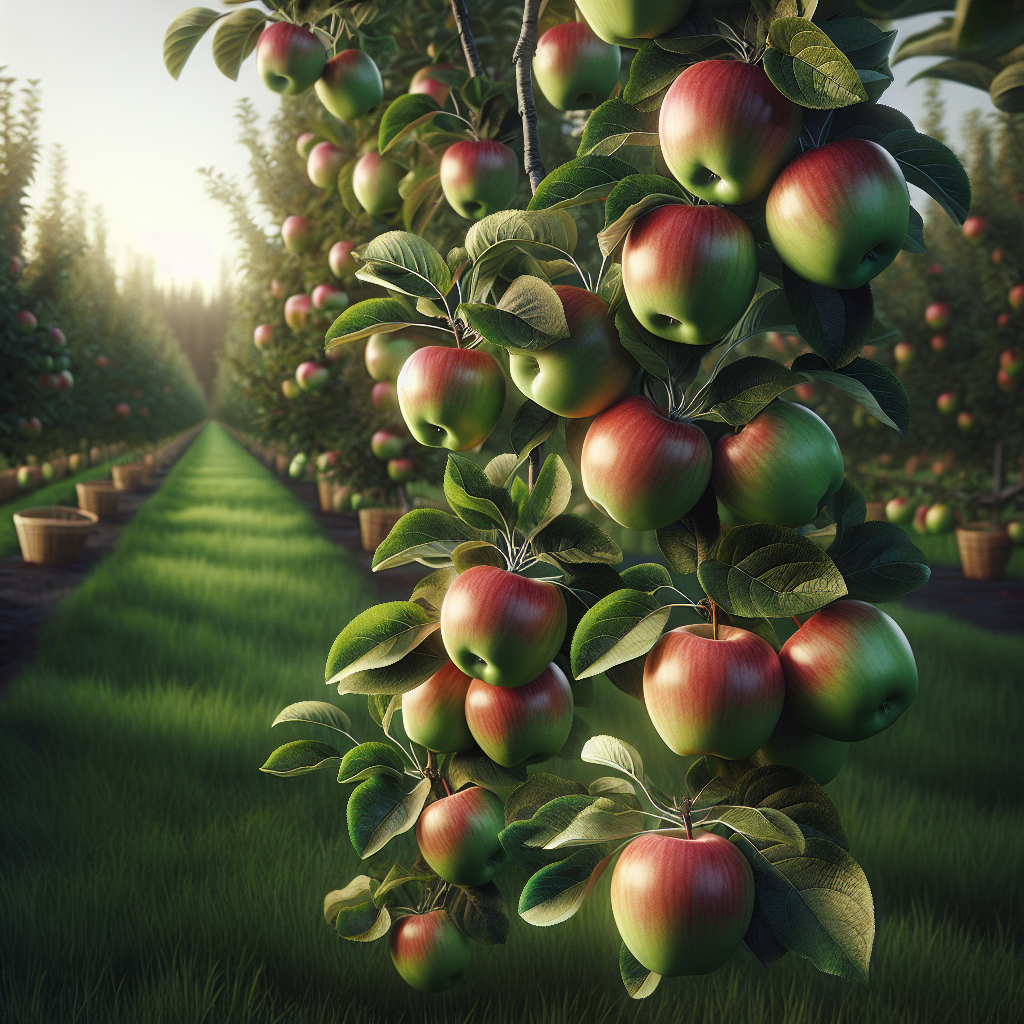
Introduction to McIntosh Apple
Discovered in the early 19th century in Dundela, Ontario, Canada, this variety became one of the foundational apples of northeastern North America and remains an important parent in modern breeding. Its popularity comes from a distinctive vinous aroma, juicy white flesh, and characteristic red blush over a green background, but it is also known for relatively soft flesh compared with firmer modern market cultivars.
For growers, this is a cultivar with very specific strengths and limitations. It excels in cool temperate districts, develops superior flavor where nights are cool before harvest, and is especially valued for fresh eating, sauce, and cider blending. It is less ideal for long-distance shipping than firmer apples, and its susceptibility to several common apple diseases means site selection, sanitation, and pruning are critical. For broader species-level context, see our Apple guide.
Botanical Profile of McIntosh Apple
This cultivar belongs to the rose family, Rosaceae, and is a grafted clonal selection of Malus domestica. Trees are typically sold on dwarfing, semi-dwarf, or standard rootstocks rather than grown on their own roots. Rootstock choice strongly influences ultimate tree size, anchorage, precocity, soil adaptation, and irrigation needs.
McIntosh trees tend to be medium vigor with a naturally spreading to somewhat upright-spreading habit depending on rootstock and pruning system. Fruiting occurs largely on spurs and short lateral shoots, though young trees may also crop on terminals. Blossoms are pink in bud, opening white with a blush tint, and generally bloom in the midseason apple flowering window. That mid-bloom timing matters because the variety is not reliably self-fertile and requires cross-pollination from another compatible apple flowering at the same time.
Fruit is usually medium sized, round to slightly flattened, with a thin skin that can bruise more readily than firmer thick-skinned cultivars. The background color is green, becoming washed or striped with deep red to crimson. In cooler sites, color development is often better, while very warm autumns can reduce both color intensity and the sharp aromatic complexity for which the cultivar is famous.
The flesh is white, fine-textured, very juicy, and more tender than crisp. At optimum maturity, flavor balances sugar and malic acidity with a perfumed, almost spicy note. If left too long on the tree or harvested late in warm conditions, flesh softens quickly and storage life drops. This is one reason commercial growers monitor starch conversion and background color carefully rather than harvesting only by external redness.
Soil, pH, and Climate Requirements for McIntosh Apple
This variety performs best in deep, well-drained loam or sandy loam with good aeration and moderate water-holding capacity. Ideal soil depth is at least 75 to 100 cm before any restrictive layer, because shallow hardpan, compacted subsoil, or a seasonal perched water table can reduce root growth, vigor balance, and cold resilience. Heavy clay can work if it is structured, drained, and not prone to prolonged saturation, but poorly drained clay is a common cause of weak trees, Phytophthora risk, and chronic nutrient imbalance.
The preferred soil pH is 6.0 to 6.8, with 6.2 to 6.5 often the sweet spot for nutrient availability and root performance. Below pH 5.8, calcium, magnesium, and phosphorus availability can become limiting and aluminum or manganese may become excessive. Above pH 7.2, iron and manganese deficiencies become more likely, especially on certain rootstocks. If lime is needed, incorporate it well before planting based on a complete soil test. If pH is too high, elemental sulfur is more effective when applied and reacted months before planting rather than after the orchard is established.
Winter chill is essential. McIntosh is best suited to cool temperate climates roughly corresponding to USDA zones 4 through 7, depending on rootstock and local microclimate. It generally benefits from substantial chilling accumulation, often well above 800 chill hours, though exact requirements vary by model. Regions with cold winters and moderate summers tend to produce the best combination of bloom regularity, sugar-acid balance, and red color.
Summer heat matters almost as much as winter chill. Excessively hot growing seasons can lead to poorer color, faster softening, and less distinctive flavor. Ideal growing areas have warm but not extreme summer days and cooler nights during the final 4 to 6 weeks before harvest. Protection from spring frost pockets is important because flowers and young fruitlets can be damaged when temperatures fall below about -2 to -3°C during sensitive stages.
Air drainage is crucial. A gentle slope is preferable to a valley bottom because cold air pools in low sites. Good air movement also helps reduce leaf wetness duration, which is central in suppressing Apple scab and other fungal diseases. Avoid wind-exposed ridges, however, if they cause repeated blossom damage or reduce pollinator activity.
Soil moisture should remain evenly moist, not waterlogged, during establishment and fruit sizing. As a practical field target, the root zone should not be allowed to swing from saturated to drought-stressed. In medium-textured soils, this often means maintaining moisture around 60 to 80% of field capacity in the active root zone. Overwatering signs include pale leaves despite adequate fertility, reduced shoot extension with soft or blackened feeder roots, sour-smelling soil, algae growth near emitters, and fruit that splits or shows poor keeping quality. Underwatering signs include dull foliage, midday leaf curl, premature fruit drop, weak return bloom, and small fruit with reduced juiciness.
Step-by-Step Planting & Propagation
Commercially and horticulturally, this variety is propagated almost exclusively by grafting or budding onto selected rootstocks. Seed propagation is unsuitable if you want true-to-type trees because seedlings are genetically variable and will not reproduce the exact cultivar characteristics.
Choose the right rootstock and orchard system. Dwarf rootstocks such as M.9 produce small trees that fruit early and are suitable for high-density systems, but they require permanent support and consistent irrigation. Semi-dwarf stocks such as M.26 or MM.106 produce larger trees with lower density requirements. In colder or more marginal soils, rootstock selection must account for winter hardiness, Fire blight susceptibility, and drainage tolerance.
Select a compatible pollinizer. Because this cultivar needs cross-pollination, plant another mid-bloom apple nearby. Crabapples can also serve as pollinizers if bloom timing matches. A practical spacing for pollination is within 15 to 30 meters of another compatible tree, with honey bee or wild bee activity present during bloom.
Prepare the site one season ahead if possible. Remove perennial weeds, subsoil if compaction exists, and correct pH based on soil analysis. If organic matter is low, incorporate well-finished compost modestly across the planting area rather than packing raw organic matter into the planting hole, which can create a water bathtub effect.
Plant during dormancy. Early spring planting is preferred in colder climates, while late fall to winter planting may work in milder temperate regions where soils remain workable and roots can establish before spring growth.
Dig a broad planting hole, not an excessively deep one. The hole should be wide enough to spread roots naturally, but the final planting depth should keep the graft union 5 to 10 cm above the final soil line, especially on dwarfing rootstocks. Burying the graft union can allow scion rooting and negate the size-control effect.
Set the tree at the correct height. The root flare should sit at or slightly above grade in heavier soils. Backfill with native soil, breaking clods but not over-amending. Water thoroughly to settle soil around roots.
Install support immediately if needed. Dwarf plantings need a stake or trellis from day one. Tie the trunk loosely with a flexible tie that will not girdle the bark.
Mulch carefully. Apply 5 to 8 cm of wood chips or similar coarse mulch over the root zone, but keep it 10 to 15 cm away from the trunk to prevent vole damage, collar rot, and bark moisture retention.
Head and shape the young tree. At planting, prune according to the chosen training system. Central leader systems are most common. Remove broken roots and damaged shoots, then establish scaffold placement early.
Bench grafting and whip-and-tongue grafting are the main propagation techniques for nursery production, while T-budding is also common. Scionwood should be collected during dormancy from healthy, virus-free, true-to-type trees and stored cold and slightly moist until grafting.
Care & Maintenance regimes for McIntosh Apple
During the first three years, establishment determines the orchard's long-term productivity. Young trees need regular but measured irrigation. In the absence of rainfall, newly planted trees often require 10 to 20 liters of water 1 to 3 times weekly depending on soil texture, temperature, and rootstock vigor. Sandy soils require smaller, more frequent applications; clay loams require deeper, less frequent watering. The aim is to wet the root zone to roughly 20 to 30 cm deep in year one, then deeper as roots expand.
Once bearing begins, water demand increases during bloom, cell division, and fruit enlargement. The most critical periods are from petal fall through midsummer and again during late fruit sizing in dry regions. Drip irrigation is preferred because it maintains even moisture without wetting foliage. Severe moisture stress after bloom can reduce fruit size and next year's flower bud formation. Conversely, excess water late in the season can dilute flavor, promote soft fruit, and increase storage disorders.
Nitrogen management should be conservative. Over-fertilized McIntosh trees produce rank vegetative growth, denser canopies, reduced color, delayed hardening before winter, and greater disease pressure. A young nonbearing tree may benefit from modest annual nitrogen based on leaf analysis and shoot growth targets, while bearing trees often need just enough to sustain 20 to 30 cm of annual terminal extension on mature scaffolds. Excessive shoot growth beyond that often signals too much nitrogen or overpruning.
Leaf analysis in midsummer is the professional standard for nutrient management. Calcium deserves special attention because this cultivar's relatively soft flesh and storage limitations make fruit quality sensitive to calcium status. Low fruit calcium is associated with bitter pit risk and weaker storage performance. Foliar calcium sprays during the season are often used where deficiency or disorder risk exists.
Pruning should aim for light penetration, spur renewal, and a calm balance between vigor and fruiting. Dormant pruning shapes structure, but summer pruning can be useful where excessive shading delays color. Maintain a central leader with well-spaced scaffolds and remove narrow crotch angles early. Thin out crowded interior shoots because dense canopies trap humidity and sharply increase scab and Sooty blotch pressure.
Fruit thinning is essential. McIntosh can set heavily, and overcropping leads to small apples, weak return bloom, biennial bearing tendencies, and poor color. Thin within 2 to 4 weeks after petal fall, ideally leaving one fruit per cluster and spacing fruit about 15 to 20 cm apart along the branch. Hand thinning gives the most precision for home orchards; commercial blocks may use chemical thinning timed carefully by weather and fruitlet size.
Weed control around the tree row is more important than many new growers realize. Grass and perennial weeds compete strongly for nitrogen and moisture, especially with dwarf rootstocks. Maintain a weed-free strip extending at least 60 to 90 cm from the trunk in young orchards, widening as trees mature. Mulch, shallow cultivation, or approved organic methods can be used, but avoid trunk injury.
Sunlight drives color. McIntosh flavor can still develop under moderate light, but premium red coloration requires good exposure. Prune and train so that dappled light reaches interior fruiting wood. In humid areas, this also improves spray penetration and disease control. For general orchard floor improvement strategies, read soil health tips.
Pests, Diseases & Organic Management
This cultivar is notably susceptible to Apple scab in many regions, and this single issue often determines whether a planting remains attractive and productive. Apple scab, caused by Venturia inaequalis, appears as olive-brown lesions on leaves and dark, corky spots on fruit. It thrives when spring leaf wetness periods coincide with mild temperatures. Organic management depends on sanitation, resistant pollinizer choices where possible, pruning for airflow, and protective sprays timed from green tip through primary infection periods. Removing fallen leaves or accelerating their decomposition can reduce overwintering inoculum significantly.
Fire blight, caused by Erwinia amylovora, can be another concern, especially in warm, wet bloom periods and on susceptible rootstocks. Symptoms include blackened blossom clusters, shepherd's-crook shoot tips, and cankers. Prune out strikes well below visible symptoms during dry weather and disinfect tools between cuts when disease pressure is high. Avoid excessive nitrogen that stimulates lush susceptible growth.
Cedar-apple rust may occur where junipers are nearby, causing bright orange lesions on foliage and fruit. Powdery mildew can infect shoots and blossoms in some districts, especially where canopies remain dense. Sooty blotch and Flyspeck become troublesome in humid summers if spray coverage and airflow are poor.
Key insect pests include Codling moth, Apple maggot, Plum curculio, Aphids, Leafrollers, Scale insects, and Mites. Codling moth larvae tunnel into fruit, leaving frass near entry points. Apple maggot causes winding brown trails through flesh. Plum curculio leaves crescent-shaped egg-laying scars and can trigger early drop. Organic control relies on an integrated system rather than a single product.
Best organic practices include:
- Dormant oil to suppress overwintering scale and mite eggs.
- Kaolin clay films to deter Plum curculio and some other pests when applied preventively and maintained after rain.
- Pheromone traps for monitoring Codling moth flights and timing interventions.
- Fruit bagging on small plantings after thinning for high-quality, pesticide-light production.
- Sanitation by removing dropped fruit weekly to break insect life cycles.
- Encouraging beneficial insects with flowering strips and companion plants.
- Trunk guards and habitat management to reduce rodent injury in winter.
Wildlife can also be a major source of loss. Deer browse young shoots and can deform trees permanently; rabbits and voles may girdle trunks under snow or mulch. Use hardware cloth guards, maintain short vegetation near trunks in winter, and fence if pressure is high.
Harvesting, Curing & Optimal Storage
This cultivar is typically harvested in early to mid-fall, but exact timing depends strongly on region, rootstock, crop load, and intended market. Fruit for immediate fresh eating can be picked slightly later for fuller aroma, while fruit intended for storage is better harvested at mature-but-not-overripe stage.
Professional maturity indicators include background color shift from deep green toward lighter green, ease of separation from the spur when lifted and twisted, seed darkening, starch conversion tests, and soluble solids balanced against acidity. External redness alone is not a reliable index because fruit can color before it reaches optimum internal maturity.
Pick carefully by hand to avoid bruising the thin skin and tender flesh. Lift the apple upward and roll it gently so the stem remains attached. Stemless fruit store poorly and are more prone to rot entry. Never yank fruit downward, which damages spurs and reduces next year's crop potential.
Unlike onions or potatoes, apples are not cured in the traditional dry-down sense, but they do benefit from prompt field heat removal. Move harvested fruit into shade immediately and pre-cool as fast as practical. Ideal storage temperature is close to 0 to 1°C with high relative humidity around 90 to 95%. Lower humidity causes shriveling; warmer storage accelerates softening and aroma loss.
McIntosh is not among the longest-storing apples. Under ordinary cold storage, quality often holds for several weeks to a few months depending on harvest maturity and condition at picking. Overmature fruit may become mealy quickly. Controlled atmosphere storage can extend marketability, but this is more relevant at commercial scale.
Inspect stored fruit regularly and remove any with bruising, breakdown, or decay. Do not store alongside produce that emits high levels of ethylene-sensitive or odor-absorbing crops unless storage is segregated. For home use, refrigeration is far superior to countertop storage if you want to preserve texture and acidity.
Companion Planting for McIntosh Apple
Useful orchard companions support pollination, beneficial insect habitat, weed suppression, and soil improvement rather than directly boosting yield through simple proximity alone. The most effective plantings are low-growing or seasonally managed species that do not compete aggressively with tree roots.
Clover is one of the best orchard floor companions because it acts as a living mulch, supports pollinators when managed correctly, and can contribute biologically fixed nitrogen. Keep it mowed low around young trees so it does not compete excessively for moisture.
Thyme works well near tree rows or in border strips because its flowers attract beneficial insects and it remains relatively low and manageable. In drier climates it can fill edge spaces without creating a dense humid microclimate around trunks.
Yarrow is valuable for attracting predatory wasps, hoverflies, and other beneficial insects. Its deep-rooting habit can also help cycle nutrients from lower soil layers, though it should be managed so it does not become overly competitive in very young plantings.
Nasturtium can be used as a seasonal insectary and trap plant in diversified orchards. Its flowers attract pollinators, and its foliage may draw Aphids away from more valuable crops in some systems. Keep all companion plants back from the immediate trunk zone to prevent rodent habitat and collar moisture problems.
Avoid planting heavy feeders or tall shading crops directly within the root competition zone. Also avoid dense, unmanaged groundcovers that harbor voles or keep bark damp. The best companion strategy is a managed orchard floor: clean around trunks, biologically diverse between rows, and easy to mow, scout, and harvest.