Introduction to water-mold pathogens
Water-mold pathogens, commonly referred to as oomycetes, represent a critical threat to global agriculture, particularly in humid and poorly drained environments. Unlike true fungi, these protist-like organisms feature cellulose cell walls and motile zoospores that enable rapid dispersal in water films. Key genera include Pythium spp., Phytophthora spp., and Plasmopara spp., responsible for diseases like Pythium root rot, Phytophthora blight, and downy mildew. These pathogens exploit excessive soil moisture, causing seedling death, root decay, and foliar infections that can wipe out entire fields. In commercial farming, losses can exceed 50% in susceptible crops during prolonged wet periods, making early detection and prevention essential. This guide provides professional-grade diagnostics, lifecycle insights, organic treatments, and prevention strategies tailored for small to large-scale operations. Understanding water-molds' dependence on free water is key to control, as they cannot survive in dry conditions.
Identifying Symptoms & Damage
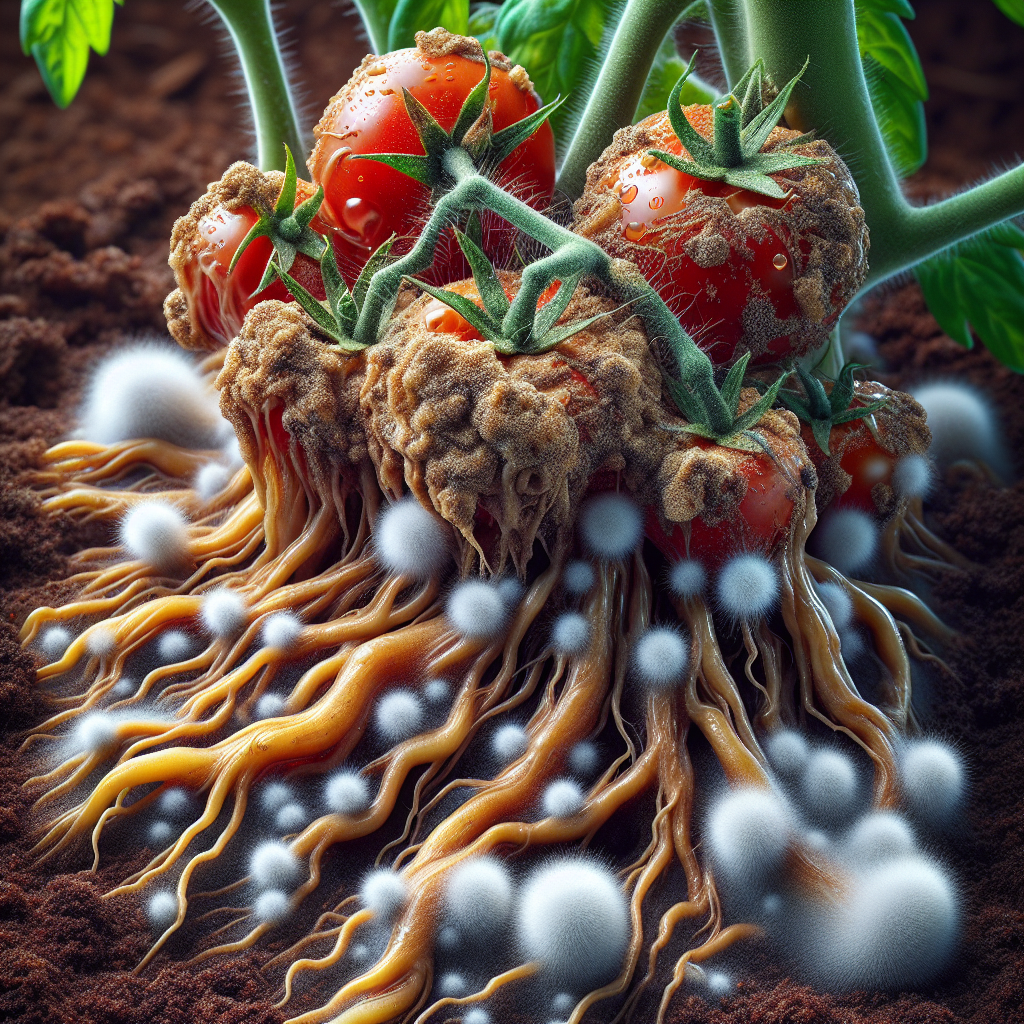
Accurate diagnosis begins with recognizing characteristic symptoms across plant parts. Early signs include wilting during the day with partial recovery at night, progressing to permanent collapse. Seedlings exhibit seedling damping-off, where stems water-soak at the soil line, turning mushy and collapsing into a thin, necrotic strand. Roots appear dark brown, water-soaked, and foul-smelling, often shredding when pulled, indicative of root rot.
Foliar symptoms vary: Phytophthora causes irregular dark lesions with white, cottony mycelium on lower leaves, while Pythium produces sparse, watery spots. Advanced stages show stem cankers (collar rot) at the soil line, girdling vascular tissue and blocking water flow. In fruiting crops, infected fruits develop firm, brown rots that soften over time. Damage severity correlates with moisture duration; confirm via lab tests showing oospore-filled hyphae under microscopy. Differentiate from Fusarium (dry rot) or Rhizoctonia (firm, reddish lesions) by the watery texture and zoospore motility in water mounts. Yield impacts are profound: up to 100% seedling loss and 30-70% in mature stands.
Lifecycle and Progression of water-mold pathogens
Water-molds follow a complex lifecycle adapted to wet cycles. Primary inoculum survives as thick-walled oospores in soil or plant debris for years. Under saturated conditions (>70% soil moisture), oospores germinate, producing sporangia that release biflagellate zoospores. These swim in water films, encyst, and penetrate roots via wounds or natural openings, colonizing cortex tissues within hours.
Inside plants, mycelium spreads systemically, producing more sporangia. In cooler temps (15-25°C), sexual reproduction forms durable oospores. Progression accelerates in warm, wet weather: infection to symptom in 2-5 days, full rot in 7-14 days. Aerial spread occurs via splashing rain or overhead irrigation, infecting leaves. Crop debris harbors overwintering structures, perpetuating cycles. Interrupt by drying soils and removing residues.
Environmental Triggers & Risk Factors
Optimal conditions for water-molds are cool-to-warm temperatures (10-30°C), prolonged leaf wetness (>8 hours), and saturated soils (field capacity exceeded). Poor drainage, compacted soils, and high clay content trap moisture, elevating risk. Over-irrigation, especially overhead, splashes zoospores. High nitrogen fertilizers promote succulent growth, enhancing susceptibility. Cool nights followed by warm days create dew that sustains foliar phases.
Risk spikes post-rainy seasons or flooding. Susceptible crops in potato, tomato, or soybeans fields amplify spread. Contaminated tools, transplants, or runoff from infected areas introduce inoculum. Soil pH extremes (below 5.5 or above 7.5) stress plants, indirectly favoring pathogens. Monitor with soil probes; act when volumetric water content >0.3 m³/m³.
Organic Control & Treatment Plans
Organic management integrates cultural, biological, and physical tactics. Immediate response: Remove and destroy infected plants to curb spread. Improve drainage with raised beds or ditches. Apply Soil Health Mastery: 5 Proven Strategies for Small Farms to Build Fertile Ground Without Breaking the Bank principles like cover cropping to enhance aeration.
Biological controls: Introduce Trichoderma spp. or Bacillus subtilis (e.g., Serenade) as soil drenches; these outcompete water-molds. Gliocladium virens targets oospores. Apply at 10^9 CFU/g rates pre-planting.
Organic amendments: Incorporate compost tea with aerobic bacteria, lime to raise pH to 6.5, or phosphites (mono-potassium phosphite) for induced resistance—foliar spray every 14 days. Hydrogen peroxide (3%) drenches oxidize mycelium in early stages.
Treatment protocol: Day 1: Excavate and solarize affected zones (clear plastic, 60°C for 4 weeks). Week 2: Biocontrol drench. Ongoing: Mulch with coarse organics to reduce splash. Rotate with non-hosts like grains. Avoid copper-based fungicides in organics; use OMRI-listed alternatives. Success rates: 70-90% with integrated plans.
Preventing water-mold pathogens in the Future
Prevention outperforms cure through cultural vigilance. Select resistant varieties, e.g., grafted tomatoes or russet burbank potato. Optimize spacing for airflow (30-50% canopy reduction). Use drip irrigation, scheduling to maintain soil at 60-70% capacity; avoid overhead. Pre-plant solarization kills 80-95% inoculum.
Soil testing guides amendments: boost calcium (>1000 ppm) and avoid excess N. Sanitize tools with 10% bleach. Crop rotation (3-4 years) with grasses breaks cycles. Monitor with baiting traps (radish seedlings) or PCR kits. Integrate companion plants like marigold for biofumigation. Post-harvest, till and aerate to dry residues. Long-term, build mycorrhizal associations via clover covers. These strategies sustain yields, minimizing outbreaks to <5%.
Crops Most Affected by water-mold pathogens
Water-molds devastate moisture-loving crops. Solanaceae like potato, tomato, and eggplant suffer Phytophthora root rot. Legumes including soybeans and peas face damping-off. Cucurbits (cucumber, squash) get vine blights. Root crops like sweet potato and cassava endure black shank. Tropicals such as avocado, banana, and mango battle crown rots. Grains like rice and corn see seedling losses. Brassicas (cabbage) and leafy greens (lettuce) prone to basal rots. Ornamentals and turf also vulnerable. Prioritize high-value crops like Hass avocado with stringent prevention.