Introduction to Trichogramma
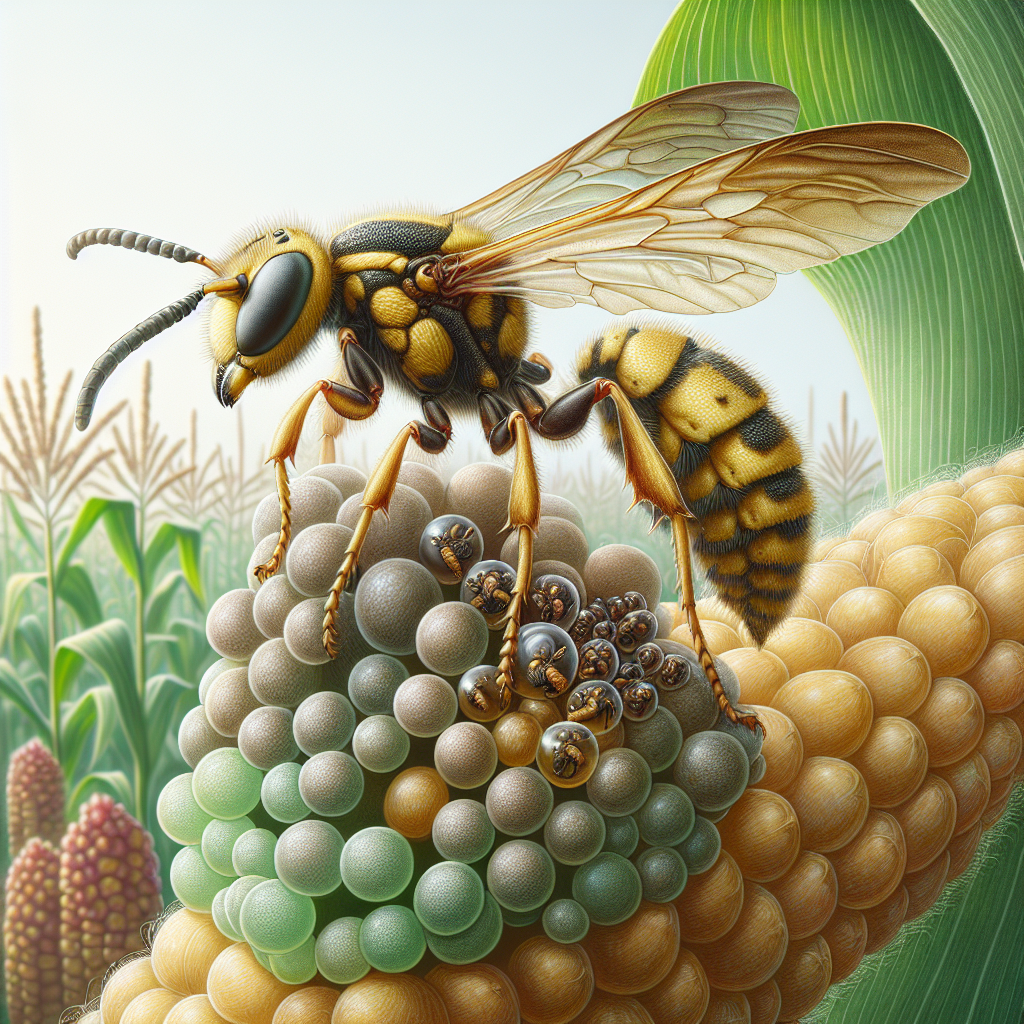
Trichogramma wasps represent one of the most successful and widely deployed biological control agents in modern agriculture. Belonging to the family Trichogrammatidae, these minute parasitoids (typically 0.5-1 mm in length) specialize in attacking the eggs of lepidopteran pests, including notorious crop destroyers like the corn earworm, European corn borer, and various leaf-feeding caterpillars. Unlike chemical pesticides, Trichogramma offers a sustainable, targeted approach that preserves beneficial insects and minimizes environmental impact.
Farmers and growers have harnessed Trichogramma since the early 20th century, with commercial production scaling up dramatically in the 1980s. Today, billions of these wasps are released annually worldwide, protecting high-value crops from devastating infestations. Their appeal lies in simplicity: no resistance buildup in target pests, low cost per unit area, and compatibility with integrated pest management (IPM) systems. However, successful deployment requires precise timing, environmental awareness, and understanding of their biology to avoid common pitfalls like premature release or inadequate host availability.
This definitive guide equips agricultural professionals, small-scale farmers, and horticulturists with professional-grade strategies for diagnosing pest pressures that necessitate Trichogramma releases, managing their lifecycle for optimal efficacy, and integrating them into organic treatment plans. Whether safeguarding tomato fields from tomato fruitworms or corn from borers, mastering Trichogramma can slash chemical inputs by 50-90% while boosting yields.
Identifying Symptoms & Damage
Trichogramma itself causes no direct damage to crops—quite the opposite. Signs of their activity manifest as blackened, shriveled lepidopteran eggs scattered on leaves, stems, or fruit. Under magnification (10-20x), parasitized eggs appear with a small emergence hole from which the adult wasp exits, often leaving a tiny meconium (frass) spot. Healthy pest eggs, by contrast, hatch into damaging larvae that chew foliage, bore into fruits, or tunnel stems.
Diagnostic symptoms prompting Trichogramma intervention include clusters of cream-to-yellow moth eggs (0.5-1 mm) on undersides of leaves, especially in crops like cabbage, squash, and peppers. Early infestation signs: skeletonized leaves from neonate larvae, webbing, frass pellets, or entry holes in pods/ears. Differentiate from similar pests like aphids (honeydew producers) or mites (stippling) by scouting for adult moths at dusk. Use sticky traps or pheromone lures to monitor moth flights, correlating peaks with egglaying.
Quantitative scouting: Sample 25-50 leaves per acre, noting egg masses >5% infestation threshold. Damage thresholds vary: in soybeans, 20% defoliation from pod borers warrants release; in cotton, 10 eggs/100 plants triggers action. Misdiagnosis risks wasting wasps on non-hosts like beetles or flies—Trichogramma targets only Lepidoptera eggs. For confirmation, rear out samples in lab conditions (25°C, 70% RH) to observe wasp emergence in 7-10 days.
Lifecycle and Progression of Trichogramma
Trichogramma completes its lifecycle in 10-14 days under optimal conditions (24-28°C, 60-80% RH), making it highly responsive to pest outbreaks. Adult females (yellowish, winged, 0.3-1 mm) emerge from host eggs, mate within hours, and seek fresh lepidopteran eggs using chemical cues. A single female parasitizes 50-300 eggs over 2-3 days, laying 20-60 offspring per host via telescoping ovipositor.
Eggs hatch in 24-48 hours inside the host egg, with larvae (5 instars) consuming the yolk over 4-7 days. Fully fed larvae spin a silken meconium, pupate, and eclose as adults. Hyperparasitism (wasps parasitizing Trichogramma) can reduce efficacy by 20-50%, visible as dual emergence holes. Overlap generations allow continuous field populations, but commercial releases use inundative strategy (high doses) or inoculative (low doses for establishment).
Seasonal progression: In temperate zones, 20-30 generations/year; tropics, continuous. Monitor via degree-day models (base 10°C, 200-250 DD from moth flight to release). Species selection critical: T. pretiosum excels on corn earworm; T. brassicae on crucifer pests; T. ostriniae on borers. Quality control in production ensures >80% parasitism rate, female-biased sex ratio (>60%), and vigor tested against sentinel eggs.
Environmental Triggers & Risk Factors
Trichogramma thrives at 20-30°C and 50-90% RH, with mortality spiking above 35°C or below 15°C. UV radiation kills exposed adults within hours—deploy shaded cards or evening releases. Pesticide residues (pyrethroids, organophosphates) devastate populations; wait 7-14 days post-spray or use selective options like Bacillus thuringiensis (Bt).
Risk factors for failure: Low host density (<1 egg/10 plants) wastes wasps; excessive wind (>10 km/h) hinders dispersal (flight range 30-100m). Rain washes off cards, reducing recovery by 40%. Poor timing misses egg window (moths lay <48 hours post-flight). Soil type irrelevant, but flowering crops boost nectar for longevity (adults starve in 24-48 hours sans food). Integrate with companion planting using nectar-rich marigold or thyme to sustain residents.
Organic Control & Treatment Plans
Deploy Trichogramma as cornerstone of organic IPM. Release rates: 50,000-200,000/ha weekly for 3-4 weeks at egg thresholds. Methods: Card releases (5x10 cm, 500-1000 wasps/card) stapled to foliage; aerial dispersal via planes for large fields. Timing: 24-48 hours post-moth peak, targeting neonate eggs.
Step-by-step plan:
- Scout weekly, map hotspots.
- Source certified wasps (T. spp. matching local pests).
- Pre-release: Acclimate 1-2 days at field temp.
- Distribute evenly, 10-20m spacing.
- Monitor parasitism (black eggs >30% success). Combine with Bt sprays, row covers, reflective mulches. For corn, augment with sweet corn (Honey Select) borders as trap crops. Economics: $10-20/ha per release, ROI via 20-50% yield protection. See Spring Pest Patrol for scouting tech.
Preventing Trichogramma in the Future
Prevention focuses on conserving natural populations rather than exclusion. Plant pollen/nectar strips (nasturtium, yarrow) every 50m to fuel wasps. Avoid broad-spectrum sprays; rotate with oils/soaps. Crop rotation disrupts host cycles—alternate potato with non-hosts. Maintain refugia: 5% wildflowers enhance residency. Monitor natural parasitism >20% before releases. Long-term: Breed resistant varieties, use pheromones to disrupt moth mating. Baseline scouting prevents outbreaks, ensuring Trichogramma self-sustains.
Crops Most Affected by Trichogramma
Trichogramma targets lepidopteran pests in diverse crops: