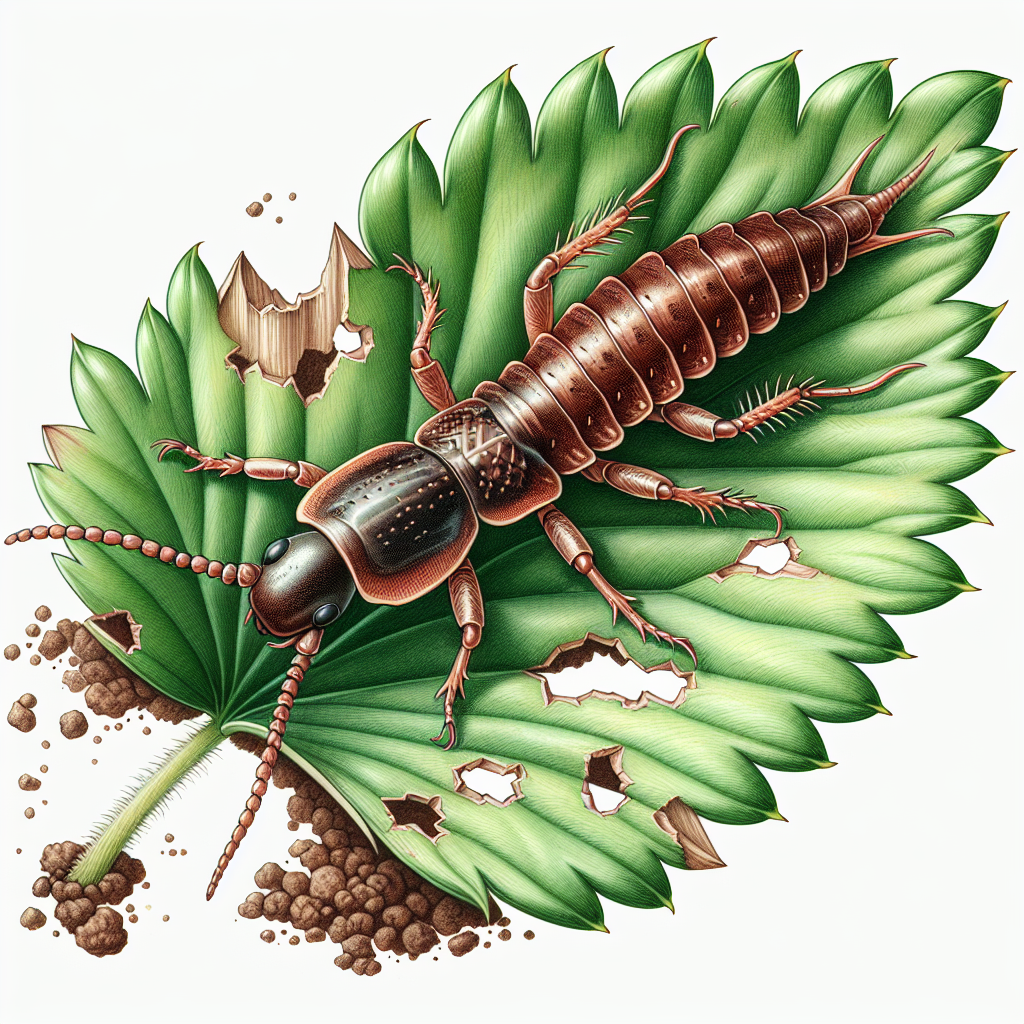
Introduction to Earwigs
Earwigs (order Dermaptera) are elongated, flattened insects with distinctive forceps-like cerci at the abdomen's end, often misunderstood as dangerous but harmless to humans. Over 2,000 species exist worldwide, with the European earwig (Forficula auricularia) most common in temperate agriculture. These nocturnal scavengers prefer damp, sheltered habitats, feeding on decaying plant matter, lichens, and small insects, but they readily turn to live crops during population booms.
In agricultural settings, earwigs pose a moderate threat, rasping ragged holes in foliage, flowers, and fruits. They target soft tissues at night, hiding in mulch, under pots, or in stem crevices by day. Populations explode in humid, poorly drained soils, leading to 20-50% yield losses in susceptible strawberry fields if unmanaged. Early detection via pitfall traps prevents escalation, as earwigs reproduce rapidly in organic debris. This guide equips farmers with diagnostic tools, lifecycle insights, and organic strategies to minimize damage while preserving beneficial roles in soil aeration and pest predation. For small farms, integrating these tactics boosts resilience without synthetic inputs. Spring Pest Patrol: Organic AI Strategies to Shield Your Crops from Common Invaders
Identifying Symptoms & Damage
Earwig damage manifests as irregular, shredded holes in leaves, often with smooth edges from their chewing mandibles, distinguishing them from slug slime trails or caterpillar frass. Look for notched leaf margins, scooped petals on flowers, and scarred fruits like pitted raspberries or bored corn ears. Seedlings show cleanly clipped stems near soil level, while mature plants exhibit skeletonized undersides.
Inspect at dawn: yellowing foliage, wilting tips, and clusters of pincer-tailed insects in curled leaves confirm infestation. Differentiate from slugs by absence of mucus; from cutworms by vertical feeding patterns. Severe cases defoliate lettuce heads or tunnel into tomato fruits, reducing marketability by up to 30%. Use a flashlight at night to spot foraging earwigs, which flee when exposed. Associated signs include silk-like webbing in hiding spots and increased slugs and snails activity, as earwigs compete for mulch refuges.
Lifecycle and Progression of Earwigs
Earwigs undergo incomplete metamorphosis: eggs, nymphs, adults. Females overwinter in soil burrows, laying 20-60 eggs in spring (March-May in temperate zones). Eggs hatch in 20-30 days into tiny, wingless nymphs resembling adults but smaller (1-5mm). Five to six instars follow, maturing in 2-4 months; adults live 1+ years.
Peak activity occurs June-August, with winged dispersal rare—most crawl. Nymphs feed voraciously on tender growth, molting under debris. Overwintering adults emerge ravenous, targeting ripening fruits. One female produces 50-100 offspring annually; humid summers yield 2-3 generations. Monitor with tuna-can traps (oil-filled) to track progression: high nymph counts signal outbreak risk.
Environmental Triggers & Risk Factors
Earwigs proliferate in moist (60-80% RH), warm (15-25°C) conditions with abundant organic matter. Heavy mulch, compost piles, and overwatering create ideal microclimates. Poor drainage, shaded beds, and nearby weeds like dandelions serve as reservoirs. Climate shifts—wet springs, mild winters—boost survival; irrigation without drying cycles exacerbates issues.
Risk spikes post-rain in sweet corn (Honey Select) fields or cabbage patches. Companion pests like flea beetles indicate stressed plants attractive to omnivorous earwigs. Soil pH 6.0-7.0 suits them; compacted earth limits predation by birds or toads.
Organic Control & Treatment Plans
Cultural Controls: Reduce mulch to 2 inches; till soil in fall to expose eggs. Improve drainage with raised beds; hand-pick at night into soapy water. Trap with rolled newspapers or burlap stuffed with straw—discard daily.
Barriers & Traps: Diatomaceous earth (DE) rings around plants abrade exoskeletons; reapply after rain. Oil pans (tuna cans sunk level with soil, filled with 1-inch oil/soy sauce) capture 50-100/night. Sticky barriers on trunks deter climbers.
Biologicals: Encourage predators—ground beetles, birds, toads. Release parasitic nematodes (Steinernema carpocapsae) at 1M/m² in evening soil drenches (22-25°C). Parasitic flies (Tachinidae) target nymphs.
Biopesticides: Neem oil (0.5% weekly sprays) disrupts molting; pyrethrin soaps for knockdown. Bacillus thuringiensis (Bt) ineffective—earwigs aren't lepidopterans.
Integrated Plan: Week 1: Scout/trap. Week 2: DE barriers + nematodes. Week 3: Neem if >10/plant. Rotate tactics; avoid broad-spectrum sprays preserving predators. Yields recover 70-90% with diligence.
Preventing Earwigs in the Future
Long-term prevention hinges on habitat denial: minimal mulch, gravel mulches, and 12-inch soil berms. Plant repellents like garlic, thyme, or nasturtium border crops. Solarize soil pre-planting (clear plastic, 4-6 weeks summer). Rotate crops annually; remove debris post-harvest.
Encourage natural enemies via birdhouses, toad habitats. Monitor with 5-10 traps/acre; threshold: 5/trap. Drip irrigation minimizes wetness. For high-value strawberry beds, floating row covers exclude migrants. Annual audits prevent reinfestation.
Crops Most Affected by Earwigs
Earwigs ravage soft-skinned, low-growing crops:
- Berries: Strawberry (fruit scarring, 40% loss); raspberry, blackberry (flower/fruit drop).
- Vegetables: Lettuce, cabbage (head shredding); corn (silk/ear damage); tomato, cucumber (fruit pitting).
- Others: Peach, [apricot] blossoms; bean seedlings; potato foliage.
Tolerance varies: brassicas resist better than solanaceae. In orchards, they aggregate on ripening Hass Avocado. Prioritize monitoring in these.