Introduction to Snails
Snails, belonging to the Gastropoda class, are among the most notorious pests in agriculture and horticulture, particularly in temperate and humid regions. These hermaphroditic mollusks, often recognized by their coiled shells and slimy trails, feed voraciously on plant material, causing significant economic losses to small farms and large-scale operations alike. Common species include the garden snail (Helix aspersa or Cornu aspersum), white garden snail (Theba pisana), and various slugs closely related in damage potential—check our guide on Slugs for comparative management.
Unlike faster-moving insects, snails are nocturnal foragers that emerge after rain or irrigation, scraping tender leaves, stems, and fruits with their radula—a file-like tongue. They reproduce rapidly, laying hundreds of eggs per season, making early detection critical. In vegetable patches, orchards, and nurseries, snail infestations can wipe out seedlings overnight, reducing yields by up to 50% in severe cases. This definitive guide equips agricultural professionals with diagnostic tools, lifecycle knowledge, and proven organic strategies to reclaim productivity. For small farms battling multiple invaders, explore Spring Pest Patrol: Organic AI Strategies to Shield Your Crops from Common Invaders.
Identifying Symptoms & Damage
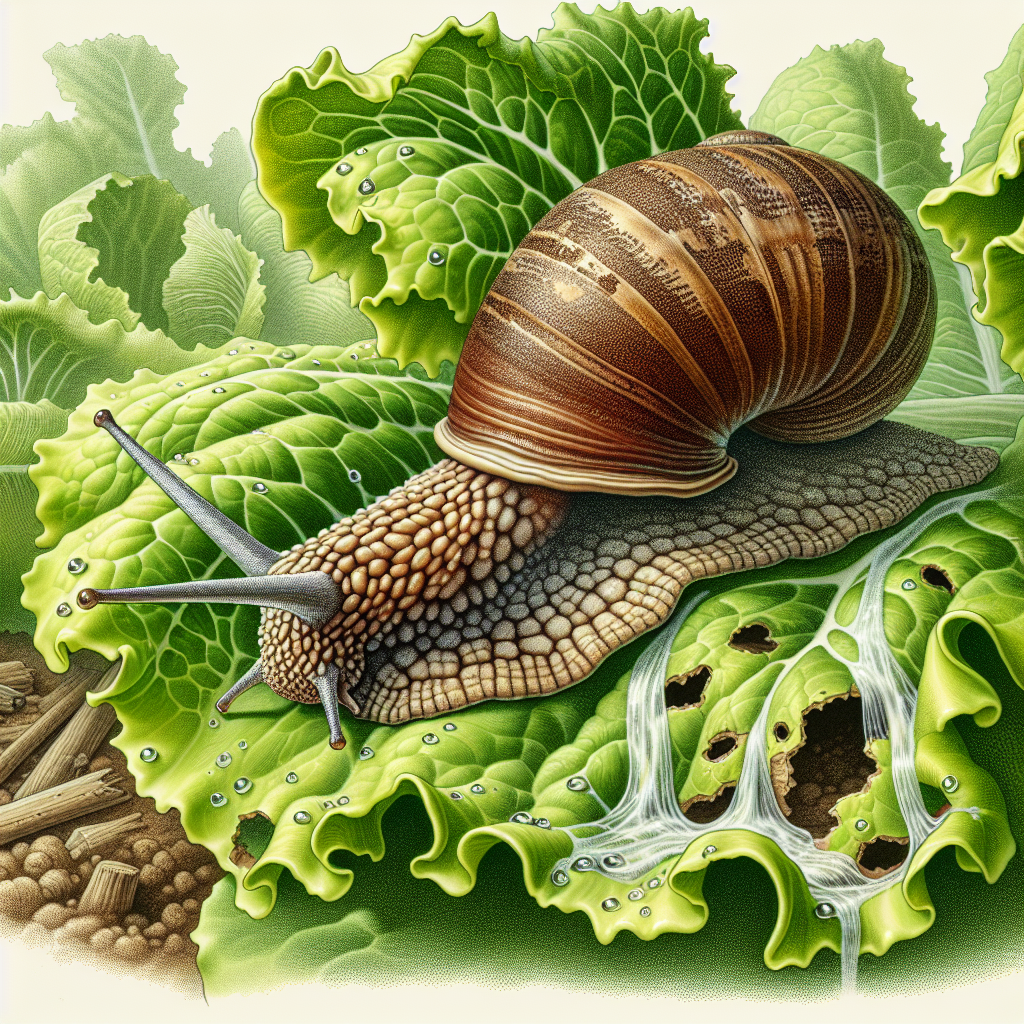
Snails leave unmistakable signs of their presence, allowing for swift diagnosis. The hallmark is irregular holes in leaves, often starting from the edges and progressing inward, with smooth, clean-cut edges unlike the jagged tears from caterpillars. Look for glistening mucus trails on foliage, soil, or plant bases—these silvery paths are most visible in the morning after nocturnal feeding.
Seedlings suffer most, vanishing entirely or appearing severed at soil level. On mature crops like lettuce, cabbage, or strawberries, expect skeletonized leaves where only veins remain. Fruits such as tomatoes, strawberries, and citrus show deep rasps or complete scarring, rendering them unmarketable. In greenhouses, dense populations create a web of trails across pots and benches.
Secondary damage includes contamination: snail feces (dark pellets) spread pathogens, exacerbating issues like Botrytis or bacterial infections. Inspect under pots, mulch, and debris at dawn or dusk for live snails—shells vary from brown spirals to banded patterns. Differentiate from slugs by the presence of a shell; both often coexist, amplifying destruction. Early identification prevents escalation, especially in high-value crops like strawberry beds.
Lifecycle and Progression of Snails
Understanding the snail lifecycle is key to timing interventions. Eggs are tiny, translucent spheres (2-3mm), laid in clutches of 80-120 beneath soil, mulch, or leaf litter. Hatching occurs in 2-4 weeks under moist, warm conditions (above 10°C/50°F), yielding juveniles that resemble mini-adults.
Juveniles grow rapidly, molting shell periodically while feeding aggressively. Maturity is reached in 6-12 months, depending on species and climate—garden snails live 2-5 years. Hermaphroditic adults cross-fertilize, producing 1-6 batches yearly. Peak activity aligns with wet seasons; aestivation (dormancy) occurs in dry heat, with snails sealing shells via epiphragm.
Overwintering happens as eggs or adults burrowed in soil. Progression from egg to pest is fueled by organic matter and irrigation. Disrupt this cycle by targeting eggs and juveniles, as adults are hardier. In tropical areas, continuous breeding demands vigilant monitoring.
Environmental Triggers & Risk Factors
Snails flourish in cool, humid environments (15-25°C/59-77°F, >80% humidity), triggered by rainfall, overwatering, or poor drainage. Mulch layers, compost piles, and weedy borders serve as refuges, while dense canopies retain moisture. Shade cloth or greenhouses amplify risks without ventilation.
Soil type matters: clay-loams hold moisture better than sands. Nearby wild areas harbor populations, migrating via trails. Over-fertilization with nitrogen promotes lush growth, prime snail fodder. Monocultures like cabbage or seedling beds heighten vulnerability. Climate change extends wet seasons, boosting outbreaks—pair with Slugs and snails for integrated defense.
Organic Control & Treatment Plans
Organic management prioritizes integrated pest management (IPM): cultural, physical, biological, and minimal chemical options. Cultural: Remove debris, till soil to expose eggs, and improve drainage. Hand-pick at night with flashlights, dropping into soapy water—effective for small areas.
Barriers: Copper tape (releases mild shock on contact), diatomaceous earth (DE) rings (2-3cm wide, reapplied after rain), or sharp ashes/crushed eggshells dehydrate snails. For raised beds, use 10cm metal collars buried 5cm deep.
Biological: Introduce predators like decollate snails (Rumina decollata), predatory beetles, or birds (ducks, chickens in orchards). Nematodes (Phasmarhabditis hermaphrodita) target juveniles—apply evenings in moist soil.
Traps: Beer traps (shallow dishes sunk level with soil) lure and drown; yeast-sugar-water alternatives work too. Iron phosphate baits (e.g., Sluggo) are OMRI-listed, safe for edibles.
Treatment Plan: Week 1: Scout and hand-pick. Week 2: Apply barriers/DE. Ongoing: Deploy traps, nematodes. Monitor weekly. Rotate tactics to prevent resistance. For lettuce or strawberries, combine with row covers.
Preventing Snails in the Future
Prevention beats cure. Choose snail-resistant varieties (e.g., fuzzy-leaved plants). Plant in full sun, space for airflow, and avoid overhead watering—drip irrigation minimizes wetness. Thin mulch to 5cm, using coarse types like bark over fine compost.
Perimeter traps and barriers around fields deter influx. Encourage predators: plant nasturtium or install bird boxes. Crop rotation disrupts habitats; solarize soil pre-planting to kill eggs. Monitor with traps; act at first trail sighting. Long-term, integrate with companion planting—see Why Companion Planting Feels Like Guesswork for Small Farms - And How AI Makes It Foolproof. Quarantine new plants.
Crops Most Affected by Snails
Snails target over 500 plant species, favoring succulents and low-growing veggies. Top victims: leafy greens (lettuce, spinach, kale), brassicas (cabbage, broccoli), legumes (peas), and fruits (strawberry, tomato). Seedlings of carrot, beans, and potato are decimated.
Orchards suffer: young citrus, apple, berries. In rice paddies (rice), they clog irrigation. Tropicals like banana, mango face bark/stem damage. Floriculture (basil, seedlings) and nurseries lose most. Protect high-risk crops with IPM; diversify to dilute impact.