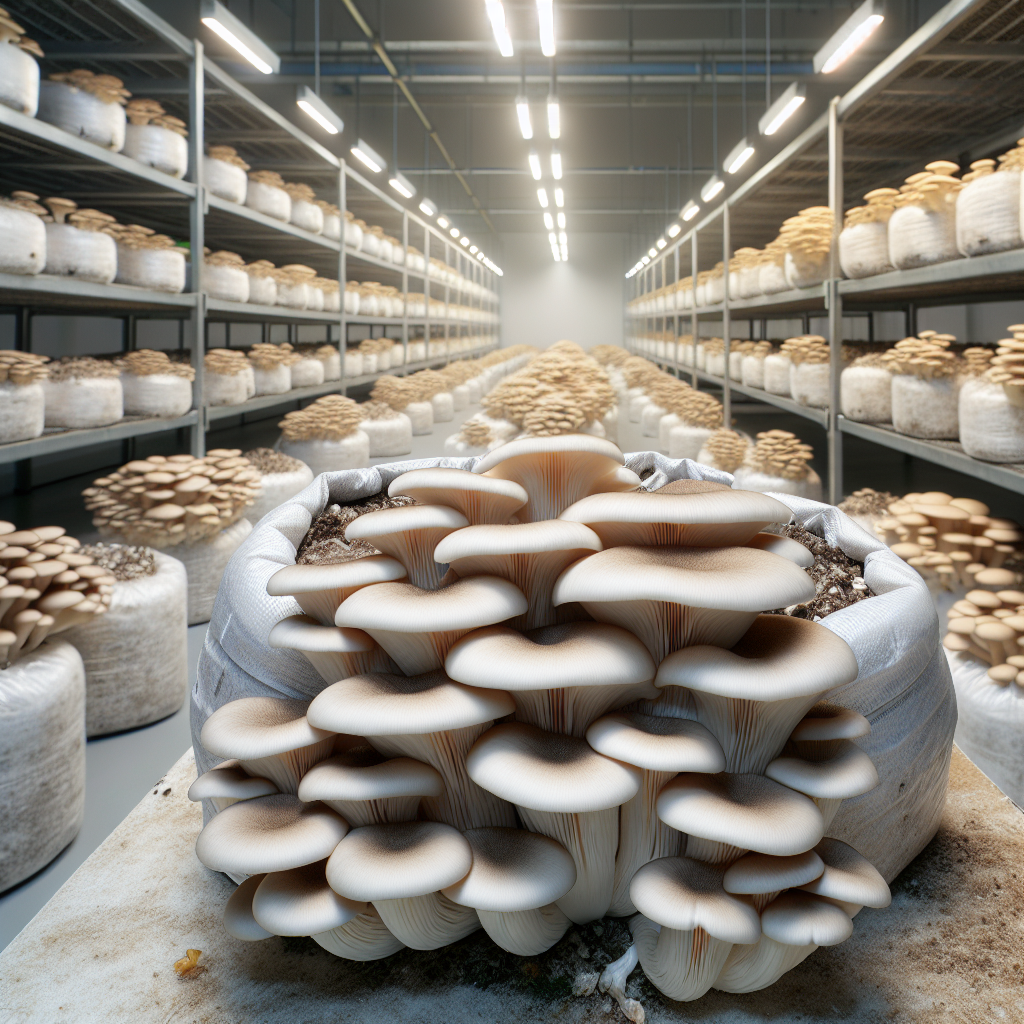
Introduction to Oyster Mushroom
A fast-growing edible fungus with broad commercial and household appeal, oyster mushroom includes several cultivated Pleurotus species and strains rather than a single narrowly defined crop. The name usually refers to Pleurotus ostreatus, but growers also cultivate warm-weather and specialty types such as P. pulmonarius, P. djamor, P. citrinopileatus, and P. eryngii under related production systems. The classic cap is shell-like to fan-shaped, often white, cream, gray, blue-gray, tan, or pink depending on strain, and it typically forms overlapping clusters from a common base.
Historically, oyster mushrooms gained major cultivation importance because they are easier to produce than many other gourmet mushrooms. They aggressively digest lignocellulosic materials, especially straw and hardwood residues, and they tolerate a wider range of conditions than more finicky species. That vigor explains why oyster mushroom production has spread from artisanal indoor rooms to low-cost rural systems using chopped straw, cotton waste, sugarcane bagasse, corn cobs, coffee husks, and hardwood fuel pellets.
From an agricultural perspective, oyster mushrooms are notable decomposers. They are not "planted" in soil like vegetables; instead, they are inoculated into a substrate rich in carbon, cellulose, and hemicellulose. Their white-rot fungal metabolism breaks down lignin efficiently, allowing them to convert agricultural by-products into food. This ecological function makes them highly attractive in circular farming systems where waste valorization matters. For growers interested in integrated systems, herbs such as Thai basil can complement diversified protected-cropping enterprises, even though they are not grown in the same substrate.
Botanical Profile of Oyster Mushroom
Although commonly treated as a vegetable crop in culinary writing, oyster mushroom is a basidiomycete fungus in the family Pleurotaceae. It produces a vegetative body called mycelium, composed of microscopic hyphae that spread through substrate. The visible mushroom is the fruiting body, formed when environmental triggers such as fresh air exchange, humidity, light, and temperature align.
Key taxonomic and production features include:
- Kingdom: Fungi
- Phylum: Basidiomycota
- Class: Agaricomycetes
- Order: Agaricales
- Family: Pleurotaceae
- Genus: Pleurotus
- Common cultivated species: P. ostreatus, P. pulmonarius, P. florida, P. sajor-caju in trade usage, P. citrinopileatus, P. djamor, and P. eryngii
Morphologically, the cap may range from 3 to 20 cm across depending on strain and growing conditions. Caps are usually smooth, slightly convex when young, then flattening or becoming shallowly funnel-shaped. Gills are decurrent, extending down the short or nearly absent stem. Spore print is typically white to pale lilac-gray. Commercial strains differ in cap thickness, stem density, preferred fruiting temperature, color stability, and shelf life.
Biologically, oyster mushrooms are unusually competitive among cultivated fungi. Spawn run is often rapid, with complete colonization of pasteurized straw in 10 to 21 days under good conditions. They also produce enzymes and metabolites that suppress some competing organisms. Certain Pleurotus species are known to trap and digest nematodes, a fascinating reminder that fungi can be both decomposers and microscopic predators.
For production planning, growers usually group strains by fruiting temperature:
- Cold-fruiting oysters: often 10-18°C
- Intermediate strains: often 15-24°C
- Warm-fruiting oysters: often 20-30°C
Choosing the right strain for ambient conditions is one of the most important decisions in successful cultivation. A gray winter oyster may produce thick, high-quality caps in cool weather but elongate stems and form small caps in heat. By contrast, warm-weather white or phoenix-type oysters often fruit strongly where classic P. ostreatus struggles.
Soil, pH, and Climate Requirements for Oyster Mushroom
This crop is not grown in field soil, so the critical production medium is substrate rather than mineral earth. The ideal substrate must supply structure, moisture, aeration, and digestible carbon. Common options include wheat straw, paddy straw, oat straw, chopped corn stalks, cottonseed hulls, hardwood sawdust, soybean hull blends, paper waste, and other clean agricultural residues free from fungicide contamination.
Substrate chemistry matters. Oyster mushrooms generally perform best when substrate pH is mildly acidic to near neutral, roughly 5.5 to 7.0 after processing. Most straw-based systems naturally fall into an acceptable range after pasteurization and draining. Sawdust systems often benefit from buffering with small amounts of agricultural lime, but excessive alkalinity can favor contamination or nutrient imbalance. Avoid using hydrated lime casually in supplemented bag culture unless you understand its concentration effects; strong alkalinity can damage beneficial microbial balance or create inconsistent hydration.
Moisture content of the substrate at spawning is one of the most decisive variables. A practical target is 60-68% moisture for many straw and sawdust systems. If you squeeze prepared substrate firmly in a clean hand, it should feel uniformly moist and release only a few drops, not a stream. If water pours out, the substrate is too wet and oxygen diffusion will be reduced, inviting bacterial souring. If the material feels merely damp with no resilience, it is too dry and mycelium may stall or colonize unevenly.
Temperature requirements shift by stage:
- Spawn run: generally 20-28°C depending on strain
- Fruiting initiation: often a slight temperature drop helps, especially for cool-fruiting strains
- Fruiting room: 12-24°C for many common gray/blue oysters; up to 30°C for some warm-adapted strains
Relative humidity should usually be:
- Incubation: around 70-80% is often adequate if bags are closed and substrate moisture is correct
- Fruiting: 85-95% during pin formation, then 80-90% as mushrooms enlarge
Light is required for proper fruit body formation, though not at high intensities. About 300-1000 lux of diffuse light for 8-12 hours daily is generally sufficient. In darkness, many strains form malformed primordia or elongated, stem-heavy clusters.
Fresh air exchange is absolutely critical. Oyster mushrooms need more oxygen than many novice growers expect. Elevated carbon dioxide leads to long stems, small caps, cupped fruit bodies, and poor market quality. Fruiting rooms should be managed to keep CO2 low enough for the specific strain, often below 800-1200 ppm for attractive broad caps, though some species tolerate slightly more. If stems are stretching and caps remain tiny despite good humidity, insufficient fresh air is usually the cause.
Because substrate health is central to yield, broader fertility and organic matter concepts from crop systems still matter conceptually; this is well explored in soil health strategies, even though mushroom production uses a different biological pathway from field crops.
Step-by-Step Planting & Propagation
Propagation is done through spawn, not seed. Spawn is grain, sawdust, or another carrier fully colonized by oyster mushroom mycelium. For dependable production, buy fresh, strain-identified spawn from a reputable laboratory unless you have sterile technique and a dedicated culture facility.
A reliable straw-bag method follows these steps:
- Select clean raw material. Use fresh, dry straw with no mold smell, black spotting, or chemical residues. Chop to 2-5 cm pieces for denser packing and faster colonization.
- Pasteurize. Soak and heat the straw at 60-70°C for about 1 to 2 hours, or use a proven lime-pasteurization or steam protocol suitable to your system. Pasteurization reduces competitor organisms while preserving a microbial background less risky than fully unsterile raw straw.
- Drain and cool. Bring substrate to spawning temperature, ideally below 30°C. Drain until moisture is in the 60-68% range.
- Inoculate with spawn. Use 3-10% spawn by wet substrate weight; 5% is a common balanced rate. Higher spawn rates shorten colonization and lower contamination risk but increase cost.
- Pack into bags. Use food-grade polypropylene or similar mushroom bags. Compress enough to eliminate large air voids but do not compact into an anaerobic mass.
- Create aeration/fruiting points. Depending on system, make small holes after colonization or pre-perforate according to bag design.
- Incubate. Keep bags in a clean room at the strain-appropriate temperature, usually 20-24°C for many strains, away from direct sun.
- Monitor colonization. Healthy mycelium appears bright white and spreads evenly. Most bags become fully white in 10-21 days.
- Initiate fruiting. Move colonized bags to a fruiting room with high humidity, diffuse light, lower CO2, and strain-appropriate temperature.
- Harvest in clusters when caps are still slightly inrolled or just flattening, before heavy spore release.
For supplemented hardwood sawdust blocks, sterilization rather than pasteurization is usually required because added bran or nitrogen-rich supplements increase contamination risk. A common formula is hardwood sawdust plus 10-20% bran with moisture adjusted to about 60-65%, then sterilized under pressure before spawning in a clean environment.
Signs of a good spawn run include:
- Even white colonization from multiple points
- Pleasant fresh mushroom smell
- Substrate warming slightly but not overheating
- No wet patches, sour odor, green mold, or orange bacterial slime
Common propagation mistakes include using old spawn, spawning into hot substrate, overwatering the substrate, insufficient pasteurization, and fruiting before full colonization.
Care & Maintenance regimes for Oyster Mushroom
Once inoculated, oyster mushroom care is mostly environmental management. The grower is balancing moisture, gas exchange, cleanliness, and timing.
During incubation, keep the substrate undisturbed and avoid unnecessary opening of bags. Mycelium prefers stable conditions. Excess heat is dangerous: if the internal bag temperature rises much above the target range, especially over 30°C for cool-adapted strains, growth may weaken or contamination may accelerate. Dense bags can self-heat, so large stacks in warm rooms should be avoided.
During fruiting, humidity management must be precise. Aim for 85-95% relative humidity during pinning so young primordia do not dry out. If humidity is too low, pins abort, cap margins crack, and clusters remain undersized. If humidity is too high with poor air movement, bacterial blotch and soft tissue can develop. The ideal room has humid air plus gentle circulation, not direct airflow onto the clusters.
Misting should maintain room humidity rather than soak the mushrooms. Fine fogging is better than coarse spraying. Water droplets sitting on caps for long periods encourage discoloration and bacterial issues. On low-tech farms, mist walls and floors more than fruit bodies. In small grow rooms, observe cap surface texture: healthy caps are supple and matte to slightly satiny, not slimy and not dry or papery.
Fresh air exchange should increase as soon as primordia form. Oyster mushrooms respond very visibly to CO2. Good-quality fruit has broad caps and relatively short stems. If stems elongate and caps stay narrow, add more ventilation. If edges dry and curl upward while humidity is low, increase humidity before assuming ventilation is the only issue.
Lighting should be gentle but regular. A 6500K daylight-style spectrum works well in indoor systems. Mushrooms do not need intense horticultural lighting; they need enough light for directional growth and normal cap development.
Flush management is also important. Most bags produce 2 to 4 flushes, with the first two usually contributing the majority of yield. After each harvest, remove old stem bases cleanly to reduce rot. Rest the block briefly, keep humidity up, and resume standard fruiting conditions. If blocks become very light, shrink substantially, or produce only tiny clusters, they are exhausted.
Expected biological efficiency varies by system and skill. On a dry substrate basis, 50-100% biological efficiency is common for competent growers, and more is possible with optimized strains and formulation. That means 1 kg of dry substrate may yield roughly 0.5 to 1.0 kg fresh mushrooms or more under strong management.
Pests, Diseases & Organic Management
Contamination and hygiene are more serious threats than classic field pests. Because the substrate is moist, nutrient-bearing, and biologically active, lapses in sanitation can rapidly lead to losses.
Major problems include:
- Green mold, commonly Trichoderma spp.: appears as white growth turning green as spores form. Often linked to poor pasteurization, weak spawn, dirty rooms, or overheating.
- Bacterial sour rot or wet spots: substrate smells sour or sweet-rotten, appears greasy, and may have brown wet patches. Commonly caused by overwatering, poor drainage, or insufficient oxygen.
- Cobweb mold: gray, wispy growth over casing or fruit bodies in some systems, favored by stagnant humid air.
- Fungus gnats and Sciarid flies: larvae may feed in substrate and adults spread contaminants.
- Mites: can reduce vigor and contaminate facilities, especially where hygiene is poor.
- Competing wild fungi: often from contaminated raw materials or poor processing.
Organic management begins with prevention:
- Start with clean substrate and fresh spawn.
- Pasteurize or sterilize correctly for the chosen system.
- Clean tools, racks, floors, and hands before spawning.
- Maintain separate incubation and fruiting areas if possible.
- Remove contaminated bags immediately and seal them before disposal.
- Use insect screens on air inlets.
- Keep the grow area dry between production cycles, then disinfect thoroughly.
For Fungus gnats, sanitation is the first line of control. Remove spent blocks promptly, eliminate standing water, and install sticky traps to monitor adults. Fine mesh screening and positive-pressure filtered air greatly reduce infestation pressure. Biological controls such as Bacillus thuringiensis var. israelensis may help in some systems where larvae breed in wet organic residues nearby.
For Trichoderma, the most effective response is rapid removal. Once sporulating green mold appears, do not disturb it unnecessarily because spores spread easily. Bag the infected block and remove it from the facility. Then review whether contamination came from poor substrate treatment, dirty spawn handling, excessive incubation heat, or delayed harvesting of spent blocks.
A useful diagnostic principle: white mycelium is not always your crop. Healthy oyster mycelium is dense, bright, and rhizomorphic to cottony depending on substrate and strain, but suspicious odors, unusual colors, or abrupt patches of different texture warrant caution.
Harvesting, Curing & Optimal Storage
Harvest timing determines quality, shelf life, and market value. Oyster mushrooms should generally be cut or twisted off in whole clusters when caps are well formed but still young. The ideal point is usually when cap margins begin to flatten but remain slightly inrolled, before edges become fully upturned and before heavy spore release dusts the room.
Overmature mushrooms are still edible but decline quickly in texture and shelf life. Caps become thinner, spores release heavily, and clusters break more easily in handling. Stems may toughen, especially in warm conditions or under high CO2.
To harvest, grasp the cluster near the base and twist gently, or use a clean knife to remove the entire bunch. Avoid leaving a shredded stump on the block, because decaying tissue can invite bacteria or mold before the next flush. Trim off tough substrate-attached bases after harvest.
Unlike onions, garlic, or grain crops, oyster mushrooms are not cured in a dry-down sense. Instead, postharvest handling focuses on rapid cooling, clean packing, and moisture retention without condensation. The best practice is to move harvested mushrooms to shade immediately, then pre-cool as soon as possible.
Storage guidelines:
- Temperature: 1-4°C is ideal for short-term storage
- Relative humidity: about 90-95% to minimize wilting
- Packaging: ventilated clamshells, paper-lined crates, or breathable film that limits dehydration without trapping free moisture
- Shelf life: often 4-7 days for common oysters, occasionally longer for thicker strains under excellent cold chain management
Do not wash mushrooms before storage unless absolutely necessary. Free water shortens shelf life. Instead, brush away substrate particles and keep handling gentle. If condensation forms inside packaging, ventilation is inadequate or the mushrooms were packed too warm.
For processing, oyster mushrooms can be dried, frozen after sautéing or blanching, or turned into powders and value-added products. Drying should be done with clean warm airflow, typically around 45-55°C, until pieces are brittle. Lower, controlled temperatures preserve color and aroma better than aggressive heat.
Companion Planting for Oyster Mushroom
Because this crop grows on prepared substrate rather than in garden soil, companion planting works differently than with field vegetables. The most useful interpretation is companion enterprise design: pairing oyster mushroom production with crops, structures, and waste streams that improve farm efficiency.
Excellent production companions include cereal crops that generate clean straw, hardwood processing that produces suitable sawdust, and greenhouse or shade-house operations where temperature and humidity infrastructure can be shared. Small farms often pair oyster mushrooms with herbs, salad greens, and nursery crops because mushrooms use vertical indoor space and can diversify cash flow without requiring field acreage.
Nutrient cycling is one of the strongest benefits. After mushroom production, spent mushroom substrate can be composted, vermicomposted, used as mulch after stabilization, or incorporated into non-sensitive cropping systems as an organic matter source. It should not be viewed as a fully balanced fertilizer, but it can improve tilth and microbial activity when properly aged.
In integrated gardens, spent substrate may support trees, ornamentals, and some vegetables after composting. Avoid applying fresh spent blocks directly against delicate seedlings if salts or incomplete decomposition are concerns. The material is often especially useful in building compost for heavy feeders.
From a systems perspective, oyster mushroom pairs well with diversified farms focused on residue utilization, local fresh sales, and quick crop turnover. It complements conventional companion-planting philosophies by turning by-products into edible biomass, reducing waste, and adding a high-value specialty crop to the farm portfolio.