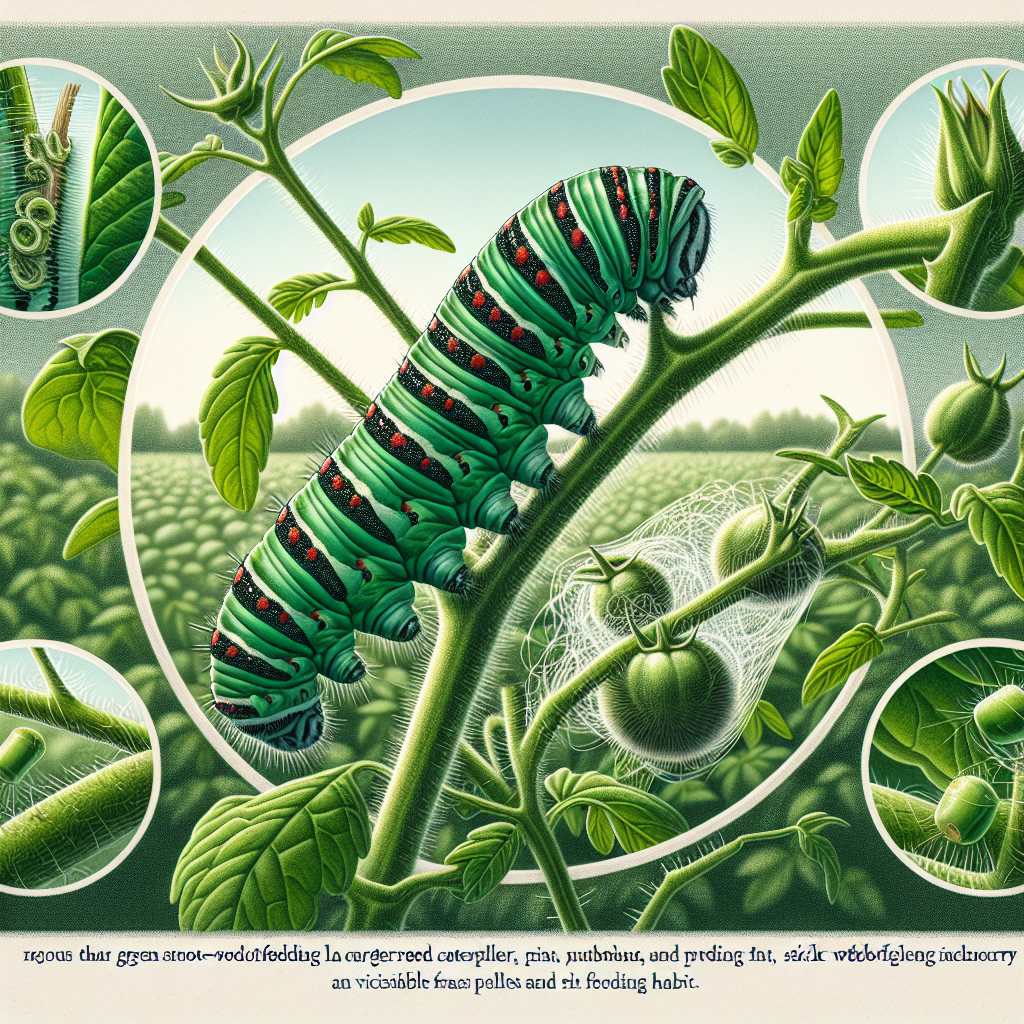
Introduction to Shoot-feeding caterpillars
Shoot-feeding caterpillars represent a diverse group of moth larvae (order Lepidoptera) that specialize in devouring the succulent shoots, buds, and tender terminals of growing plants. Unlike leaf-feeding caterpillars that broadly consume foliage, these pests focus on apical growth points, leading to stunted plants, deformed terminals, and reduced yields. Common culprits include species from families like Noctuidae (e.g., armyworm relatives), Pyralidae (snout moths), and Tortricidae (leafrollers), with over 100 species affecting global agriculture.
These caterpillars thrive in warm, humid conditions, often appearing in outbreaks following mild winters. Farmers encounter them in crops like tomato, cabbage, corn, and fruit trees such as apple and mango. Early detection is crucial, as small larvae cause disproportionate damage by feeding internally on meristems. This guide provides diagnostic tools, lifecycle insights, and organic management strategies to protect your fields. Annual losses from shoot-feeders exceed millions in high-value crops, making proactive IPM (Integrated Pest Management) essential for sustainable farming.
Understanding their behavior—solitary or gregarious feeding, webbing habits, and frass production—enables precise identification. For small farms, combining cultural controls with biological agents like Bacillus thuringiensis (BT) offers cost-effective relief without residues. Stay ahead by scouting weekly during peak seasons.
Identifying Symptoms & Damage
Diagnosing shoot-feeding caterpillar damage starts with recognizing hallmark signs on affected plants. Look for shredded or skeletonized new shoots, where larvae rasp away epidermis, leaving translucent windows or ragged edges. Unlike chewing damage from cutworms, which sever stems at soil level, shoot-feeders target upper growth, causing wilting terminals and multiple lateral buds (witch's broom effect).
Key symptoms include:
- Frass pellets: Small, dark green or black droppings at shoot bases or in webbing.
- Silk webbing: Many species spin protective tents over feeding sites, especially tortricids.
- Entry holes: Tiny bore marks on stems with sawdust-like excrement.
- Discolored terminals: Yellowing or browning tips, often with larvae visible inside.
Damage severity escalates quickly: 5-10 larvae per plant can defoliate terminals in days. Differentiate from aphids (honeydew trails) or mites (stippling) by presence of live larvae—soft-bodied, 1-4 cm long, green/brown with stripes or spots. Use a hand lens to spot head capsules or prolegs. In corn, check whorls for 'shot-hole' patterns; in brassicas like cabbage, shoots curl and fail to head.
Secondary signs: Sooty mold on honeydew from concurrent whiteflies, or powdery mildew exploiting wounds. Scout at dusk when larvae are active. Threshold: 20% shoot infestation warrants action. Photograph samples for Spring Pest Patrol: Organic AI Strategies to Shield Your Crops from Common Invaders to confirm ID.
Lifecycle and Progression of Shoot-feeding caterpillars
Shoot-feeding caterpillars undergo complete metamorphosis: egg, larva (5-7 instars), pupa, adult moth. Lifecycle spans 3-6 weeks, with 2-5 generations yearly depending on climate. Females lay 50-500 eggs in clusters on undersides of leaves or shoots, hatching in 3-7 days.
Larvae progress from 1mm hatchlings (feeding externally) to mature 3-5cm wanderers (boring into shoots). Peak damage in instars 3-5, lasting 10-20 days. They pupate in soil, silk cocoons, or crop debris, emerging as nocturnal moths with 2-4cm wingspans, often brown/gray with markings.
Overwinter as pupae or diapause larvae in mild regions. Progression accelerates above 20°C (68°F), slowing below 15°C. Monitor with pheromone traps for adults; egg masses appear post-rain. In rice, synchronize with tillering stage; in orchards, bloom coincides with flights. Disrupt at eggs/early larvae for 90% control.
Environmental Triggers & Risk Factors
Warm temperatures (24-32°C), high humidity (>70%), and mild winters trigger outbreaks. Excessive nitrogen promotes tender shoots, ideal for larvae. Risk factors: Nearby weedy borders harboring alternate hosts, reduced tillage leaving pupae intact, and monsoon rains boosting moth flights.
Monocultures like soybeans or wheat amplify spread via gregarious species. Drought stress weakens plants, increasing susceptibility. Companion crops like marigold deter via repellents. Track via degree-day models: 200-300 DD(F) from moth emergence signals egg hatch.
Organic Control & Treatment Plans
Prioritize IPM: Scout twice weekly, using sticky traps. Biological: BT kurstaki (e.g., Dipel) at 1-2g/L, applied evenings to young larvae (<1cm)—90% efficacy, safe for beneficials. Release Trichogramma wasps for eggs (1,000/acre/week).
Cultural: Hand-pick clusters; flame-weed borders. Neem oil (0.5%) or spinosad (organic-approved) for outbreaks—rotate to avoid resistance. Insecticidal soaps smother small larvae.
Treatment plan:
- Scout: Threshold 1-2 larvae/10 plants.
- BT Day 1, reapply Day 3-5.
- Neem if >20% damage.
- Monitor 2 weeks post-treatment. Avoid broad-spectrum sprays preserving predators like lacewings.
Preventing Shoot-feeding caterpillars in the Future
Prevention beats cure: Crop rotation (2-3 years, non-hosts like clover). Plant resistant varieties (e.g., Bt corn hybrids). Mulch with straw to bury pupae; till post-harvest.
Intercrop with thyme or nasturtium—repels moths. Reflective mulches deter oviposition. Pheromone traps for monitoring/mating disruption. Clean fields of debris; destroy volunteers. Timing transplants post-peak flights. Long-term: Encourage birds (caterpillar-pests).
Crops Most Affected by Shoot-feeding caterpillars
Vegetables: Tomato, cabbage, eggplant, peppers. Field crops: Corn, rice, sorghum, soybeans. Fruits: Apple, mango, grapes, citrus. Others: Cotton, sugarcane. Yields drop 30-70% untreated.