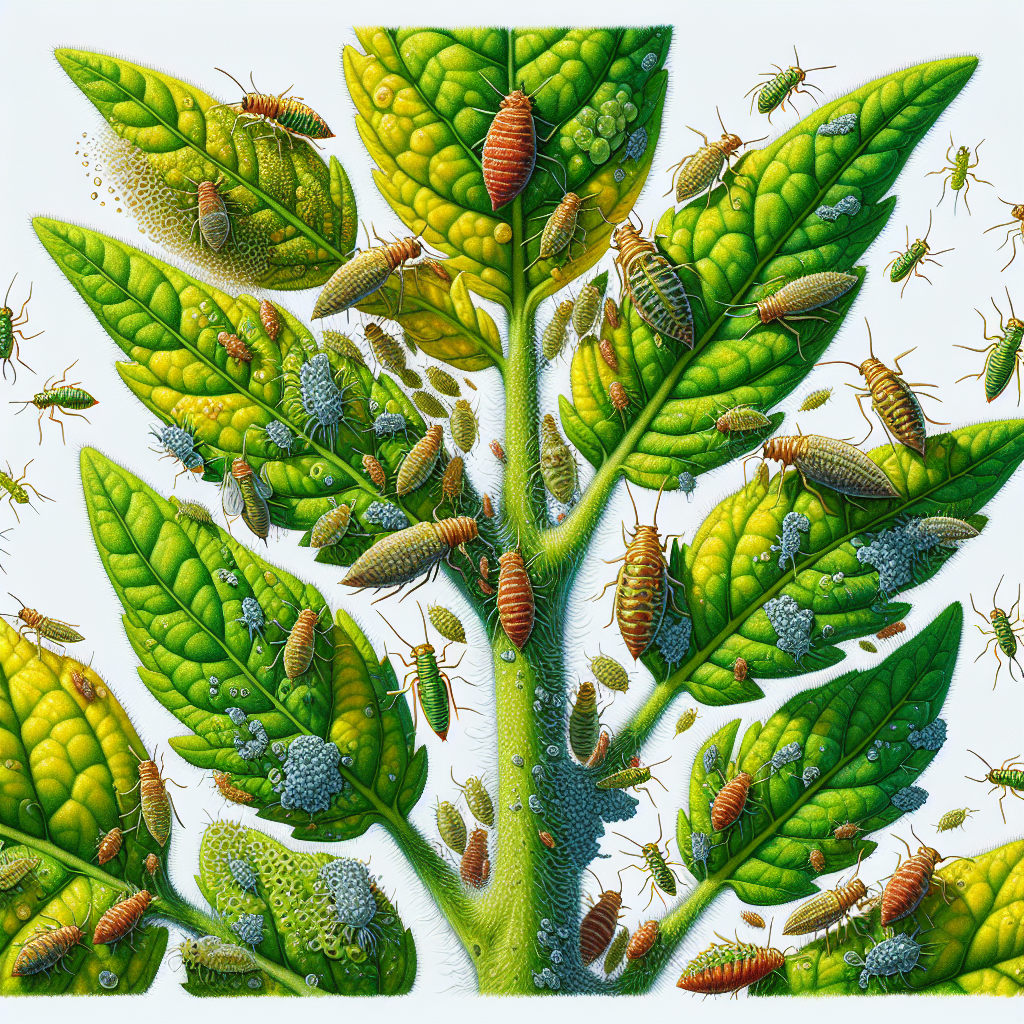
Introduction to Sap-sucking insects
Sap-sucking insects represent one of the most pervasive threats to global agriculture, encompassing a diverse group of pests from the order Hemiptera. Key culprits include aphids, whiteflies, scale insects, mealybugs, leafhoppers, and psyllids. These pests use specialized mouthparts called stylets to penetrate plant phloem and xylem tissues, extracting sugars, amino acids, and water. This feeding disrupts nutrient flow, leading to widespread crop damage estimated at billions annually.
Unlike chewing insects, sap-suckers cause indirect harm by injecting toxins, excreting honeydew that fosters sooty mold, and vectoring over 100 plant viruses. In commercial farming, they target high-value crops like tomatoes, citrus, and grains, reducing yields by 20-50% if unmanaged. Home gardeners face similar issues on ornamentals and vegetables. Understanding their biology is crucial for timely intervention. This guide provides diagnostic tools, lifecycle insights, organic treatments, and prevention strategies tailored for small farms and large operations alike. Early detection via regular scouting prevents escalation, preserving plant vigor and market quality.
Identifying Symptoms & Damage
Recognizing sap-sucking insect damage requires keen observation of subtle signs. Primary symptoms include leaf curling, yellowing (chlorosis), and stunted growth, as plants divert energy to compensate for lost sap. Look for sticky honeydew on leaves, stems, or fruit, often accompanied by black sooty mold colonies. Infested plants exhibit wilting despite adequate watering, with brittle, drooping tips.
Aphids cluster on new growth, causing distorted shoots; whiteflies rise in clouds when disturbed, leaving pale stippling. Scale insects appear as waxy bumps on bark or fruit, while mealybugs form cottony masses in axils. Leafhoppers leave white or yellow hopping damage patterns. Severe infestations transmit viruses, resulting in mosaic patterns, vein clearing, or necrosis—check for mosaic viruses or powdery mildew secondary issues.
Diagnostic tips: Use a hand lens to spot tiny nymphs or eggs. Shake foliage over white paper to detect mobile stages. Test for honeydew by rubbing leaves—if sticky, pests are active. Differentiate from drought stress by checking undersides; sap-suckers thrive in dense canopies. On tomato or citrus, damage concentrates on undersides, progressing upward. Yield impacts: Fruit deformation, seed fill reduction in grains like rice, and premature leaf drop in orchards.
Lifecycle and Progression of Sap-sucking insects
Sap-sucking insects exhibit complex lifecycles adapted to host plants, typically spanning 1-8 weeks depending on species and temperature. Most undergo incomplete metamorphosis: egg → nymph → adult. Aphids reproduce parthenogenetically (virgin births) in warm weather, producing 50-100 offspring per female daily, leading to explosive populations. Eggs overwinter on bark or debris.
Nymphs (1-5 instars) feed identically to adults, molting 4-7 times over 7-14 days at 25°C. Adults are winged (alate) for dispersal or wingless (apterous). Scales have armored or soft-bodied females that remain sessile, birthing crawlers that settle and form shells. Whiteflies progress egg → crawler → pupa → adult in 20-30 days, with pupae resembling tiny scales.
Progression accelerates in spring (optimum 20-30°C), slowing below 10°C or above 35°C. Multiple generations (10-20/year) overlap, complicating control. Monitor peaks: Aphids in cool, humid springs; whiteflies in hot, dry summers. Viruses spread during nymphal feeding. Lifecycle knowledge informs timing—target crawlers with oils, adults with predators. In soybeans, synchronized scouting aligns with reproductive peaks.
Environmental Triggers & Risk Factors
Sap-suckers thrive under specific conditions: high nitrogen fertility promotes tender growth; dense planting reduces airflow, fostering humidity. Warm temperatures (20-32°C) and low wind favor population booms. Over-fertilization with urea spikes amino acids in sap, attracting aphids. Drought-stressed plants exude sweeter sap, drawing whiteflies.
Risk factors include nearby weed hosts (e.g., nightshades for whiteflies) and ant mutualism—ants farm honeydew, protecting pests. Imported transplants carry eggs/nymphs. Monocultures like cotton amplify outbreaks via lack of diversity. Climate change extends seasons, increasing generations. Poor sanitation (unremoved debris) harbors overwintering stages. In greenhouses, stable warmth accelerates cycles. Mitigate by balancing NPK, improving ventilation, and removing volunteers. Spring Pest Patrol: Organic AI Strategies to Shield Your Crops from Common Invaders offers tech-aided forecasting.
Organic Control & Treatment Plans
Organic management emphasizes integrated pest management (IPM): monitor, cultural, biological, then minimal mechanical/organic sprays. Scout weekly with sticky traps (yellow for whiteflies, blue for thrips). Prune infested tips; blast with water to dislodge nymphs.
Biological: Release ladybugs (10-20/100 sq ft) for aphids, lacewings for soft-bodied pests, parasitic wasps (Encarsia for whiteflies). Predatory mites control spider mites. Neem oil (0.5-2%) smothers crawlers; insecticidal soaps (1-2% potassium salts) target soft insects without residue. Apply evenings to spare beneficials. Horticultural oils (e.g., dormant oil) coat overwintering stages.
Treatment plans: Mild (threshold 5-10% infested leaves)—encourage predators, reflective mulches. Moderate—alternate neem/soap weekly for 3 applications. Severe—combine with pyrethrins (OMRI-listed), repeat 7 days. For scales on avocado, scrape + oil. Rotate modes to prevent resistance. Companion plants like marigold repel. Track efficacy; if viruses appear, rogue plants. Always test sprays on small areas.
Preventing Sap-sucking insects in the Future
Prevention hinges on cultural practices and resilience. Select resistant varieties: e.g., aphid-tolerant potato cultivars. Maintain 20-30% canopy gaps for airflow/sunlight, reducing humidity. Balanced fertility avoids excess N; use slow-release. Reflective mulches (aluminum) deter whiteflies by confusing alates. Intercrop with trap crops (radish for aphids) or repellents like garlic/onion borders.
Sanitation: Remove weeds, destroy crop residue post-harvest. Introduce beneficial habitats: flowering borders for predators. Monitor with Aphids thresholds via apps. Winter clean-up sprays (dormant oil) break cycles. Crop rotation disrupts hosts—avoid planting brassicas after solanaceae. For grapes, yellow sticky traps reduce migrants. Long-term: Build soil health for vigorous plants resisting stress. Soil Health Mastery: 5 Proven Strategies for Small Farms to Build Fertile Ground Without Breaking the Bank enhances tolerance.
Crops Most Affected by Sap-sucking insects
Sap-suckers plague diverse crops, prioritizing tender, high-sap hosts. Vegetables: Tomato, cucumber, eggplant, lettuce—aphids/whiteflies cause 30% losses. Fruits: Citrus (orange, lemon), apple, mango, grapes—scales/psyllids vector greening. Grains: Rice, wheat, corn—leafhoppers transmit tungro viruses.
Legumes: Soybeans ravaged by aphids; cotton by jassids. Orchards: Avocado, stone fruits (peach) by mealybugs. Tropicals: Banana, sugarcane by pseudococcids. Greenhouse crops like peppers suffer whitefly booms. Economic hits: $1B+ in US alone yearly. Tailor strategies per crop—e.g., oils for tree fruits, predators for fields.