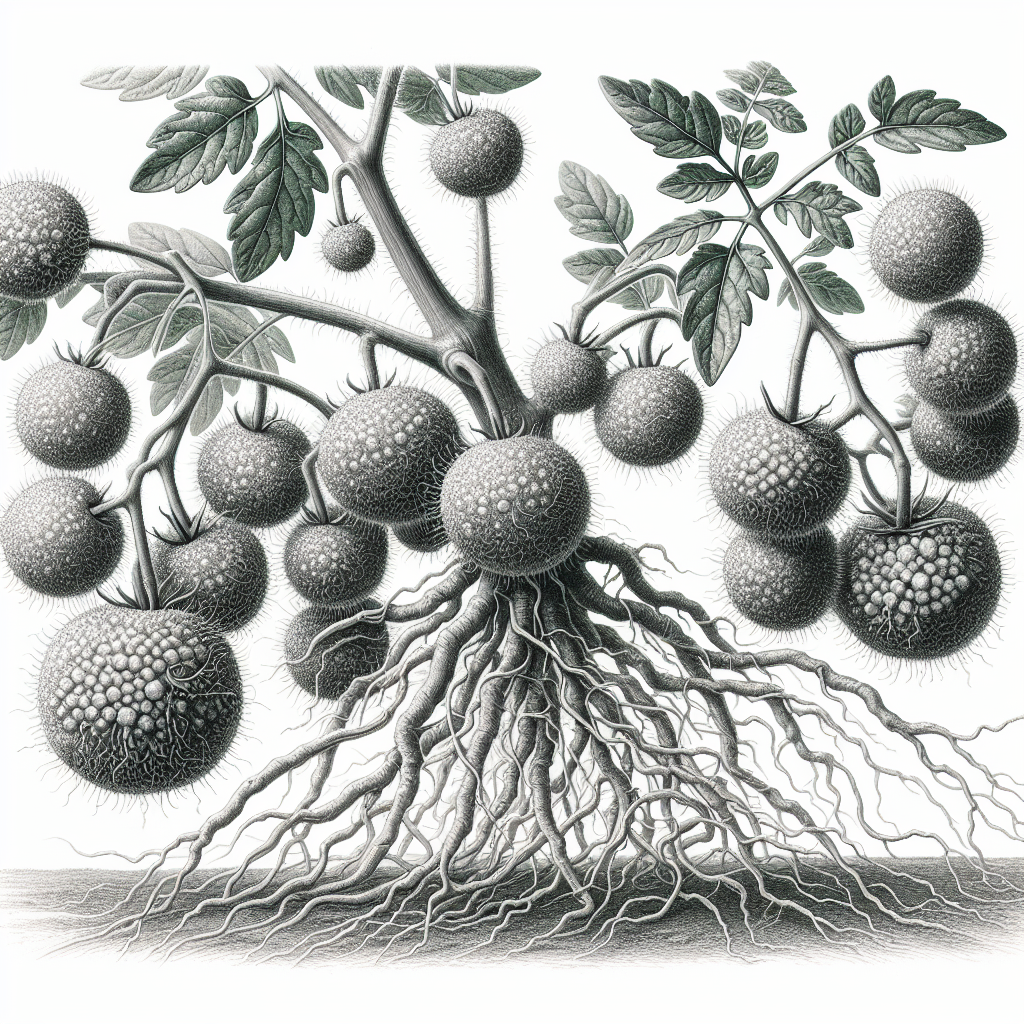
Introduction to Root-knot nematode
Root-knot nematodes (Meloidogyne spp.) are among the most destructive plant-parasitic nematodes worldwide, affecting over 2,000 plant species across temperate and tropical regions. These microscopic roundworms, invisible to the naked eye, invade plant roots, feeding on vascular tissues and inducing characteristic gall-like swellings known as "root knots." First identified in the late 19th century, they pose a severe threat to agriculture, causing annual global losses estimated in billions of dollars. Unlike aboveground pests like aphids or whiteflies, root-knot nematodes operate below ground, making early detection challenging.
There are over 100 species of Meloidogyne, with the most economically important being M. incognita, M. javanica, M. arenaria, and M. hapla. They thrive in warm soils (optimal temperature 25-30°C or 77-86°F) and sandy loam textures, spreading via infested soil, water runoff, farm equipment, or infected transplants. In high-value crops like tomatoes and peppers, infestations can reduce yields by 50-100%. This guide provides farmers, gardeners, and agronomists with comprehensive strategies for diagnosis, organic management, and prevention, drawing from decades of research by institutions like the University of California and USDA. For more on plant-parasitic nematodes, see our detailed wiki entry.
Understanding root-knot nematodes is crucial for sustainable farming. They exacerbate issues like root rot and Fusarium wilt by creating entry points for pathogens, compounding damage in susceptible varieties. Early intervention is key to protecting soil health and crop productivity.
Identifying Symptoms & Damage
Root-knot nematodes cause both above- and below-ground symptoms, often mimicking nutrient deficiencies or drought stress. Aboveground signs include stunted growth, yellowing leaves (chlorosis), wilting during hot periods despite adequate watering, and reduced yields. Plants may appear unevenly affected in patches, with vigorous plants next to severely stunted ones—a classic indicator of soilborne pests.
The definitive diagnosis comes from inspecting roots: dig up suspect plants and wash roots gently to reveal small bead-like galls (1-2 mm) on feeder roots, primarily near the root tips. Heavy infestations cause coalesced galls, root proliferation, and necrosis. In tomato plants, galls are prominent on fibrous roots; in carrot, roots become forked or cracked. Severely infested roots rot easily, inviting secondary invaders like Pythium.
To confirm, submit soil or root samples to a nematology lab for extraction and counting (threshold: >1 juvenile per 100 cm³ soil). Use the peanut agglutination test or molecular PCR for species ID. Differentiate from root mealybugs by absence of waxy secretions and microscopic examination (nematodes are worm-like, 0.3-1.5 mm long).
Damage varies by host susceptibility, nematode density, and soil type. In sandy soils, juveniles penetrate roots easily; in clay, movement is restricted but persistence is high. Young plants suffer most, with 10-20% yield loss at low populations escalating to total crop failure above 500 nematodes per gram soil. For Spring Pest Patrol: Organic AI Strategies to Shield Your Crops from Common Invaders, explore tech-aided scouting.
Lifecycle and Progression of Root-knot nematode
Root-knot nematodes have a complex lifecycle of 3-4 weeks under optimal conditions (25-30°C), allowing 4-10 generations per growing season. Females are sedentary, pear-shaped (0.6-1 mm), embedded in roots with a protruding posterior; males are vermiform and mobile. Eggs (200-500 per female) are laid in gelatinous matrices on root surfaces, hatching into second-stage juveniles (J2)—the only infective stage.
J2s (0.4-0.5 mm) migrate through soil moisture films, attracted by root exudates like amino acids. They penetrate near root tips, migrate intercellularly to vascular cylinder, and induce giant cells via effector proteins (e.g., MiFLP3). Feeding enlarges cells into metabolically active syncytia, swelling roots into galls. J2s molt 3 times to adults in 10-20 days; females produce eggs, restarting the cycle.
Environmental stressors prolong lifecycle: below 15°C, eggs diapause; drought halts J2 movement. Populations peak mid-summer in tropics. Overwinter as eggs or J2s in soil, surviving years without hosts. This persistence underscores prevention's importance.
Environmental Triggers & Risk Factors
Root-knot nematodes flourish in warm (20-35°C), moist, sandy soils (pH 5-7), with low organic matter aiding mobility. Compaction hinders movement, but flooding spreads them via runoff. High temperatures accelerate reproduction; M. incognita thrives above 27°C, while M. hapla tolerates cold.
Risk factors include continuous monocropping of susceptibles (e.g., potato, eggplant), infested transplants, shared equipment, and flooding. Poor drainage exacerbates issues, synergizing with Phytophthora. Weeds like nutsedges host nematodes, bridging crop cycles. Climate change extends ranges northward.
Organic Control & Treatment Plans
Organic management integrates cultural, biological, and physical tactics—no synthetic nematicides allowed. Step 1: Crop Rotation (2-3 years with non-hosts like grasses or onion) reduces populations 70-90%. Step 2: Resistant Varieties—choose NemX or N-gene tomatoes, Marigold hybrids for peppers.
Biological Controls: Apply Paecilomyces lilacinus or Pasteuria penetrans (10^9 spores/ha), reducing juveniles 50%. Purpureocillium lilacinum infects eggs. Cover Crops: French marigold (Tagetes patula), sunn hemp (Crotalaria juncea), or mustard biofumigants release isothiocyanates, killing 80% nematodes pre-planting.
Soil Amendments: Incorporate chitin-rich amendments (crab meal, 200 g/m²) or compost (30 t/ha) to boost antagonists. Solarization (clear plastic 6-8 weeks summer, 45-55°C soil) kills 90% in top 20 cm. Flooding fallow fields 4-6 weeks drowns nematodes.
Treatment Plan: 1) Test soil pre-plant. 2) Solarize/amend. 3) Plant cover crop. 4) Rotate. 5) Apply bioagents at transplant. Monitor quarterly. Combine with Soil Health Mastery: 5 Proven Strategies for Small Farms to Build Fertile Ground Without Breaking the Bank for long-term success.
Preventing Root-knot nematode in the Future
Prevention beats cure: sanitize equipment (steam clean), hot-water treat transplants (50°C, 20 min), and quarantine new soil. Use clean seed starts, avoid overwatering. Mulch with nematode-suppressive materials like pine bark. Long-term: diversify rotations, integrate marigold trap crops. Soil testing annually tracks populations below thresholds. Build biodiversity with mycorrhizal inoculants enhancing tolerance. For small farms, Why Companion Planting Feels Like Guesswork for Small Farms - And How AI Makes It Foolproof aids planning.
Crops Most Affected by Root-knot nematode
Root-knot nematodes devastate solanaceous, cucurbit, and root crops. Highly susceptible: Tomato (50-100% loss), potato, eggplant, bell pepper, cucumber, carrot, okra, sweet potato, peanuts, soybeans, strawberry, watermelon. Moderately affected: beans, peas, lettuce. Tolerants: corn, garlic, cereals. Tropicals like banana, mango suffer in sandy orchards.