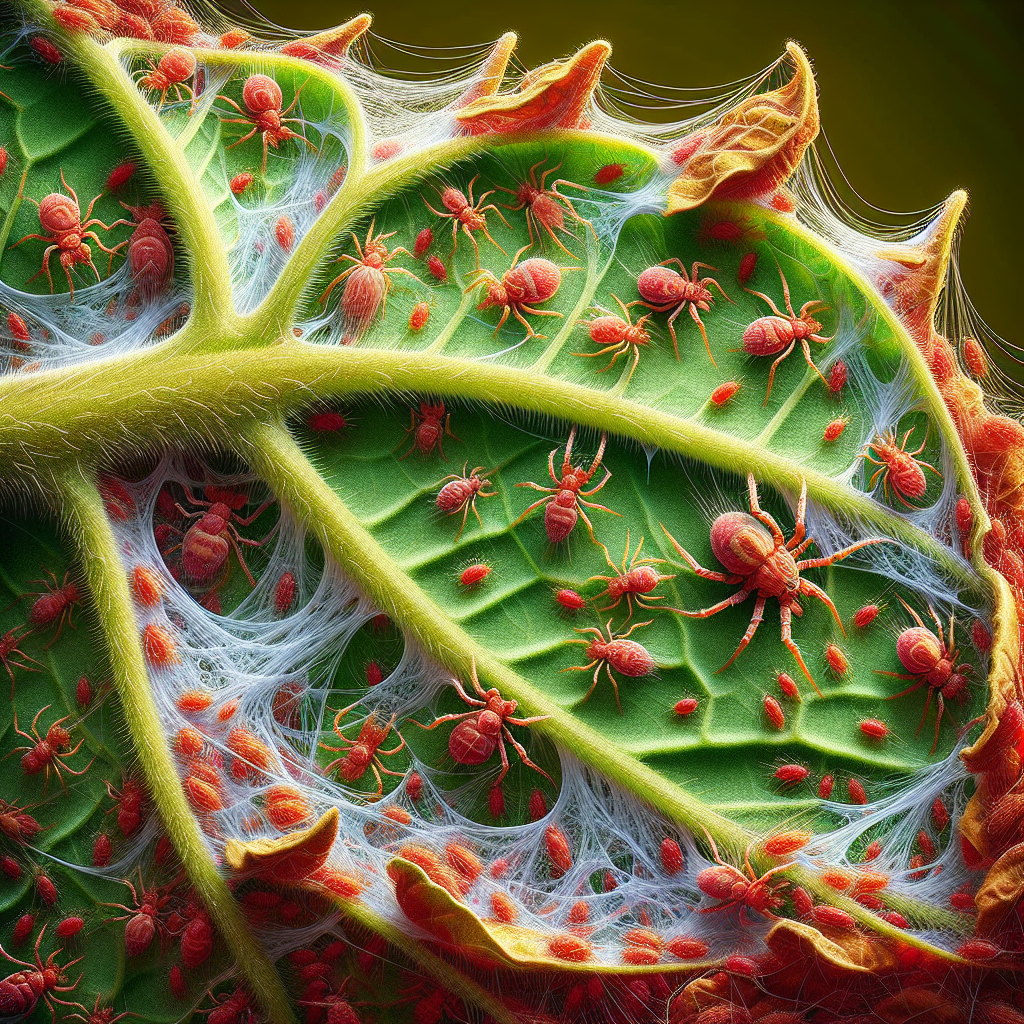
Introduction to red spider mite
Red spider mites, scientifically known as Tetranychus urticae, are among the most notorious pests in agriculture and horticulture worldwide. These minuscule arachnids, often measuring less than 0.5 mm in length, are not true insects but relatives of spiders and ticks. Despite their tiny size, red spider mites can devastate crops by piercing plant cells and extracting sap, leading to significant economic losses for farmers and gardeners alike.
Native to temperate regions but now cosmopolitan due to global trade, red spider mites thrive in warm, dry environments. They are polyphagous, attacking over 1,100 plant species, with a particular fondness for solanaceous crops like tomato and eggplant, cucurbits such as cucumber, and fruit trees including apple and peach. Their rapid reproduction—females can produce up to 100 eggs in her short lifespan—allows populations to explode from a few individuals to millions in just weeks under ideal conditions.
Early detection is crucial because infestations often go unnoticed until damage is severe. Red spider mites get their name from the reddish hue of some adult females, especially in cooler temperatures, though they appear greenish-yellow in summer. Fine silken webs on leaf undersides are a telltale sign, distinguishing them from other mites. This guide provides comprehensive diagnostic tools, lifecycle insights, and proven organic management strategies to protect your crops effectively. For small farms, integrating these practices with tools like those in Spring Pest Patrol: Organic AI Strategies to Shield Your Crops from Common Invaders can enhance monitoring and response times.
Understanding red spider mite biology empowers growers to disrupt their lifecycle at vulnerable stages. Unlike many pests, they overwinter as diapausing females in protected sites like plant debris or greenhouse cracks, resuming activity in spring. Their resistance to many synthetic pesticides due to rapid genetic adaptation underscores the value of integrated pest management (IPM), emphasizing biological and cultural controls.
Identifying Symptoms & Damage
Diagnosing red spider mite infestations requires keen observation, as these pests are barely visible to the naked eye. Use a 10x hand lens or magnifying app on your phone for confirmation. Initial symptoms appear on lower leaves: tiny white or yellow stipples where mites have punctured cells, creating a speckled or sandblasted look.
As feeding intensifies, affected leaves turn bronze, gray, or reddish-brown, with upward cupping or curling. Severe cases lead to leaf drop, reduced photosynthesis, and stunted growth. On strawberry plants, fruits may be small and deformed; on bean crops, pods scar and yield drops by 50% or more. Fine webbing under leaves, often laden with eggs, mites, and cast skins, is diagnostic—shake a leaf over white paper; tiny moving specks confirm active infestation.
Differentiate from abiotic issues like nutrient deficiency or powdery mildew: mites cause irregular stippling without powdery residue, and damage starts at leaf undersides. Compare to thrips, which leave silvery trails and black fecal spots. On ornamentals, heavy webbing resembles spider mites broadly, but red spider mites produce denser silk networks.
Yield impacts are profound: in greenhouses, populations can reduce tomato yields by 80%. Scout weekly during hot spells, focusing on field edges and stressed plants. Use sticky traps for monitoring adults. Economic thresholds vary: 5-10 mites per leaf for tomatoes, 20+ for cotton. Early intervention prevents exponential population growth.
Lifecycle and Progression of red spider mite
Red spider mites complete their lifecycle in 8-20 days, depending on temperature (optimal 26-30°C). Eggs (0.1 mm, spherical, translucent) hatch in 3-5 days into larvae (hexapod stage), then protonymphs, deutonymphs, and adults. All motile stages feed voraciously; adults live 2-4 weeks, females dispersing on silk threads (ballooning).
Under ideal conditions, 20+ generations occur annually. Overwintering females turn orange-red, entering diapause triggered by short days. In spring, they lay unfertilized eggs producing males, and fertilized ones yielding females (arrhenotokous parthenogenesis). Population booms in summer heat.
Lifecycle progression: Eggs cluster on leaf undersides (50-100 per female). Larvae feed 1-2 days, molt to nymphs (4-legged). Nymphs resemble smaller adults. Males guard pre-ovipositing females. High densities cause webbing for protection and dispersal. Cold snaps (<10°C) slow development; humidity >60% hampers populations.
Disrupting stages: Target eggs with oils smothering them; nymphs are vulnerable to predators. Understanding this enables timed interventions, like releasing predators when nymphs peak.
Environmental Triggers & Risk Factors
Red spider mites explode in hot (27-32°C), low-humidity (<40%) conditions, common in greenhouses and arid fields. Drought-stressed plants exude sugars attracting mites. Dust-covered leaves impair natural enemies like predatory mites.
Risk factors: Over-fertilization with nitrogen boosts succulent growth; dense canopies trap heat/humidity imbalances. Weeds like clover host reservoirs. Importing infested cherry tomato seedlings spreads them. Poor airflow in tunnels favors outbreaks. Monocultures amplify issues; intercropping with thyme repels via volatiles.
Climate change extends seasons, increasing generations. Monitor during heatwaves; irrigate overhead to raise humidity. Avoid excessive pruning creating stubs for hiding.
Organic Control & Treatment Plans
Organic management prioritizes IPM: prevention, monitoring, biological controls.
Immediate Actions:
- Hose plants forcefully with water (3x/week) to dislodge mites, especially undersides. Repeat 5-7 days.
- Apply horticultural oils (1-2% neem oil) or insecticidal soaps weekly; smother eggs/adults. Test on small area.
Biological Controls: Release predatory mites like Phytoseiulus persimilis (1:10 ratio) or Neoseiulus californicus. Amblyseius swirskii targets all stages. Ladybugs, lacewings eat small populations.
Treatment Plans:
- Mild Infestation (<5 mites/leaf): Water blasts + soaps.
- Moderate (5-20): Add predatory mites + neem rotations.
- Severe: Sulfur burns (hot conditions), potassium salts of fatty acids. Rotate modes to prevent resistance.
Botanical Extracts: Garlic-chili sprays, rosemary oil. Sulfur miticides OMRI-listed.
Integrate with aphids controls, as ants farm mites. Clean up debris post-harvest.
Preventing red spider mite in the Future
Prevention beats cure: Maintain 50-60% humidity via drip irrigation, avoiding wet foliage. Scout weekly with tapsheets. Introduce predators early.
Cultural: Plant resistant varieties (e.g., pubescent leaves). Space for airflow. Mulch conserves moisture. Companion plant marigold or nasturtium as traps. Quarantine new plants.
Sanitation: Remove weeds, destroy debris. Reflective mulches deter. Monitor with apps for hyper-local alerts. Rotate crops; avoid solanaceous sequences.
Long-term: Boost biodiversity with flowering borders attracting predators. Soil health via cover crops like clover supports resilient plants.
Crops Most Affected by red spider mite
Red spider mites plague diverse crops:
- Solanaceae: Tomato, eggplant, bell pepper, chili pepper—stippling reduces fruit set.
- Cucurbits: Cucumber, squash, zucchini—webby leaves drop.
- Legumes: Soybeans, peas, chickpeas—pod deformation.
- Fruits: Strawberry, grapes, apple, peach—yield losses up to 70%.
- Others: Cotton, corn, bean, ornamentals.
Greenhouse tomato and field cotton suffer most commercially.