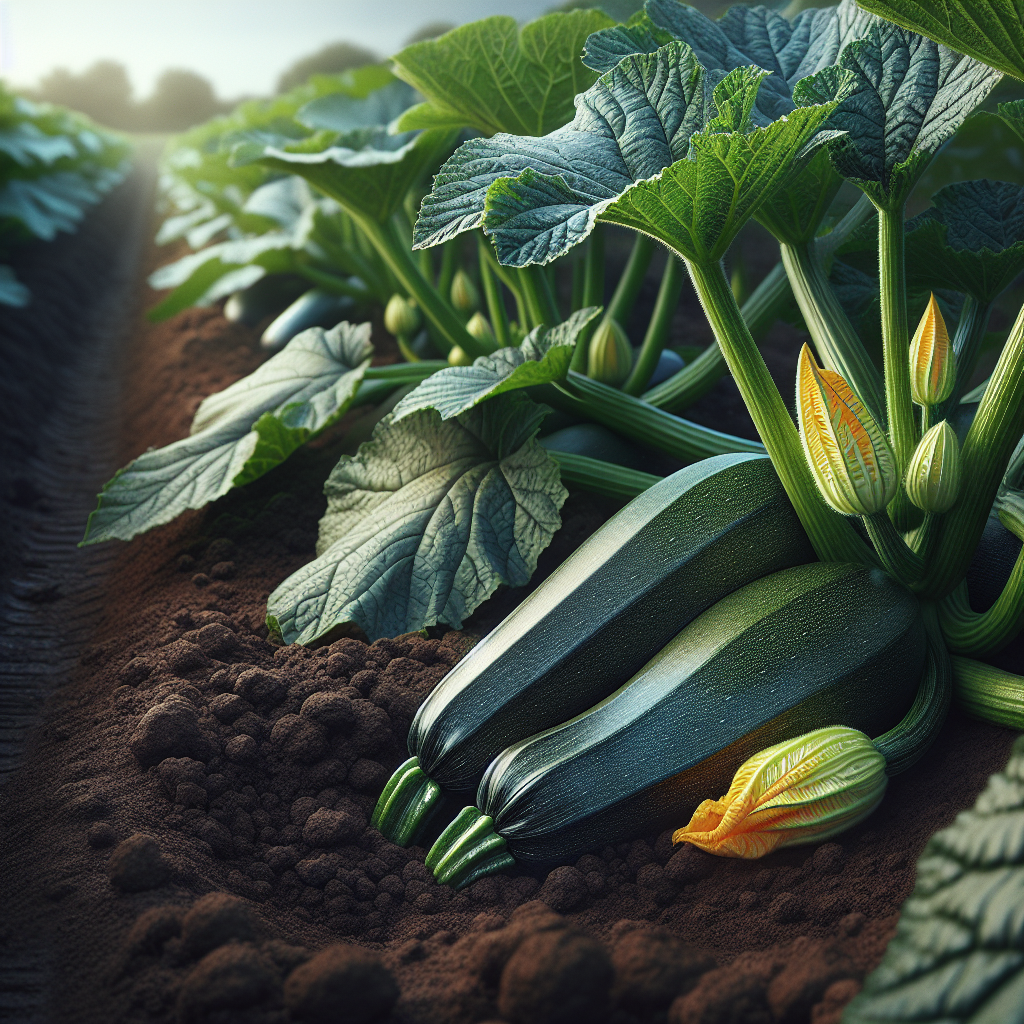
Introduction to Zucchini
A warm-season annual in the cucurbit family, zucchini is one of the most rewarding vegetable crops because it germinates quickly, reaches production fast, and can yield continuously for weeks if fruits are harvested young and plants remain healthy. Although often treated as a “beginner crop,” truly high-quality zucchini production depends on precision: warm root-zone temperatures, balanced fertility, steady soil moisture, excellent airflow, and active pollination all strongly influence fruit quality and plant longevity.
Botanically, zucchini belongs to the same species as many other summer squashes and some pumpkins, Cucurbita pepo. The crop originated through the domestication pathway of squash in the Americas, while the modern elongated green “zucchini” type was further refined in Italy, which is why the Italian name became globally dominant. In many regions it is also called courgette, especially when harvested at a small, tender stage.
For growers, zucchini stands out for speed. Under ideal conditions, harvest can begin 45 to 60 days from sowing, and each plant may produce many fruits over its lifespan. The best fruits are harvested immature, before seeds harden and before the rind thickens. This means timing is central to quality: missing only a few days in hot weather can turn an excellent market fruit into an oversized marrow. If you grow related cucurbits, compare growth habit and spacing with Cucumber, which shares some pollination and disease-management principles.
Botanical Profile of Zucchini
Zucchini is a frost-sensitive, herbaceous annual with a typically bushy or semi-bush habit, though some cultivars are more open and sprawling than others. It develops a thick, hollow, angular stem and very large, rough-textured leaves borne on long petioles. Leaves are often deeply lobed and may display natural silver mottling; this should not be confused with disease unless accompanied by distortion, chlorosis, or fungal growth.
The root system is moderately deep but functionally concentrated in the upper soil profile, especially in cultivated garden beds. Most active feeder roots occupy the top 20 to 30 cm of soil, which is why surface drying, compaction, and erratic irrigation quickly affect growth. Despite vigorous foliage, zucchini is less drought-tolerant than many growers assume because its large leaf area drives high transpiration in warm weather.
Zucchini is monoecious, producing separate male and female flowers on the same plant. Male flowers usually appear first, often a week or more before female bloom. Female flowers are identifiable by the miniature ovary directly behind the petals; male flowers are borne on thin stems without a swollen base. Pollination is primarily by bees, especially squash bees and honeybees. Poor pollination leads to misshapen, partially developed, or aborted fruits.
Fruit types vary by cultivar and include dark green cylindrical forms, medium green ribbed types, pale green, yellow, striped, round, and specialty bicolor selections. Professional growers often choose cultivars based on market preference, virus resistance, open plant architecture, and harvest visibility. Compact bush cultivars suit small gardens, while open-habit types can reduce disease pressure by improving airflow and making fruit easier to locate before oversizing.
From a culinary standpoint, the immature fruit is the main harvest product, but blossoms are also edible and highly valued. Male flowers are often preferred for culinary harvest because removing too many female flowers directly reduces fruit set.
Soil, pH, and Climate Requirements for Zucchini
Zucchini performs best in fertile, well-drained loam or sandy loam rich in organic matter, with a target pH of 6.0 to 7.0. It will tolerate slightly broader conditions, roughly 5.8 to 7.5, but nutrient uptake is most reliable near mildly acidic to neutral soil. Below pH 5.8, calcium and magnesium availability may become limiting and root performance often declines. Above pH 7.5, micronutrient deficiencies, especially iron and manganese, are more likely, often visible as interveinal chlorosis on young leaves.
Drainage is non-negotiable. Zucchini roots require moisture but decline quickly in saturated soil. Waterlogged conditions reduce oxygen around roots, leading to stunted growth, pale foliage, susceptibility to root pathogens, and blossom drop. A good field or bed should drain after a heavy irrigation or rainfall within 24 hours. If puddles persist longer, improve drainage with raised beds, added organic matter, and reduced traffic compaction.
Ideal soil temperature for germination is 21 to 35°C, with strongest emergence usually around 25 to 30°C. Seeds will rot or emerge slowly in cold, wet soil below about 16°C. Planting into warm soil is one of the simplest ways to prevent early failure. Air temperatures for vigorous growth are best between 20 and 30°C. Growth slows markedly below 15°C, and flowers and young fruits can be damaged by temperatures below 10°C. Frost kills plants outright.
Heat tolerance is good, but extreme heat above 35°C can impair pollination and fruit set, especially when nights stay hot. In very hot climates, morning flowering may be shorter, pollen viability may decrease, and bees may be less active. Afternoon shade is usually unnecessary in temperate regions but can help in desert or subtropical heat.
Nutritionally, zucchini is a moderate-to-heavy feeder. Excess nitrogen produces huge leaves at the expense of flowers and fruit, and can worsen mildew pressure by creating dense canopies. Balanced pre-plant fertility is better than repeated heavy nitrogen side-dressing. A professional target is soil rich in stable organic matter, with adequate phosphorus for rooting and flowering and enough potassium for water regulation, fruit firmness, and disease resilience. For broader bed-building principles, see soil health tips.
Step-by-Step Planting & Propagation
Start with site preparation 2 to 3 weeks before sowing. Remove perennial weeds, loosen the soil to at least 25 to 30 cm, and incorporate finished compost at roughly 2 to 5 kg per square meter depending on baseline fertility. Avoid fresh manure immediately before planting, as it can push overly vegetative growth and increase disease pressure. Shape raised beds if drainage is marginal.
Direct sowing is generally preferred because zucchini grows rapidly and dislikes prolonged root disturbance. Sow after all frost danger has passed and when the top 5 to 8 cm of soil has warmed to at least 18°C, preferably above 21°C. Plant seeds 2 to 3 cm deep in moist soil. In garden beds, space bush types about 60 to 90 cm apart in rows 90 to 150 cm apart. On small farms using wider equipment access or intensive airflow management, 90 cm in-row and 150 cm between rows is common. Overcrowding is a major cause of mildew, poor pollination, and harvest inefficiency.
If starting indoors, sow 2 to 3 weeks before transplanting into 7.5 to 10 cm biodegradable pots or deep cells to minimize root disruption. Maintain media temperature near 24 to 29°C for quick germination. Provide strong light immediately after emergence and avoid letting seedlings become rootbound. Transplant when plants have 1 to 2 true leaves, handling by the pot or root ball rather than the stem. Harden off for 5 to 7 days before setting out.
For each planting station, sow 2 to 3 seeds and thin to the strongest seedling after establishment. Thinning is important because crowded seedlings compete early and create weak, elongated plants. If using plastic mulch, install irrigation underneath before laying mulch, then transplant or sow through holes at final spacing.
Succession sowing every 2 to 3 weeks can extend harvest and reduce the impact of pests or disease on a single planting. This is especially useful where Squash vine borer, Powdery mildew, or viruses routinely shorten plant life. In market systems, staggered sowings also smooth labor and improve consistency of supply.
Propagation by seed is standard. Zucchini does not come true from saved seed if cross-pollinated with compatible Cucurbita pepo types nearby. Seed saving therefore requires isolation distances or controlled pollination. Most growers purchase fresh seed annually because germination vigor and varietal uniformity matter for fast stand establishment.
Care & Maintenance regimes for Zucchini
Irrigation should keep the root zone consistently moist but never saturated. As a practical target, maintain the upper 15 to 20 cm of soil evenly damp, similar to a wrung-out sponge. In coarse sandy soils, this may require watering every 2 to 3 days during hot weather; in heavier loams, a deep watering once or twice weekly may suffice. Most mature plants need about 25 to 40 mm of water per week, but fruiting plants in heat may use more.
The key is consistency. Uneven watering contributes to blossom-end shriveling, fruit abortion, bitter flavor, and slowed production. Signs of underwatering include midday wilting that persists into evening, dull leaf color, slow new growth, and aborted female flowers. Signs of overwatering include chronically limp leaves despite wet soil, yellowing lower foliage, sour-smelling soil, edema-like blistering, and increased fungus gnat or root disease activity. Drip irrigation is strongly preferred over overhead watering because dry foliage reduces disease pressure.
Mulch plants once soil has thoroughly warmed. Use clean straw, shredded leaves, or composted mulch to suppress weeds, buffer soil moisture fluctuations, and keep fruits cleaner. Keep mulch a few centimeters away from the stem crown to reduce rot risk. Plastic mulch can accelerate early growth in cool regions, but organic mulches are often better later in summer when soil cooling is helpful.
Fertilize based on soil testing whenever possible. A balanced pre-plant application is often enough for fertile gardens. If growth stalls or leaves pale during heavy production, side-dress modestly with compost, vermicompost, fish-based fertilizer, or another balanced nutrient source once plants begin flowering. Avoid repeated high-nitrogen feeds; these create impressive foliage but fewer marketable fruits. Potassium and calcium are especially important for fruit quality under rapid summer growth.
Weed control matters most in the first 4 to 6 weeks. Shallow cultivation is best because zucchini roots spread near the surface. Once the canopy expands, hand removal of large weeds may be safer than hoeing close to plants.
Pollination management can make the difference between lush plants and full harvest baskets. Encourage pollinators by avoiding insecticide sprays during bloom, maintaining nearby flowering habitat, and irrigating in ways that do not discourage bee activity. If fruits enlarge slightly then yellow and rot at the blossom end, poor pollination is likely. In small plantings, hand pollination in the early morning can rescue yields: collect a newly opened male flower, remove petals, and brush pollen onto the stigma in the center of a female flower.
Pruning is usually minimal, but selective removal of old, damaged, or diseased leaves improves airflow and harvest visibility. Do not over-prune healthy foliage, as leaves power fruit production. Cut with clean tools and avoid tearing petioles. In very dense canopies, removing a few inner leaves can reduce humidity around the crown.
For extended production, harvest frequently. The plant responds to regular picking by continuing to flower and set fruit. Allowing oversized fruits to remain on the plant signals reproductive completion and often reduces subsequent yield.
Pests, Diseases & Organic Management
Squash vine borer is among the most destructive regional pests where present. Adults resemble wasps and lay eggs near stems; larvae bore into the crown and stem, causing sudden wilting despite moist soil. Look for frass resembling moist sawdust at the stem base. Prevention is more effective than cure: use row covers until flowering begins, mound soil over lower stems to encourage additional rooting, destroy infested vines promptly, and time plantings to avoid peak borer flights where local patterns are known. In small plots, carefully slitting the stem and removing larvae can sometimes save a plant, followed by burying the wounded portion under moist soil.
Squash bugs feed by piercing leaves and stems, causing speckling, yellowing, and eventual plant decline. They also vector disease. Inspect leaf undersides for bronze egg clusters and crush or remove them early. Handpick adults and nymphs in the morning when they are sluggish. Keep debris down, rotate crops, and use boards or traps to collect hiding adults.
Aphids, Whiteflies, and Cucumber beetles may also attack zucchini. Aphids distort new growth and spread viruses. Whiteflies weaken plants and leave honeydew. Cucumber beetles chew foliage and flowers and may transmit Bacterial wilt in some areas. Floating row covers are highly effective early in the season, but must be removed for pollination unless hand pollination is used.
Powdery mildew is the most common late-season disease. It appears as white powdery patches on leaves, reducing photosynthesis and shortening plant life. It thrives in humid conditions and dense canopies, though unlike many fungi it does not require free water on leaves. Manage it with wide spacing, good airflow, morning irrigation at soil level, resistant cultivars, and prompt removal of heavily infected older leaves. Organic sprays such as potassium bicarbonate, sulfur, neem-based products, or biological fungicides can suppress spread if started early and rotated appropriately.
Downy mildew, where present, causes angular yellow lesions and grayish sporulation on leaf undersides, often progressing quickly in humid weather. Because it can devastate cucurbits fast, early detection is essential. Remove badly infected tissue, increase airflow, and use approved organic protectants preventively when disease pressure is forecast.
Viruses such as Zucchini yellow mosaic virus, Cucumber mosaic virus, and Watermelon mosaic virus cause mottling, distortion, blistering, reduced vigor, and malformed fruit. There is no cure. Rogue infected plants early, control aphid vectors as much as practical, manage weeds that host viruses, sanitize tools, and favor resistant cultivars when available.
Blossom-end issues in zucchini are often due to pollination failure rather than classic calcium deficiency, though inconsistent moisture can worsen fruit disorders. Soft rot at the flower end of tiny fruits usually indicates incomplete pollination. Improve bee activity and avoid stress during flowering.
Crop rotation is foundational organic management. Do not plant zucchini or other cucurbits in the same bed year after year. A 3- to 4-year rotation away from squash, pumpkin, melon, and cucumber relatives helps reduce carryover of pests and pathogens.
Harvesting, Curing & Optimal Storage
Harvest timing determines quality more than any postharvest technique. Most zucchini are best picked when 15 to 20 cm long, though round and specialty cultivars have different ideal sizes. At this stage, the skin is glossy, the flesh is tender, and seeds are still soft. Fruits left too long become oversized, watery or fibrous, and less productive for the plant overall.
Check plants daily in hot weather. Zucchini can move from prime stage to oversized in 24 to 48 hours during peak summer conditions. Use a sharp knife or pruners to cut fruits with a short stem stub attached rather than twisting aggressively, which can damage the plant crown and nearby developing fruits. Handle carefully; even minor abrasions shorten storage life.
Male blossoms for culinary use should be harvested early the day they open, ideally after pollinators have had some access if fruit set is also desired. Never remove all male flowers from a planting, particularly in early production when pollination is still ramping up.
Unlike winter squash, zucchini is not cured for long storage. It has a tender skin and high respiration rate, so it is best used fresh. After harvest, move fruits out of direct sun immediately. Field heat greatly reduces shelf life. Gently wipe off visible soil but do not wash unless necessary before sale or use, since surface moisture encourages decay.
Optimal storage is at about 7 to 10°C with relative humidity around 90 to 95%. Under these conditions, fruits usually keep 1 to 2 weeks. Temperatures that are too cold, especially below about 5°C, may cause chilling injury, seen as pitting, water-soaked areas, rapid breakdown, and poor flavor once returned to room temperature. In a household refrigerator, zucchini often stores acceptably for around a week if kept in a perforated bag to reduce dehydration without trapping excess condensation.
Oversized fruits are still useful for soups, breads, grilling, stuffing, and animal feed, but they should not be allowed to accumulate on productive plants if continued harvest is the goal.
Companion Planting for Zucchini
The best companion planting strategy combines ecological support with spacing discipline. Zucchini benefits from neighboring plants that attract pollinators, repel or distract pests, improve biodiversity, or occupy vertical and temporal niches without crowding the squash canopy.
Flowering herbs and insectary plants are especially valuable. Dill, cilantro, alyssum, calendula, nasturtium, and borage can attract hoverflies, parasitic wasps, lacewings, and bees. These support both pollination and biological pest control. Basil and Thai Basil can fit on bed edges where airflow remains open and harvest access is not blocked.
Good vegetable companions include bush beans, peas in cooler shoulder periods, onions, garlic, radishes, and lettuce planted early before zucchini reaches full size. Alliums may help confuse some pests with their strong scent, while shallow quick crops make use of space before the squash canopy closes. Corn is sometimes combined in traditional polycultures with squash, though zucchini is less vining than winter squash and therefore less effective as a living groundcover in the classic “Three Sisters” model.
Avoid placing zucchini next to crops that create heavy shade or intense root competition at close range. Potatoes can compete strongly for nutrients and complicate irrigation scheduling. Other cucurbits planted adjacent in dense blocks can intensify pest and disease spread, especially Powdery mildew, vine borer pressure, and virus transmission. If multiple cucurbits are grown, separate them as much as space allows and maintain sanitation between plantings.
A practical companion layout uses zucchini at proper wide spacing, low herbs or flowers on the sunny perimeter, and pollinator strips nearby rather than wedged directly into the plant crowns. This preserves airflow while still delivering ecological benefits. Companion planting should never substitute for crop rotation, sanitation, and correct irrigation, but when integrated thoughtfully it can improve resilience, pollination success, and overall harvest quality.