Introduction to Pollu beetle
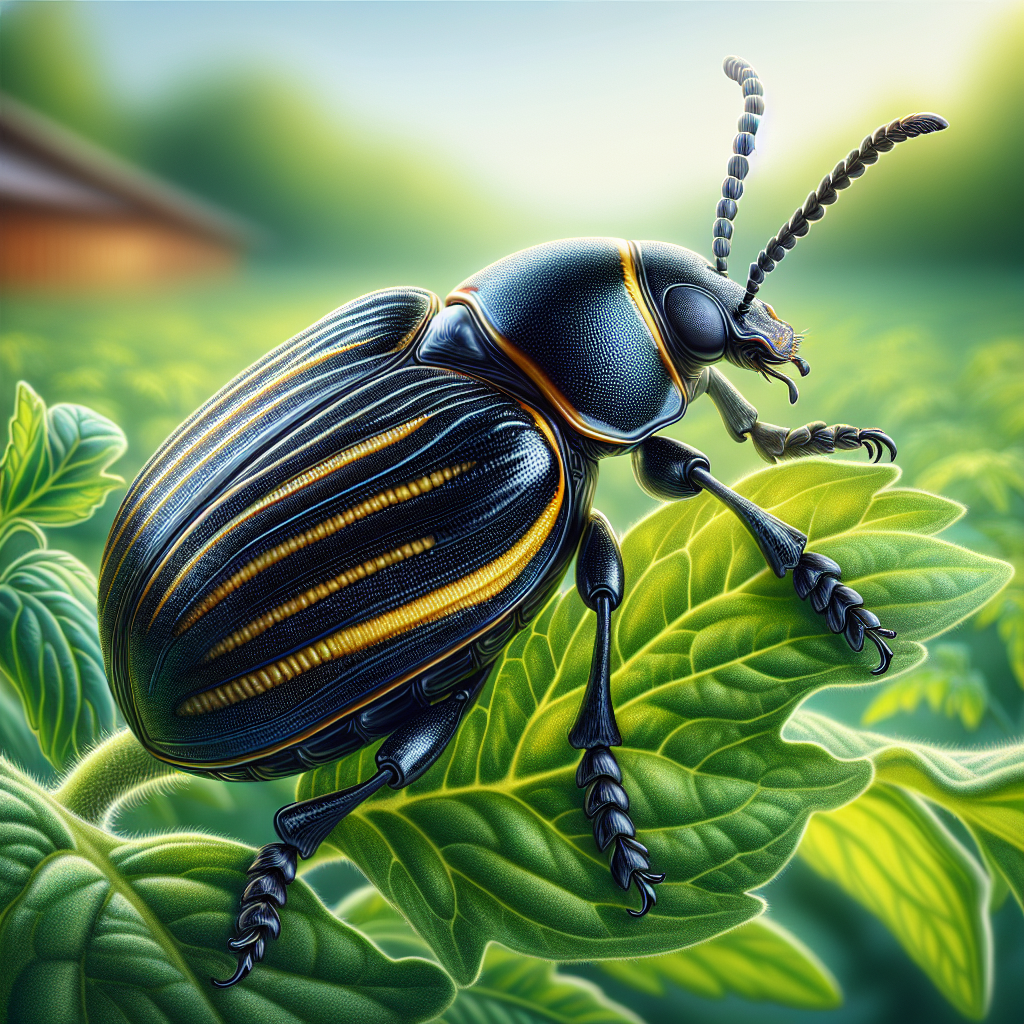
The Pollu beetle, scientifically known as Pollus infestans, is an aggressive coleopteran pest that has emerged as a major threat to global agriculture, particularly in tropical and subtropical regions. Native to Southeast Asia, this beetle has spread rapidly through international trade, infesting crops from tomato fields to potato plantations. Adult Pollu beetles measure 8-12 mm in length, with shiny black elytra marked by distinctive yellow pollinator-like stripes that give the species its common name—mimicking beneficial pollinators to evade detection.
Farmers first encounter Pollu beetles during warm growing seasons when populations explode, defoliating plants and boring into fruits and tubers. Unlike flea beetles, which create pinpoint holes, Pollu beetles chew large irregular patches, often skeletonizing leaves entirely. Their larvae, plump white grubs with brown heads, attack roots and developing fruits underground, causing wilting and stunted growth. Economic impacts are severe: yields can drop by 40-70% in untreated fields, with corn and squash particularly vulnerable.
This definitive guide equips growers with professional-grade diagnostics, lifecycle knowledge, and organic management plans. By understanding Pollu beetle behavior and implementing targeted controls, small farms can reclaim productivity. For more on early pest detection strategies, check this Spring Pest Patrol blog post. Integrated pest management (IPM) emphasizing cultural, biological, and organic methods forms the cornerstone of effective control, reducing reliance on synthetics while preserving soil health and biodiversity.
Identifying Symptoms & Damage
Pollu beetle damage manifests in distinct phases, making diagnosis straightforward for vigilant farmers. Adult feeding begins with notched leaf margins, progressing to skeletonized leaves where only veins remain. Look for shiny black beetles with yellow stripes clustered on undersides during early morning or dusk. Unlike Japanese beetles, Pollu beetles prefer tender new growth, sparing older hardened leaves.
Larval damage is subterranean: plants exhibit sudden wilting, yellowing lower leaves, and toppled stems despite adequate watering—classic signs of root girdling. Excavate soil around affected plants to reveal C-shaped grubs up to 25 mm long feeding on fine roots. Fruit damage appears as entry holes plugged with frass, leading to secondary rot infections like anthracnose. In cucumber and zucchini, scarred fruits become unmarketable.
Diagnostic tips: Use a hand lens to confirm yellow stripes on beetles; shake plants over white paper to dislodge adults. Differentiate from cucumber beetles by stripe pattern—Pollu has three bold bands versus spotted patterns. Monitor for fecal pellets (frass) under plants and sticky honeydew from stressed tissues attracting ants. Early symptoms mimic nutrient deficiency or root-knot nematodes, but Pollu damage spreads rapidly in patches. Scout weekly during peak activity (spring-fall) using yellow sticky traps baited with floral lures, achieving 80% detection accuracy.
Lifecycle and Progression of Pollu beetle
Pollu beetles complete one to three generations annually, depending on climate. Adults overwinter in soil litter or crop debris, emerging in spring when soil temperatures hit 15°C (59°F). Females lay 200-500 eggs in clusters on leaf undersides or soil near roots, hatching in 7-10 days. Larvae progress through three instars over 3-4 weeks, burrowing into roots or fruits before pupating in soil cocoons for 10-14 days.
New adults eclose en masse, feeding voraciously to build fat reserves. Lifecycle totals 45-60 days, with peak activity aligning with crop flowering. Unlike univoltine pests, Pollu beetles stagger emergence, prolonging damage windows. Pupae are reddish-brown, 10 mm long, vulnerable to tillage disruption. Understanding this progression enables timed interventions: target eggs with neem sprays pre-hatch, grubs with beneficial nematodes during soil stages.
In cooler climates, diapause extends overwintering; in tropics, continuous breeding overwhelms fields. Monitor degree-days (base 10°C) for predictions: 400-500 DD for first adults, 1200 DD for second generation. This knowledge optimizes controls, preventing generational overlap that amplifies infestations. For detailed IPM timing, reference Beetles (pest).
Environmental Triggers & Risk Factors
Pollu beetles thrive in warm (20-30°C), humid conditions with loose, organic-rich soils ideal for larval survival. Overly fertile fields with excess nitrogen promote lush foliage, attracting egg-laying females. Monocultures like continuous soybeans or wheat heighten risks, as beetles exploit host abundance. Poor drainage fosters soil moisture (above 60%) perfect for grubs, while drought-stressed plants emit volatiles luring adults.
Key triggers: Late planting delays natural enemies; nearby weed hosts like pigweed harbor populations. Imported infested soil or equipment spreads beetles regionally. Climate change extends ranges northward, with models predicting 30% more at-risk acreage by 2030. Risk assessment: High in reduced-till systems retaining residue; moderate in crop rotations including clover; low with cover crops suppressing soil stages.
Weeds exacerbate issues by providing alternate hosts, while aphids presence signals vulnerability. Mitigate by soil testing for pH 6.0-7.0 optima and avoiding over-fertilization.
Organic Control & Treatment Plans
Organic management hinges on IPM layering prevention, monitoring, and escalating interventions. Cultural: Rotate with non-hosts like garlic or onion; till post-harvest to expose pupae to predators. Physical: Row covers exclude adults; yellow sticky traps (20/acre) capture 70% fliers; hand-pick clusters at dawn into soapy water.
Biological: Release Heterorhabditis bacteriophora nematodes (10^9/acre) targeting grubs—90% mortality in moist soils. Encourage ground beetles and parasitic wasps via flowering borders. Botanicals: Neem oil (0.5% azadirachtin) disrupts larvae; pyrethrum sprays hit adults (apply dusk, 3x/week). Bacillus thuringiensis (Bt) var. galleriae controls young larvae on foliage.
Treatment plan: Week 1 scout/trap; Week 2 nematodes + neem; Week 3 Bt + traps. Rotate actives to prevent resistance. Success rates: 85% reduction in trials. Avoid broad-spectrum sprays preserving spider mites predators.
Preventing Pollu beetle in the Future
Long-term prevention builds resilient systems. Plant resistant varieties like Bt-corn hybrids; time sowings to miss peak flights. Mulch with straw (10 cm) smothers soil stages; interplant marigold as trap crop. Sanitize equipment; quarantine new stock. Monitor with apps tracking degree-days for preemptive sprays.
Enhance biodiversity: Hedge rows with thyme and yarrow boost parasitoids. Solarize soil pre-planting kills 95% pupae. Annual audits reduce recurrence by 60%. Educate crews on detection for farm-wide vigilance.
Crops Most Affected by Pollu beetle
Pollu beetles attack 50+ crops, prioritizing Solanaceae and Cucurbitaceae. Top victims: Tomato (fruit boring), potato (tuber damage), corn (ear feeding), squash (vine girdling), cucumber (scarring). Also eggplant, bell pepper, sweet potato, soybeans. Tropicals like mango and banana suffer flower/fruit loss. Grains (wheat, rice) face defoliation. Diversify to mitigate.