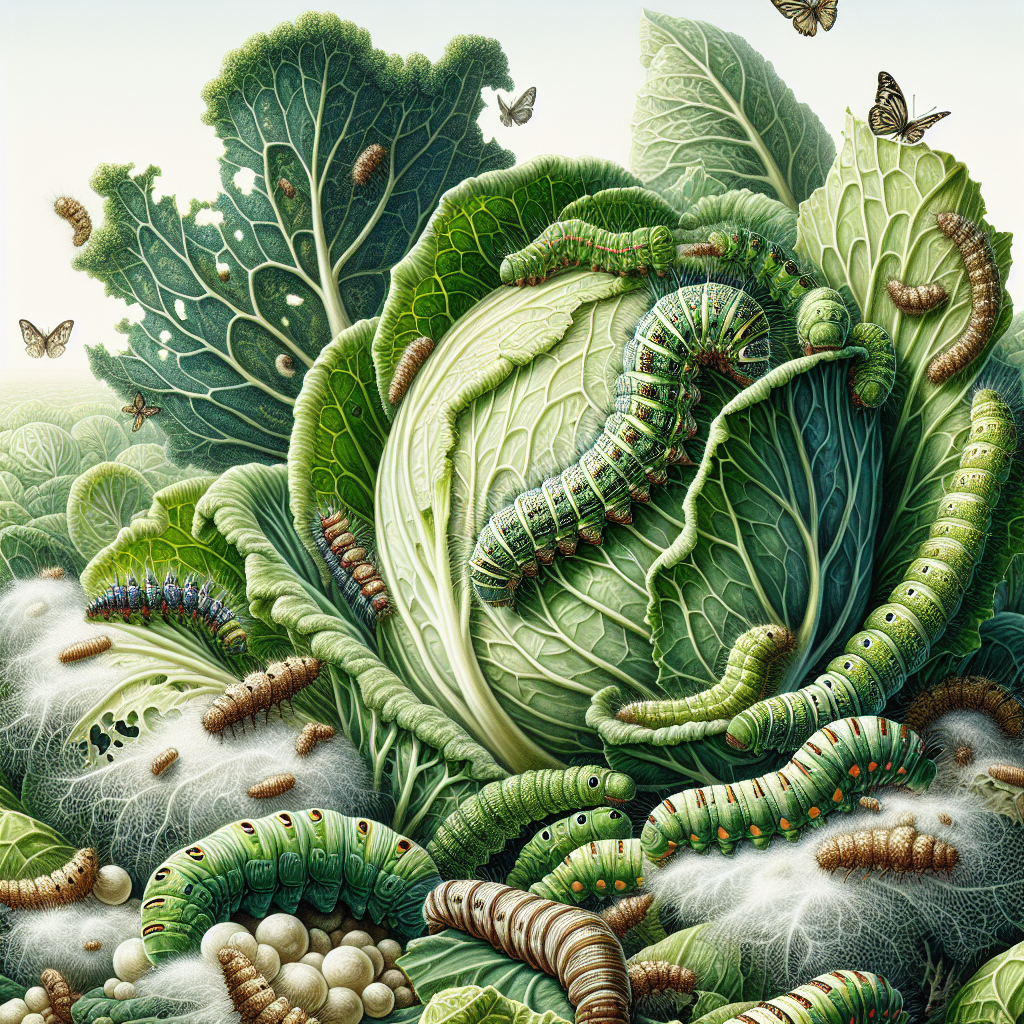
Introduction to Leaf-eating caterpillars
Leaf-eating caterpillars represent one of the most pervasive pest challenges in global agriculture, encompassing larvae from diverse Lepidoptera families such as Noctuidae, Pieridae, and Pyralidae. These voracious feeders can strip entire fields of foliage, reducing photosynthetic capacity and yield by up to 50-70% in severe infestations. Common culprits include the cabbage looper (Trichoplusia ni), imported cabbageworm (Pieris rapae), and various armyworm species (Spodoptera spp.). As a professional botanist and entomologist, I've observed their impact across vegetable, fruit, and field crops, where timely diagnosis and integrated management are critical for sustainable production.
Unlike adult moths or butterflies, which primarily lay eggs, the larval stage poses the direct threat through skeletonization and defoliation. These pests thrive in warm, humid conditions, often migrating via wind-dispersed adults. Understanding their biology enables proactive strategies, preventing economic losses estimated at billions annually. This guide provides definitive diagnostic criteria, lifecycle insights, and organic management protocols tailored for small to medium-scale farms. For detailed species info, see the comprehensive caterpillars wiki page.
Identifying Symptoms & Damage
Early detection of leaf-eating caterpillar damage hinges on recognizing distinct symptoms before widespread defoliation occurs. Initial signs include small irregular holes in leaves, often starting on older, lower foliage. As larvae grow, damage escalates to skeletonized leaves where only veins remain, accompanied by abundant black frass (droppings) resembling pepper grains scattered on leaves and soil.
Inspect undersides of leaves for eggs—clusters of pale yellow spheres or ribbed cylinders—and newly hatched larvae, which may appear as tiny green 'worms' with dark heads. Mature caterpillars vary: loopers lack prolegs and 'loop' when moving; cabbageworms are velvety green with faint lines; armyworms are striped and gregarious. Secondary indicators include sooty mold on honeydew-excreting pests or leafminers co-infestation, which create serpentine trails.
Differentiate from similar damage: cutworms sever stems at soil level, while flea beetles cause shot-hole pitting. Use a hand lens to confirm presence; shake plants over white paper to dislodge larvae. Severe cases show stunted growth, reduced fruit set, and increased susceptibility to Alternaria leaf spot or powdery mildew. Photograph suspected damage for AI-assisted identification, as detailed in this Spring Pest Patrol blog post.
Quantitative assessment: Scout 25-50 plants per acre, recording larvae per leaf. Thresholds vary: 1-2 per plant for tomato, 0.5 for cabbage. Consistent monitoring prevents outbreaks.
Lifecycle and Progression of Leaf-eating caterpillars
Leaf-eating caterpillars undergo complete metamorphosis: egg, larva (5-7 instars), pupa, and adult moth/butterfly. Eggs hatch in 3-7 days under optimal 75-85°F (24-29°C). Larval stage, the damage phase, lasts 2-4 weeks, with feeding peaking in 3rd-5th instars. Pupation occurs in soil or leaf litter (7-14 days), yielding adults that live 1-3 weeks, dispersing to lay 200-1000 eggs.
Generations per season: 4-8 in tropics, 2-4 in temperate zones. Overwinter as pupae or diapausing larvae. Progression accelerates with temperatures above 70°F; below 50°F, development halts. Moths are nocturnal, attracted to lights; females oviposit nocturnally on host plants. Understanding this cycle informs timing: target eggs/young larvae for 90% control efficacy.
Varietal differences: Armyworms march gregariously; loopers are solitary climbers. Parasitization by wasps (e.g., Cotesia) disrupts cycles naturally.
Environmental Triggers & Risk Factors
Leaf-eating caterpillars proliferate under specific conditions: mild winters (>40°F average) allow pupal survival; spring rains enhance egg hatch. High nitrogen soils promote tender foliage, ideal for larvae. Monocultures exceed economic thresholds faster than intercropped systems. Nearby weedy margins harboring alternate hosts like mustard or clover serve as reservoirs.
Risk amplifies with reduced tillage, preserving pupae, or late planting aligning with peak moth flights. Climate change extends seasons, increasing generations. Companion pests like aphids indicate imbalance; army worms surge post-flood. Monitor pheromone traps for moth influx; >10/trap/week signals risk. Humid microclimates (>80% RH) favor outbreaks on lettuce or kale.
Organic Control & Treatment Plans
Integrated Pest Management (IPM) prioritizes organics. Cultural: Hand-pick larvae mornings/evenings; destroy >90% small populations. Use row covers (0.25mm mesh) from planting. Biological: Release Trichogramma wasps (egg parasitoids, 100,000/acre); Bacillus thuringiensis (Bt) kurstaki (1-2L/ha, evenings, 3x at 7-day intervals) targets larvae <1cm. Efficacy: 85-95%.
Botanicals: Neem oil (0.5-2%) disrupts molting; pyrethrum (1%) for knockdown. Spinosad (organic-approved, 0.2ml/L) for loopers. Trap crops: Plant mustard borders to lure moths away from broccoli. Encourage predators: lacewings, birds via perches. Foliar sprays: insecticidal soap + Bt rotates modes of action, preventing resistance.
Treatment plan: Scout weekly; treat at 0.2-0.5 larvae/leaf. Reapply post-rain. Rotate products; preserve beneficials. Yields recover 70-90% with early intervention.
Preventing Leaf-eating caterpillars in the Future
Prevention builds resilience. Crop rotation: 2-3 years away from brassicas/ solanaceae. Sanitation: Till post-harvest to expose pupae; flame weedy edges. Resistant varieties: 'Cabbage Green' or Bt-expressing hybrids. Traps: Pheromone for monitoring; UV lights reduce adults 40%.
Mulching: Straw suppresses soil pupae. Intercropping: Nasturtium repels; dill attracts parasitoids. Timing: Plant early, avoiding peak flights (use degree-day models: 300-500 DD base 50°F). Soil health via cover crops (clover) boosts plant vigor, deterring infestation. Annual audits track progress; combine with hyper-local forecasts for preemptive action.
Crops Most Affected by Leaf-eating caterpillars
Leaf-eating caterpillars devastate leafy and fruiting crops. Brassicas top the list: cabbage, broccoli, cauliflower, kale—cabbage loopers alone cause 30% losses. Solanaceae: tomato, eggplant, bell pepper suffer hornworms, armyworms. Leafy greens: lettuce, spinach. Field crops: corn (earworms), soybeans (velvetbean caterpillar). Fruits: grapes, apple. Tropicals: mango, banana. Grains: rice, wheat face stem borers transitioning to leaves. Mitigation scales by crop; brassicas demand vigilant Bt applications.