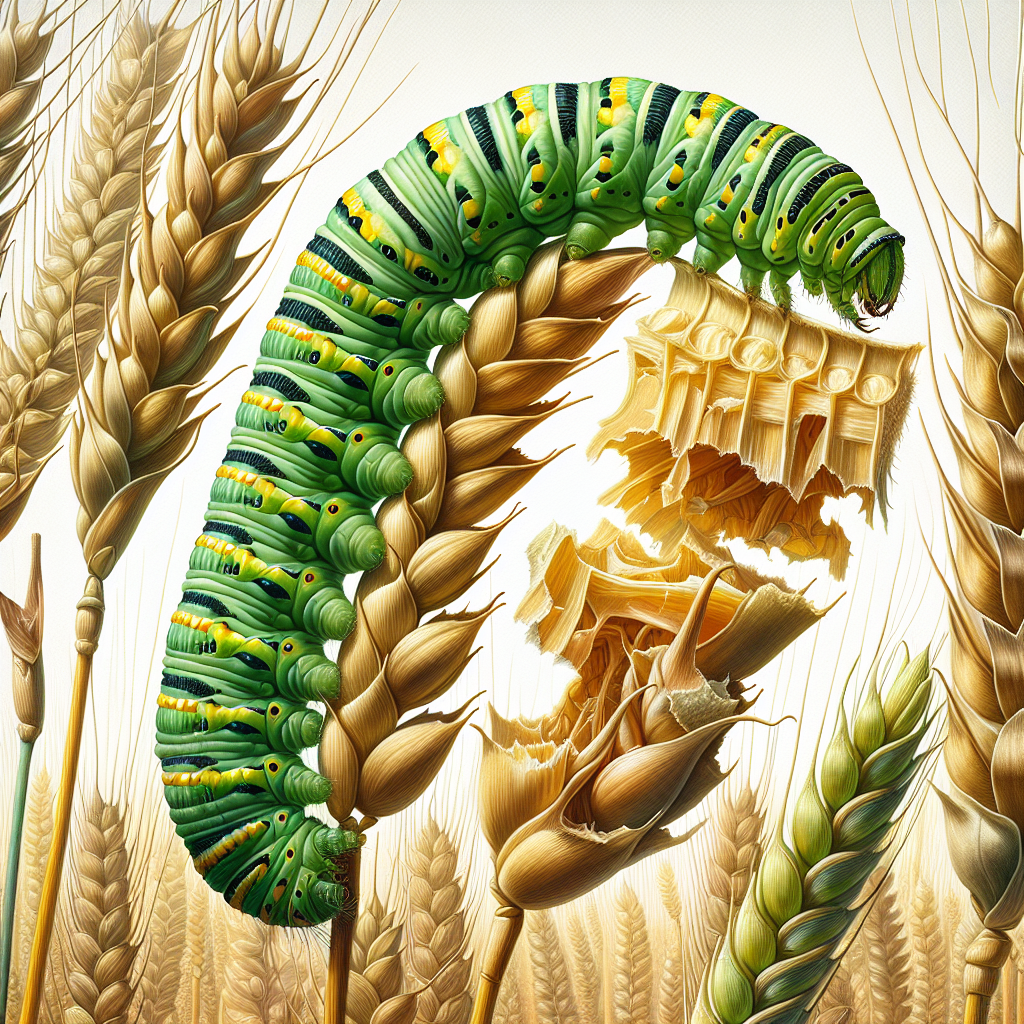
Introduction to head-feeding caterpillars
Head-feeding caterpillars represent a critical threat to grain production worldwide, particularly in cereal crops where they target the reproductive structures—heads, panicles, ears, and cobs—during the critical grain-filling stages. These pests, often larvae of noctuid moths like the fall armyworm (Spodoptera frugiperda) and Helicoverpa species, feed voraciously on developing grains, florets, and kernels, leading to chaffy heads, reduced grain weight, and total crop failure in severe infestations. Unlike leaf-feeding caterpillars that damage foliage, head-feeders strike at the harvestable yield, making early detection and intervention essential.
In small-scale and commercial farming, these caterpillars can devastate yields by 20-80%, depending on crop stage and population density. Native to tropical regions but now global due to trade and climate shifts, they thrive in warm, humid conditions. This definitive guide equips farmers with professional diagnostics, lifecycle knowledge, organic treatments, and prevention strategies. For more on integrated pest management timing, check this insightful Spring Pest Patrol blog. Understanding their behavior allows for targeted controls that preserve beneficial insects and soil health.
Identifying Symptoms & Damage
Diagnosing head-feeding caterpillar damage requires keen observation during flowering to dough stages. Primary symptoms include:
- Skeletonized or chaffy heads: Grains are consumed, leaving empty glumes or husks. Affected panicles appear silvery or white, with frass (caterpillar droppings) coating the heads.
- Holes and webbing in ears: Entry points with silk threads binding grains; kernels bored out, often with secondary head molds.
- Premature head drop or sterility: Florets clipped, leading to blank spikes. Grains may show clipping scars or partial filling.
Distinguish from other pests: Unlike earhead-feeding caterpillars, head-feeders leave more frass and less boring. Head-feeding insects like bugs cause sucking damage without chewing. Scout 20-30 plants per field quadrant at milky to dough stage; action threshold is 10-20% infested heads.
Damage escalates rapidly: Larvae clip 5-10 grains daily, multiplying losses in dense stands. Yield impacts: 1 larva/head can cut 30-50% grain weight. Associated issues include mycotoxin contamination from grain mold entry points and bird attraction to damaged heads (birds). Use a hand lens to confirm larvae (1-3 cm, green/brown with stripes) hiding in whorls or tassels.
Lifecycle and Progression of head-feeding caterpillars
Head-feeding caterpillars undergo complete metamorphosis: egg, larva, pupa, adult moth. Lifecycle spans 25-40 days, with 4-8 generations/year in tropics.
- Eggs (2-5 days): Pale yellow clusters (50-200) on leaves near heads, often underside.
- Larvae (14-21 days): 6 instars; early stages leaf-feed, late instars target heads. Mature larvae (3-4 cm) bore into grains, frass-heavy.
- Pupa (7-10 days): Soil or plant debris; reddish-brown.
- Adults (5-10 days): Gray-brown moths, 3-4 cm wingspan, nocturnal. Females lay 500-1500 eggs.
Progression ties to crop phenology: Eggs laid at boot-leaf stage, larvae peak at flowering/anthesis. Overwinter as pupae in mild climates. Monitor with pheromone traps for adult flights. Relates to armyworms and corn earworm, sharing similar cycles but head-specific feeding.
Environmental Triggers & Risk Factors
Head-feeding caterpillars explode under specific conditions:
- Warm, humid weather: Optimal 25-35°C, >70% RH; monsoon rains boost survival.
- Crop phenology: Vulnerability peaks at booting to grain-fill; staggered planting prolongs exposure.
- Weedy fields: Alternate hosts like sorghum harbor populations.
- Nitrogen excess: Lush heads attract moths.
- Refuge absence: Monocultures without clover borders amplify outbreaks.
Risk factors: Late planting, no-till residue (pupal overwintering), nearby corn or rice fields. Climate change extends ranges northward. Scout after 2-3 days rain; thresholds rise in dry heat.
Organic Control & Treatment Plans
Organic management integrates cultural, biological, and mechanical tactics:
- Cultural: Destroy volunteer plants; rotate with peas. Deep plow post-harvest to expose pupae.
- Biological: Release Trichogramma wasps (egg parasitoids); apply Bacillus thuringiensis (Bt) kurstaki at early larval stage (threshold: 10% eggs hatched). Neem oil (azadirachtin) disrupts molting.
- Mechanical: Hand-pick larvae in small fields; shake heads over trays. Pheromone traps disrupt mating.
- Barrier: Netting over heads in high-value plots.
Treatment plan: Scout weekly; apply Bt/neem at 20% infestation, repeat 5-7 days. Combine with marigold borders for repulsion. Avoid broad-spectrum sprays to protect predators like birds and slugs and snails (ironically beneficial here). Efficacy: 70-90% reduction with IPM.
Preventing head-feeding caterpillars in the Future
Prevention focuses on breaking lifecycle:
- Resistant varieties: Plant tolerant hybrids (e.g., Bt-corn where certified organic).
- Timing: Early planting evades peak moth flights.
- Trap crops: Border with susceptible millet.
- Sanitation: Burn residues; flood fields briefly.
- Monitoring: Delta traps with lures; apps for degree-day models.
Long-term: Diversify with quinoa, enhance biodiversity via nasturtium intercropping. Soil health via cover crops reduces risk (Soil Health Mastery blog). Annual audits cut incidence 50%.
Crops Most Affected by head-feeding caterpillars
Primary targets: wheat, rice, corn, sorghum, barley, millet, oats. Sorghum panicles suffer 40% losses; maize ears clipped heavily. Secondary: sugarcane tops, teff. Grains >50% global production at risk.