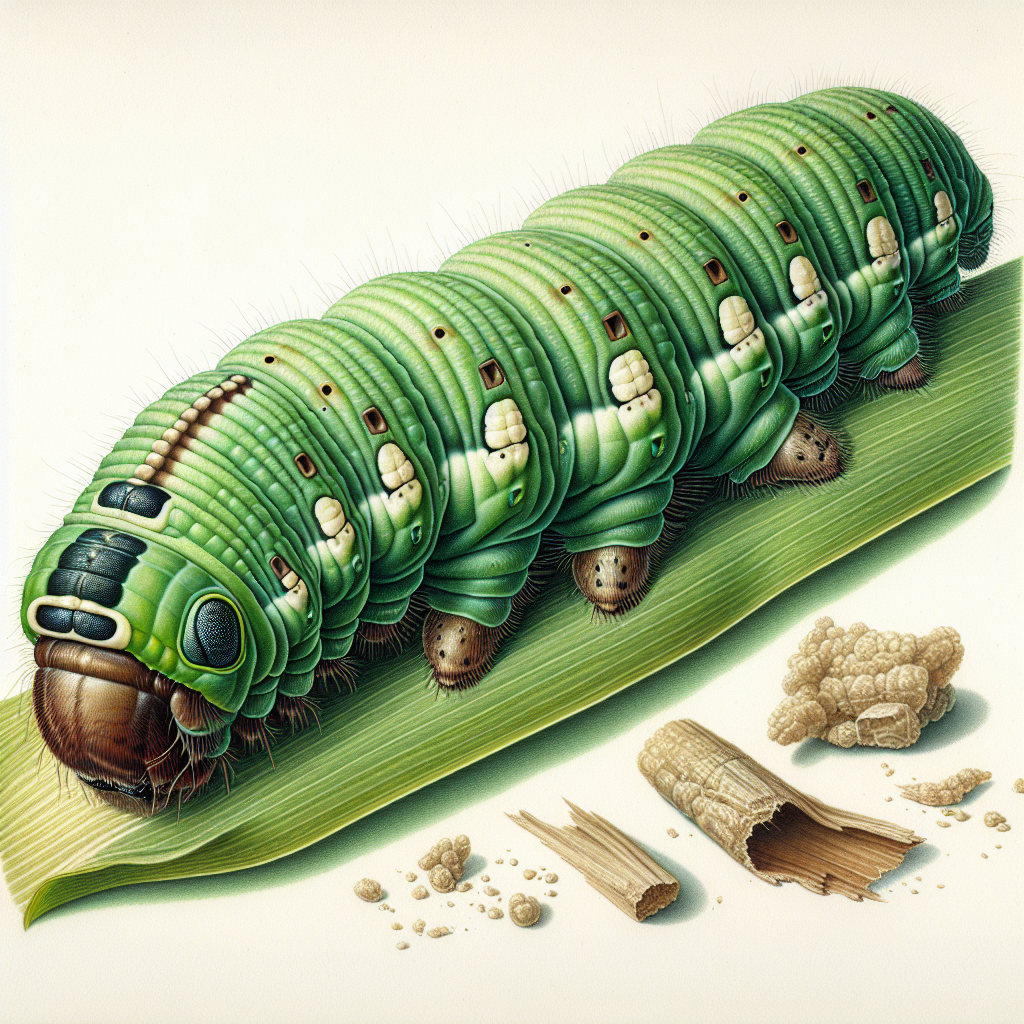
Introduction to Fall Armyworm
The Fall Armyworm (FAW), scientifically known as Spodoptera frugiperda, represents one of the most formidable pests in modern agriculture. First identified in the tropical Americas, this noctuid moth's larvae have earned their name from their marching behavior, forming massive armies that strip fields bare overnight. Since its detection in Central Africa in 2016, FAW has invaded over 80 countries, devastating staple crops and threatening food security for millions. In the U.S., it affects cornfields from Florida to Texas, while in Asia and Africa, it targets corn, rice, and sorghum.
FAW's adaptability to diverse climates and resistance to many insecticides make it a nightmare for smallholder farmers. Capable of completing a generation in as little as 24 days under optimal conditions, populations explode rapidly. Economic impacts are staggering: in Africa alone, losses exceed $3 billion yearly, with yield reductions up to 50% in untreated fields. Early detection and integrated management are critical to mitigate damage. For practical insights on timing interventions, check this blog post on why timing kills small farm profits.
This guide equips growers with diagnostic tools, lifecycle knowledge, organic controls, and prevention strategies to combat FAW effectively. Understanding its biology empowers proactive defense, turning potential devastation into manageable challenges.
Identifying Symptoms & Damage
Fall Armyworm damage manifests in distinct patterns across growth stages. Young larvae (1-3 instars) skeletonize leaves, creating translucent 'windows' where they feed between veins, leaving a fine mesh of epidermal tissue. This is often the first sign, appearing as ragged, notched leaf margins on whorls. As larvae mature (4-6 instars), they bore into whorls, tassels, and ears, producing massive amounts of green frass (caterpillar poop) that resembles sawdust or cornmeal at the base of plants.
Key diagnostic features include:
- Leaf damage: Shot-hole appearance from pinhead-sized holes coalescing into larger lesions. Severe feeding leaves only midribs.
- Whorl injury: Central leaves shredded, with larvae hidden inside producing wet, sawdust-like frass.
- Ear damage: Larvae tunnel into silks, clipping them short and feeding on kernels, leading to poorly filled ears.
- Stems and stalks: Pinched-off plants at soil line (similar to cutworms) or bored tunnels causing lodging.
Physical identification of larvae is crucial: FAW caterpillars are green to brown, 30-50mm long, with dark heads marked by an inverted white Y on the front. A key differentiator is the four dark spots on the abdominal segments just behind the head, forming a square. Unlike other caterpillars, they lack a prominent tail horn but may have greasy appearance from defensive hairs.
Scout fields weekly from seedling stage, checking 25-50 plants per acre. Thresholds: 20% whorls with damage or 15% with larvae. Differentiate from armyworms or corn earworm by the Y-mark and square spots. Damage peaks at night; use blacklight traps for adults.
Lifecycle and Progression of Fall Armyworm
FAW completes 6-12 generations per year depending on temperature, with each cycle spanning 25-40 days. Adult moths are beige-gray with a white spot near each wingtip, active at dusk. Females lay 1000-2000 eggs in masses covered by gray scales on undersides of leaves, hatching in 2-4 days.
Larvae progress through 6 instars over 14-21 days:
- Instar 1-2: 1-5mm, translucent green, leaf skeletonizers.
- Instar 3-4: 10-20mm, darker, start whorl boring.
- Instar 5-6: 30-50mm, voracious, ear/stalk feeders.
Pupation occurs 2-5cm deep in soil, lasting 7-14 days. Optimal development at 28-30°C; diapause absent, enabling year-round activity in tropics.
Progression varies by host: on corn, whorl stage damage dominates V4-VT; on sorghum, head emergence triggers outbreaks. Moths migrate hundreds of miles on winds, with southern U.S. populations overwintering as pupae. Monitor with pheromone traps: 10+ moths/week signals imminent larval infestation.
Environmental Triggers & Risk Factors
FAW thrives in warm, humid conditions (25-35°C, 80-90% RH), accelerating reproduction. Key triggers include:
- Temperature: Above 10°C for development; peaks at 28°C.
- Rainfall: Heavy rains post-egg-lay increase survival by suppressing predators.
- Host availability: Prefers grasses; outbreaks follow corn or wheat planting.
- Weeds: Alternate hosts like bermudagrass harbor populations.
Risk factors: Continuous corn monoculture, late planting (overlaps generations), poor field sanitation. Drought-stressed plants are more susceptible. In Africa, coincides with rainy seasons; in U.S., late summer hurricanes disperse moths. Climate change extends ranges northward.
High-risk zones: Tropical/subtropical regions, conservation tillage (protects pupae). Scout after storms or moth flights.
Organic Control & Treatment Plans
Organic management emphasizes IPM: monitoring, cultural, biological, and targeted organics.
1. Cultural Controls:
- Destroy volunteer corn and weeds.
- Rotate with non-hosts like soybeans or cassava.
- Plant early-maturing varieties; interplant with repellents like thai-basil.
2. Biological Controls:
- Conserve natural enemies: Telenomus wasps parasitize 70% eggs; birds eat larvae.
- Release Trichogramma wasps (1,000/ha/week for 4 weeks).
- Apply Bacillus thuringiensis (Bt) kurstaki at 1-2L/ha young larvae (1-3 instar); reapply every 3-5 days.
3. Organic Insecticides:
- Neem oil/azadirachtin (0.5-1%) weekly; disrupts hormones.
- Spinosad (organic-approved) at 100-200ml/ha; effective on small larvae.
- Pyrethrins + PBO for knockdown.
Treatment Plan:
- Scout: Threshold 20% damaged whorls.
- Young larvae: Bt + neem.
- Large larvae: Spinosad + remove manually.
- Post-treatment: Marigold borders attract predators.
Avoid broad-spectrum sprays to protect beneficials. For more on organic strategies, see Spring Pest Patrol. Efficacy: IPM reduces damage 70-90%.
Preventing Fall Armyworm in the Future
Prevention hinges on breaking lifecycle and reducing inoculum:
- Crop Rotation: 2-3 years away from grasses; include legumes.
- Sanitation: Deep plow post-harvest to expose pupae; destroy stubble.
- Trap Crops: Plant border sorghum rows.
- Varieties: FAW-resistant hybrids (e.g., Bt corn).
- Monitoring: Pheromone traps + apps for moth forecasts.
- Push-Pull: Intercrop Desmodium (repels moths) with Napier grass (attracts).
Mulch suppresses soil pupae; cover crops like clover enhance predators. Calendar-based sprays unnecessary; scout-driven. Long-term: Build soil health per this soil health mastery guide. Community-wide efforts amplify success.
Crops Most Affected by Fall Armyworm
FAW attacks 350+ species, preferring Poaceae:
- Grains: Corn (whorls/ears), sorghum, rice, wheat, millet.
- Vegetables: Potato, sweet potato, cabbage, beet.
- Legumes: Soybeans, peanuts, chickpeas.
- Others: Sugarcane, cotton, pasture grasses.
Most vulnerable: Young corn (V1-V8), flowering sorghum. Economic hits on staples drive interventions. Manage alongside cutworms, aphids.