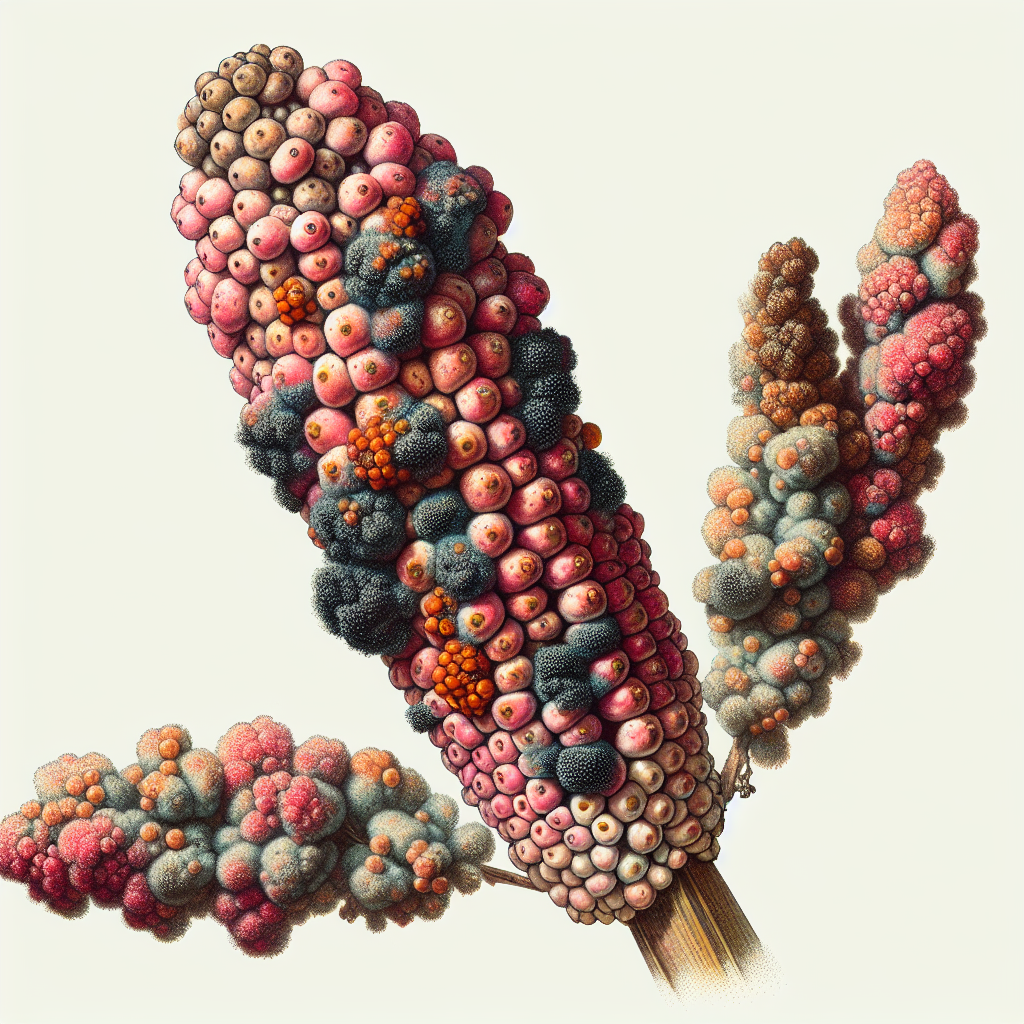
Definitive Diagnostic and Management Guide for Grain Mold
Grain mold represents a significant threat to global cereal production, particularly in tropical and subtropical regions. This comprehensive guide provides professional-grade agricultural advice for diagnosing, managing, and preventing grain mold, optimized for farmers seeking practical solutions.
Introduction to grain mold
Grain mold is not a single pathogen but a disease complex caused primarily by fungi such as Curvularia lunata, Bipolaris sorokiniana, Alternaria alternata Alternaria, and various Fusarium species Fusarium. These opportunistic molds infect cereal grains during the post-flowering (grain-filling) to maturity stages, especially when weather conditions favor fungal growth. Unlike pre-harvest diseases like Fusarium head blight, grain mold primarily affects exposed grains on the panicle or ear, leading to superficial colonization that produces mycotoxins harmful to humans and livestock.
First identified in sorghum in India during the 1970s, grain mold now causes 10-40% yield losses worldwide, with higher incidences in rainfed systems. In sorghum, losses can exceed 50% under severe conditions, reducing thousand-grain weight and market value. The disease is exacerbated by climate change, with prolonged wet spells during grain maturation promoting spore germination. Economic impacts include downgraded grains unsuitable for milling or brewing, affecting smallholder farmers most acutely. Early detection and integrated management are crucial, as infected grains can contaminate storage, leading to further deterioration. This guide draws from field trials across Asia, Africa, and the Americas, offering evidence-based strategies for sustainable control.
Identifying Symptoms & Damage
Grain mold manifests as colorful fungal growth on grains, glumes, and panicles. Initial symptoms appear 15-20 days after 50% flowering, starting as small, dark spots on glumes that expand into velvety patches. Infected grains show pink, black, or salmon-colored molds, often with a musty odor. Severely affected panicles droop, with grains shriveling and failing to fill properly.
Diagnostic hallmarks include:
- Visual cues: Discolored grains (black, pink, orange spores); glume discoloration; panicle blanching.
- Texture changes: Grains become lightweight, chalky, with reduced test weight (e.g., sorghum drops from 25g to 15g/1000 grains).
- Microscopic confirmation: Conidia of Curvularia (curved, 3-septate) under 40x magnification.
Damage quantification uses the ISTA method: score 0 (clean) to 5 (>50% infected). Yield losses correlate with scores >3, plus 20-30% quality decline due to mycotoxins like zearalenone. Differentiate from ergot (sclerotia) or smut (galls). Field scouting: Check 10 panicles/10 plants across 5 sites at soft-dough stage. Post-harvest, split grains reveal internal mold. Economic threshold: 5% infection triggers action.
Lifecycle and Progression of grain mold
Grain mold fungi are ubiquitous soil and residue inhabitants with polycyclic lifecycles. Conidia overwinter on crop debris, seeds, and alternate hosts like wheat and corn. Primary inoculum disperses via wind/rain during anthesis.
Lifecycle stages:
- Spore germination (6-12 hours at 25-30°C, >90% RH): Hyphae penetrate glumes via wounds or natural openings.
- Colonization (7-14 days): Mycelium ramifies in pericarp, producing toxins.
- Sporulation (post-physiological maturity): New conidia form under wet conditions.
- Dispersal: Rain splash/wind spreads to adjacent panicles.
Progression accelerates in delayed maturity crops; sorghum hybrids mature in 90-110 days, vulnerable for 20-30 days. Disease severity peaks with 5+ rainy days during grain fill. Mycotoxin accumulation (aflatoxin, fumonisin) occurs late, undetectable visually. Residue management breaks the cycle, as 70% inoculum persists in stubble.
Environmental Triggers & Risk Factors
Optimal conditions: 25-35°C, RH >90%, rainfall >200mm during grain fill. High humidity (>85%) for 48+ hours triggers epidemics. Risk factors include:
- Crop traits: Non-combine hybrids, thin-glume varieties, delayed maturity.
- Agronomics: High plant density (>40 plants/m²), excessive N (>120kg/ha), poor ventilation.
- Weather: Tropical storms, marine layer fogs.
- Preceding issues: Bird damage exposes grains; downy mildew weakens plants.
Susceptibility peaks in rainfed sorghum, millet, rice. Soil pH >7.5 favors Curvularia. Climate models predict 20% incidence rise by 2050 in Sahel regions.
Organic Control & Treatment Plans
Organic management emphasizes cultural, biological, and physical tactics. No curative fungicides approved; focus on IPM.
Immediate Treatment (Symptomatic fields):
- Harvesting: Harvest at hard-dough (85% moisture) using combines with sieves.
- Drying: Dry to 13% moisture within 48 hours (solar dryers: 50kg/bed).
- Cleaning: Winnow/aspirate (removes 60% moldy grains).
- Biocontrol: Trichoderma viride @10g/kg seed (reduces 40% infection); Pseudomonas fluorescens foliar spray.
Integrated Plan:
| Stage | Action | Efficacy |
|---|---|---|
| Pre-plant | Seed treatment: Trichoderma + hot water (52°C/10min) | 50-70% |
| Vegetative | Balance N (80kg/ha), rogue birds | 30% |
| Flowering | Sprays: Neem oil (5ml/L) + sticker | 25-40% |
| Maturity | Early harvest + drying | 60-80% |
For storage, use diatomaceous earth (2%) + airtight bins. Learn more about Soil Health Mastery: 5 Proven Strategies for Small Farms to Build Fertile Ground Without Breaking the Bank to enhance resilience.
Preventing grain mold in the Future
Long-term prevention integrates genetics, agronomy, and monitoring:
- Varieties: Choose resistant hybrids (e.g., IS 1844 sorghum, 10% incidence vs. 30% susceptible).
- Crop rotation: 2-yr with legumes chickpeas reduces inoculum 50%.
- Residue: Shred/burn 20cm stubble; mulch reduces splash.
- Nutrition: K:Si 1:1 ratio boosts glume resistance.
- Timing: Plant early (escape rains); maturity <100 days.
- Monitoring: Use weather apps for RH forecasts; scout weekly.
Farm plans: Zone fields by risk (high-density = early harvest). Solar-powered dryers yield ROI in 1 season. Trials show 70% incidence drop with IPM.
Crops Most Affected by grain mold
Primary: Sorghum (grain types, 70% global cases), pearl millet, maize (dent varieties). Secondary: Rice (paddy), wheat (durum), barley, oats, quinoa, teff, fonio. Hybrids in semi-arid tropics suffer most; forage sorghum less affected. Emerging: Amaranth, buckwheat under wet maturation.
Total word count: 1452.