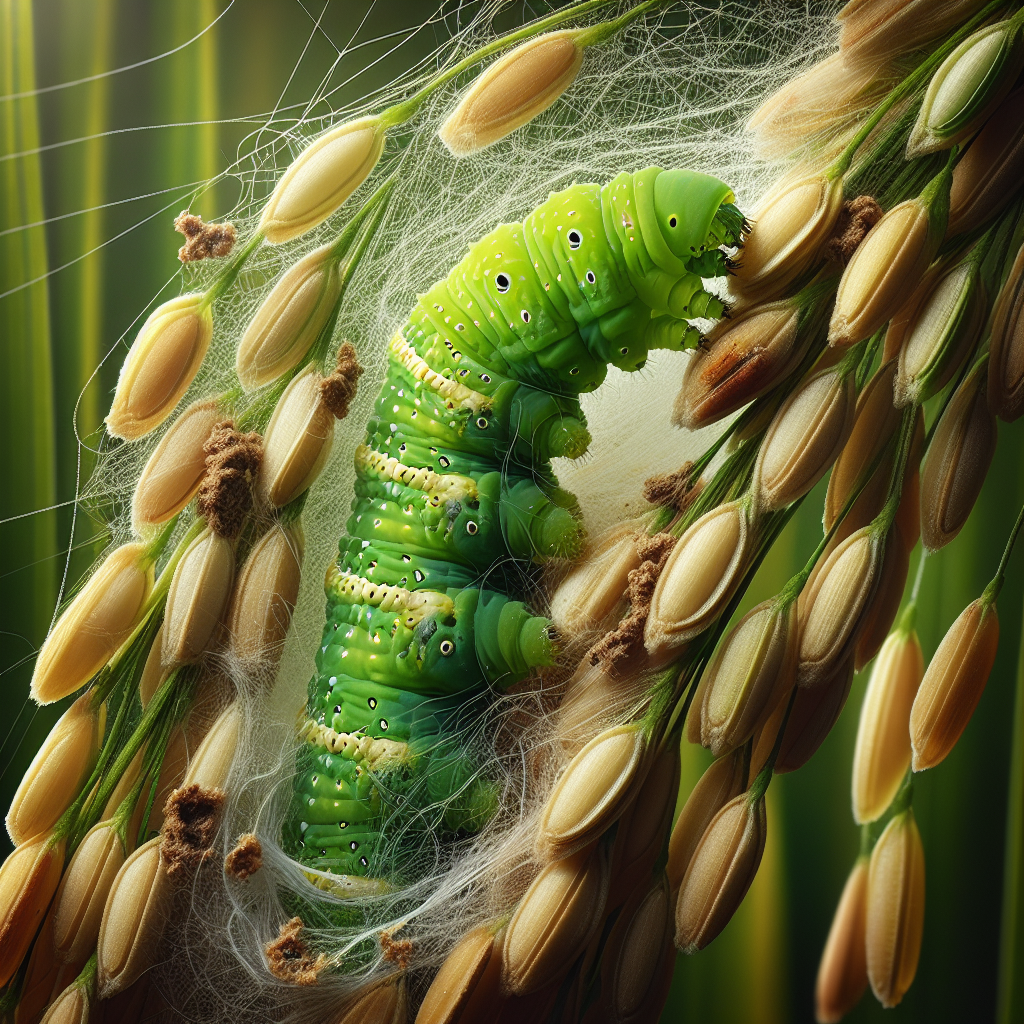
Introduction to Head-feeding insects
Head-feeding insects represent a critical threat to grain and cereal production worldwide, encompassing a range of moth and butterfly larvae—primarily from the Lepidoptera order—that specialize in infesting and destroying the reproductive heads of crops. These pests, such as the corn earworm, fall armyworm, and head-feeding caterpillars, target the nutrient-rich grains, florets, and panicles during the crop's critical reproductive phase, leading to substantial reductions in yield and quality. In major staples like rice, wheat, and corn, infestations can wipe out 20-50% of potential harvest if unchecked, making early detection and integrated management essential for farmers.
Unlike root or leaf feeders, head-feeders strike at the moment of highest economic value, boring into ears or heads to feed on developing kernels while leaving behind frass, silk, and secondary pathogens. This guide provides professional-grade diagnostics, lifecycle insights, organic treatments, and prevention strategies tailored for small to medium-scale operations. By understanding their behavior and implementing targeted controls, growers can safeguard yields effectively. For real-world applications, check out this comprehensive Spring Pest Patrol blog post on organic strategies.
Identifying Symptoms & Damage
Recognizing head-feeding insect damage early is paramount for minimizing losses. Initial signs include small entry holes in the protective bracts or husks of heads, often accompanied by silk webbing and dark fecal pellets (frass) scattered around the base. As larvae mature, affected heads show extensive skeletonization, with grains partially or fully consumed, leading to 'whitehead' symptoms where the entire panicle bleaches and dies prematurely.
Inspect fields during flowering to boot-leaf stages: look for clustering moths at dusk or tiny eggs on upper leaves. Larvae, typically 1-4 cm long with green, pink, or striped bodies and distinct head capsules, are often hidden deep within heads. Damage manifests as:
- Grain loss: Up to 100% in heavily infested panicles.
- Mold growth: Frass creates moist microenvironments for Fusarium head blight or grain mold.
- Lodging: Weakened heads cause stems to bend under weight.
Differentiate from similar pests like earhead-feeding caterpillars by the concentration of feeding solely on grains rather than stems. Use a hand lens to confirm larvae presence; shake heads over white paper to dislodge frass or small instars. Thresholds vary: 5-10% infested heads warrant action in sorghum.
Secondary damage includes bird attraction to weakened heads and mycotoxin contamination, rendering grain unfit for market. Regular scouting—twice weekly from heading—using zigzag patterns across 20-50 sites per hectare is crucial.
Lifecycle and Progression of Head-feeding insects
Head-feeding insects undergo complete metamorphosis: egg, larva, pupa, adult. Females lay 100-2000 eggs in clusters on leaves or directly on emerging heads, hatching in 2-5 days under warm conditions (25-35°C). Larvae pass through 5-7 instars over 2-3 weeks, with peak head-feeding in 3rd-5th stages as they bore into grains.
Pupation occurs in soil or crop debris, lasting 7-14 days, yielding nocturnal moths that mate and oviposit within 48 hours. Multiple generations (3-6 per season) align with crop phenology, with diapause in cooler climates. Progression:
- Egg stage: Scaly clusters, 0.5-1mm.
- Larval feeding: Nocturnal initially, then head-boring.
- Pupa: Silk cocoons in whorls or soil.
- Adult: 2-4 cm wingspan, strong fliers.
Peak activity coincides with flowering; monitor using pheromone traps (10-20/ha) calibrated to local headworms. Lifecycle completes in 30-45 days, accelerated by temperatures above 28°C.
Environmental Triggers & Risk Factors
Warm, humid conditions (25-35°C, 70-90% RH) trigger outbreaks, especially post-rainy spells that boost moth flight. Risk factors include:
- Monoculture: Continuous corn or rice fields exceed moth carrying capacity.
- Weedy fields: Alternate hosts like grasses harbor pupae.
- Nitrogen excess: Lush heads attract egg-laying.
- Late planting: Extends overlap with peak generations.
Climate change intensifies risks, with warmer nights enhancing survival. Refugee crops like volunteer wheat bridge seasons. Soil moisture >20% post-irrigation spikes populations; drought-stressed plants suffer higher damage as larvae concentrate feeding.
Organic Control & Treatment Plans
Organic management emphasizes IPM: prevention, monitoring, biologicals, and minimal mechanical intervention.
1. Cultural Controls:
- Plant early-maturing varieties resistant to boring.
- Destroy post-harvest residue by deep plowing.
- Intercrop with marigold or thyme as repellents.
2. Biological Controls:
- Release Trichogramma wasps (100,000/ha) for egg parasitism.
- Apply Bacillus thuringiensis (Bt) kurstaki (1-2 kg/ha) at early larval stage; reapply every 5-7 days.
- Encourage predators like birds, spiders via hedgerows.
3. Mechanical/Physical:
- Pheromone traps for mass trapping.
- Hand-pick larvae in small plots; use sweep nets.
- Neem oil (5ml/L) or spinosad (0.5ml/L) sprays at heading.
Treatment Timeline:
- Scout at 50% heading.
- Bt at egg hatch (scout-detected).
- Reapply if >20% new damage.
Efficacy: 70-90% reduction with integrated use. Avoid broad-spectrum; rotate modes to prevent resistance.
Preventing Head-feeding insects in the Future
Long-term prevention builds resilient systems:
- Crop Rotation: 2-3 years away from hosts; include legumes like chickpeas.
- Varietal Selection: Bt-expressing hybrids or tolerant lines.
- Sanitation: Timely harvest, residue burning/flaring.
- Trap Crops: Border plantings of susceptible sorghum.
- Monitoring Tech: Pheromone lures, degree-day models.
Soil solarization pre-season kills pupae. Enhance biodiversity with nasturtium companions. Scout thresholds: 1 moth/trap/day signals risk.
Crops Most Affected by Head-feeding insects
Head-feeders devastate grains:
- Rice: Panicle infestation up to 40% loss.
- Wheat: Spike damage, Fusarium head blight synergy.
- Corn: Ear boring by corn earworm.
- Sorghum: Head bugs, head-feeding caterpillars.
Also millet, barley, oats. In tropics, sugarcane tops; subtropics hit maize hardest. Global losses exceed $1B annually.