Introduction to Teff
A small-seeded annual cereal from Ethiopia and Eritrea, teff has moved from being a regionally essential staple to a globally valued grain because of its nutritional profile, culinary versatility, and fit in climate-variable farming systems. It is widely used for flour, porridge, flatbreads such as injera, forage, hay, and cover cropping. Agronomically, teff stands out for its short growing cycle, usually 60 to 120 days depending on cultivar and environment, and for its ability to produce under rainfall patterns that are often too erratic for many larger-seeded cereals.
Its tiny seed size is both an advantage and a management challenge. A kilogram of seed contains millions of seeds, allowing low seeding rates, but the same feature makes uniform sowing, shallow placement, and early weed control critical. Teff also has a reputation for tolerating both temporary waterlogging better than many small grains and moderate drought once established, though maximum grain yield still depends on good moisture management. In diversified cereal systems, growers often compare it with millet because both are warm-season, small-seeded grains suited to marginal conditions, yet teff generally requires more precision at planting and harvest.
Historically, teff is among the oldest domesticated crops in Africa. Its long cultivation history has produced landraces with variation in maturity, lodging resistance, grain color, and adaptation to elevation. White-seeded types often command premium market prices for food use, while red or brown types may be favored in some traditional systems for hardiness, forage value, or local preferences. Modern production focuses on balancing grain quality with standability, because lodging remains one of the major yield-limiting factors.
Botanical Profile of Teff
Teff belongs to the Poaceae family and is a C4 annual grass, which helps explain its efficient performance in warm, high-light environments. Plants typically reach 30 to 120 cm in height depending on fertility, moisture, cultivar, and planting density. Growth habit ranges from relatively compact to more open and tillering. Stems are slender, often delicate-looking, and susceptible to lodging if pushed with excessive nitrogen or exposed to wind and late irrigation.
Leaves are narrow, linear, and soft, arising alternately on fine culms. The root system is fibrous and relatively shallow compared with deep-rooted dryland crops, but it is dense enough to exploit surface moisture efficiently. This dense root mat also helps teff suppress erosion and makes it useful as a forage or soil-protective crop in some rotations.
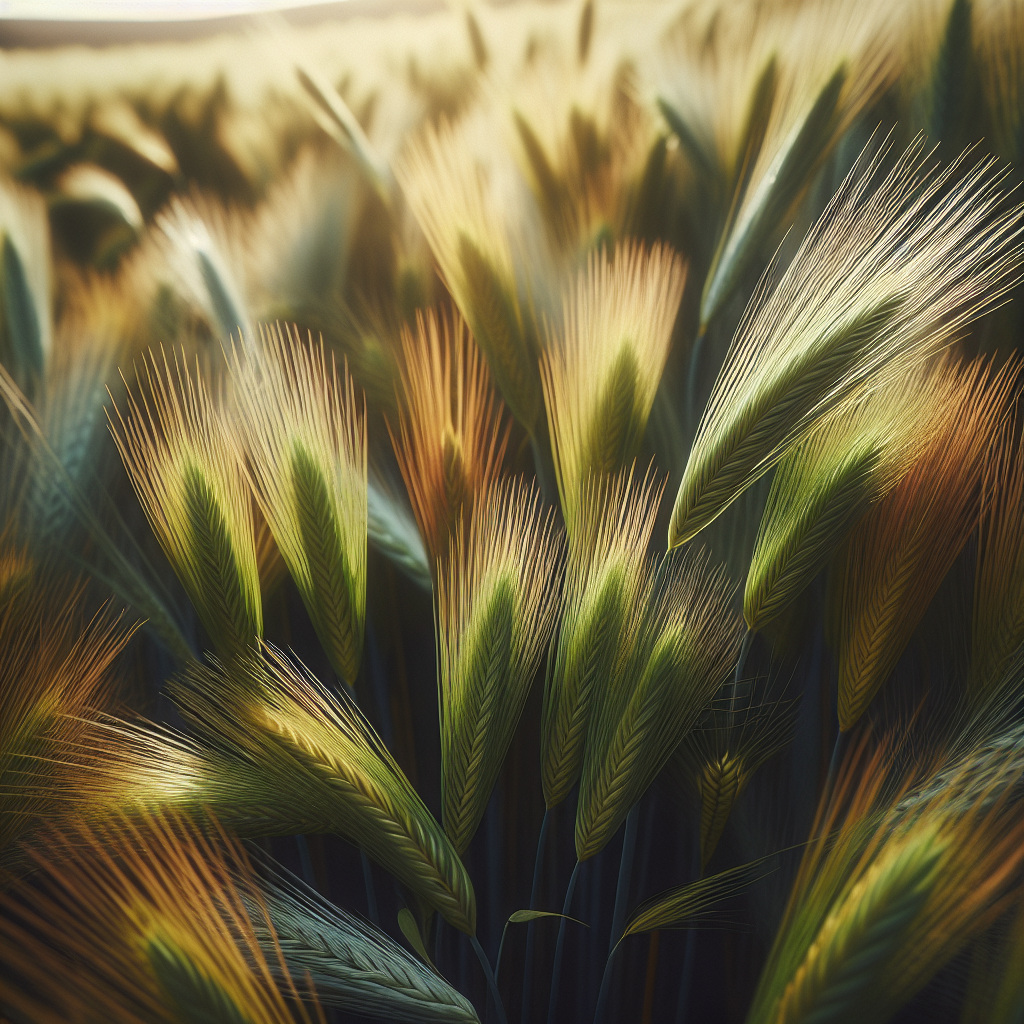
The inflorescence is a loose or compact panicle depending on genotype. Spikelets are small and numerous, containing very fine grains that are usually white, ivory, red, or brown. Because the grains are so small, uniform maturity is difficult to judge at first glance; growers should learn to read panicle color change, stem dryness, and grain firmness rather than relying on canopy appearance alone.
Botanically, teff is primarily self-pollinated, which helps preserve varietal traits under farm conditions. However, environmental stress can still influence expression of plant height, seed color intensity, and maturity timing. Different cultivars may be selected for grain production, forage biomass, or dual-purpose use. Early cultivars are particularly valuable in short rainy seasons or where terminal drought is common, while medium-duration types often yield more when moisture is dependable.
Soil, pH, and Climate Requirements for Teff
Teff grows across a broad range of soils, but professional-grade production depends on matching site conditions to its establishment needs. The ideal soil is a fine, firm, weed-free seedbed on well-drained loam, silt loam, or clay loam with good surface structure. Because the seed is extremely small, coarse cloddy ground reduces emergence dramatically. Sandy soils can work if moisture is consistent during germination, but they often require more careful irrigation scheduling and nutrient management. Heavy clays can produce excellent yields if drainage is adequate and crusting is prevented.
Optimal soil pH is about 5.5 to 7.5. Teff tolerates mildly acidic conditions better than many cereals, but strongly acidic soils below about pH 5.2 can reduce nutrient availability, especially phosphorus, and limit early growth. In alkaline soils above pH 8.0, micronutrient imbalances, especially zinc and iron, may appear as chlorosis and weak establishment. Soil testing before planting is highly recommended, particularly if teff is being introduced to a new field.
Teff performs best in warm, frost-free conditions with daytime temperatures around 20 to 30°C. Germination can begin at lower temperatures, but emergence is slower and seedlings are more vulnerable to weeds and crusting if soil temperatures stay below 15°C. It is not frost tolerant, and even light frost can injure seedlings or delay maturity. In high-altitude tropical regions, it can still perform well if the crop avoids cold stress during early growth and flowering.
Rainfall requirements vary widely, but 300 to 750 mm over the season can support a crop depending on soil type and distribution. The most critical period for moisture is establishment and early tillering. Once rooted, teff is relatively drought tolerant, but severe water deficit during panicle initiation, flowering, or grain filling sharply reduces yield. Conversely, continuously saturated soils cause root stress, reduced tillering, chlorosis, and elevated disease pressure. The goal is moist but aerated soil, not mud. In practical terms, the top 2 to 5 cm of soil should remain lightly moist during germination; after establishment, irrigation or rainfall should refill the active root zone before plants show prolonged midday rolling or a dull gray-green cast.
A smooth, firm seedbed is essential. If a footprint sinks deeply or leaves a fluffy impression, the ground is too loose for ideal sowing. A properly prepared field should allow shallow seed placement and good seed-to-soil contact without burying seed more than 0.5 to 1 cm.
Step-by-Step Planting & Propagation
Teff is propagated by seed and is almost always direct sown. Transplanting is impractical for grain production because of the tiny seed and dense plant population required.
Select the right cultivar. Choose based on season length, rainfall reliability, lodging risk, grain color preference, and intended use. White-grained cultivars often target premium food markets, while some taller lines are preferred for forage.
Prepare a fine, firm seedbed. Control perennial weeds before planting. Primary tillage should be followed by secondary passes to break clods and level the surface. On small farms, raking and light rolling improve precision. On larger fields, a cultipacker or roller before and after seeding is highly beneficial.
Time planting carefully. Sow after danger of frost when soil is warm enough for rapid emergence. In monsoonal or summer-rainfall systems, plant at the onset of reliable moisture, but avoid placing seed immediately before a storm likely to cause crusting or wash seed off the field.
Apply starter fertility if needed. Phosphorus is especially important where soil tests indicate deficiency. Because seedlings are small and slow to compete initially, early nutrient access matters. Avoid heavy upfront nitrogen on fertile soils, as it can increase lodging later.
Use a very shallow seeding depth. Ideal depth is about 0.3 to 0.6 cm, and rarely deeper than 1 cm. Many stand failures occur because seed is buried too deeply. In very fine moist soils, surface broadcasting followed by rolling can work better than drilling too deep.
Choose an appropriate seeding rate. For grain production, rates often range from 3 to 8 kg/ha depending on seed size, drilling precision, weed pressure, and lodging risk. Higher rates can create thin stems and worsen lodging. For forage or hay, rates may be somewhat higher to encourage denser stands.
Plant in narrow rows or broadcast uniformly. Drill rows around 15 to 20 cm apart where equipment allows. Narrow spacing closes the canopy sooner and helps with weed suppression. Broadcasting can succeed if seed distribution is even and followed by firm packing.
Irrigate lightly after sowing if rainfall is lacking. The objective is to moisten the topsoil without causing seed drift. Fine droplets or very light sprinkler irrigation are preferable to heavy streams. If the surface dries and forms a crust before emergence, seedling losses can be severe.
Monitor emergence closely. Seedlings usually emerge within 3 to 7 days under warm conditions. A healthy stand appears like a fine green haze over the soil. Patchiness often points to uneven depth, surface sealing, or moisture fluctuation.
Because seedlings are delicate, avoid walking or driving over newly emerged fields. Mechanical disturbance at this stage can thin stands significantly.
Care & Maintenance regimes for Teff
Good teff management is about precision rather than intensity. Once established, it is comparatively resilient, but early mistakes are hard to correct.
Water management should follow growth stage. During germination and the first two weeks, keep the surface layer consistently moist, not saturated. If irrigation is used, apply small amounts frequently enough to prevent drying of the top centimeter. Overwatering at this stage shows up as soil crusting, yellowing seedlings, Damping-off symptoms, or washed seed concentrated in low spots. After establishment, move to deeper, less frequent irrigation that wets the main root zone and allows partial drying between events. A practical target is to irrigate when the upper 3 to 5 cm become dry but before the crop develops persistent leaf rolling, bluish-green color, or slowed tillering. During flowering and early grain fill, avoid drought stress; this is the stage when moisture most strongly affects final yield.
Nutrient management should be guided by soil analysis, but teff generally responds to balanced nitrogen and phosphorus. Typical grain production programs use moderate nitrogen rather than aggressive feeding. Too little nitrogen causes pale leaves, weak tillering, and low biomass; too much causes lush growth, delayed maturity, and lodging. Split nitrogen applications are often safer than a full preplant dose: one portion at planting or soon after emergence, followed by another at early tillering if crop color and growth justify it. Potassium supports stem strength and stress tolerance where deficient. Sulfur and zinc may also be beneficial in low-testing soils.
Weed control is critical in the first 3 to 5 weeks. Teff seedlings compete poorly before canopy closure. Start with a clean field. Shallow stale seedbed techniques, pre-irrigation followed by light cultivation, or careful pre-plant weed flush control can greatly improve results. Once teff is established and tillering, it becomes more competitive, but early weed pressure can permanently reduce stand density and yield. Hand weeding is possible on small plots, while mechanical weeding is challenging because rows are often narrow and seedlings fragile.
Lodging management deserves special attention. Lodging occurs when stems bend or fall over before harvest, often due to excessive nitrogen, high plant density, wind, rain, or irrigation late in the season. To reduce risk, avoid over-seeding, keep nitrogen moderate and balanced with potassium, and refrain from heavy irrigation after the grain begins to harden. Fields with a history of fertile manure loading may need especially conservative nitrogen programs.
In rotational systems, teff fits well after legumes such as chickpeas or Soil health practices can improve seedbed structure and water infiltration before planting. However, avoid sowing into fresh, lumpy residues that interfere with shallow placement.
Pests, Diseases & Organic Management
Teff is often considered relatively hardy, but that does not mean pest-free. The crop is most vulnerable when stressed by poor establishment, nutrient imbalance, or excess moisture.
Common insect issues vary by region and may include Aphids, Armyworms, Cutworms, Shoot-feeding caterpillars, and occasional Grasshoppers. Aphids can cluster on stems and seed heads, reducing vigor and potentially transmitting viral diseases in mixed-crop environments. Armyworms and caterpillars are more dangerous because they can defoliate young stands quickly. Regular scouting should begin soon after emergence and continue weekly. Check 10 to 20 representative spots in the field, looking at leaf bases, stem junctions, and panicles.
Birds can also become serious pests near maturity, especially in small fields or isolated plantings. Damage often appears first along edges and elevated perches. Netting, reflective tape, synchronized community planting, or timely harvest can reduce losses.
Disease pressure is usually highest under dense canopies, excessive nitrogen, poor air flow, or prolonged leaf wetness. Potential problems include Rusts, Leaf spots, Seedling blights, and Damping-off under wet establishment conditions. Root stress from saturated soil may also predispose plants to secondary infections. Fungal symptoms often start as scattered chlorotic or necrotic spots, stem weakness, or premature drying of lower leaves.
Organic management begins with prevention:
- Use clean seed from reliable sources.
- Rotate away from cereals when disease pressure has been significant.
- Avoid over-irrigation and waterlogging.
- Maintain balanced fertility rather than pushing lush top growth.
- Promote air movement with sensible seeding rates.
- Destroy volunteer cereals and grassy weeds that can harbor pests.
For insect control in organic systems, encourage beneficial insects through field margins with flowering plants, avoid unnecessary broad-spectrum sprays, and intervene early when larvae are still small. Biological products based on Bacillus thuringiensis may help on caterpillars if timed correctly. Neem-based materials may suppress soft-bodied insects in some situations, but coverage on dense grass canopies can be difficult.
For disease suppression, seed treatments approved for organic systems, compost teas of verified quality, and microbial inoculants may have a role, but none substitute for drainage, rotation, and seedbed quality. If Damping-off recurs, review irrigation frequency, seed placement depth, and soil crust management before assuming a pathogen-only cause.
Harvesting, Curing & Optimal Storage
Teff harvest is one of the most technically sensitive stages because the grain is tiny and shattering losses can rise quickly if the crop is left too long or handled roughly. Maturity is indicated by panicles changing from green to straw-colored, stems drying down, and grains becoming firm and difficult to dent with a fingernail. Mature heads should feel dry, but waiting for complete field dryness can increase shatter and bird damage.
For small-scale harvesting, plants are often cut when the majority of panicles are mature and then bundled to finish drying under cover or on clean tarps. For mechanized systems, combine settings must be adjusted carefully for the small seed: low cylinder or rotor speed, tight enough concave settings to thresh without excessive cracking, and air flow calibrated to prevent seed blowout. Many first-time growers lose grain because fan speeds are set like wheat or barley rather than for teff’s minute seed size.
If swathing is used, cut when grain is physiologically mature but before severe lodging or shattering. Swaths should be kept off wet ground if possible. In humid regions, prolonged field curing increases mold risk and weather losses.
Post-harvest drying should bring seed moisture down to about 12% or lower for safe short-term storage, and closer to 10% for longer storage in warm climates. Because teff seed is small, it gains and loses moisture quickly. Dry on clean, elevated surfaces or forced-air systems with gentle temperatures. Excessive heat reduces seed viability and can impair flour quality.
Cleaning is essential. Remove chaff, dust, weed seed, and broken material using appropriately screened equipment. Even small contamination can reduce milling quality and market value. Once dry and cleaned, store in cool, dry, rodent-proof bins or sealed food-grade containers. Watch for condensation if grain harvested warm is moved into cool storage. The bin interior should remain dry, with no musty smell, caking, or heating. If grain temperature rises, moisture is too high or airflow is inadequate.
For seed intended for planting, maintain especially careful storage conditions: stable low humidity, protection from insects, and minimal handling damage. Germination tests before the next sowing season are wise because seed vigor can decline faster than appearance suggests.
Companion Planting for Teff
In broadacre terms, companion planting for teff is best understood as intelligent intercropping, border planting, and rotation support rather than dense mixed gardening. Since teff is a grass cereal with tiny seedlings, it should not be crowded by aggressive companions during establishment. The best partners are those that improve nitrogen cycling, reduce erosion, support beneficial insects, or fit the crop calendar without shading it.
Legumes are the strongest companions in surrounding strips or rotations. Chickpeas, lentils, peas, and certain low-growing beans can improve system fertility and break cereal disease cycles when used before or after teff. In strip systems, legumes should be positioned so they do not overtop the teff during its early growth. Teff also benefits from preceding cover crops that leave a mellow, level seedbed with manageable residue.
Flowering insectary borders such as basil, coriander, dill, yarrow, or low-growing native wildflowers can encourage parasitoids and predatory insects that help limit Aphids and caterpillars. These borders are especially useful around small plots and seed production areas. Keep borders far enough away that they do not cast shade or complicate harvest operations.
Avoid pairing teff in immediate mixed rows with tall, competitive crops such as corn, sorghum, or sprawling cucurbits. These crops can rob light, moisture, and nutrients, and they make early teff weed management far more difficult. Likewise, aggressive perennial grasses nearby can act as reservoirs for pests and create harvest contamination.
In grazing or forage systems, teff can be integrated after cool-season annuals and before fall legumes, creating a productive seasonal bridge. In grain systems, its short duration allows it to slot into double-cropping plans where moisture and frost-free days allow. The most successful companions are not those planted directly into the same row, but those used to support field ecology, fertility balance, and clean establishment.
When designing a companion system, prioritize three rules: preserve full sun for teff, maintain a fine residue-managed seedbed, and prevent early-season competition. If those rules are respected, teff can be an excellent component of resilient, diversified farms.