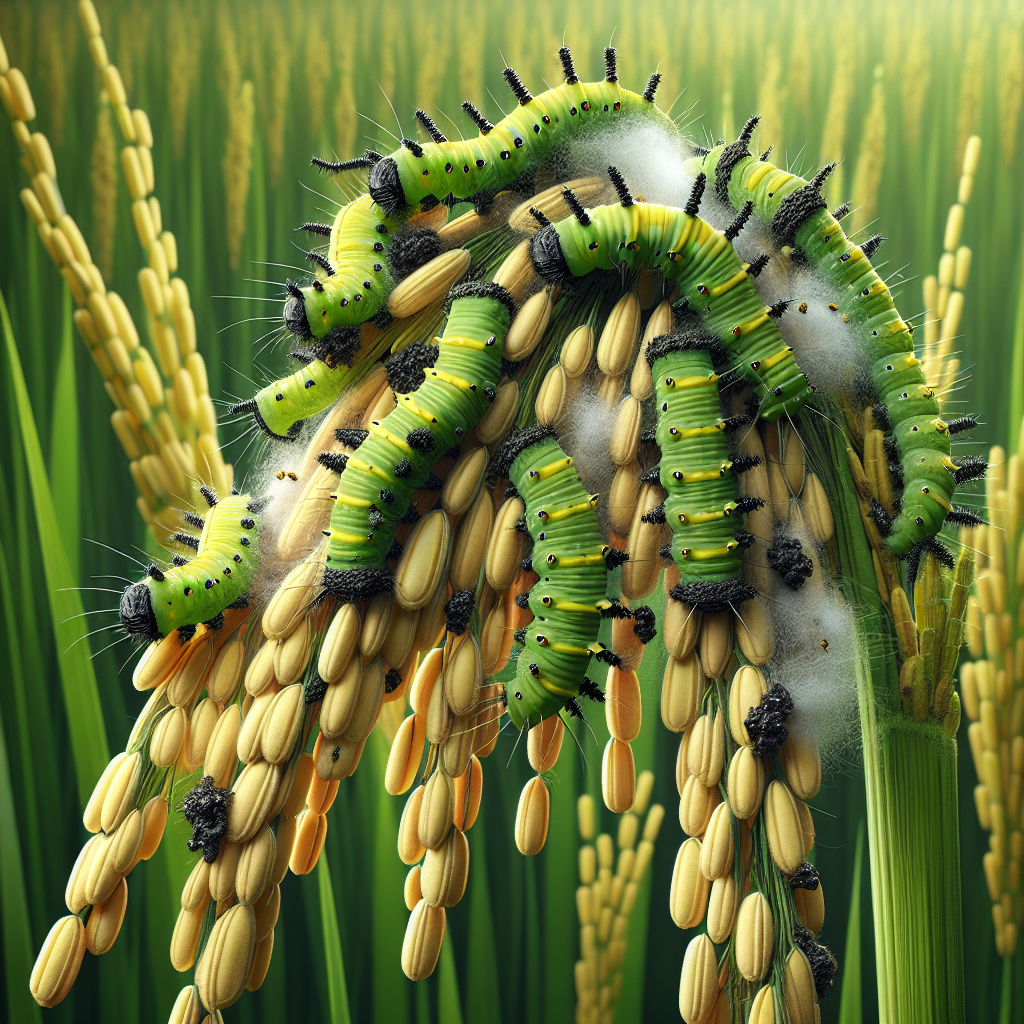
Introduction to earhead-feeding caterpillars
Earhead-feeding caterpillars represent a critical threat to cereal crop production worldwide, particularly in tropical and subtropical regions where rice, wheat, and other grains are staple foods. These pests, primarily larvae of moths from families like Noctuidae (e.g., rice ear-cutting caterpillar, Spodoptera litura) and Crambidae (e.g., paddy stem borer relatives), infest the reproductive structures of crops known as earheads or panicles. By burrowing into and feeding on developing grains, they can devastate yields, with losses reaching 20-50% in severe outbreaks. Farmers often first notice white or yellowish caterpillars webbing together grains, leading to empty, chaffy panicles that shatter easily during harvest.
Understanding earhead-feeding caterpillars is essential for grain growers, as these pests thrive in warm, humid conditions and can complete multiple generations per season. Unlike leaf-feeding caterpillars, which damage foliage, earhead feeders specifically target the harvestable portions, making them economically devastating. Early detection through scouting and integrated pest management (IPM) is key to minimizing damage. This guide provides diagnostic tools, lifecycle insights, and proven organic strategies to protect your rice and wheat crops effectively.
Identifying Symptoms & Damage
Diagnosing earhead-feeding caterpillar infestations requires keen observation during the crop's reproductive stages, typically from booting to milk grain development. Key symptoms include:
- Webbing and frass: Caterpillars spin silky webs that bind earhead parts together, filled with black fecal pellets (frass). Affected panicles appear hooded or bundled.
- Chaffy grains: Feeding hollows out grains, leaving only empty husks. Grains may turn grayish-white or brown, failing to fill properly.
- Earhead clipping: Young larvae clip earheads at the base, causing them to hang limp or drop prematurely—a hallmark of species like the rice ear-cutting caterpillar.
- Discoloration and drying: Infested earheads dry out prematurely, turning from green to straw-colored while adjacent healthy ones remain vibrant.
- Secondary damage: Honeydew from associated pests or sooty mold on residues can appear, but primary signs are larval presence (1-3 cm long, greenish-yellow with dark spots).
Damage severity escalates quickly; a single larva can destroy 10-20 grains. Scout by tapping panicles over a white tray—larvae and frass will fall out. Differentiate from armyworms by their ear-specific feeding versus broader plant damage. Yield losses correlate directly with infestation levels: 5% infested earheads can mean 10-15% grain loss.
To confirm, dissect earheads: live caterpillars tunneling inside confirm the pest. Monitor fields weekly from panicle initiation, focusing on borders near previous crop residues or weeds.
Lifecycle and Progression of earhead-feeding caterpillars
Earhead-feeding caterpillars undergo complete metamorphosis: egg, larva, pupa, adult moth. The lifecycle spans 25-40 days, allowing 4-6 generations in a single growing season.
- Eggs: Tiny (0.5 mm), flat, yellowish-white clusters of 50-200 laid on leaf undersides or earhead bases 5-10 days before infestation peaks.
- Larva (caterpillar): 6 instars over 15-20 days. Neonates are 1 mm, feeding on silk; mature larvae (2-3 cm) bore into grains. Colors vary: green, brown, striped.
- Pupa: Silken cocoons in leaf whorls or earhead debris, lasting 7-10 days.
- Adult: Nocturnal moths (20-30 mm wingspan, brown/gray with markings) live 5-10 days, females laying 300-1000 eggs.
Progression ties to crop phenology: eggs laid at booting, peak larval damage at flowering/grain fill. Overwinter as pupae in soil or stubble. In corn, similar species like corn earworm follow analogous cycles but with broader host range. Understanding this enables precise timing for interventions.
Environmental Triggers & Risk Factors
These caterpillars flourish in temperatures of 25-35°C with 70-90% humidity, common in monsoon seasons. Key triggers include:
- Warm, wet weather: Rainfall >100 mm/month boosts egg hatch and larval survival.
- Crop residues: Stubble from prior sorghum or rice harbors pupae.
- Nitrogen-rich fields: Excessive N fertilizers promote lush growth, attracting oviposition.
- Monocropping: Continuous cereal cycles without rotation amplify populations.
- Weedy borders: Alternate hosts like grasses sustain pests.
Risk spikes post-flood irrigation or in low-lying fields. Drought stress indirectly favors pests by weakening plants. Pair with head-feeding insects monitoring, as mixed infestations compound damage. Check for downy mildew which predisposes earheads.
Organic Control & Treatment Plans
Organic management emphasizes IPM, avoiding synthetics. Start with thresholds: treat if >5% earheads infested.
Cultural Controls:
- Destroy stubble post-harvest; flood fields briefly to drown pupae.
- Intercrop with marigold or thyme to repel moths.
- Time planting to avoid peak moth flights.
Biological Controls:
- Release Trichogramma wasps (egg parasitoids): 20,000/ha weekly for 3 weeks.
- Conserve predators like spiders, lacewings; avoid broad-spectrum sprays.
- Apply Bacillus thuringiensis (Bt) kurstaki at 1-2 kg/ha during early larval stages—highly effective, safe for beneficials.
Mechanical/Physical:
- Handpick larvae from borders.
- Use pheromone traps (10-15/ha) for monitoring/mass trapping.
- Light traps at night to capture adults.
Botanicals:
- Neem oil (5 ml/L) or azadirachtin sprays at 7-day intervals.
- Garlic-chili extracts as repellents.
Integrated plan: Scout → Trap → Bt/neem at egg hatch → Parasitoids. For severe cases, combine with Spring Pest Patrol: Organic AI Strategies to Shield Your Crops from Common Invaders. Efficacy: 70-90% reduction in populations.
Preventing earhead-feeding caterpillars in the Future
Prevention focuses on breaking lifecycle and resilience-building:
- Crop rotation: Alternate with legumes like chickpeas or lentils for 1-2 seasons.
- Resistant varieties: Plant tolerant hybrids e.g., rice cv. with tight panicle structure.
- Sanitation: Deep plow to bury pupae; rogue weeds.
- Fertilizer balance: Avoid excess N; use balanced NPK.
- Trap crops: Border plantings of susceptible sorghum attract and destroy pests.
- Monitoring tech: Use sticky traps, apps for moth counts.
Long-term: Enhance biodiversity with hedgerows of nasturtium. Annual field history tracking prevents outbreaks. Combined with soil health practices from Soil Health Mastery: 5 Proven Strategies for Small Farms to Build Fertile Ground Without Breaking the Bank, fields become resilient.
Crops Most Affected by earhead-feeding caterpillars
Primary targets are cereals:
- Rice (Oryza sativa): Worst hit, losses up to 30%.
- Wheat: Especially durum and bread varieties.
- Sorghum: Grain types vulnerable at milky stage.
- Pearl millet: Common in semi-arid zones.
- Barley: Two-row varieties.
Secondary: Corn, finger millet. Avoid confusion with pod borers on legumes. Global impact: Millions in losses yearly; Asia/Africa hardest hit.