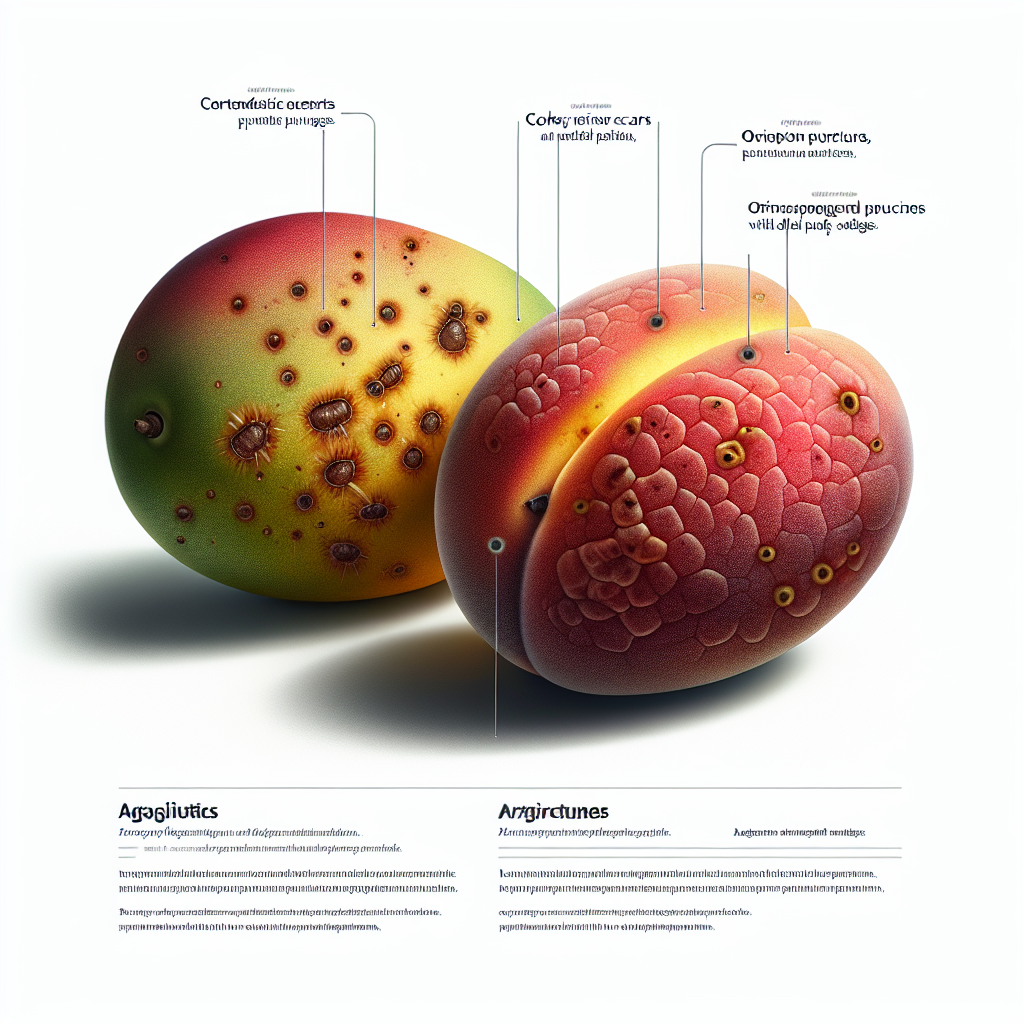
Introduction to Fruit-scarring insects
Fruit-scarring insects represent a critical challenge for fruit growers worldwide, encompassing a range of pests like fruit flies (Tephritidae family), leaffooted bugs, stink bugs, curculio weevils, and certain moth larvae that mar the exterior of developing fruits. These insects cause characteristic scarring through rasping mouthparts, oviposition punctures, or feeding that disrupts skin integrity, leading to corky, sunken, or discolored lesions. Such damage not only reduces cosmetic appeal and marketability—often rendering fruits ungraded for fresh sales—but can also create entry points for pathogens like anthracnose or fruit rots, exacerbating post-harvest losses.
In commercial orchards and small farms, fruit scarring can slash yields by 20-50% in severe infestations, particularly during warm, humid growing seasons. Common culprits include the Caribbean fruit fly (Anastrepha suspensa), Mediterranean fruit fly (Ceratitis capitata), plum curculio (Conotrachelus nenuphar), and leaf-footed bugs (Leptoglossus spp.). Early identification and integrated management are essential, as scarring appears during fruit swell stages. This guide draws on entomological research and practical field experience to equip growers with diagnostic tools, lifecycle knowledge, and organic strategies. For small farms, timely interventions can preserve profitability; check out Spring Pest Patrol: Organic AI Strategies to Shield Your Crops from Common Invaders for tech-enhanced monitoring tips.
Understanding these pests' behaviors allows for precise targeting, reducing reliance on broad-spectrum controls. We'll cover symptoms, lifecycles, triggers, treatments, prevention, and key crops, empowering you to protect your harvest.
Identifying Symptoms & Damage
Diagnosing fruit-scarring insects starts with recognizing distinct damage patterns on fruit exocarp (skin). Primary symptoms include:
Rasping Scars: Irregular, corky, or silvery scars from bugs like leaffooted bugs or stink bugs using stylet-like mouthparts to scrape epidermal cells for sap. Scars often appear as shallow depressions with darkened edges, clustered on fruit shoulders or undersides.
Oviposition Punctures: Tiny, dark punctures (0.5-1mm) from fruit flies or moths laying eggs under the skin. These may ooze gum or exude clear liquid, surrounded by callus tissue forming 'stings' or dimples.
Feeding Galleries: Curved slits or trenches from weevils like plum curculio, often with frass (insect waste) pellets. Larvae tunnel shallowly, causing sunken, crescent-shaped scars.
Advanced Damage: Cracking, lenticel enlargement, or secondary fungal growth (e.g., sooty mold) on scarred areas. Fruits may drop prematurely or show internal discoloration without deep rot.
Differentiate from abiotic issues: Wind rub causes broad abrasions without punctures; sunburn shows bleached, sunken spots without exudate. Use a hand lens to spot eggs, nymphs, or adults. For instance, leaffooted bug nymphs cluster gregariously, leaving rust-colored stains. Monitor weekly during bloom-to-fruit-set; threshold: 5% scarred fruit signals action. Compare with thrips damage, which is finer stippling, or mites, causing bronzing without punctures.
Photographic scouting aids diagnosis—scar patterns are species-specific. Plum curculio scars form neat 'D'-shapes; fruit fly stings radiate from a central hole. Harvest samples reveal larvae for confirmation.
Lifecycle and Progression of Fruit-scarring insects
Fruit-scarring insects exhibit 1-3 generations per season, timed to fruit development. Take fruit flies as exemplars:
Egg Stage (2-3 days): Laid singly or in clutches under skin via ovipositor punctures.
Larval Stage (5-15 days): Maggots feed on mesocarp, exiting to pupate in soil. Surface feeders like curculio larvae scar externally.
Pupal Stage (10-20 days): Soil-dwelling, non-feeding.
Adult Stage (weeks to months): Oviposition peaks at fruit pea-size; adults overwinter in leaf litter.
Bugs like leaf-footed complete 2-4 generations, nymphs rasping young fruits. Weevils overwinter as adults, emerging at petal fall. Progression accelerates in heat (>25°C/77°F), with diapause in cooler climates. Track degree-days (base 10°C) for predictions: e.g., Mediterranean fruit fly adults emerge at 300 DD.
Disrupt at vulnerable stages—target eggs/larvae with organics. Sanitation removes pupae; see fruit flies for specifics.
Environmental Triggers & Risk Factors
Warm, humid conditions (25-32°C, >70% RH) trigger outbreaks, favoring adult activity and rapid development. Drought stresses fruits, making skins brittle and attractive for rasping. Over-fertilization with nitrogen promotes lush growth, drawing sap-feeders.
Proximity to wild hosts (e.g., unmanaged mango or guava) serves as reservoirs. Poor pruning leads to dense canopies, shading fruits and retaining humidity. Monocultures amplify risks; interplanting repels pests.
Soil type matters—sandy soils aid pupation. Recent rains splash adults onto crops. Climate change extends seasons, increasing generations. Mitigate with airflow, irrigation scheduling, and resistant cultivars like thick-skinned Hass Avocado.
Organic Control & Treatment Plans
Organic management emphasizes IPM: monitor, disrupt, and conserve beneficials.
Monitoring: Yellow sticky traps for flies (1-4/ha); pheromone traps for moths. Shake branches over trays for bugs/weevils.
Cultural: Strip-pick damaged fruit; destroy cull piles. Prune for light penetration; mulch to deter soil pupation.
Biological: Release parasitoids (e.g., Fopius arisanus for flies); encourage ladybugs predators. Neem oil (0.5-2%) smothers eggs/nymphs—apply at dusk.
Organic Sprays: Spinosad (GF-120 bait) for flies/larvae; kaolin clay barriers deter feeding. Insecticidal soaps target soft-bodied nymphs.
Treatment Plan: Scout weekly; at 2% scarring, apply neem + spinosad rotations (7-10 day intervals, 3 apps). Border sprays hit influx. Kaolin post-petal fall reduces scarring 70%. Avoid bloom sprays to protect pollinators.
Preventing Fruit-scarring insects in the Future
Prevention builds resilient systems:
Sanitation: Fall cleanup removes 90% overwintering sites.
Barriers: Sleeve bags on clusters; fine netting (1.6mm mesh).
Trap Crops: Plant early tomato borders.
Biopesticides: Protein baits with entomopathogens.
Soil Health: Cover crops suppress pupae; see Soil Health Mastery: 5 Proven Strategies for Small Farms to Build Fertile Ground Without Breaking the Bank.
Annual rotation + monitoring prevents buildup. Calendar sprays unnecessary with IPM.
Crops Most Affected by Fruit-scarring insects
Citrus (orange, lemon), stone fruits (peach, plum, cherry), pome fruits (apple, pear), subtropicals (mango, avocado, dragon fruit), and berries (strawberry, blueberry) suffer most. Soft-skinned grapes scar easily from bugs; pineapple from mealybugs. Tropicals like papaya face fruit fly devastation. Thin-skinned cultivars worst-hit; manage per crop specifics.