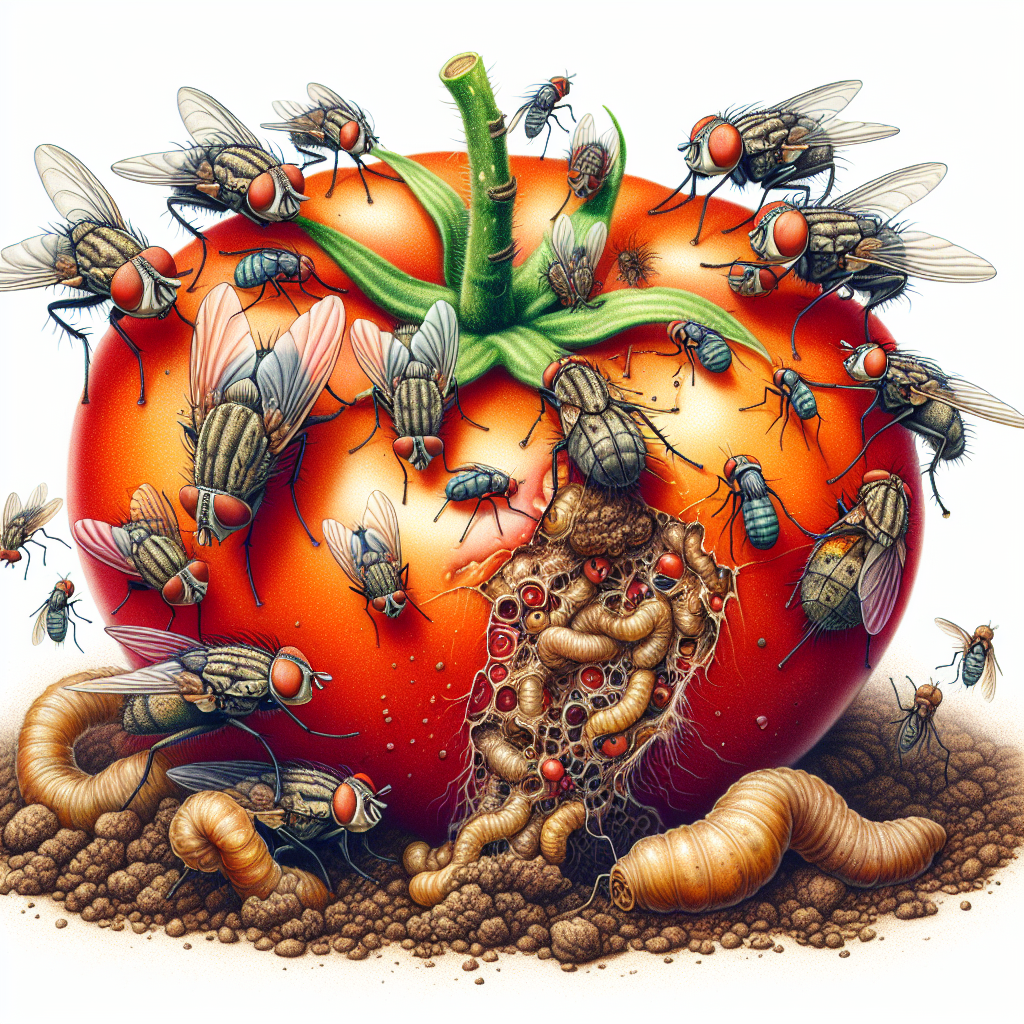
Introduction to flies
Flies (order Diptera) represent one of the most pervasive pest challenges in agriculture, affecting small farms, greenhouses, and large-scale operations worldwide. Unlike other insects with two pairs of wings, flies possess a single pair, with the hindwings reduced to halteres for balance. Over 160,000 species exist, but agricultural pests like fruit flies, fungus gnats, drain flies, and house flies dominate crop damage scenarios. These pests thrive in warm, humid environments, breeding rapidly in organic debris, overripe fruits, and moist soils.
In farming contexts, flies are notorious for vectoring pathogens such as bacteria and fungi, contaminating produce and causing secondary infections. Larvae (maggots) feed on roots, fruits, and seedlings, while adults spread contamination across fields. Economic impacts are staggering: global losses from fruit fly infestations alone exceed $2 billion annually. Small farms suffer disproportionately due to limited resources for monitoring. Early detection via sticky traps and sanitation is crucial. This guide equips growers with diagnostic tools, lifecycle insights, and organic strategies to reclaim productivity. For integrated pest management (IPM), understanding fly biology is foundational. Read our comprehensive Spring Pest Patrol: Organic AI Strategies to Shield Your Crops from Common Invaders for tech-enhanced tactics.
Identifying Symptoms & Damage
Fly infestations manifest through telltale signs, often mistaken for other pests like aphids or mites. Adult flies appear as small, buzzing insects (2-10mm), with species-specific traits: fruit flies (Drosophila spp.) have red eyes and tan bodies; fungus gnats (Bradysia spp.) are dark, mosquito-like with long legs; house flies (Musca domestica) are gray with four dark stripes.
Primary damage stems from maggots—white, legless larvae tunneling into fruits, roots, and stems. On tomato and cucumber, expect soft, mushy spots oozing clear liquid, often with dark entry points. Seedlings show stunted growth, wilting, and 'damping-off' where stems collapse at soil level, mimicking Pythium root rot. Fruits like strawberry and mango develop sunken lesions, accelerating rot.
Secondary symptoms include sooty mold from honeydew-like excretions (though less common than in whiteflies), and bacterial contamination leading to soft rots. Yellowing leaves, distorted growth, and webbing near soil indicate fungus gnat larvae feeding on roots. Inspect undersides of leaves and soil surfaces at dawn when adults are active. Use yellow sticky traps to quantify populations: >10 flies/trap/week signals infestation. Differentiate from beneficial flies by absence of predatory behaviors. Damage thresholds vary: 5% fruit infestation warrants action in high-value crops like avocado.
Lifecycle and Progression of flies
Flies undergo complete metamorphosis: egg, larva, pupa, adult. Lifecycle spans 7-30 days, accelerating in 25-30°C (77-86°F) with 70-90% humidity. Females lay 500+ eggs in moist, protein-rich substrates like compost, manure, or wounded fruits.
Eggs (0.2-1mm, white) hatch in 8-72 hours into maggots, which feed voraciously for 3-10 days across 3 instars, growing to 10mm. They pupate in soil or debris, forming brown cases for 3-20 days before emerging as adults living 15-30 days. Multiple generations (10-20/year) overlap, complicating control. Fungus gnats favor fungal-rich soils; fruit flies target fermenting matter.
Progression: Eggs near wounds → larval tunneling → pupation in soil → adult swarming. Monitor with soil cores and traps. Disrupt at larval stage via drenches. In greenhouses, 80% populations are soil-dwelling. Cold (<15°C) or dry conditions slow development; overwinter as pupae.
Environmental Triggers & Risk Factors
Flies explode in warm (20-35°C), humid (>70% RH) conditions with abundant organic matter. Poor sanitation—unburied crop residues, open compost, or spilled produce—triggers outbreaks. Overwatering creates ideal breeding media, especially in potato and lettuce beds.
Risk factors include dense planting reducing airflow, proximity to livestock/manure, and monsoon seasons. Injured crops from cutworms or hail invite oviposition. Greenhouse vents without screens allow influx. Soil pH >7 or high nitrogen favors gnats. Nearby weeds like clover host reservoirs. Climate change extends seasons, increasing pressure on perennials like banana.
Organic Control & Treatment Plans
Prioritize IPM: cultural, biological, mechanical, then botanicals. Cultural: Remove debris daily; bury residues >15cm deep. Solarize soil (clear plastic, 60°C for 4 weeks) kills pupae. Rotate crops; avoid susceptible sequences like cabbage post-manure.
Biological: Introduce nematodes (Steinernema feltiae) at 2M/m² for larvae; apply weekly. predatory mites (Hypoaspis miles) for gnats. Bacillus thuringiensis israelensis (BTI) targets larvae in water traps.
Mechanical: Yellow sticky traps (1/100m²); apple cider vinegar bait traps (1:3 vinegar-water + dish soap). Exclusion nets (0.5mm mesh). High-pressure water blasts adults.
Botanicals: Neem oil (0.5%) or pyrethrum sprays weekly; spinosad drenches for soil larvae. Diatomaceous earth (DE) on surfaces. Treatment plan: Week 1: Sanitation + traps; Week 2: Nematodes/DE; Week 3: Neem + monitor. Rotate modes to prevent resistance. Efficacy: 90% reduction in 4 weeks.
Preventing flies in the Future
Build resilience via sanitation protocols: Clean harvest tools, grade fruits promptly, compost off-site. Use row covers from planting. Mulch with coarse materials to deter oviposition. Monitor with traps; threshold: 5 flies/trap. Enhance biodiversity: Plant marigold borders, encourage birds. Improve drainage; aerate soils. Quarantine new plants. Seasonal prep: Tillage pre-planting exposes pupae. Long-term: Resistant varieties like hybrid squash. Annual audits prevent reinfestation.
Crops Most Affected by flies
Flies plague soft fruits and vegetables: Tomato, cucumber, strawberry, mango, banana, avocado, orange, grapes, lettuce, cabbage, potato. Greenhouse crops like eggplant and bell pepper suffer most from gnats. Field staples corn and onion face seedcorn maggots. Tropicals pineapple and papaya battle fruit flies. Losses peak in humid tropics/subtropics.