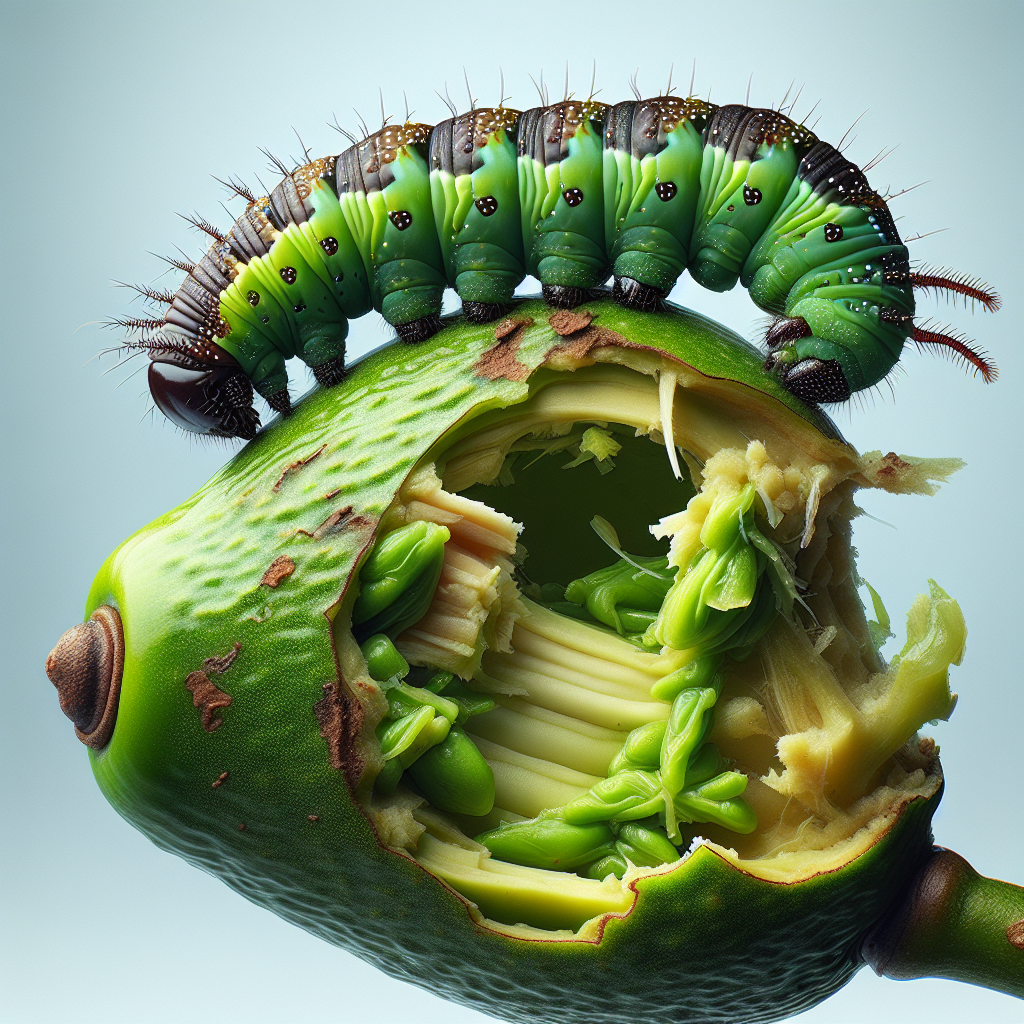
Introduction to Bud feeders
Bud feeders represent a critical threat to agricultural productivity worldwide, encompassing a range of insect larvae—primarily from the Lepidoptera order, such as Helicoverpa species, armyworms (armyworms), and other caterpillars—that specialize in devastating tender plant buds. These pests infiltrate the most vulnerable growth points of crops, chewing through protective scales to consume developing tissues, often resulting in catastrophic crop losses exceeding 50% in severe infestations. As a professional botanist and entomologist, I've witnessed bud feeders turn promising orchards and fields into barren landscapes, underscoring the need for this definitive diagnostic and management guide.
Understanding bud feeders is essential for farmers, horticulturists, and small-scale growers. These insects thrive in warm, humid conditions, targeting high-value crops during their most sensitive phenological stages. Early identification and intervention are key to minimizing damage, preserving yields, and maintaining economic viability. This guide draws from decades of field research and practical application, offering actionable strategies to combat bud feeders effectively. For small farms struggling with pest identification, resources like Why Misidentifying Plants Costs Small Farms Thousands - And How AI Camera Diagnosis Fixes It Fast can complement these efforts by enhancing diagnostic accuracy.
Bud feeders not only cause direct feeding damage but also open wounds that invite secondary infections like Botrytis or Alternaria. Their cryptic feeding behavior inside buds makes detection challenging until significant harm is done. Proactive scouting, integrated with organic management, forms the cornerstone of control. This comprehensive resource will equip you with the knowledge to diagnose, treat, and prevent bud feeder outbreaks, ensuring robust crop health and profitability.
Identifying Symptoms & Damage
Recognizing bud feeder activity requires keen observation of subtle early signs that escalate rapidly. Initial symptoms include small entry holes (1-3 mm) on bud scales, often frass-filled—dark, pellet-like insect droppings that resemble fine sawdust. Affected buds fail to expand, appearing shriveled, blackened, or 'blasted,' with internal tissues hollowed out by larval feeding. Severely damaged buds abort entirely, leading to blind shoots or clusters of deformed terminals.
Damage progression manifests as distorted growth: leaves emerge crinkled or webbed, flowers fail to open, and fruits develop unevenly or drop prematurely. In fruit crops like mango or avocado, buds show gummy exudates mixed with frass, while vegetables like tomato exhibit 'shot-hole' patterns from partial bud consumption. Differentiate from other pests: unlike aphids, bud feeders leave no honeydew; compared to thrips, damage is deeper and chew marks coarser.
Diagnostic tools include parting bud scales with forceps to reveal live larvae (1-20 mm, green to brown, often with dark heads). Use a 10x hand lens for confirmation. Yield impacts are profound: in Hass Avocado, bud feeders can reduce fruit set by 30-70%; in brassicas, they mimic caterpillars but target buds specifically. Monitor weekly during bud swell, recording infestation rates (>5% signals action). Secondary signs include sooty mold on frass or increased leaf spot diseases from wounds.
Lifecycle and Progression of Bud feeders
Bud feeders exhibit complete metamorphosis, with four stages: egg, larva (bud-feeding stage), pupa, and adult moth. Eggs are laid singly or in clusters (10-50) on tender buds or nearby leaves, spherical, 0.5-1 mm, cream-colored, hatching in 3-7 days at 25-30°C. Larvae progress through 5-7 instars over 10-21 days, starting as 'miners' then becoming voracious bud destroyers. Early instars skeletonize tissues; later ones bore deep, exiting to pupate in soil or debris.
Pupae (8-15 mm, brown) overwinter or persist 7-14 days before adults emerge. Moths are nocturnal, 15-30 mm wingspan, with patterns aiding ID (e.g., Helicoverpa's spotted abdomen). There are 2-6 generations annually, synced to crop phenology—peaking during bud break. Progression accelerates in tropics (30-45 day cycle) versus temperate zones (60+ days with diapause). Overwintering pupae survive as deep as 20 cm soil, emerging with spring warmth.
Understanding timing is crucial: scout 7-10 days post-bloom for neonates. Lifecycle knowledge informs controls, targeting eggs/larvae when 80% vulnerable. In ghost pepper, synchronize with flowering; in perennials, track degree-days (>500 DD base 10°C signals risk).
Environmental Triggers & Risk Factors
Bud feeders proliferate under specific conditions: temperatures 20-32°C, humidity >70%, and mild winds aiding moth dispersal. Over-fertilization with nitrogen promotes succulent buds, prime targets; drought-stressed plants show resilience via tougher tissues. Poor sanitation—unremoved debris harbors pupae—increases risk 3x. Monocultures amplify outbreaks; nearby corn fields serve as reservoirs for Helicoverpa.
Risk factors include planting susceptible varieties during peak flights, inadequate irrigation, and adjacent weedy borders hosting alternate hosts like caterpillars. Climate change extends seasons, boosting generations. Soil types matter: sandy loams retain fewer pupae than clays. Assess farm risk via history (>10% prior loss = high) and proximity to wild hosts. Mitigate with diverse rotations and windbreaks.
Organic Control & Treatment Plans
Organic management emphasizes IPM: prevention first, then biological, mechanical, then targeted botanicals. Monitoring: Use pheromone traps (1-2/ha) for adults; delta traps catch 20-50 moths/week signaling larvae soon. Scout 20-50 buds/10 sites, treat at 5-10% infestation.
Biological: Deploy Trichogramma wasps (release 50,000/ha weekly for 4 weeks) parasitizing 60-80% eggs. Bacillus thuringiensis (Bt) kurstaki (1-2 kg/ha, evenings) kills 90% neonates; reapply 7 days. Predators like lacewings (Spring Pest Patrol: Organic AI Strategies to Shield Your Crops from Common Invaders) boost efficacy.
Mechanical: Hand-pick larvae mornings; destroy >90% small populations. Kaolin clay barriers (30-50 g/L) deter oviposition 70%. Spinosad (0.5 L/ha, OMRI-approved) for outbreaks, <2 apps/season.
Treatment Plan: Week 1: Scout/trap. Week 2: Bt + Trichogramma if >5%. Week 3: Spinosad if >15%, mulch debris. Rotate modes avoid resistance. Efficacy: 85-95% yield protection.
Preventing Bud feeders in the Future
Prevention hinges on cultural resilience: Plant resistant varieties (e.g., thick-budded apple). Time planting post-peak flights. Rotate crops, interplant repellents like thyme, marigold. Maintain sanitation: deep plow post-harvest buries 70% pupae; flaming debris kills surface pupae.
Mulch suppresses soil emergence; reflective mulches confuse moths. Biodiverse hedgerows foster predators. Monitor degree-days for preemptive Bt. Long-term: select fields >500m from reservoirs. Annual audits reduce incidence 80%. Integrate with Soil Health Mastery: 5 Proven Strategies for Small Farms to Build Fertile Ground Without Breaking the Bank for robust plants.
Crops Most Affected by Bud feeders
Bud feeders plague tender-budded crops: fruits like mango, avocado, Hass Avocado, cherry; vegetables tomato, bell pepper, eggplant, ghost pepper; ornamentals roses, citrus. High-value perennials suffer most: grapes lose 20-40% clusters; strawberry buds abort. Field crops corn, sorghum see tassel damage. Tropicals banana, dragon fruit vulnerable during flushes. Mitigation tailored per crop yields best results.