Introduction to Botryosphaeria panicle and shoot blight
Botryosphaeria panicle and shoot blight, caused primarily by the fungus Botryosphaeria dothidea and related species like Neofusicoccum and Lasiodiplodia, is a serious disease impacting fruit and nut trees worldwide. This pathogen infects through wounds or natural openings, colonizing vascular tissues and causing dieback, blight, and fruit rot. First identified in the early 20th century on pecans and peaches, it has since spread to numerous hosts, posing challenges to commercial orchards and home gardens alike.
The disease manifests as blighting of panicles (flower clusters), shoots, and leaves, often resulting in 20-80% yield reductions in severe cases. In pecan orchards, for instance, infected panicles blacken and shrivel, dropping prematurely and reducing nut production. Symptoms mimic other blights like anthracnose or Botrytis, making accurate diagnosis essential. Warm, humid climates accelerate spore dispersal via rain splash and wind, with infections peaking during spring bloom and summer rains.
Understanding this disease is crucial for growers of susceptible crops. Early detection prevents canker formation and tree decline, while integrated management combines cultural practices, sanitation, and organic treatments. This definitive guide equips agricultural professionals, orchard managers, and small-scale farmers with practical, evidence-based strategies to diagnose, manage, and prevent Botryosphaeria blight, safeguarding yields and tree health. For more on small farm optimization, check this insightful blog post on zoning farm chaos.
Identifying Symptoms & Damage
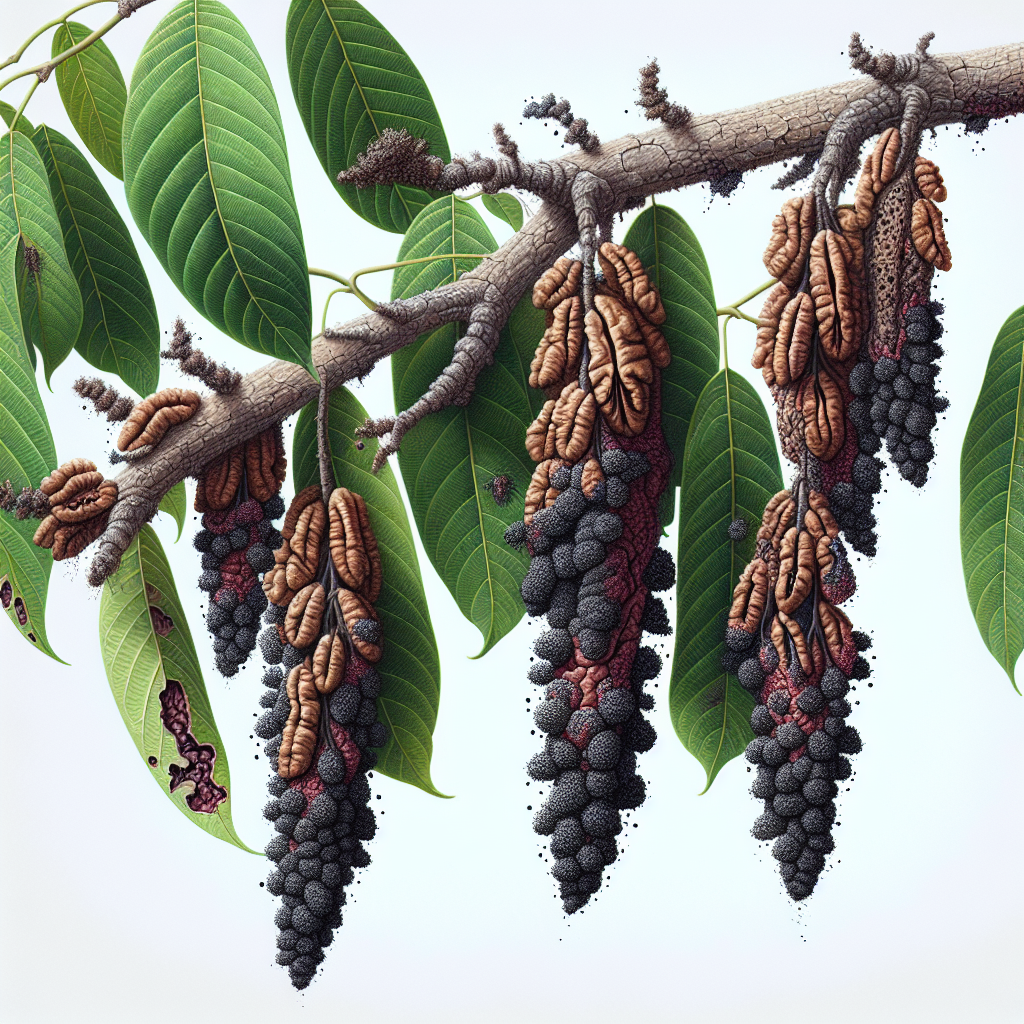
Recognizing Botryosphaeria panicle and shoot blight early is key to limiting spread. Initial symptoms appear on panicles during bloom: flowers turn brown, shrivel, and fail to set fruit, often with black pycnidia (fungal fruiting bodies) visible as tiny black dots on blighted tissues. Affected panicles hang limp, blackening from the base outward, and drop prematurely.
Shoot infections start as small, sunken lesions on young twigs, expanding into cankers with dark borders. Leaves on blighted shoots wilt, turn necrotic, and remain attached, giving a 'shepherd's crook' appearance. In advanced stages, reddish-brown streaks appear under bark, and gummy exudate may ooze from cracks. Branch dieback follows, with longitudinal cracks and callus formation around cankers.
Fruit damage includes rot at the stem end, with dark, sunken lesions spreading to the entire nut or drupe. In pecan trees, shucks blacken and fail to open; in peach, fruits mummify. Damage severity varies: mild infections cause 10-30% panicle loss, while epidemics can girdle branches, killing entire limbs. Differentiate from Phytophthora by the absence of white mycelium and presence of pycnidia. Lab confirmation via culturing or PCR is recommended for precise identification.
Economic impacts are profound: in California pecan groves, losses exceed $1 million annually. Yield reductions compound over years as weakened trees succumb to secondary pests like borers. Regular scouting during wet periods—examine 20-50 panicles per tree—enables timely intervention.
Lifecycle and Progression of Botryosphaeria panicle and shoot blight
Botryosphaeria dothidea is a latent endophyte, living asymptomatically in healthy tissues before activating under stress. The lifecycle begins with conidia (asexual spores) exuded from pycnidia in pink tendrils during rain. These splash-disperse up to 1-2 meters or spread via wind over longer distances.
Infection occurs through wounds from pruning, hail, or insects, or natural lenticels on shoots and panicles. Optimal conditions (25-30°C, >90% humidity) allow germination within 6-12 hours. Hyphae colonize cortex and xylem, producing toxins that kill tissues. Symptoms appear 2-4 weeks post-infection.
Ascospores (sexual stage) form in pseudothecia on dead wood during fall-winter, maturing with alternating wet-dry cycles. Overwintering in cankers ensures survival; one-year-old wood harbors most inoculum. Progression: spring infections blight blooms (primary yield loss); summer hits shoots (structural damage); fall infects fruit (quality loss). Polycyclic nature enables multiple generations per season.
In peach orchards, disease progresses from panicle blight to shoot cankers, leading to scaffold branch dieback within 2-3 years if unchecked. Understanding this cycle informs timing: prune post-harvest to remove inoculum before spring rains. For detailed wiki info, see Botryosphaeria cankers.
Environmental Triggers & Risk Factors
Botryosphaeria thrives in warm (20-32°C), humid environments with frequent leaf wetness (>12 hours). Spring rains during bloom are critical for panicle infections; summer droughts stress trees, activating latent infections. High nitrogen fertilization promotes succulent growth, increasing susceptibility.
Risk factors include mechanical injury (pruning wounds, hail), drought stress, and poor vigor from overcropping or root damage. Susceptible varieties like 'Desirable' pecan or 'Redhaven' peach fare worse. Dense canopies trap moisture, while overhead irrigation splashes spores.
Soil compaction and poor drainage exacerbate root stress, mimicking root rot. Climate change intensifies risks with erratic rains. In the southeastern U.S., incidence peaks after mild winters. Monitor weather: >90% RH for 48 hours signals high risk.
Organic Control & Treatment Plans
Organic management emphasizes prevention, but active treatments curb spread. Sanitation first: Prune infected parts 12-18 inches below symptoms during dry periods (late summer/fall), removing >90% inoculum. Destroy debris; avoid chipping near orchards.
Cultural practices: Improve air circulation via selective pruning (open-center for peaches). Irrigate deeply but infrequently; mulch to retain moisture without wetting foliage. Balance nutrition: avoid excess N; apply compost teas for micronutrients.
Biological controls: Apply Trichoderma spp. or Bacillus subtilis (e.g., Serenade) to wounds post-pruning. These antagonize Botryosphaeria via mycoparasitism and antibiotics. Efficacy: 40-60% reduction in canker expansion.
Organic fungicides: Copper-based (e.g., Bordeaux mix) at bloom and shuck split; rotate with potassium bicarbonate. Neem oil suppresses spore germination. Timing: 3 applications at 10-14 day intervals during high-risk periods. Trials show 50-70% control on pecans.
Resistant varieties and rootstocks: Select tolerant cultivars like 'Pawnee' pecan. Integrated plans reduce losses by 80%. Monitor with sticky traps for vectors; encourage predators like ladybugs indirectly.
Step-by-step plan: 1) Scout weekly; 2) Prune sanitize; 3) Apply biofungicide; 4) Fertilize balanced; 5) Reassess post-rain.
Preventing Botryosphaeria panicle and shoot blight in the Future
Prevention hinges on resilience: maintain vigorous trees via integrated soil health. Test soil annually; amend with lime for pH 6.0-7.0. Use cover crops like clover to suppress weeds and build mycorrhizae.
Site selection: Avoid low-lying frost pockets; ensure good drainage. Prune annually to remove deadwood, entering cuts with 10% bleach. Time pruning for rapid healing (dry weather). Windbreaks reduce hail damage.
Resistant cultivars: 'Elliot' pecan, 'Contender' peach. Quarantine new plantings; propagate from clean stock. Monitor hyper-local weather for alerts—rainfall >0.5 inches triggers sprays. Long-term: Diversify orchards to buffer losses.
Organic IPM: Combine sanitation (80% effective), bio-controls (boost immunity), and cultural stress reduction. Annual audits track progress; expect <5% incidence with diligence.
Crops Most Affected by Botryosphaeria panicle and shoot blight
Primarily woody perennials in Rosaceae and Juglandaceae. Pecans (Desirable Pecan, Stuart): Panicle blight causes 50% nut loss. Peaches (Elberta Peach): Shoot dieback, fruit rot. Pecans lead U.S. losses.
Others: Almond (branch cankers), Walnut (twig blight), Grapes (cankers), Apple, Pear, Cherry, Plum, Pomegranate, Olive, Avocado, Pistachio (Kerman Pistachio), Fig (Brown Turkey Fig). Tropicals like Mango and Guava in humid areas. Avoid confusion with powdery mildew on berries. Global reports from U.S., Australia, South Africa.