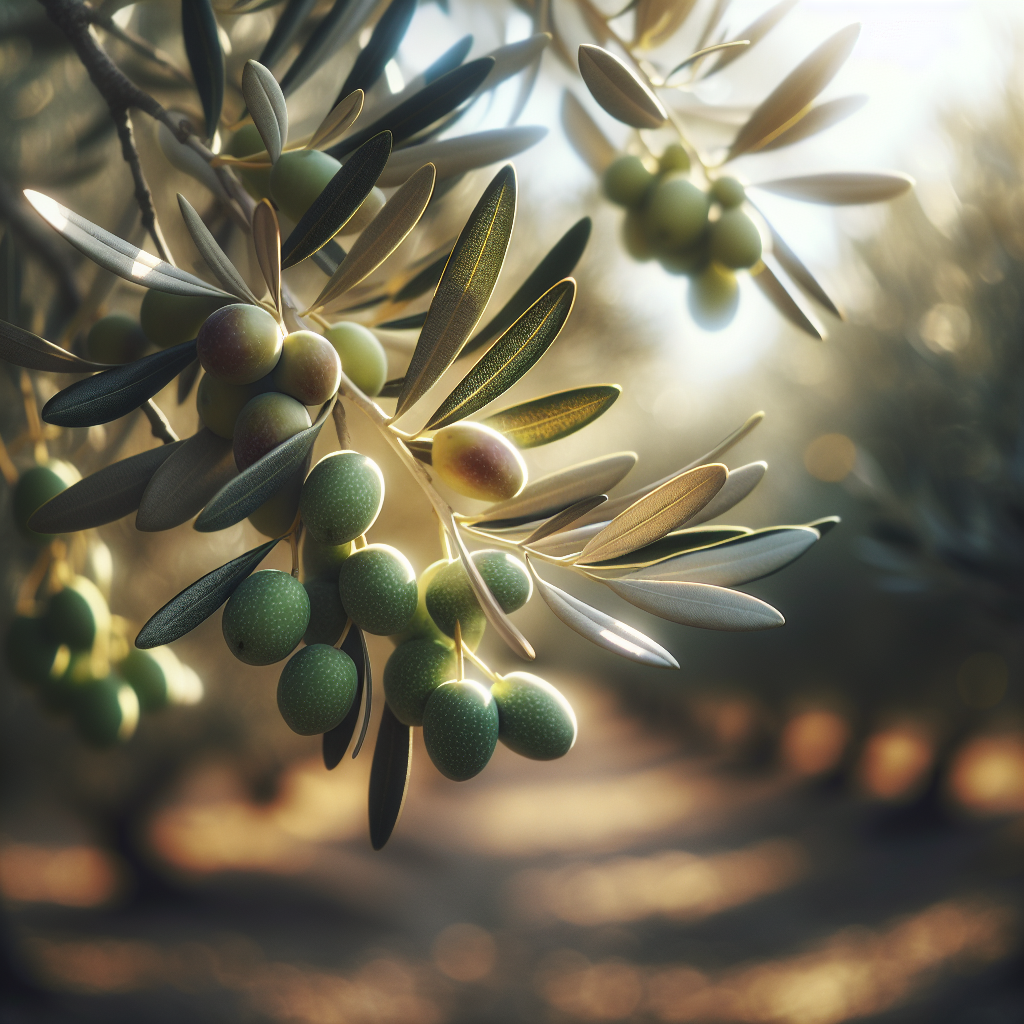
Introduction to Olive
One of the oldest cultivated fruit trees in human history, olive has been grown for thousands of years across the Mediterranean Basin, West Asia, and later in California, South America, Australia, and other dry subtropical regions. It is both an agricultural crop and a cultural symbol, associated with longevity, peace, and endurance. Many orchards remain productive for decades, and some trees survive for centuries when managed correctly.
Commercially, olives are divided into two broad use classes: oil olives and table olives, though some cultivars can serve both purposes. This distinction matters because fruit size, flesh-to-pit ratio, oil content, harvest timing, and processing methods differ significantly. Table cultivars are generally larger with more flesh and lower relative oil concentration, while oil cultivars often bear smaller fruit with higher extractable oil content and more concentrated aroma compounds.
From a grower’s perspective, olive is often described as hardy and low-input, but that description can be misleading. Olive survives neglect better than many fruit crops, yet profitable production requires precision. Alternate bearing, poor pollination under unfavorable weather, excessive vegetative growth from nitrogen overuse, salinity stress, and root diseases in wet soils can all drastically reduce yield. In other words, olive is forgiving of drought and poor fertility up to a point, but not forgiving of poor drainage, chronic overwatering, or bad orchard design.
Modern olive production also benefits from understanding cultivar behavior. Some varieties are strongly upright, others spreading; some are self-fertile but still crop better with a pollinizer; some tolerate colder winters, while others excel in warmer, low-chill districts. Matching the cultivar to the site is more important in olives than many new growers realize. If you already grow dryland fruit trees, comparing orchard planning with a crop like Fig can help frame spacing, canopy control, and drought adaptation.
Botanical Profile of Olive
Olive belongs to the family Oleaceae, the same family as ash, jasmine, lilac, and privet. It is an evergreen, broadleaf, subtropical tree with a naturally gnarled trunk, gray bark, and narrow, opposite leaves that are dark green above and silvery beneath. That silvery underside is not merely ornamental; it reflects light and reduces water loss, an adaptation that contributes to olive’s ability to withstand hot, dry summers.
The species Olea europaea is highly variable, with hundreds of named cultivars developed over centuries of regional selection. Common commercial cultivars include Arbequina, Koroneiki, Picual, Frantoio, Leccino, Manzanillo, Kalamata, and Mission. Arbequina is compact, precocious, and widely used in high-density plantings. Koroneiki is famous for high-quality oil and strong productivity. Manzanillo is a classic table olive but can be disease-prone in humid climates. Frantoio is a valued pollinizer in mixed orchards because it produces abundant viable pollen.
Olive flowering usually occurs on one-year-old shoots that arose from the previous season’s growth. This botanical detail directly shapes pruning strategy: if you prune too hard every year, you remove the wood that should carry the next crop. The flowers are typically small, cream to white, and borne in panicles from leaf axils. Trees can produce perfect flowers and staminate flowers in varying proportions depending on cultivar and conditions. Poor carbohydrate reserves, excessive nitrogen, heat stress, cold damage, or water imbalance can all increase flower abortion and reduce fruit set.
The root system is generally wide-spreading rather than deeply taprooted in cultivated conditions, especially in irrigated orchards. Most feeder roots concentrate in the upper soil profile where oxygen availability is highest. This explains why olives can handle drought far better than waterlogging: roots are physiologically adapted to searching through aerated, mineral soils, not sitting in saturated ground.
Fruit is a drupe, consisting of skin, flesh, and a hard stone surrounding the seed. As olives mature, they transition from green to straw-green, then turning shades of red-purple, violet, and black depending on cultivar and ripeness. Oil accumulates in the flesh as the fruit matures, but waiting too long may reduce sensory quality, increase fruit drop, or elevate disease pressure.
Soil, pH, and Climate Requirements for Olive
The single most important soil requirement is drainage. Olive tolerates rocky, calcareous, sandy, and relatively low-fertility soils, but it performs poorly in heavy, compacted, or continuously wet ground. Ideal soil texture is sandy loam to loam with moderate structure and rapid internal drainage. Clay soils can work if planted on berms or ridges and improved with deep ripping before establishment, but poorly drained subsoil remains a major risk.
Optimal soil pH falls roughly between 6.0 and 8.5, with excellent performance often seen in slightly alkaline Mediterranean-type soils. Unlike acid-loving fruit crops, olive can thrive in calcareous ground as long as micronutrient availability, especially iron, remains adequate. In high-pH soils above about 8.2, iron chlorosis may appear as yellowing young leaves with green veins. Repeated chlorosis indicates the need for chelated iron, improved root aeration, and more careful water management rather than simply adding more fertilizer.
Climate is best described as Mediterranean: cool to mild winters, hot dry summers, strong sunlight, and low summer humidity. Olives need some winter chilling to induce reliable flowering, though the exact requirement varies by cultivar and is generally lower than most deciduous fruits. Many perform best where winter temperatures provide enough cool hours without severe freeze injury. Trees can survive brief drops below freezing, but damage risk rises when temperatures fall below about -7 to -10°C, especially for young trees, warm-acclimated trees, or cold-sensitive cultivars. Flowers and newly set fruit are more vulnerable than dormant wood.
High humidity and frequent summer rain are major constraints. These conditions favor fungal leaf diseases, fruit rots, and poor oil quality. In humid subtropical zones, site selection becomes critical: choose slopes with strong air movement, avoid frost pockets and enclosed basins, and maintain open canopies. If your region is wetter than classic olive country, focus on drainage, airflow, and disease-tolerant cultivars from day one.
Olive is considered drought tolerant, but drought tolerance is not the same as maximum productivity. Mature rainfed trees can survive long dry periods, yet fruit size, oil yield, and return bloom often improve markedly under regulated irrigation. The best system is deep, infrequent watering that moistens the main root zone while allowing the soil surface to dry between events. Soil should be moist but never constantly saturated. As a practical benchmark, the upper 5 to 8 cm may dry between irrigations, while the root zone down to 30 to 60 cm should rewet thoroughly during irrigation cycles.
Salinity tolerance is moderate compared with many fruit trees, but chronic salt accumulation still reduces vigor, leaf health, and fruiting. Good-quality irrigation water is preferred. Where salinity is unavoidable, periodic leaching in well-drained soils and organic matter improvement can help. For broader soil-building principles relevant to orchard establishment, see soil health tips.
Step-by-Step Planting & Propagation
Start with certified, disease-free nursery plants from a reputable source. This is especially important because latent pests, root disorders, and mislabeled cultivars can compromise an orchard for years. Select cultivars based on end use, climate adaptation, and pollination compatibility. In many regions, mixing a main cultivar with 10 to 15% compatible pollinizer trees improves fruit set, especially where spring weather is unpredictable.
Planting begins with site preparation. Clear perennial weeds, test soil pH and nutrients, and correct major physical issues before trees go in the ground. Deep rip compacted rows if needed, but only when soil moisture is right; ripping wet clay often creates smearing rather than true fracture. On marginally drained land, build raised beds or berms 30 to 50 cm high to keep the crown above saturated layers.
Spacing depends on system. Traditional orchards may use 6 x 6 m to 8 x 8 m spacing. Intensive orchards commonly range around 5 x 3 m to 6 x 4 m. Super-high-density hedgerow systems can be much tighter, often with compact cultivars such as Arbequina, but these systems demand mechanization, irrigation precision, and annual canopy control. Home growers should favor enough space for sunlight penetration and access rather than crowding trees too closely.
Plant in early spring after danger of severe frost, or in mild-winter climates plant in autumn so roots establish before summer heat. Dig a hole no deeper than the root ball and two to three times as wide. Set the tree so the top of the nursery root ball sits level with or slightly above surrounding soil. Planting too deep is a common and serious mistake; buried crowns invite rot and weak growth.
Backfill with native soil rather than heavily amended compost mixes, which can create texture discontinuities that impede root exploration. Water immediately after planting to settle soil around roots. Apply mulch 5 to 10 cm deep over the root zone, but keep it at least 10 cm away from the trunk to avoid moisture accumulation and rodent damage.
Propagation is usually by semi-hardwood cuttings, rooted under mist with bottom heat and hormone treatment. This preserves cultivar identity, unlike seed propagation, which produces highly variable offspring and is mostly used for breeding or rootstock work. Grafting is less common than in many fruit trees but may be used for top-working or changing cultivars in established orchards.
During the first year, remove only damaged branches and select a framework. Many growers train olives to a single trunk with an open vase or modified central structure, depending on harvest method. Keep scaffold branches well distributed vertically and radially so future weight is balanced.
Care & Maintenance regimes for Olive
Young olives need consistent establishment care for the first two to three years. Irrigate often enough to prevent severe moisture stress, but not so often that soil stays wet for long periods. In sandy soils, this may mean smaller, more frequent irrigation events. In loam or clay loam, longer intervals are preferable. A useful field test is to dig 20 to 30 cm down near the drip line: soil should feel cool and slightly moist, not sticky, sour-smelling, or gray from anaerobic conditions. Overwatered olives often show pale leaves, weak extension growth, tip dieback, or leaf drop that can be mistaken for drought stress.
Once established, water demand depends on crop load, canopy size, temperature, wind, and soil type. Critical periods include flowering, fruit set, pit hardening, and oil accumulation. Severe drought during flowering can reduce fruit set; severe stress during fruit enlargement reduces size; excess water late in the season can dilute oil concentration and encourage disease in humid climates. Regulated deficit irrigation is sometimes used commercially to balance yield and oil quality, but this requires experience and local calibration.
Fertilization should be based on leaf analysis, soil testing, and tree performance, not guesswork. Nitrogen is usually the primary nutrient affecting growth and yield. Deficiency appears as pale foliage, short shoots, and poor flowering. Excess nitrogen causes overly vigorous, shaded canopies, more sucker growth, and sometimes reduced fruiting or heightened disease susceptibility. Mature orchards often receive modest split nitrogen applications from late winter through early summer. Potassium is important for fruiting and drought tolerance, especially in bearing years. Boron, zinc, and iron may be needed in deficient soils.
Pruning is essential but should be strategic, not aggressive. Olive bears on the previous season’s shoots, so the objective is to maintain a balance between renewal wood and fruiting wood. Remove dead, diseased, crossing, and inward-growing branches. Thin dense interior growth to improve light penetration and air circulation. Eliminate root suckers and vigorous water sprouts unless one is needed to replace an aging scaffold. Heavy pruning can trigger excessive vegetative growth and contribute to alternate bearing.
Alternate bearing, the tendency to produce a heavy crop one year and a lighter crop the next, is common in olive. To moderate it, maintain balanced nutrition, avoid severe drought in on-years, harvest on time, and prune annually but moderately. Allowing an excessive crop to remain too long on the tree can suppress return bloom the following season.
Weed management matters most in the root zone of young trees. Keep a vegetation-free strip around the trunk for the first few years, using mulch, shallow cultivation, hand weeding, or carefully managed organic methods. Avoid repeated deep cultivation that damages surface roots. In mature orchards, a managed cover crop between rows can improve infiltration and reduce erosion, provided it does not compete excessively for water.
Winter protection may be necessary in marginal climates. White trunk paint diluted with water can reduce sunscald on young trunks after freezes. In frost-prone sites, avoid late-season nitrogen that promotes tender growth. Good air drainage, clean orchard floors, and avoiding low pockets all reduce frost severity.
Pests, Diseases & Organic Management
Olive pests vary by region, but several are globally important. Olive fruit fly is among the most destructive, laying eggs in fruit and causing tunneling, premature drop, lower table quality, and poorer oil quality through oxidation and microbial entry. Monitoring with traps is essential. Organic management may include mass trapping, bait sprays based on spinosad where permitted, sanitation through prompt harvest, and destruction of infested dropped fruit.
Scale insects, Black scale in particular, can weaken trees and lead to honeydew and sooty mold. These pests often flare where canopies are overly dense or natural enemies are disrupted. Pruning for airflow, avoiding excess nitrogen, and applying horticultural oil during vulnerable life stages are core management tools in organic systems.
Spider mites may increase under hot, dusty conditions, especially in stressed orchards. Dust suppression, adequate irrigation, and preservation of predatory mites help keep populations below damaging thresholds. Thrips occasionally scar fruit in some districts.
Among diseases, Peacock spot, caused by a fungal pathogen, is especially common in humid or rainy climates. It produces circular dark leaf spots, followed by defoliation that weakens trees and reduces productivity. Good air circulation, sanitation, resistant cultivars where available, and approved copper-based sprays timed to rainfall periods are common organic approaches.
Olive knot, caused by Pseudomonas savastanoi, forms rough tumorous galls on twigs and branches, often entering through wounds from hail, pruning, or frost. Prevention is crucial: prune during dry weather, disinfect tools when moving between infected blocks, avoid unnecessary injury, and remove diseased wood well below visible symptoms.
Verticillium wilt can be devastating in soils previously planted with susceptible hosts. The pathogen persists in soil and causes wilting, dieback, and branch death. Prevention through site selection is far more effective than treatment. Avoid planting olives where solanaceous vegetables, cotton, or other susceptible crops had a history of wilt. Good drainage and tree vigor help, but there is no simple cure once soil is infested.
Root rots, including Phytophthora problems, are closely tied to poor drainage and overirrigation. Symptoms include dull foliage, reduced shoot growth, leaf drop, and eventual dieback. The best organic management is prevention: raised planting, careful irrigation scheduling, and never allowing water to pond around the trunk.
Birds can remove ripening fruit in some areas, especially from small orchards or isolated trees. Netting, reflective deterrents, and synchronized harvest reduce losses. Rodents may damage bark of young trees under thick mulch if mulch touches the trunk.
An effective organic program is built around prevention, observation, and orchard hygiene: resistant cultivars, balanced nutrition, trap monitoring, clean harvest practices, timely pruning, and strong soil drainage. Reactive spraying alone rarely solves chronic olive health issues.
Harvesting, Curing & Optimal Storage
Harvest timing depends on whether the crop is destined for table use or oil. Table olives are often harvested green at full size but before color change, or later for specific black olive styles depending on cultivar and processing method. Oil olives are harvested from the turning-color stage through fuller maturity, depending on the desired balance of yield, bitterness, polyphenols, and aroma.
For oil production, earlier harvests generally produce greener, more pungent oils with higher polyphenol content but lower extraction volume. Later harvests usually raise oil yield per kilogram of fruit but may soften flavors and increase the risk of fruit damage or drop. The best harvest window is therefore not simply the latest possible date, but the point where oil quality and quantity align with your production goals.
Fruit should be handled gently. Bruising accelerates enzymatic breakdown and degrades both table quality and oil character. Hand harvesting, small rakes, pneumatic combs, and trunk shakers are all used depending on scale. Keep harvested fruit shaded and cool. For oil, mill the olives ideally within 24 hours, and certainly as quickly as possible, because delays reduce aroma quality and increase defects.
Fresh olives are naturally bitter due to phenolic compounds, especially oleuropein, and must be cured before eating. Common curing methods include brine curing, dry salt curing, water curing followed by brine, and lye curing for certain commercial styles. Brine concentrations often range from about 8 to 12% salt depending on method, fruit stage, and fermentation strategy. Containers must stay clean, fruit fully submerged, and fermentation monitored for off-odors or surface yeast issues.
For short-term storage before curing or milling, keep harvested olives cool, dry, and ventilated; do not pile them deeply in sacks where heat builds. Oil should be stored in stainless steel or dark glass, completely protected from light, heat, and oxygen. Ideal storage temperature is cool and stable, often around 15 to 18°C. Exposure to air and warmth rapidly diminishes fruitiness and may create rancid or flat flavors.
Table olives in brine should remain submerged and stored in sanitized containers. Once opened, refrigeration extends quality. For home producers, labeling each batch with cultivar, harvest date, curing method, and salt percentage helps refine future results.
Companion Planting for Olive
In olive systems, companion planting is less about close intercropping under the canopy and more about whole-orchard ecology. The best companions are species that improve pollinator activity, support beneficial insects, protect soil, and do not create excessive competition for water near young trees. Because olive orchards are often grown in water-limited environments, underplanting must be chosen carefully.
Low-growing legumes such as clovers, medics, or vetches can serve as seasonal alley covers in orchards with enough winter moisture. They help reduce erosion, support soil biology, and may contribute modest nitrogen through fixation. Flowering insectary species such as alyssum, dill, fennel, phacelia, and certain native wildflowers can support parasitoids and predators that suppress scale and other orchard pests. In dry regions, confine these covers to alleyways rather than the immediate tree row.
Avoid aggressive perennial companions directly around trunks, especially during establishment. Deep-rooted grasses and thirsty herbs can outcompete young olives for moisture. Likewise, dense vegetation touching the trunk can hold humidity and increase disease or rodent risk. Maintain a clean circle around each tree and place beneficial covers farther out where roots are more established.
Mediterranean herb species such as lavender, rosemary, sage, and thyme may fit aesthetically and ecologically in low-rainfall landscapes, but they still compete for water if planted too close. Use them as border plantings or on terrace edges rather than within the primary feeder-root zone of newly planted trees.
If designing a diversified dryland orchard, think in layers: mulch and clean trunk zones near the tree, seasonal covers in row middles, flowering beneficial strips on margins, and windbreaks at a distance that do not cast excessive shade. For broader planning ideas, see this companion planting guide. The key principle is simple: support biodiversity without compromising airflow, sunlight, or scarce soil moisture.
Done well, companion planting around olive increases resilience rather than just adding species. The strongest systems are those where every plant in or near the orchard has a purpose: erosion control, predator support, pollinator forage, weed suppression, or water conservation.